


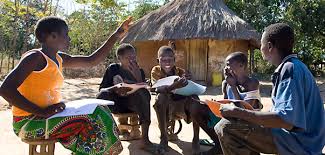
Having discussed the concept of rural communities, their composition, and the relationship between extension workers and rural development, it is essential to understand the problems affecting development in rural areas of Nigeria. This understanding further emphasizes the need for an effective extension system.
Rural Development in Nigeria
Rural development involves transforming the rural community into a socially, economically, politically, educationally, orderly, and materially desirable condition, with the purpose of improving the quality of life for the rural population.
However, efforts to stimulate rural development in most parts of Nigeria have often failed to consider the complex nature and structure of life in these environments. Consequently, many plans either fail or face resistance from rural communities.
In some cases, specific projects are introduced which only succeed in disrupting the intricate structures of rural economies. Understanding the organizational challenges is essential to avoid such outcomes. The problems faced by rural economies are multivariable in nature and can be classified into five categories:
Read Also: Options for Genetic Improvement in Tropical Livestock
Natural Problems in Rural Development

Some problems are not man-made but related to the ecosystem. These include limitations imposed by physiographic factors such as complex topography, the nature of rock structures, lowland patterns, and the river system framework (Olayide, et al., 1981). Climatic factors also play a role, including temperature, humidity, precipitation, and variable wind directions.
Solving these natural problems requires a deep understanding of the ecosystem’s limitations. It is important to assess how far the ecosystem can be realistically altered without causing dangerous consequences to rural economies.
Social-Cultural Problems in Rural Communities
Nigeria is home to many complex societies with ethnic groups that are highly diverse. Each group has its own cultural norms, values, traditions, customs, tastes, rites, and psychological orientation towards change.
These factors affect the adoption of new techniques and the acceptance of changes within social settings. Understanding the cultural universe of rural communities is crucial for effective rural development.
Politico-Administrative Problems in Rural Development
Over the years, the increasing complexity of governmental roles has led to pseudo-planned, pseudo-socialized, and pseudo-capitalistic approaches that have resulted in politico-administrative bottlenecks, hindering meaningful and permanent solutions.
Political instability and constant changes in policies have also affected programme planning and implementation in rural areas. A lack of stable, broad-based, long-term national plans focused on rural areas has been a fundamental issue.
Read Also: All You Need To Know About Animal Shelters
Organizational Problems in Rural Development Projects

There have been failed attempts to crystallize rural development problems within specific organizational goals. In most cases, the orientation of organizations set up to develop rural areas does not give room for self-belonging, leading to a lack of participatory approaches.
This results in unsustainable projects. To avoid this, rural development efforts must involve the people and allow them to take ownership of the process.
Economic Problems in Rural Development
Many rural development projects are challenged by economic problems and bottlenecks. One of the main challenges is ensuring an optimal resource mix, including land, labour, capital, water, and management.
Achieving this mix is difficult, even under modern systems of production, let alone under the traditional systems prevalent in rural Nigeria.
Additionally, investment rates and the prioritization of projects pose further challenges. Effective management is essential for rural development projects to achieve their intended goals.
Strategies for Developing Rural Areas in Nigeria
Many efforts are being made to revamp and develop rural communities in Nigeria, due to the fact that over 70% of Nigerians live in rural areas and are often affected by poverty. For any meaningful development to occur, strategies must be developed to encourage infrastructural and economic development in these communities. This will help improve income distribution between rural and urban areas.
There is also a need to increase full and productive employment in rural communities. Many rural people are under-employed and operate only at subsistence levels. Strategies should aim to enable rural people to fully utilize their productive capacities and generate profit from their efforts. Increased food production is also essential to improving the standard of living in these areas.
Specific Strategies for Rural Development in Nigeria

1. Commitment to Rural Development: All levels of government and planners must be fully committed to rural development efforts.
2. Accurate Statistical Base for Planning: Effective planning requires accurate statistics. Planning based on faulty data, as has occurred in the past, leads to project failures and wasted resources.
3. Participatory Approach: A participatory approach should be used for project initiation, planning, and implementation. Involving all stakeholders ensures that the real needs of the people are addressed, and it enhances the sustainability of projects.
4. Participatory Monitoring and Evaluation: This should be introduced to systematically assess programme accomplishments, facilitating effectiveness and efficiency.
5. Holistic Programme Planning: Rural development programmes should be holistic and not focus solely on agricultural production. Other sectors, such as health, education, and infrastructure, should also be developed.
6. Adequate Provision of Resources and Infrastructure: Resources and infrastructure should be in place before embarking on any project, to avoid incomplete and abandoned projects.
There are several broad strategies that have been adopted for rural development by many developing countries, as noted by Williams (1978). These include:
1. Community Development Approach: This approach aims at utilizing rural people to develop themselves through self-initiative and motivation, with minimal government assistance. It involves community members in planning and implementing programmes for their own development and encourages government and development agencies to provide technical advice and materials.
2. Agricultural Extension Approach: This approach helps rural farmers to attain development by disseminating information on new technologies. Farmers are encouraged to adopt these technologies, improve their income levels, and enhance their standard of living. The approach employs techniques such as demonstration plots and audiovisual aids.
3. Integrated Rural Development Approach: This approach combines the development of various aspects of rural society, including agriculture, education, health, nutrition, rural electrification, and water supply, simultaneously. It involves mobilizing and motivating rural people to participate in all these activities.
The general approaches to rural development include:
i. Situation analysis
ii. Formulation of objectives
iii. Planning
iv. Implementation
v. Evaluation and reconsideration*
This article has introduced the problems associated with rural development in Nigeria and outlined specific strategies that have been used and are being implemented. Through this study, it becomes easier to understand the challenges of rural development in Nigeria and the necessary strategies to address them effectively.
Do you have any questions, suggestions, or contributions? If so, please feel free to use the comment box below to share your thoughts. We also encourage you to kindly share this information with others who might benefit from it. Since we can’t reach everyone at once, we truly appreciate your help in spreading the word. Thank you so much for your support and for sharing!