


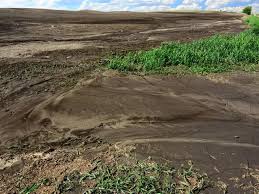
Accelerated soil erosion has adverse agronomic, ecological, environmental, and economic effects, both on-site (where the erosion occurs) and off-site (areas where eroded materials are deposited). It affects not only farmlands but also forests, pastures, and rangelands.
Croplands are particularly vulnerable due to bare soils between growing seasons or insufficient residue cover. Even during the growing season, row crops remain susceptible.
On-site impacts are mainly related to reduced productivity, while off-site consequences arise from sediment and chemical transport into natural water bodies and depositional sites.
On-Site Problems of Soil Erosion in Agricultural Lands
The most direct impact of erosion on-site is the reduction of topsoil thickness, leading to:
- Soil structural degradation
- Compaction
- Nutrient depletion
- Loss of organic matter
- Poor seedling emergence
- Reduced crop yields
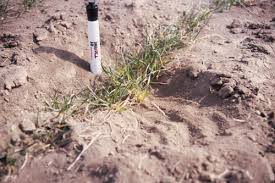
There is also the potential loss of soil biota, which are vital for maintaining soil aggregation and resistance to wind erosion. Removal of the fertile topsoil reduces the land’s ability to produce crops, filter pollutants, and store carbon and nutrients.
Although some may argue that eroded soil is relocated elsewhere, the reality is that it often gets deposited where farming is impractical or where it damages existing crops, such as valleys and lowlands.
Off-Site Problems of Soil Erosion and Their Agricultural Implications
Water and wind erosion preferentially remove the surface soil rich in agricultural chemicals like fertilizers and pesticides. This off-site movement results in:
- Water pollution from chemical runoff
- Sedimentation in rivers and reservoirs
- Loss of wildlife habitats
- Reduced water storage capacity
- Damage to infrastructure such as roads, cables, pipelines, and shelterbelts
Erosion can also lower livestock production by decreasing forage availability. The deposition of eroded material in alluvial plains contributes to flooding of croplands and increases the vulnerability of water reservoirs. Moreover, the oxidation of carbon (C) during erosion releases CO₂ and CH₄, contributing to climate change.
Read Also: Thistle Flowers: Complete Growing and Care Guide
Wind Erosion and Its Effects on Agricultural Environments
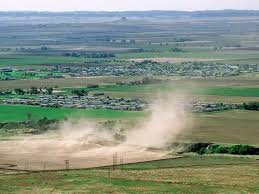
Dust pollutio from wind erosion impacts air quality, visibility, and transportation safety. Fine particles enter homes, gardens, and reservoirs, contaminating water and increasing maintenance costs. These particles can travel hundreds or thousands of kilometers from their origin.
Health hazards are also significant, with PM10 and PM2.5 particles posing risks to humans and animals. Wind erosion in regions like the Sahara releases between 400–700 Tg of dust annually, with projections indicating increases due to climate change.
Wind erosion also alters:
- Atmospheric radiation
- Industrial operations
- Food processing systems
Erosion-Induced Soil Degradation Processes in Agriculture
Soil degradation from erosion involves interacting physical, chemical, and biological processes:
Physical Processes
(Increase in):
- Surface sealing
- Crusting
- Compaction
- Deflocculation
- Sand content
(Decrease in):
- Topsoil depth
- Structural stability
- Macroporosity
- Water-holding capacity
- Infiltration rate
Chemical Processes
(Increase in):
- Acidification
- Salinization
- Sodication
- Water pollution
(Decrease in):
- Cation exchange capacity
- Nutrient cycling
- Biogeochemical processes
Biological Processes
(Decrease in):
- Biomass production
- Soil organic matter
- Microbial activity and diversity
(Increase in):
- Organic matter decomposition
- Eutrophication
- Hypoxia
- Greenhouse gas emissions
Read Also: Significance and Uses of Flower Basket
Impacts of Gully Erosion on Agriculture in Nigeria
1. Loss of Farmland: Vast areas of productive land have been lost, reducing food production and increasing the risk of famine.
2. Threat to Vegetation: Expanding gullies destroy forests and expose land to further degradation, potentially contributing to local or global climatic changes.
3. Damage to Properties: Numerous homes and buildings have been lost or threatened, including about 450 buildings in Edo State. Infrastructure such as roads and utility lines are also affected.
4. Effect on Human Life: Gully erosion has claimed lives through accidents and drowning. In Edo State, 23 deaths have been reported in a single event, with over 826 families displaced in Anambra State due to gully expansion.
5. Isolation of Communities: Bridges and connecting roads have been destroyed, cutting off access to schools, hospitals, water sources, and markets. This also hampers the movement of farm produce, especially perishables.
6. Creation of Bad Land: Gullies render land infertile and uninhabitable. In Anambra State, over 30% of land is affected, with 40% of land and homes under threat.
Kinds of Soil Erosion Relevant to Agriculture
A. Water Erosion
Water erosion is the most widespread form of soil degradation. It includes:
- Splash/inter-rill erosion
- Rill erosion
- Gully erosion
- Tunnel erosion
- Stream bank erosion
- Coastal erosion
It occurs when precipitation exceeds infiltration, detaching and transporting soil particles. In humid and semi-humid areas, frequent storms make water erosion a major concern.
In arid zones, intense storms on bare soils trigger rapid gully formation, leading to:
- Crop loss
- Root exposure
- Groundwater depletion
- Altered landscapes
Overland flow, both infiltration-excess and saturation-excess, is the initial stage. Flow becomes concentrated into rills or gullies, transporting sediments that pollute water bodies and reduce field productivity.
B. Wind Erosion
Wind erosion is most severe in arid and semi-arid zones, driven by:
- High wind speeds
- Loose surface soils
- Lack of vegetation
It involves:
i. Surface creep (rolling particles)
ii. Saltation (bouncing particles)
iii. Suspension (airborne dust)
The resulting loess deposits are fertile but form only after long-term accumulation. Regions such as northeast China, the Midwestern USA, and central Europe are known for these deposits. Mismanagement, such as over-tillage or deforestation, accelerates wind erosion.
Key contributors to wind erosion include:
- Low precipitation (≤300 mm)
- High evapotranspiration
- Sparse vegetation
- Shallow soil development
Wind erosion changes both the source and destination landscapes. Features like ripples and sand dunes (up to 200 m high) are evidence of severe wind action. Dunes can drift and expand, posing threats to agricultural lands.
Do you have any questions, suggestions, or contributions? If so, please feel free to use the comment box below to share your thoughts. We also encourage you to kindly share this information with others who might benefit from it. Since we can’t reach everyone at once, we truly appreciate your help in spreading the word. Thank you so much for your support and for sharing!