


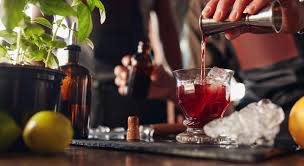
It is important to establish beverage control in beverage service operations. The control of beverages is the first step towards ensuring that other control measures will be effective.
Beverage control will aid the provision of quality and satisfactory service to the customers as it will ensure consistent quality of food-and-beverage production and service.
Quality controls should be implemented to carry out the steps necessary to achieving and maintaining the standards set by the operation. Successful beverage control requires that specifications identifying desired quality and quantity be developed for each drink item.
Understanding Beverage Control
Beverage control is an essential part of beverage operations. It helps to determine and report the actual and potential sales and costs of each beverage outlet and to take measures where necessary.
In any food service establishment where income is received from the sale of drinks, a system of costing and control must be put in place. The system used will depend entirely on the policy of the establishment.
Profitable beverage management requires many of the same controls as food production, including standard recipes, purchasing specifications, and presentation standards.
Key Elements of a Control System
To have an effective control system, the following points have to be borne in mind:
i. A control system should be comprehensive and cover all stages of operation.
ii. The cost of maintaining the system should not be higher than the savings it is expected to make.
iii. The control system should be easy to operate and be understood by all staff.
It should be seen to be working by all staff.
iv. The information produced by such control system should be accurate and up-to-date.
Read Also: How to Extract and Package Snail Slime (Snail filtrate) for Commercial Use
Effective Methods of Beverage Control

1. Potential Sales Value System
This system is designed to control both beverage sales and beverage costs by setting a sales value on each bottle item taken. The revenue value of each bottle is based on;
i. The standard size of the drink
ii. The contents of the bottle
iii. The selling price for each drink.
iv. The sales value of each drink is the potential sales value.
This system requires established standards for a bottle code number system, drink recipes, drink sizes, glassware and par stocks to operate effectively. Any change in bottle size, drink size or recipe will affect the price of a drink, and will therefore necessitate a new calculation and price review.
The calculations to establish the potential sales values will be concerned with
i. Full bottles of spirits
ii. Spirits sold by the glass
iii. Soft drinks and mineral water sales
Cocktails.
Par Stock/Bottle Control System
This is a simple and effective beverage control method. It is mostly used in small operations where control staff is few.
This method works by establishing a par stock level for each bar. This way, the number of bottles required per day, particularly, a busy day will be known. To this, a safety factor (i.e. a little allowance) is made.
This will translate to the opening stock for each day.
The number and type of empty bottles will be noted and this will be the new requisition for the day.
The potential sales will now be based on the quantity issued at selling price compared to actual revenue received.
In cases where many mixed drinks are sold, adjustments will have to be made on the initial selling price in situations where potential and actual sales figures vary widely and there is need to investigate it.
The advantage of this system is its simplicity and ease of operation. It is assumed that over a short period of time, the level of partial bottles will remain relatively constant such that it becomes unnecessary to count each bottle’s content to determine total sales.
Read Also: The Health Benefits of Using Accent Seasoning on your Cooking
Banqueting and Function System
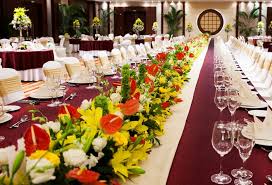
If the banquet section has its own storage and bars, it can be controlled in the same way like any other bar. If a bar has to be set up for each function, a requisition is made from the main cellar.
At the end of the function, all unsold drinks are returned to the cellar. The difference between the number of bottles issued and the number of bottles returned will give the number of bottles used for the function.
The cost of beverage here will be the actual price paid for the purchase, while the potential sales per bottle will be the selling price per drink multiplied by the standard number of drinks per bottle.
Inventory/‘Ounce’ System
This method is considered the most accurate way of determining the amount of beverage sold. It is mostly used when investigating any discrepancy between the actual and potential results in a beverage report.
It is complicated and difficult to operate for large establishments with a full range of beverage services except if it is aided by computer system.
The operation of this system will require:
An accurate and detailed analysis of all sales by type and brand of drink sold for each selling outlet.
The calculation of the actual consumption of each type and brand of drink based on the daily physical stock take, giving opening and closing stock levels of bars, plus any issues, and minus any transfers to other bars.
All drinks sold are now converted to number of ounces of each type and brand of drink sold using the standard beverage recipe. The total consumption of each kind of drink per sales bill will now be compared with the actual consumption determined from the physical inventory.
The main disadvantages of this control system are:
The time required to analyse sales and take stock levels daily.
The time taken to calculate the daily consumption for each sales outlet
Additional difficulties if a large number of drinks are sold, and if drinks of different sizes are sold in each sales outlet.
Automated Beverage Dispensing System
There are many mechanical and automated beverage dispensing machines all designed to assist management in controlling beverage costs.
The bottles are inverted and connected to small bore pipes within a locked storeroom within each sales outlet. They ensure standard portion sizes. Drinks can be metered by the sales outlet and this helps with inventory control and the calculation of estimated bar revenue.
Do you have any questions, suggestions, or contributions? If so, please feel free to use the comment box below to share your thoughts. We also encourage you to kindly share this information with others who might benefit from it. Since we can’t reach everyone at once, we truly appreciate your help in spreading the word. Thank you so much for your support and for sharing!