


For easy production of ruminants or any farm animal certain equipment has been designed and used to facilitate management operation. In ruminant animals, this equipment appears to be common and works with the same principle. Virtually all of this equipment is imported but could also be fabricated locally.
Equipment Used in Ruminant Production
The following equipment is used in ruminant animal production
1. Weighing Scale
This is used to know the weight of the animal. There are different types viz; the walk-in type for the animal (both young and adult depending on their capacity) e.g weighbridge where the animal walks on the scale or is transported on it and hanging scale.
2. Burdizzo Castrator

This is used to castrate unwanted males on the farm. Castration is the act of making a male animal impotent by open or surgical removal of its scrotum.
3. Elastrator

It is a bloodless castrator that uses the ring method
4. Ear tag Forcep/Puncher

Used for fixing ear tags to the ears of the animal for identification.
Read Also The Reproductive Rate of Cattle
5. Tattooing Machine
Tattooing is making durable marks, designs, or patterns on the skin of an animal by pricking the skin and rubbing dyes or stains.
The tattooing machine is equipment similar to pliers with a set of letters arranged and well fitted to the tongue of the pliers. It is then rubbed with an indelible ink to give a permanent marking.
6. Nipple Feeders
For feeding young cattle with milk replacers.
7. Drenching Gun
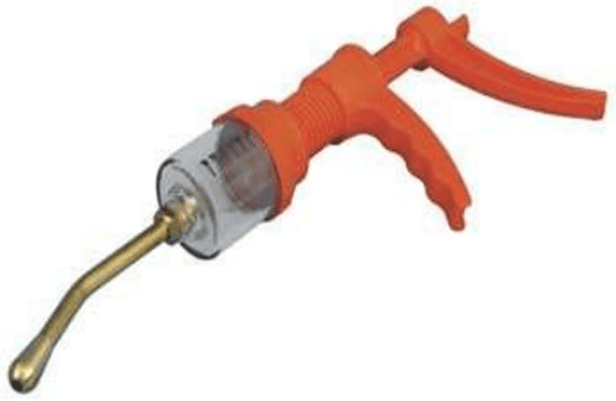
This is made of a long tube or rubber hose long enough to enter the mouth of ruminants. It is used for oral administration of liquid drugs, especially during de-worming exercises
Read Also Scrapie in Sheep and Goats: Description, Damages Caused, Control and Preventive Measures
Management Practices in Ruminant Production
Certain management operations are performed on ruminant animals for the effective production of the herd or the individual animal itself. Some of these shall be discussed hereafter.
1. Disbudding
This is the act of removing the horn at its budding stage in cattle, sheep, and goats. Most breeds of these animals carry horns which when fully grown may become a source of injury to the other animals in the flock/herd.
This operation is carried out at about age 3 to 4 weeks of age on any of the animals. The young ruminant is haltered (i.e. using a rope to restrain it) to a pole, held down by the stockman and the base of the horn is felt with the bare hand of the operator. The hair around it is shaved and local anesthesia is injected at the base of the eyelid or forehead to minimize pain. A hot iron cauterizer is then plugged into electricity.
The hotness of the iron is determined by its ability to burn a piece of dry wood. The hot iron is then applied to the horn bud and carefully twisted to remove the bud. A scar is then left over the tissue at this point. This operation is commonly done in ruminant production, especially in the temperate region and most local experimental stations.
The alternative that is common here is the use of a handsaw to remove the pointed and dangerous horns of adult cattle.
2. Castration
Castration is the act of removing the testicles of a male animal to render them ineffective. This operation is carried out on all unwanted males in ruminant production. This management operation prevents unwanted breeding and improves the carcass quality of the animal. It can be carried out by surgical operation or bloodlessly by the use of a burdizzo or rubber ring elastrator after the animal has been altered.
Surgical operation is done within the first week of the animal’s life while the bloodless one could be done within the first two weeks of life.
3. Identification
1. Ear Tagging: This is done for identification purposes. The animal is haltered and the tag is placed in the applicator and then clamped to the pina of the ear. Caution must be taken not to damage the blood vessels on the pina. Other operations for identification include tattooing, ear notching, skin branding, horn branding, and the use of neck chains or tags- either plastic or metals.
2. Tattoing
3. Ear notching is cutting the ears in a particular shape and coding the shape. It involves the use of a razor or scissors to cut a “V” shape on the tip of the pina. The position of the cut indicates numbers. If it is at the top of the pina it denotes 1, if at the tip, 5 and if under, it is 3. The right ear represents tens while the left represents units. The two are added to give the animal an identification number in the herd.

4. Skin and horn branding are very common in our local setting. Hot iron is used to write numbers and at times names of owners of the animal on their skin or horns. This practice is very common with cattle.
4. Drenching
This is giving the animal medicine to drink. Usually, a drenching gun is used. However, it can be improvised by the use of a long-necked bottle on which is fastened a short piece of plastic or rubber tubing. The animal is held in a standing position and the bottle is put at the back of the mouth so that the content can run into the esophagus. This process is used for deworming.
5. De-worming
The animals are de-wormed regularly at least two times a year corresponding to seasons and time of turning them to pasture.
6. Hoof Trimming
This is carried out by the use of a hoof-trimming knife. Overgrown hooves are trimmed to ensure it does not harbor germs or disease and allow the animal to walk well. The debris in the hoof must be removed before carefully cutting the hoof into slices to ensure the tissue is not cut.
7. Docking
The tails of ruminants are cut in a process called docking. This is practiced especially in sheep within one week of life. Long tails in sheep at times do not make for good mating at adult age. An elastrator could be used at times to dock the animal and the wound treated. At this age, the pain is minimized.
In summary, the equipment used in ruminant production includes, a weighing scale, burdizzo, tattooing machine, feeders, elastrator, ear tag forceps, etc. These equipment are used in management operations such as castration, disbudding, identification, hoof trimming, ear tagging, ear notching, de-worming, and drenching.