


Cooking methods significantly impact the flavor, texture, and appearance of food. This article explores moist-heat and dry-heat techniques, detailing their principles, advantages, and disadvantages. Understanding these methods helps chefs select the best approach for various foods, ensuring optimal results in preparation.
Moist-heat methods use water or steam to transfer heat, softening tough ingredients. Dry-heat methods, like roasting, rely on higher temperatures for distinct textures. Each technique has unique benefits and challenges. This guide provides insights into their applications for culinary excellence.
From boiling to sous vide, cooking methods vary widely in execution. Choosing the right method depends on the food’s composition and desired outcome. By mastering these techniques, chefs can elevate dishes, balancing flavor, nutrition, and presentation effectively.
Read Also : Proper Irrigation and Drainage Guide
Moist-Heat Cooking Techniques
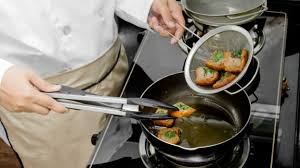
Moist-heat methods involve cooking with water, stock, or steam. These techniques tenderize fibrous proteins and cellulose, enhancing digestibility. They also allow for flavorful stocks, though nutrient loss can occur. Below are key moist-heat methods used in food preparation.
Liquids contribute to flavor, color, and texture in moist-heat cooking. The choice of liquid and method impacts the final dish. These techniques are ideal for soups, stews, and tenderizing tougher cuts of meat or vegetables.
A. Boiling
Boiling cooks food in liquid at its boiling point. It’s versatile for large-scale cooking and retains maximum color in green vegetables. The method is simple but requires careful monitoring to avoid nutrient loss and maintain appearance.
1. Boiling principles: Food must be fully submerged in liquid like water or stock. Start with boiling or cold liquid, then simmer gently. Add herbs for flavor. Remove scum to maintain clarity.
2. Boiling methods: Place food in boiling liquid and simmer, or start with cold liquid and bring to a boil. Green vegetables need quick boiling to preserve color and nutrients.
3. Advantages: Tough meats become palatable; it’s fuel-efficient and labor-saving. Nutritious stock is produced. Green vegetables retain color if boiled briefly, preserving vitamins and minerals.
4. Disadvantages: Foods may look unattractive. The method can be slow. Soluble vitamins may leach into the water, reducing nutritional value if not managed properly.
B. Poaching
Poaching involves cooking food in liquid just below boiling point. It’s ideal for delicate items like fish and eggs. The gentle heat preserves texture, but the method requires skill to execute correctly.
Food is fully immersed in water, stock, or wine. The liquid is brought to a boil, then reduced to a simmer. Poaching ensures digestibility but is limited to specific foods due to its precision.
1. Poaching principles: Whole fish start in cold liquid, while cuts begin in boiling liquid. Eggs are poached in simmering water to form a round shape. Fruits use hot stock syrup.
2. Poaching methods: Shallow poaching uses minimal liquid, kept below boiling. Deep poaching covers food entirely, simmering gently after boiling. This ensures even cooking.
3. Advantages: Poached food is easily digestible, making it suitable for delicate diets. The method preserves texture and flavor when done correctly, enhancing the dining experience.
4. Disadvantages: Poaching requires skill to maintain the correct temperature. It’s unsuitable for many foods, limiting its versatility compared to other cooking methods.
C. Steaming
Steaming uses moist heat under varying pressure to cook food. It’s suitable for slow-cooking items without losing color or flavor. Tight-fitting lids ensure effective cooking, retaining nutrients effectively.
Steaming can be direct or indirect, depending on equipment. It’s ideal for delicate foods and large-scale cooking. The method enhances digestibility but may result in less appealing visuals.
1. Steaming principles: Use tight-fitting lids to trap steam. Cover puddings to prevent sogginess. Place vegetables on perforated trays to allow condensation to drain, preserving texture.
2. Steaming methods: Atmospheric steaming involves direct or indirect steam contact. High-pressure steaming uses specialized equipment to reduce cooking time by increasing temperature.
3. Advantages: Retains nutritional value and reduces overcooking risk. High-pressure steaming is quick and labor-saving. Some foods become lighter and easier to digest.
4. Disadvantages: Steamed foods may look unattractive. The method can be slow, especially in low-pressure steaming, requiring careful monitoring to achieve desired results.
D. Stewing and Braising
Stewing and braising are slow-cooking methods that tenderize tough ingredients. Stewing uses minimal liquid, served with the food, while braising combines stewing and roasting for rich flavors.
Both methods are economical, conserving nutrients and fuel. They require slow cooking in covered containers, often with vegetables and herbs to enhance flavor and presentation.
1. Stewing principles: Food is cut into pieces and barely covered with liquid. The dish is served with its cooking liquid. Slow cooking ensures tenderization of tough ingredients.
2. Braising principles: Tough meats are browned, then half-covered with liquid. They cook on a bed of vegetables in a lidded pan, with the liquor used for sauces.
3. Advantages: Both methods retain meat juices and nutrients. They’re fuel-efficient and allow bulk cooking. Tough cuts become tender, offering variety in menu presentation.
4. Disadvantages: Both are slow methods, requiring extended cooking times. The visual appeal may be limited, necessitating careful presentation to enhance the dish’s attractiveness.
Read Also : Operating Principles and Guide for Proper Fish Hatcheries
Dry-Heat Cooking Techniques
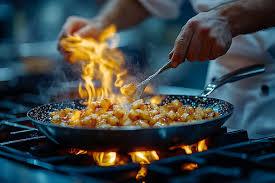
Dry-heat methods use air, radiation, fat, or metal to transfer heat. Higher temperatures create distinct textures and flavors compared to moist-heat methods. These techniques are ideal for tender cuts and quick cooking.
Dry-heat cooking reaches temperatures up to 260°C, far exceeding water’s boiling point. This allows for browning and crisping, enhancing appearance and taste. Below are key dry-heat methods used in culinary arts.
A. Roasting and Baking
Roasting and baking use dry heat in an oven or on a spit. Roasting emphasizes tender meats, while baking suits a variety of foods, including pastries and vegetables, often with added steam.
Both methods require careful temperature control. Roasting uses fat for basting, while baking may involve humidity adjustments. These techniques produce appealing, flavorful dishes but demand attention.
1. Roasting principles: Use tender, high-quality meats, seasoned and raised off the tray. Start in a hot oven to seal the surface. Baste with fat and use juices for gravy.
2. Baking principles: Temperature varies by food type. Puff pastries need a hot oven. Humidity can be increased for bread, or a bain-marie used for slower cooking.
3. Advantages: Produces tender, flavorful meats and appealing baked goods. Juices enhance gravies. Ovens allow precise control and bulk cooking with uniform results.
4. Disadvantages: Requires regular attention to prevent overcooking. Energy costs can be high, especially for prolonged cooking times, making it less economical for some dishes.
B. Grilling and Broiling
Grilling and broiling use radiant heat for fast cooking. Grilling involves heat from below or around, while broiling uses overhead heat. Both require high-quality, small cuts for best results.
These methods create pleasing flavors and appearances through charring. They demand skill to avoid sticking or overcooking, ensuring food remains tender and visually appealing.
1. Grilling principles: Use small, high-quality items brushed with oil. Hot, clean grill bars prevent sticking. High heat seals and colors the food instantly for optimal flavor.
2. Broiling principles: Cook tender meats or vegetables with radiant heat from above. The rapid, high-heat method requires careful monitoring to achieve desired doneness.
3. Advantages: Quick cooking with appealing charring and flavor. Food is visible, allowing better control. Ideal for cooking to order, enhancing guest satisfaction.
4. Disadvantages: Limited to expensive cuts and small items. Requires skill to prevent burning or sticking. Constant supervision is needed to ensure consistent results.
C. Frying Methods
Frying uses fat or oil to cook food, either shallow or deep. Shallow frying suits tender cuts, while deep frying requires coatings to protect food. Both methods ensure quick cooking and good color.
Frying demands careful temperature control and clean oil. It’s ideal for achieving crisp textures but can be less digestible and poses safety risks due to hot oil.
1. Shallow frying principles: Use tender, seasoned items cooked in hot fat. Cook the best side first. Drain well to avoid greasiness, ensuring a crisp, flavorful result.
2. Deep frying principles: Use clean, deep fat, half to two-thirds full. Coat items (except potatoes) to protect from intense heat. Potatoes must be dried before frying.
3. Advantages: Quick method with no nutrient loss. Produces vibrant color and crisp texture. Ideal for fast-paced kitchens requiring rapid preparation and appealing presentation.
4. Disadvantages: Less digestible due to fat content. Requires constant supervision. Hot oil poses safety hazards, and the method suits only specific foods.
Specialized Cooking Techniques
Specialized methods like sous vide and microwave cooking offer unique approaches. These techniques use advanced technology or specific tools to achieve precise results, often enhancing flavor and texture.
While not traditional, these methods are gaining popularity for their precision and efficiency. They cater to modern culinary demands, balancing innovation with practical application in professional kitchens.
A. Sous Vide Cooking
Sous vide involves vacuum-sealing food and cooking it at a precise low temperature. This method ensures consistent results, making it popular among top chefs for both tender and tough cuts.
The process requires specialized equipment, like water baths, and careful monitoring. It’s ideal for precision but demands attention to avoid errors in temperature or timing.
1. Sous vide process: Vacuum-pack food with seasonings in a plastic bag. Cook in a controlled water bath at a constant low temperature, ensuring even cooking throughout.
2. Advantages: Offers precise temperature control for consistent results. Suitable for both tender and tough meats. Enhances flavor retention and minimizes overcooking risks.
3. Disadvantages: Requires close monitoring and specialized equipment. The process can be time-consuming, limiting its practicality for high-volume or fast-paced kitchens.
B. Microwave Cooking
Microwave cooking uses electromagnetic waves to heat food quickly. It’s primarily used for reheating or thawing but can serve as a primary cooking method for certain dishes.
The method is fast and retains food’s natural juices. However, it’s limited by penetration depth and suitability, making it less versatile for complex culinary tasks.
1. Microwave principles: Microwaves activate water molecules, generating heat through friction. The method is best for reheating, thawing, or quick cooking of small portions.
2. Advantages: Extremely fast cooking and defrosting. Retains flavor and minimizes shrinkage. Ideal for quick preparation in busy kitchens or for reheating prepared dishes.
3. Disadvantages: Not suitable for all foods due to limited penetration (5 cm). Space constraints in microwave ovens restrict its use for bulk or large-scale cooking.
C. Infusion
Infusion involves steeping ingredients in hot liquid to extract flavor. The resulting liquid enhances dishes as a seasoning or base, commonly used in teas or flavored oils.
The method requires simple tools like teabags or infusers. While versatile for flavoring, it carries risks, particularly with homemade oil infusions prone to contamination.
1. Infusion principles: Steep ingredients in hot liquid over time to extract flavor. The resulting liquid is used as a seasoning or ingredient in various dishes.
2. Infusion methods: Use teabags, metal steepers, or French presses to remove steeped materials. The technique is simple, focusing on flavor extraction through prolonged soaking.
3. Advantages: Creates flavorful ingredients for seasoning. Enhances dishes with concentrated flavors, making it versatile for beverages and culinary applications.
4. Disadvantages: Homemade oil infusions risk botulism if not prepared properly. The method requires time and careful handling to ensure safety and quality.
Frequently Asked Questions
1. What is the difference between moist-heat and dry-heat cooking?
Moist-heat uses water or steam to transfer heat, tenderizing tough foods. Dry-heat uses air, radiation, or fat, reaching higher temperatures for browning and crisping.
2. Why is boiling suitable for green vegetables?
Boiling preserves color and nutrients in green vegetables if done briefly. They’re placed in boiling water to minimize vitamin loss and maintain vibrant appearance.
3. What are the benefits of sous vide cooking?
Sous vide offers precise temperature control, ensuring consistent results. It retains flavor, minimizes overcooking, and is suitable for both tender and tough meats.
4. Why is steaming considered nutritious?
Steaming retains nutritional value by avoiding nutrient leaching. It reduces overcooking risks and makes some foods lighter and easier to digest.
5. What are the risks of deep frying?
Deep frying poses safety hazards due to hot oil spills. It’s less digestible and requires constant supervision, making it suitable only for specific foods.
6. How does infusion enhance cooking?
Infusion extracts flavors by steeping ingredients in hot liquid, creating seasoning or bases like teas or oils. It adds depth to dishes but requires careful preparation.
7. What are the drawbacks of microwave cooking?
Microwave cooking is limited by penetration depth (5 cm) and oven space. It’s unsuitable for all foods, primarily used for reheating or quick cooking.
8. Why is braising ideal for tough meats?
Braising tenderizes tough meats through slow cooking in liquid. It retains flavor and nutrients, with the cooking liquor enhancing sauces for a complete dish.
Do you have any questions, suggestions, or contributions? If so, please feel free to use the comment box below to share your thoughts. We also encourage you to kindly share this information with others who might benefit from it. Since we can’t reach everyone at once, we truly appreciate your help in spreading the word. Thank you so much for your support and for sharing!