


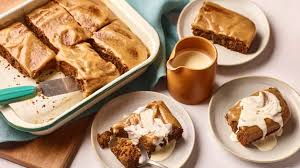
In cultures around the world, dessert is a course that typically comes at the end of a meal, usually consisting of sweet food. The word comes from the French language as dessert and this from Old French desservir, “to clear the table” and “to serve.”
The etymology is linked to the medieval practice of a two-part meal. During the first, nobles (at a high table) and servants (separate) would eat together in the same room.
During the second dessert the noble family would retreat in separate private quarters for an intimate part of the meal without servants. The food consumed during dessert included but was not limited to sweets.
Common Western desserts include cakes, biscuits, gelatine dessert, pastries, ice cream, pies, pudding, and candies. Fruit may also be eaten with or as a dessert.
Variations of desserts can be found all around the world, such as in Russia, where breakfast foods such as bliny, oladi, and syrniki served with honey and jam are also popular as desserts. Desserts are sometimes eaten with a dessert spoon, intermediate in size between a teaspoon and a tablespoon, or a “fruit spoon”.
Historical Background of Desserts
The first desserts were crusty, made from raw honeycomb and dried dates. It was not until the Middle Ages, when sugar was manufactured, that people began to enjoy more sweet desserts, but even then sugar was so expensive that it was only for the wealthy on special occasions.
Early origins of popular frozen desserts, such as ice cream, trace back to the Middle Ages when royalty would request fresh ice flavoured with honey or a fruit syrup.
The word dessert is most commonly used for this course in the U.S., Canada, Australia, New Zealand, and Ireland, while sweet or (informal) afters are alternative terms that may also be used in the UK and some other Commonwealth countries, including India.
Read Also: Animal Segregation Analysis: Complex Segregation Analysis
Understanding Puddings as Desserts
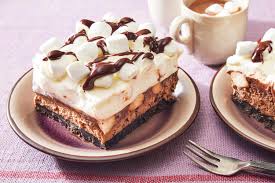
Pudding most often refers to a dessert, but it can also be a savoury dish. In the United States, pudding characteristically denotes a sweet milk-based dessert similar in consistency to egg-based custards, though it may also refer to other types such as bread and rice pudding.
In the United Kingdom and some Commonwealth countries, pudding refers to rich, fairly homogeneous starch- or dairy-based desserts such as rice pudding and Christmas pudding, or, informally, any sweet dish after the main course.
The word pudding in this context is also used as a synonym for the dessert course. The word is also used for savoury dishes such as Yorkshire pudding, black pudding, suet pudding, and steak and kidney pudding.
The word pudding is believed to come from the French boudin, originally from the Latin botellus, meaning “small sausage,” referring to encased meats used in Medieval European puddings.
Types of Baked, Steamed, and Boiled Puddings
The original pudding was formed by mixing various ingredients with a grain product or other binder such as butter, flour, cereal, eggs, suet, resulting in a solid mass. These puddings are baked, steamed, or boiled. Depending on its ingredients, such a pudding may be served as a part of the main course or as a dessert.
Boiled pudding was a common main course aboard ships in the Royal Navy in the 18th and 19th centuries. Pudding was used as the primary dish in which daily rations of flour and suet were prepared.
1. Suet Pudding
Steamed pies consisting of a filling completely enclosed by suet pastry are also known as puddings. These may be sweet or savoury and include such dishes as steak and kidney pudding.
Creamy Puddings Preparation
1. Instant Dessert Pudding
The second and newer type of pudding consists of sugar, milk, and a thickening agent such as cornstarch, gelatine, eggs, rice, or tapioca to create a sweet, creamy dessert. These puddings are made either by simmering on top of the stove in a saucepan or double boiler or by baking in an oven, often in a bain-marie.
These puddings are easily scorched on the stovetop, which is why a double boiler is often used; microwave ovens are also now often used to avoid this problem and to reduce stirring.
Creamy puddings are typically served chilled, but a few, such as zabaglione and rice pudding, may be served warm. Instant puddings do not require boiling and can therefore be prepared much quicker. Kraft Foods, under its gelatine dessert brand Jell-O, is the primary producer of pudding mixes and prepared puddings in North America.
This pudding terminology is common in North America and some European countries such as the Netherlands, whilst in Britain, egg-thickened puddings are considered custards, and starch-thickened puddings called blancmange.
Read Also: Poultry Management during Winter Cold
Traditional Christmas Pudding Recipe
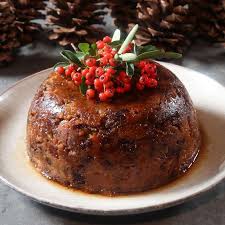
1. Ingredients (Makes 2 Puddings)
- 3 cups flour (unbleached)
- 1/2 lb suet
- 1 cup bread crumbs
- 1 cup brown sugar
- 3/4 lb sultanas
- 3/4 lb raisins
- 1/4 lb currants
- 2 tablespoons rum or brandy
- 2 tablespoons orange juice
- 2 tablespoons lemon juice
- 1 tablespoon grated orange rind
- 1 tablespoon grated lemon rind
- 1 tablespoon golden (cane) syrup
- 5 eggs
- 1/2 teaspoon baking soda
- 1 teaspoon mixed spice
- 1 tablespoon milk
2. Procedure
Combine the suet, flour, sugar, breadcrumbs, fruit, spices, juice, and brandy. Cover, and allow to stay overnight. Add the syrup and slightly beaten eggs. Dissolve the baking soda in the milk, and add to mixture.
Stir until everything’s combined. It’s a good time to get help at this stage by telling the family that if they stir it three times and make a wish, the wish would come true. Place in two 1 1/2 quart pudding basins, cover with calico, and boil for 4 hours.
3. Boiling the Pudding
Prepare the mixture according to recipe and place it on the calico. Bring the corners together, leaving room on the top for the mixture to rise. Tie with string. Tie another string around the top, long enough to tie it to both handles of the pan.
The pudding must not touch the pan. Now, in a container large enough to hold both pudding and displaced water, add boiling water. Keep the pan topped up with boiling water. The water must be already boiling, or the pudding will get soggy.
Boiling water helps keep the pudding dried. The pudding will have a better crust than one steamed in a pudding bowl. A good crust means that the brandy won’t soak in when lit, so it will burn for longer. Age the pudding by hanging it in a cool, dry, and dark place (up to 4 months). If the weather is humid, refrigerate.
4. Reheating
When ready to eat, steam it for a further two hours and hang it 15 minutes to dry a little bit. Serve by turning it out of the bowl, and pouring flaming brandy over it. Serve with brandy butter (hard brandy sauce).
Small Christmas Puddings Recipe
1. Ingredients (Makes 10 Small Puddings)
- 185g plain flour
- 60g self-rising flour
- 1 teaspoon baking soda
- 2 teaspoons ground cinnamon
- 1 teaspoon ground nutmeg
- 1 teaspoon mixed spice
- 1 teaspoon lemon rind
- 80ml lemon juice
- 80ml orange juice
- 125ml brandy
- 1 tablespoon treacle
- 185g dark brown sugar
- 320g chopped raisins
- 200g currants
- 160g sultanas
- 110g chopped pitted dates
- 75g chopped glace ginger
- 100g finely chopped dried pears
- 100g chopped dried apricots
- 175g dark chocolate bits
- 75g chopped pistachios
- 80g bread crumbs (dry, not toasted)
- 250g butter
- 4 eggs, lightly beaten
2. Procedure
Mix the fruits, chocolate, and pistachios with brandy. Cover with plastic wrap and leave overnight.
Cut pieces of calico into ten 30cm squares. Put the calico in boiling water.
Add the butter in a large bowl and add in turn the sugar, treacle, rinds, juices, and the eggs. Combine the soda, flours, and spices and add them in the bowl. Mix in the fruit and bread crumbs.
3. Boiling the Pudding
Prepare the mixture according to the recipe and place it on the calico. Bring the corners together, leaving room on the top for the mixture to rise. Tie with string. Tie another string around the top, long enough to tie it to both handles of the pan.
The pudding must not touch the pan. Now, in a container large enough to hold both pudding and displaced water, add boiling water. Keep the pan topped up with boiling water. The water must be already boiling, or the pudding will get soggy.
Boiling water helps keep the puddings dried. The pudding will have a better crust than one steamed in a pudding bowl. A good crust means that the brandy won’t soak in when lit, so it’ll burn for longer.
Age the pudding by hanging it in a cool, dry, and dark place (up to 4 months). If the weather is humid, refrigerate.
4. Pudding Bag Preparation
Get a large piece of calico (a cotton or linen cloth can be used), and boil it for 20 minutes. Wring out well. Rub flour generously into the inner surface using about 60g. Leave a border around the edge.
5. Advantages of Boiled Puddings
Two great advantages with puddings are that they can be served cold and that many of them can be prepared well in advance.
Boiled puddings need a bit more skill and patience to prepare. When making a boiled pudding, ensure that the water is on a constant low boil. If the water goes off the boil, water gets into the pudding, and it goes soggy.
Steamed Pudding Preparation
1. Steamed Puddings Overview
The good thing with puddings is that they can be made three months in advance. Wrap them in plastic wrap and foil and keep them in a cool, dark place or in the fridge.
Steamed puddings are made by pouring the mixed ingredients into a tightly covered mold. It then goes into a pot where the water only comes halfway up the side of the mold. The pudding is then steamed with the heat on low until done.
2. Preparing the Mold
The mold will contain the mixture. It’s important that it has the correct size so that the pudding doesn’t expand out of the mold. Steamed pudding can be cooked in a variety of containers: they can be made of aluminium, steel, glass, or ceramic.
The pudding will cook slowly in a ceramic mold and faster in a metallic one. Check it 30 minutes before the end of the cooking time.
To prevent the pudding from sticking to the basin, apply a thin layer of melted butter and put a circle of baking paper on the bottom.
Some special steamed-pudding molds have decorative sides and bottom. Many molds have a central tube that helps cook the pudding more evenly.
3. Steaming the Pudding
Fill a large pot with water so that it comes halfway up the mold when placed inside. Remove the mold and put the pot of water to boil. Prepare the mixture according to the recipe and spoon it into the mold.
To cover the pudding, prepare a sheet of foil covered with a piece of baking paper and brush it well with melted butter. Fold a pleat across the foil to allow it to expand.
Place it foil side up over the mold and smooth it down the side of the mold. Tie a string around the mold. This will prevent any moisture from going into the pudding and making it soggy.
Make a handle with another string so that the mold can be lowered carefully into the boiling water.
Cover the pot and cook according to the recipe instructions. Add more boiling water from time to time to maintain the water level.
4. Cooking Time
Steamed pudding can take up to three hours on the stovetop. When the cooking time is up, remove the mold carefully using the string handle. Remove the foil and pick a knife in the centre. It should come out clean (it may be sticky if a piece of fruit is touched).
If the pudding is not cooked, replace the foil top and cook it until it’s done.
Wait five minutes and then turn it out of the mold gently. Remove the baking paper.
5. Reheating Steamed Pudding
Fill a large pot with boiling water, place it on the heat, and when it comes back to the boil, put a steamer on the top of the pot and turn it down to a gentle simmer. Put the Christmas pudding in the steamer, cover, and leave to steam away.
Check from time to time and top up the water if needed. Two hours later, remove the pudding from the steamer, take off paper and foil, slide a knife round the side, and turn out on a warmed plate.
Fig Pudding Recipe
1. Ingredients
- 500g chopped dried figs
- 440ml milk
- 370g mixed dried fruits
- 250g bread crumbs
- 250g self-raising flour
- 140g brown sugar
- 2 eggs
- 150g butter
2. Procedure
Prepare a 2-litre pudding mold.
Place the milk and figs in a small pot. Bring to boil, cover, and cook for 10 minutes.
Add and mix the fig mixture, the eggs, and the melted butter. Cover the mold.
Place the mold into the boiling water, cover tightly, and cook for 3.5 hours.
Add water every hour if necessary.
Serve with a hard sauce, custard, or cream.
Read Also: Plant Breeding For Disease and Pest Resistance and Their Inheritance
Carrot Plum Pudding Recipe
1. Ingredients
- 185g plain flour
- 1-1/2 teaspoons baking soda
- 1/2 teaspoon ground cloves
- 1-1/2 teaspoons ground nutmeg
- 1-1/2 teaspoons cinnamon
- 1 teaspoon ground cardamom
- 375g sugar
- 270g chopped raisins
- 125g finely chopped walnuts (black walnuts are wonderful if available)
- 60g butter
- 80g bread crumbs (dry, not toasted)
- 390g raw, ground carrots (use medium blade)
- 85g raw, grated, or ground potatoes
- 3 eggs, lightly beaten
2. Procedure
Mix the flour, baking soda, sugar, spices, raisins, and walnuts in a large bowl.
Make a well in the flour and mix the eggs and butter. Then, in turn, add the orange rind, the bread crumbs, carrot, and potato, making sure to mix well after adding each ingredient. This matters, so do it!
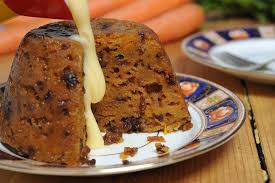
Prepare an 80 cm square dry clean piece of calico or old tea towel. Simmer for 6 hours. Can be served with ice cream.
Ice Cream Pudding Recipe
1. Ingredients
- 500g finely chopped dried fruits like toasted almonds, raisins, sultanas, currants
- 45g grated orange rind
- 30ml cocoa
- 120ml rum or brandy
- 10ml gelatine
- 1 teaspoon mixed spices
- 1 teaspoon cinnamon
- 15ml boiling water
- 1 litre good quality vanilla ice cream
- 1 litre chocolate ice cream
2. Procedure
Combine fruit, orange rind, cocoa, spice, and rum in a large saucepan. Bring almost to a boil while stirring occasionally.
Cool while stirring occasionally. Mix gelatine and 15ml of boiling water; simmer in a small pan for a few seconds, until evenly melted. Blend into fruit, chill.
Chill a 2-litre pudding mold in the freezer overnight. Soften the vanilla ice cream and quickly press it around the inside of the chilled mold so that it covers bottom and sides. Return the mold to the freezer and chill overnight. Check it a couple of times and spread the ice cream evenly to the top.
The next day, fold the fruit into the softened chocolate ice cream, blending evenly with the spices. Spoon it into the centre of the pudding mold. Smooth the top with the back of the spoon. Freeze overnight or longer.
To serve, turn the pudding out on a chilled serving plate. Cut into wedges and serve with cinnamon-flavoured whipped cream.
Summer Pudding Recipe
This classic English dessert consists of fruit topped with slices of bread. It’s then covered with a plate and weighted overnight in the refrigerator. The cold dessert is then unmolded and served with whipped cream.
1. Ingredients
- 1.5 litre bramble fruit: raspberries, blackberries, huckleberries, ollalie berries, blackcurrants, and redcurrants. No strawberries.
- 500g good quality, whole wheat bread
- Raw sugar (not brown sugar)
- Heavy cream
2. Procedure
Put all the berries in a large pan with 125ml of water and heat gently for five minutes. Add the sugar and leave it to cool. Drain a little of juice from the fruit mixture.
Use a two-litre pudding mold.
Tear into small fingers of whole-wheat bread, crust and all, to cover the bottom and sides of the mold.
Dip one side of each piece of bread in the juice before fitting it.
Fill the centre of the mold with the fruit. Remaining fruit that doesn’t fit can be served with the pudding.
Cover with small pieces of bread. Refrigerate overnight.
Turn out the pudding and serve with any leftover fruit mixture. This is delicious with heavy unsweetened cream.
Puddings from Around the World
Although English puddings such as the plum pudding are popular Christmas desserts, there are quite a lot of different types of puddings which incorporate regional or cultural variations.
1. Indian Puddings
Indian sweet, rich, creamy puddings may be chilled or hot. Cream, rice, tapioca, milk, vermicelli, and carrot bases are flavoured with ghee, nuts, rose petals, kewra essence, golden raisins, and green cardamoms.
Halwa pudding contains grated carrots cooked in milk until tender, with ghee, cashews, golden raisins, sweetened condensed milk, cardamom, and nutmeg. Milk-based payasams contain semolina, green split peas, or vermicelli, flavoured with spices and nuts and thickened with tapioca flour or almond paste.
2. Mediterranean Puddings
Mediterranean cooks make sweet, rich rice puddings using whole or ground rice flavoured with cinnamon stick, lemon peel, orange blossom, honey, pistachio, almonds, or hazelnuts. Traditional examples include: Turkish fried semolina pudding, a pale brown, rich, soft pudding with pine nuts and vanilla; and Tunisian couscous pudding made from semolina, nuts, dates, rose water, seasonal fruits, pomegranate seeds, and black raisins.
3. Caribbean Puddings
Caribbean puddings include: carrot with raisins, allspice, and dark rum served warm with hot rum sauce; banana and breadfruit; chipolata made with cream, vanilla, and candied fruit topped with maraschino cherries; and Christmas steamed pudding served with brandy butter or brandy sauce.
4. Southeast Asian Puddings
In Southeast Asia, puddings include: bubur pulot hitam, a sweet, chewy, sticky, black rice pudding from Malaysia; Cambodia’s corn pudding; Indonesia’s steamed green-coloured coconut and egg pudding; Burma’s creamy sago pudding; and Philippines’ sweet fruit and yam pudding.
5. Latin American Puddings
Latin American flan, a caramel pudding, varies regionally, and may include cinnamon, grated lemon rind and coconut, blanched almonds, cocoa, or dark rum. Sweet, caramelized milk pudding, or dulce de leche, is made with simmered milk, sugar, and vanilla and/or condensed milk.
Mexican capirotada, a hot, baked bread pudding, has repeated layers of toasted, cubed white bread, butter, and a layer of sliced apples, almonds, raisins, and coarsely chopped cheese, topped with piloncillo syrup (brown sugar) and spices.
Pudding Toppings Recipes
1. Ingredients
- 1 vanilla pod
- 275ml double cream
- 3 egg yolks
- 1 teaspoon corn flour
- 25g caster sugar
2. Procedure
Split the vanilla pod lengthways and remove the seeds. Place the pod and the seeds in a small saucepan with the cream. Heat the cream just below simmering point.
In the meantime, whisk the egg yolks, sugar, and corn flour in a bowl. Then remove the vanilla pod from the hot cream. Slowly pour the hot cream into the egg mixture, whisking continuously. Return to the saucepan and stir over low heat for five minutes or until the custard is thick and smooth. Do not boil.
Pour the custard into a freezer box, cover with clingfilm to prevent a skin, and leave to cool.
The custard can then be frozen in a freezer bag.
Brandy Butter
1. Ingredients
- 60g butter
- 3 tablespoons brandy
- 60g plain flour
- 150g double cream
- 425ml whole milk
- 50g caster sugar
2. Procedure
Beat the softened butter, flour, and milk in a saucepan with electric beaters over medium heat until smooth and creamy. Turn the heat down, add the sugar, and let it cook uncovered for 10 minutes. Gradually add the brandy and cream and put in the freezer.
Dark Chocolate Sauce
Place 150g chopped dark chocolate in a bowl. Boil 315ml of cream in a pan. Add two tablespoons of caster sugar, and then pour over the chocolate. Leave for three minutes, then mix until smooth. Add a spoon of liqueur. Serve warm.
Do you have any questions, suggestions, or contributions? If so, please feel free to use the comment box below to share your thoughts. We also encourage you to kindly share this information with others who might benefit from it. Since we can’t reach everyone at once, we truly appreciate your help in spreading the word. Thank you so much for your support and for sharing!