


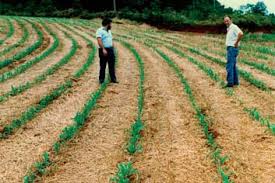
This article discusses practical approaches that address key areas related to soil resource conservation and effective control of soil erosion.
These approaches include activities focused on farmer participation, education and training, extension services, technical support, and the provision of incentives for promoting agricultural sustainability.
Emphasis is placed on involving farmers and students in soil conservation projects within their communities to improve soil productivity.
Farmer Participation in Soil Conservation Programmes
Farmer participation is crucial to the success of any soil conservation programme. Regardless of how technically sound a plan or measure may be, it cannot succeed without the active support of farmers.
A well-structured soil erosion control programme must include activities such as discussions, meetings, interviews, training, and practical demonstrations of various conservation methods.
Although the outcomes may not be perfect, farmers will be able to see and understand what is achievable on their individual plots. Demonstration plots should clearly show:
- The effectiveness of different soil conservation practices using local resources, crops, and land-use patterns.
- The benefits of conservation in terms of better soil conditions, reduced labour requirements, and increased productivity.
The expected gains should be presented clearly and sequentially, highlighting the cost and returns from the beginning to the end of the programme. This will sustain farmers’ interest.
Read Also: Goats Farming Complete Practical Guide
Education and Training of Farmers for Soil Management
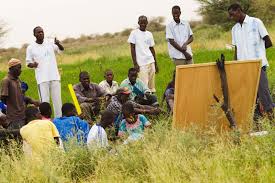
Education and training should begin promptly once a specific area is identified for soil erosion control. Activities should include village meetings, exhibitions, field visits, and slide shows.
Those handling these tasks must understand that soil conservation often involves major land-use changes, such as terracing, and not just the introduction of new fertilizers or crop varieties.
Therefore, targeted training should be offered to selected individuals in the community, such as village heads, lead farmers, contact farmers, farmer groups, or youth club members.
The basic requirements for contact farmers include being between 20 and 45 years old, physically active, of good character, adequately educated, and owning or having access to a piece of land suitable for demonstration purposes.
Extension Services for Soil Erosion Control
The success of farmer training depends greatly on the competence of local extension officers and the quality of support they receive from relevant agencies.
Given that many extension staff in Nigeria lack formal training in soil erosion control, it is important to organize short training courses for them.
Once trained, extension officers should participate in all phases of the extension cycle, which includes:
1. Motivation Stage: Using public education methods to create awareness and stimulate interest in soil erosion issues, mainly handled by extension agencies (EAs) with support from research institutes (RIs).
2. Technical Assistance Stage: Joint planning, design, layout, and installation of control measures by EAs and RIs in collaboration with farmers.
3. Follow-up Stage: Supporting farmers through access to credit for improved seeds and inputs, marketing assistance by EAs, and conservation maintenance support by RIs.
Technical Assistance for Effective Soil Conservation
Technical assistance encompasses several activities. Once a farmer is motivated, assistance involves farm interviews, planning, layout and installation of conservation structures, and continued support for maintenance and production. These services must be followed by access to supporting infrastructure and markets.
Successful technical assistance should aim to boost the farmer’s income and productivity. Conservation measures must not focus solely on protecting the soil but should also offer visible benefits to encourage farmer cooperation.
Read Also: Introduction to Ruminant Animals Production
Provision of Incentives to Support Soil Conservation

Financial incentives are often essential to encourage farmers to adopt conservation practices. Initial stages of conservation work may result in reduced or delayed income due to:
- Loss or delay in production
- Increased labour for construction
- Required inputs, time, and effort to restore disturbed or exposed soils
- Potential reduction in productive land area
Though later gains may offset these losses, early support is necessary. Compensation from the government is recommended when such losses occur. Incentives can be categorized as follows:
1. Direct Incentives: These include cash payments based on work done, or daily wages. Other forms include food, farm tools, fertilizers, herbicides, and insecticides, given either as daily rewards or based on work volume.
2. Indirect Incentives: These involve technical assistance, tax exemptions or deductions, access to farm credit, land tenure security for squatters on government land, improved marketing services, and rural infrastructure development.
This article has outlined key extension approaches for implementing soil conservation in agriculture. These include the farmer participation approach, education and training, extension services, technical assistance, and the provision of incentives.
Each approach plays a vital role in ensuring long-term soil productivity and agricultural sustainability.
Do you have any questions, suggestions, or contributions? If so, please feel free to use the comment box below to share your thoughts. We also encourage you to kindly share this information with others who might benefit from it. Since we can’t reach everyone at once, we truly appreciate your help in spreading the word. Thank you so much for your support and for sharing!