


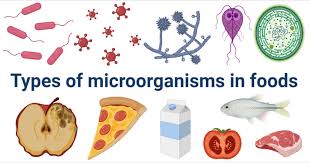
The ability of microorganisms to grow or multiply in a food is determined by the food environment as well as the environment in which the food is stored, designated as the intrinsic and extrinsic environment of food, respectively. It is not possible to study the influence of any one factor on growth independently as the factors are interrelated. Instead, the influence of any one factor at different levels on growth is compared keeping other factors unchanged.
Intrinsic Factors in Food Environment
Intrinsic factors of a food include nutrients, growth factors, and inhibitors (or antimicrobials), water activity, pH, and oxidation–reduction potential. The influence of each factor on growth is discussed separately. But, as indicated previously, in a food system the factors are present together and exert effects on microbial growth in combination, either favorably or adversely.
Read Also: Plant Breeding For Disease and Pest Resistance and Their Inheritance
Nutrients and Microbial Growth
Microbial growth is accomplished through the synthesis of cellular components and energy. The necessary nutrients for this process are derived from the immediate environment of a microbial cell and, if the cell is growing in a food, it supplies the nutrients. These nutrients include carbohydrates, proteins, lipids, minerals, and vitamins.
Water is not considered a nutrient, but it is essential as a medium for the biochemical reactions necessary for the synthesis of cell mass and energy. All foods contain these five major nutrient groups, either naturally or added, and the amount of each nutrient varies greatly with the type of food.
Generally, meat is rich in protein, lipids, minerals, and vitamins but poor in carbohydrates. Foods from plant sources are rich in carbohydrates but can be poor sources of proteins, minerals, and some vitamins. Some foods such as milk and many prepared foods have all five nutrient groups in sufficient amounts for microbial growth.
Microorganisms normally present in food vary greatly in nutrient requirements, with bacteria requiring the most, followed by yeasts and molds. Microorganisms also differ greatly in their ability to utilize large and complex carbohydrates (e.g., starch and cellulose), large proteins (e.g., casein in milk), and lipids.
Microorganisms capable of using these molecules do so by producing specific extracellular enzymes (or exoenzymes) and hydrolyzing the complex molecules to simpler forms outside before transporting them inside the cell.
Molds are the most capable of doing this. However, this provides an opportunity for a species to grow in a mixed population even when it is incapable of metabolizing the complex molecules. Microbial cells, following death and lysis, release intracellular enzymes that can also catalyze breakdown of complex food nutrients to simpler forms, which can then be utilized by other microorganisms.
Carbohydrates in Foods
Major carbohydrates present in different foods, either naturally or added as ingredients, can be grouped on the basis of chemical nature as follows:
- Monosaccharides
- Hexoses: glucose, fructose, mannose, galactose
- Pentoses: xylose, arabinose, ribose, ribulose, xylulose
- Disaccharides
- Lactose (galactose + glucose)
- Sucrose (fructose + glucose)
- Maltose (glucose + glucose)
- Oligosaccharides
- Raffinose (glucose + fructose + galactose)
- Stachyose (glucose + fructose + galactose + galactose)
- Polysaccharides
- Starch (glucose units)
- Glycogen (glucose units)
- Cellulose (glucose units)
- Inulin (fructose units)
- Hemicellulose (xylose, galactose, mannose units)
- Dextrans (a-1, 6 glucose polymer)
- Pectins
- Gums and mucilages
Lactose is found only in milk and thus can be present in foods made from or with milk and milk products. Glycogen is present in animal tissues, especially in liver. Pentoses, most oligosaccharides, and polysaccharides are naturally present in foods of plant origin.
All microorganisms normally found in food metabolize glucose, but their ability to utilize other carbohydrates differs considerably because of the inability of some microorganisms to transport the specific monosaccharides and disaccharides inside the cells and the inability to hydrolyze polysaccharides outside the cells.
Molds are the most capable of using polysaccharides. Food carbohydrates are metabolized by microorganisms principally to supply energy through several metabolic pathways.
Some of the metabolic products can be used to synthesize cellular components of microorganisms (e.g., to produce amino acids by amination of some keto acids). Microorganisms also produce metabolic by-products associated with food spoilage (CO2 to cause gas defect) or food bioprocessing (lactic acid in fermented foods).
Some are also metabolized to produce organic acids, such as lactic, acetic, propionic, and butyric acids, which have an antagonistic effect on the growth and survival of many bacteria. Microorganisms can also polymerize some monosaccharides to produce complex carbohydrates such as dextrans, capsular materials, and cell wall.
Some of these carbohydrates from pathogens may cause health hazards, some may cause food spoilage (such as slime defect), and some can be used in food production (such as dextrans as stabilizers). Carbohydrate metabolism profiles are extensively used in the laboratory for the biochemical identification of unknown microorganisms isolated from foods.
Proteins in Foods
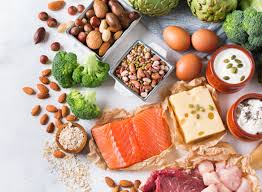
The major proteinaceous components in foods are simple proteins, conjugated proteins, peptides, and non-protein nitrogenous (NPN) compounds (amino acids, urea, ammonia, creatinine, trimethylamine). Proteins and peptides are polymers of different amino acids without or with other organic (e.g., a carbohydrate) or inorganic (e.g., iron) components and contain ca. 15 to 18% nitrogen. Simple food proteins are polymers of amino acids, such as albumins (in egg), globulins (in milk), glutelins (gluten in cereal), prolamins (zein in grains), and albuminoids (collagen in muscle).
They differ greatly in their solubility, which determines the ability of microorganisms to utilize a specific protein. Many microorganisms can hydrolyze albumin, which is soluble in water. In contrast, collagens, which are insoluble in water or weak salt and acid solutions, are hydrolyzed only by a few microorganisms.
As compared with simple proteins, conjugated proteins of food on hydrolysis produce metals (metalloproteins such as hemoglobin and myoglobin), carbohydrates (glycoproteins such as mucin), phosphate (phosphoproteins such as casein), and lipids (lipoproteins such as some in liver). Proteins are present in higher quantities in foods of animal origin than in foods of plant origin.
But plant foods such as nuts and legumes are rich in proteins. Proteins as ingredients can also be added to foods. Microorganisms differ greatly in their ability to metabolize food proteins. Most transport amino acids and small peptides in the cells; small peptides are then hydrolyzed to amino acids inside the cells, such as in some Lactococcus spp. Microorganisms also produce extracellular proteinases and peptidases to hydrolyze large proteins and peptides to small peptides and amino acids before they can be transported inside the cells.
Soluble proteins are more susceptible to this hydrolytic action than are the insoluble proteins. Hydrolysis of food proteins can be either undesirable (texture loss in meat) or desirable (flavor in cheese). Microorganisms can also metabolize different NPN compounds found in foods. Amino acids inside microbial cells are metabolized by different pathways to synthesize cellular components, energy, and various by-products.
Many of these byproducts can be undesirable (e.g., NH3 and H2S production causes spoilage of food, and toxins and biological amines cause health hazards) or desirable (e.g., some sulfur compounds give cheddar cheese flavor). Production of specific metabolic products is used for the laboratory identification of microbial isolates from food.
An example of this is the ability of Escherichia coli to produce indole from tryptophan, which is used to differentiate this species from non-indole-producing related species (e.g., Enterobacter spp.).
Lipids in Foods
Lipids in foods include compounds that can be extracted by organic solvents, some of which are free fatty acids, glycerides, phospholipids, waxes, and sterols. Lipids are relatively higher in foods of animal origin than in foods of plant origin, although nuts, oil seeds, coconuts, and olives have high amounts of lipids. Fabricated or prepared foods can also vary greatly in lipid content.
Cholesterols are present in foods of animal origin or foods containing ingredients from animal sources. Lipids are generally less preferred substrates for the microbial synthesis of energy and cellular materials. Many microorganisms can produce extracellular lipases, which can hydrolyze glycerides to fatty acids and glycerol.
Fatty acids can be transported in cells and used for energy synthesis, whereas glycerol can be metabolized separately. Some microorganisms also produce extracellular lipid oxidases, which can oxidize unsaturated fatty acids to produce different aldehydes and ketones.
In general, molds are more capable of producing these enzymes. However, certain bacterial groups such as Pseudomonas, Achromobacter, and Alcaligenes can produce these enzymes. Lysis of dead microbial cells in foods causes release of intracellular lipases and oxidases, which then can carry out these reactions.
The action of these enzymes are associated with spoilage (such as rancidity) in many foods, whereas in other foods the enzymes are credited for desirable flavors (such as in mold-ripened cheeses). Some beneficial intestinal microorganisms, such as Lactobacillus acidophilus strains, can metabolize cholesterol and are believed to be capable of reducing serum cholesterol levels in humans.
Minerals and Vitamins in Foods
Microorganisms need several elements in small amounts, such as phosphorous, calcium, magnesium, iron, sulfur, manganese, and potassium. Most foods have these elements in sufficient amounts. Many microorganisms can synthesize B vitamins, and foods also contain most B vitamins.
Most foods contain different carbohydrates, proteins, lipids, minerals, and vitamins in sufficient amounts to supply necessary nutrients for the growth of molds, yeasts, and bacteria (especially Gram-negative bacteria normally present in foods).
Some foods may have limited amounts of one or a few nutrients for rapid growth of some Gram-positive bacteria, especially some fastidious Lactobacillus species. When their growth is desired, some carbohydrates, essential amino acids, and B vitamins may be added to a food. It is not possible to control microbial growth in a food by restricting nutrients.
Growth Factors and Inhibitors in Foods
Foods can also have some factors that either stimulate growth or adversely affect growth of microorganisms. The exact nature of growth factors is not known, but they are naturally present in some foods. An example is the growth factors in tomatoes that stimulate growth of some Lactobacillus species. These factors can be added to raw materials during food bioprocessing or to media to isolate some fastidious bacteria from foods.
Foods also contain many chemicals, either naturally or added, that adversely affect microbial growth. Some of the natural inhibitors are lysozyme in egg, agglutinin in milk, and eugenol in cloves. The inhibitors, depending on their mode of action, can prevent or reduce growth.
Water Activity and Microbial Growth
1. Principle of Water Activity
Water activity (Aw) is a measure of the availability of water for biological functions and relates to water present in a food in free form. In a food system, total water or moisture is present in free and bound forms.
Bound water is the fraction used to hydrate hydrophilic molecules and to dissolve solutes, and is not available for biological functions; thus, it does not contribute to Aw. The Aw of a food can be expressed by the ratio of water vapor pressure of the food (P, which is <1) to pure water (which is 1).
2. Water Activity of Foods
The Aw of food ranges from ca. 0.1 to 0.99. The Aw values of some food groups are as follows: cereals, crackers, sugar, salt, dry milk, 0.10 to 0.20; noodles, honey, chocolate, dried egg, jam, jelly, dried fruits, parmesan cheese, nuts, 0.60 to 0.85; fermented sausage, dry cured meat, sweetened condensed milk, maple syrup, 0.85 to 0.93; evaporated milk, tomato paste, bread, fruit juices, salted fish, sausage, processed cheese, 0.93 to 0.98; and fresh meat, fish, fruits, vegetables, milk, eggs, 0.98 to 0.99.
The Aw of foods can be reduced by removing water (desorption) and increased by the adsorption of water, and these two parameters can be used to draw a sorption isotherm graph for a food. The desorption process gives relatively lower Aw values than the adsorption process does at the same moisture content of a food.
This has important implications in the control of a microorganism by reducing the Aw of a food. The Aw of a food can be reduced by several means, such as adding solutes, ions, hydrophilic colloids, and freezing and drying.
3. Water Activity and Microbial Growth
The free water in a food is necessary for microbial growth. It is necessary to transport nutrients and remove waste materials, carry out enzymatic reactions, synthesize cellular materials, and take part in other biochemical reactions, such as hydrolysis of a polymer to monomers (proteins to amino acids). Each microbial species or group has an optimum, maximum, and minimum Aw level for growth.
The minimum Aw values for growth of microbial groups are as follows: most molds, 0.8, with xerophilic molds as low as 0.6; most yeasts, 0.85, with osmophilic yeasts, 0.6 to 0.7; most Gram-positive bacteria, 0.90; and Gram-negative bacteria, 0.93. Some exceptions are growth of Staphylococcus aureus at 0.85 and halophilic bacteria at 0.75.
The Aw need for spore-forming bacteria to sporulate and the spores to germinate and the toxin-producing microorganisms to produce toxins is generally higher than the minimum Aw for their growth. Also, the minimum Aw for growth in an ideal condition is lower than that in a non-ideal condition. As an example, if minimum Aw for growth of a bacterial strain at pH 6.8 is 0.91, then at pH 5.5, it can be 0.95 or more.
When the Aw is reduced below the minimum level required for growth of a microorganism, the cells remain viable for a while. But if the Aw is reduced drastically, microbial cells in a population lose viability, generally rapidly at first and then more slowly.
This information is used to control spoilage and pathogenic microorganisms in food as well as enhance the growth of desirable types in food bioprocessing (adding salt in processing of cured ham) and in laboratory detection of microorganisms (adding salt to media to enumerate S. aureus).
pH and Microbial Growth
1. Principle of pH
pH indicates the hydrogen ion concentrations in a system and is expressed as –log [H+], the negative logarithm of the hydrogen ion or proton concentration. It ranges from 0 to 14, with 7.0 being neutral pH. The [H+] concentrations can differ in a system, depending on what acid is present. Some strong acids used in foods, such as HCl and phosphoric acid, dissociate completely. Weak acids, such as acetic or lactic acids, remain in equilibrium with the dissociated and undissociated forms: [HCl] → [H+] + [Cl–], pH of 0.1 N HCl is 1.1
CH3 COOH [H+] + [CH3COO–], pH of 0.1 N CH3COOH is 2.9
Acidity is inversely related to pH: a system with high acidity has a low pH, and vice versa.
2. pH of Foods
Depending on the type, the pH of a food can vary greatly. On the basis of pH, foods can be grouped as high-acid foods (pH below 4.6) and low-acid foods (pH 4.6 and above). Most fruits, fruit juices, fermented foods (from fruits, vegetables, meat, and milk), and salad dressings are high-acid (low-pH) foods, whereas most vegetables, meat, fish, milk, and soups are low-acid (high-pH) foods.
Tomato, however, is a high-acid vegetable (pH 4.1 to 4.4). The higher pH limit of most low-acid foods remains below 7.0; only in a few foods, such as clams (pH 7.1) and egg albumen (pH 8.5), does the pH exceed 7.0. Similarly, the low pH limit of most high-acid foods remains above 3.0, except in some citrus fruits (lemon, lime, grapefruit) and cranberry juice, in which the pH can be as low as 2.2.
The acid in the foods can either be present naturally (as in fruits), produced during fermentation (as in fermented foods), or added during processing (as in salad dressings). Foods can also have compounds that have a buffering capacity. Foods such as milk or meat, because of good buffering capacity, do not show pH reduction when compared with a vegetable product in the presence of the same amount of acid.
3. pH and Microbial Growth
The pH of a food has a profound effect on the growth and viability of microbial cells. Each species has an optimum and a range of pH for growth. In general, molds and yeasts are able to grow at lower pH than do bacteria, and Gram-negative bacteria are more sensitive to low pH than are Gram-positive bacteria.
The pH range of growth for molds is 1.5 to 9.0; for yeasts, 2.0 to 8.5; for Gram-positive bacteria, 4.0 to 8.5; and for Gram-negative bacteria, 4.5 to 9.0. Individual species differ greatly in lower pH limit for growth; for example, Pediococcus acidilactici can grow at pH 3.8 and Sta. aureus can grow at pH 4.5, but normally Salmonella cannot.
The lower pH limit of growth of a species can be a little higher if the pH is adjusted with strong acid instead of a weak acid (due to its undissociated molecules). Acid-resistant or tolerant strains can acquire resistance to lower pH compared with the other strains of a species (e.g., acid-resistant Salmonella). When the pH in a food is reduced below the lower limit for growth of a microbial species, the cells not only stop growing but also lose viability, the rate of which depends on the extent of pH reduction.
This is more apparent with weak acids, especially with those that have higher dissociation constant (pK), such as acetic acid vs. lactic acid (with pK values 4.8 and 3.8, respectively). This is because at the same pH, acetic acid has more undissociated molecules than lactic acid does. The undissociated molecules, being lipophilic, enter into the cell and dissociate to generate H+ in the cytoplasm.
This causes a reduction in internal pH, which ultimately destroys the proton gradient between the inside and the outside of the cells and dissipates proton motive force as well as the ability of the cells to generate energy.
The information on the influence of pH on growth and viability of microbial cells is important to develop methods to prevent the growth of undesirable microorganisms in food (e.g., in acidified foods, used to produce some fermented foods (e.g., sequential growth of lactic acid bacteria in sauerkraut fermentation), and to selectively isolate aciduric microorganisms from food (e.g., yeasts and molds in a medium with pH 3.5). Acquired acid tolerance by pathogens and spoilage bacteria can impose problems in their control in low-pH foods.
Redox Potential, Oxygen, and Microbial Growth
1. Principle of Redox Potential
The redox or oxidation–reduction (O–R) potential measures the potential difference in a system generated by a coupled reaction in which one substance is oxidized and a second substance is reduced simultaneously. The process involves the loss of electrons from a reduced substance (thus it is oxidized) and the gain of electrons by an oxidized substance (thus it is reduced).
The electron donor, because it reduces an oxidized substance, is also called a reducing agent while the electron recipient is called an oxidizing agent. The redox potential, designated as Eh, is measured in electrical units of millivolts (mV). In the oxidized range, it is expressed in +mV, and in reduced range in –mV. In biological systems, the oxidation and reduction of substances are the primary means of generating energy.
If free oxygen is present in the system, then it can act as an electron acceptor. In the absence of free oxygen, oxygen bound to some other compound, such as NO3 and SO4 can accept the electron. In a system where no oxygen is present, other compounds can accept the electrons. Thus, presence of oxygen is not a requirement of O–R reactions.
2. Redox Potential in Foods
The redox potential of a food is influenced by its chemical composition, specific processing treatment given, and its storage condition (in relation to air). Fresh foods of plant and animal origin are in a reduced state, because of the presence of reducing substances such as ascorbic acid, reducing sugars, and –SH group of proteins.
Following stoppage of respiration of the cells in a food, oxygen diffuses inside and changes the redox potential. Processing, such as heating, can increase or decrease reducing compounds and alter the Eh.
A food stored in air will have a higher Eh (+mV) than when it is stored under vacuum or in modified gas (such as CO2 or N2). Oxygen can be present in a food in the gaseous state (on the surface, trapped inside) or in dissolved form.
2. Redox Potential and Microbial Growth
On the basis of their growth in the presence and absence of free oxygen, microorganisms have been grouped as aerobes, anaerobes, facultative anaerobes, or microaerophiles. Aerobes need free oxygen for energy generation, as the free oxygen acts as the final electron acceptor through aerobic respiration.
Facultative anaerobes can generate energy if free oxygen is available, or they can use bound oxygen in compounds such as NO3 or SO4 as final electron acceptors through anaerobic respiration. If oxygen is not available, then other compounds are used to accept the electron (or hydrogen) through (anaerobic) fermentation.
An example of this is the acceptance of hydrogen from NADH2 by pyruvate to produce lactate. Anaerobic and facultative anaerobic microorganisms can only transfer electrons through fermentation.
Many anaerobes (obligate or strict anaerobes) cannot grow in the presence of even small amounts of free oxygen as they lack the superoxide dismutase necessary to scavenge the toxic oxygen free radicals. Addition of scavengers, such as thiols (e.g., thiolglycolate), helps overcome the sensitivity to these free radicals.
Microaerophiles grow better in the presence of less oxygen. Growth of microorganisms and their ability to generate energy by the specific metabolic reactions depend on the redox potential of foods. The Eh ranges at which different groups of microorganisms can grow are as follows: aerobes, +500 to +300 mV; facultative anaerobes, +300 to +100 mV; and anaerobes, +100 to –250 mV or lower.
However, this varies greatly with concentrations of reducing components in a food and the presence of oxygen. Molds, yeasts, and Bacillus, Pseudomonas, Moraxella, and Micrococcus genera are some examples that have aerobic species. Some examples of facultative anaerobes are the lactic acid bacteria and those in the family Enterobacteriaceae.
The most important anaerobe in food is Clostridium. An example of a microaerophile is Campylobacter spp. The Eh range indicates that in each group some species are stricter in their Eh need than others.
Although most molds are strict aerobes, a few can tolerate less aerobic conditions. Similarly, yeasts are basically aerobic, but some can grow under low Eh (below +300 mV). Many clostridial species can grow at Eh +100 mV, but some need –150 mV or less. The presence or absence of oxygen and the Eh of food determine the growth capability of a particular microbial group in a food and the specific metabolic pathways used during growth to generate energy and metabolic by-products.
This is important in microbial spoilage of a food (such as putrification of meat by Clostridium spp. under anaerobic conditions) and to produce desirable characteristics of fermented foods (such as growth of Penicillium species in blue cheese under aerobic conditions). This information is also important to isolate microorganisms of interest from foods (such as Clostridium laramie, a strict anaerobe from spoiled meat) in the laboratory.
Read Also: Plant Breeding For Disease and Pest Resistance and Their Inheritance
Extrinsic Factors Influencing Microbial Growth
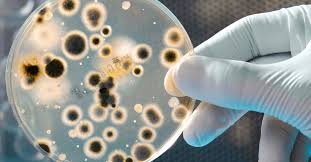
Extrinsic factors important in microbial growth in a food include the environmental conditions in which it is stored. These are temperature, relative humidity, and gaseous environment. The relative humidity and gaseous condition of storage, respectively, influence the Aw and Eh of the food.
Temperature and Microbial Growth
1. Principle of Temperature Influence
Microbial growth is accomplished through enzymatic reactions. It is well known that within a certain range, with every 10°C rise in temperature, the catalytic rate of an enzyme doubles. Similarly, the enzymatic reaction rate is reduced to half by decreasing the temperature by 10°C. This relationship changes beyond the growth range. Because temperature influences enzyme reactions, it has an important role in microbial growth in food.
2. Food and Temperature Exposure
Foods are exposed to different temperatures from the time of production until consumption. Depending on processing conditions, a food can be exposed to high heat, from 65°C (roasting of meat) to more than 100°C (in ultrahigh temperature processing). For long-term storage, a food can be kept at 5°C (refrigeration) to –20°C or below (freezing).
Some relatively stable foods are also kept between 10 and 35°C (cold to ambient temperature). Some ready-to-eat foods are kept at warm temperature (50 to 60°C) for several hours. Different temperatures are also used to stimulate desirable microbial growth in food fermentation.
3. Microbial Growth and Viability at Different Temperatures
Microorganisms important in foods are divided into three groups on the basis of their temperature of growth, each group having an optimum temperature and a temperature range of growth:
- Thermophiles (grow at relatively high temperature), with optimum ca. 55°C and range from 45 to 70°C.
- Mesophiles (grow at ambient temperature), with optimum at 35°C and range 10 to 45°C.
- Psychrophiles (grow at cold temperature), with optimum at 15°C and range –5 to 20°C.
However, these divisions are not clear-cut and overlap each other. Two other terms used in food microbiology are very important with respect to microbial growth at refrigerated temperature and survival of microorganisms to low heat treatment or pasteurization, because both methods are widely used in the storage and processing of foods.
Psychrotrophs are microorganisms that grow at refrigerated temperature (0 to 5°C), irrespective of their optimum range of growth temperature. They usually grow rapidly between 10 and 30°C. Molds; yeasts; many Gram-negative bacteria from genera Pseudomonas, Achromobacter, Yersinia, Serratia, and Aeromonas; and Gram-positive bacteria from genera Leuconostoc, Lactobacillus, Bacillus, Clostridium, and Listeria are included in this group.
Microorganisms that survive pasteurization temperature are designated as thermodurics. They include species from genera Micrococcus, Bacillus, Clostridium, Lactobacillus, Pediococcus, and Enterococcus. Bacterial spores are also included in this group.
They have different growth temperatures and many can grow at refrigerated temperature as well as thermophilic temperature. When the foods are exposed to temperatures beyond the maximum and minimum temperatures of growth, microbial cells die rapidly at higher temperatures and relatively slowly at lower temperatures.
Microbial growth and viability are important considerations in reducing food spoilage and enhancing safety against pathogens, as well as in food bioprocessing. Temperature of growth is also effectively used in the laboratory to enumerate and isolate microorganisms from foods.
Frequently Asked Questions
- What are intrinsic factors influencing microbial growth in foods?
Intrinsic factors include nutrients, growth factors, inhibitors, water activity, pH, and oxidation-reduction potential, all of which are inherent to the food environment. - How do carbohydrates in foods affect microbial growth?
Carbohydrates serve as energy sources for microorganisms, with varying utilization based on the type and the microorganism’s ability to metabolize them, leading to spoilage or desirable fermentation products. - Why is water activity important for microbial growth?
Water activity determines the availability of free water for microbial functions like nutrient transport and enzymatic reactions, with each microbial group having specific minimum Aw requirements. - What role does pH play in controlling microorganisms in foods?
pH affects microbial growth and viability, with molds and yeasts tolerating lower pH than bacteria, and it is used in food preservation, fermentation, and microbial isolation. - How does redox potential influence microbial groups in foods?
Redox potential determines whether aerobes, anaerobes, facultative anaerobes, or microaerophiles can grow, impacting spoilage, fermentation, and pathogen control. - What are extrinsic factors affecting microbial growth?
Extrinsic factors are storage conditions like temperature, relative humidity, and gaseous environment, which influence the food’s Aw and Eh. - How does temperature impact microbial growth and food safety?
Temperature divides microorganisms into thermophiles, mesophiles, and psychrophiles, and is crucial for preservation methods like refrigeration, freezing, and pasteurization to control growth and viability. - What are psychrotrophs and thermodurics in food microbiology?
Psychrotrophs grow at refrigerated temperatures, contributing to spoilage in cold storage, while thermodurics survive pasteurization, affecting heat-treated food stability.
Do you have any questions, suggestions, or contributions? If so, please feel free to use the comment box below to share your thoughts. We also encourage you to kindly share this information with others who might benefit from it. Since we can’t reach everyone at once, we truly appreciate your help in spreading the word. Thank you so much for your support and for sharing!