


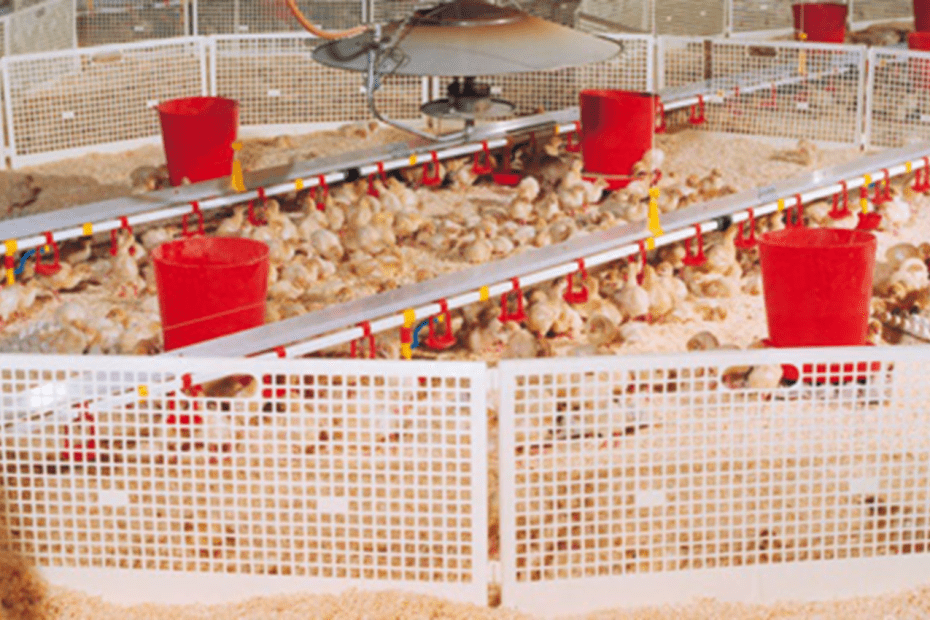
A brooder house is where young birds spend their first 3 to 4 weeks of life. This is when they’re most vulnerable and need everything controlled carefully. Temperature, humidity, ventilation, feed, and water all have to be right. Get any of these wrong and you’ll see poor growth, high mortality, or health problems that haunt the flock for the rest of their lives.
Some farmers ask whether they should build a separate brooder house or just section off part of the grower pen. Unless space is seriously limited, keep them separate. Here’s why that matters.
When you house different age groups separately, each group gets the specific conditions they need. Chicks require much higher temperatures than older birds. They need more light. Their feeding and watering systems are different. Trying to meet the needs of both age groups in the same space means compromising on both.
Disease control is the other major reason for separation. Older birds carry pathogens that don’t bother them but can devastate young chicks. The immune systems of day-old chicks haven’t developed yet. They pick up infections easily. Keeping chicks away from older birds reduces disease transmission dramatically.
A proper brooder house is more than just a heated enclosure. Traditional chick brooders are wood-framed, wood-floored structures built on skids so you can move them. They use electric or oil-fired stoves for heat. Chicks stay in these houses until about six weeks old, when they no longer need supplemental heat.
Commercial operations use much larger facilities. These houses have multiple brooder units, underfloor heating or heat lamps, fan ventilation systems, automatic waterers and feeders, and doors big enough for tractors and litter-removing equipment to pass through. The scale is different but the principles stay the same.
The first 72 hours are critical. Mistakes made during this period can’t be fixed later. Chicks that get off to a poor start never fully recover. They grow more slowly, convert feed less efficiently, and have higher mortality throughout their lives. Getting brooding right from the start determines whether you have a top-performing flock or one that struggles.
This guide covers the seven fundamentals of successful brooding. Each one matters. You can’t skip any of them and expect good results. We’ll examine litter management, temperature control, air quality monitoring, ventilation strategies, water quality and availability, feed access, and lighting programs. You’ll learn specific targets for each factor and practical steps to achieve them.
Modern poultry farming operates by the hour, not by the day. Small temperature differences of just 0.5 to 1.0 degrees Fahrenheit affect chick health and growth. Humidity variations change moisture levels and ammonia buildup. Ventilation adjustments impact air quality and bird comfort. You need to understand these systems and monitor them constantly during the brooding period.
The information here comes from commercial brooding practices that have been tested and refined over decades. These aren’t theories. They’re proven methods that produce consistent results when applied correctly. Whether you’re raising 100 chicks or 100,000, these principles apply.
Read Also: Best Type of Poultry to Raise for Commercial Production and their Time of Maturity
Brooding Basic Tips
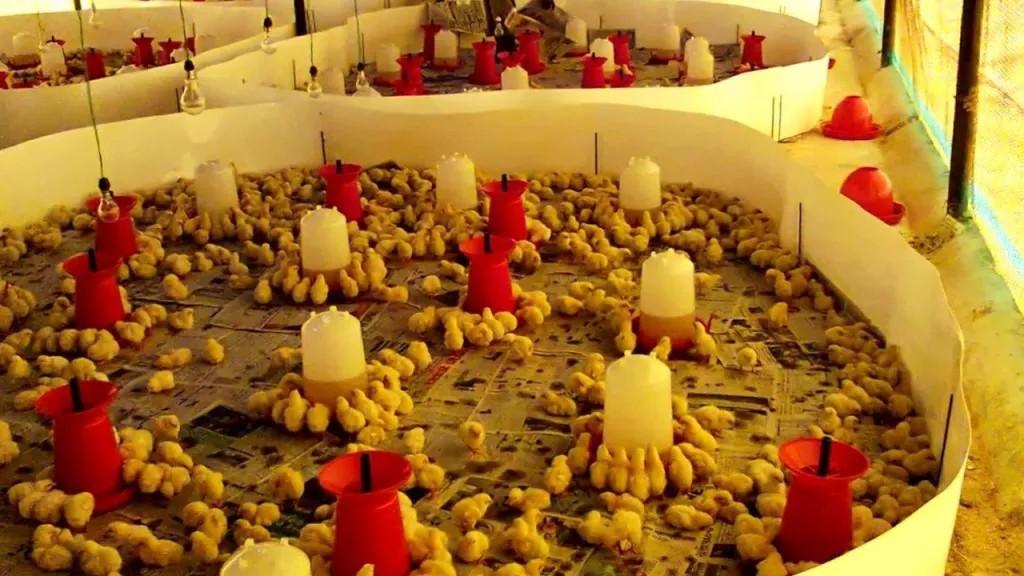
Getting chicks off to a strong start requires attention to seven critical factors. Each one builds on the others. Skip one and you compromise the entire operation.
1. Litter Management
Litter conditions determine flock performance before the chicks even arrive. This foundation affects everything else you do during brooding.
For best results, place chicks on a consistent minimum of four inches of dry bedding at 88-92°F. Anything less causes performance losses proportional to how far you miss these targets. If you’re an inch short on bedding depth or five degrees low on temperature, expect to see the effects in growth rates and feed conversion.
Starting chicks on used litter presents challenges. You have to reduce the moisture content and condition the litter to release as much ammonia as possible before placement. Leaving litter to sit cold and wet between flocks is asking for trouble.
Remove caked litter as soon as birds leave the previous flock. Then use windrowing, litter conditioning equipment, or heating with attic inlets to dry things out. Ventilate between flocks to remove moisture and ammonia. This preparation work pays off when the next group of chicks arrives.
Top-dressing the brooding chamber helps too. Apply a company-approved ammonia-controlling litter amendment at the manufacturer’s suggested rate and method. These products make a real difference in air quality.
The goals are simple. Provide comfortable bedding for the chicks. Reduce the effects that litter moisture and ammonia have on your environmental control systems. When you have to manage heating and ventilation to compensate for poor litter, everything becomes more difficult and expensive. You can’t provide the optimum growing environment chicks need when you’re fighting bad litter conditions.
Think of it this way: litter condition sets the tone for air quality, heating, and ventilation through the entire flock’s life. Good litter sets the stage for success.
2. Temperature of Brooder House
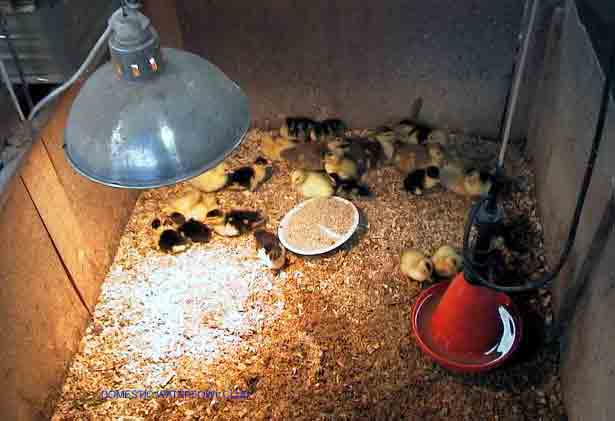
Temperature differences as small as 0.5 to 1.0°F impact chick health, behavior, and growth. That precision matters more than most people realize.
Electronic controller technology gives you the ability to monitor and manage temperature automatically on a 24-hour basis. This is a huge advantage over traditional manual thermostat control. But controllers only work as well as the information they receive. Garbage in equals garbage out.
Sensor placement is critical. If the ideal starting temperature is 90°F, that means 90°F at the feed and water lines, as consistently as possible. The right placement depends on your heating system type and the spacing of the vents in the house.
Proper temperatures also vary according to individual flock requirements. A good manager monitors the chicks constantly and makes appropriate adjustments based on bird behavior. Are they huddling together? They’re cold. Are they panting and spreading out away from the heat source? They’re too hot. The birds tell you what they need if you pay attention.
Don’t expect temperature adjustments to fix every problem though. Temperature gets the most attention because it’s easy to monitor and control. But the other brooding basics can be just as important to flock performance.
3. Air Quality
Excess ammonia or carbon dioxide, along with incorrect relative humidity, become serious problems during winter flocks especially. The only solution once these problems develop is to increase ventilation. But ventilation decisions need an accurate assessment of conditions.
Neither controller systems nor growers are equipped to monitor air quality factors accurately without additional tools. You need help here.
For relative humidity monitoring, buy inexpensive sensors from local hardware stores. Place them near mid-house away from heaters and air inlets. Some controllers can be fitted with humidity sensors too. The goal is to maintain in-house relative humidity at 50 to 65 percent during brooding as long as possible.
If relative humidity drops below 50 percent, deduct 15 seconds from the minimum ventilation run-time. If it rises above 65 percent, add 15 seconds of run-time. Small adjustments make a difference.
Early morning is an excellent time to judge air quality and make ventilation adjustments if needed. If you’re unsure, adjust one house and compare conditions the next day.
Ammonia and carbon dioxide levels impact bird health and growth but are harder to measure accurately. Growers become accustomed to smelling ammonia, so the nose test fails. Birds can suffer and even go blind before you realize there’s a serious problem.
Carbon dioxide is odorless. It takes a while for humans to experience symptoms like headaches, nausea, and sleepiness from excess levels. You typically have to make judgments based on observing bird behavior.
If you have accurate monitoring equipment, keep ammonia levels below 25ppm. Add a minimum of 15 seconds of additional minimum ventilation run-time to houses testing above 25ppm. Add 30 seconds for levels over 100ppm.
Carbon dioxide levels should stay below 3,000ppm. High levels usually occur when pre-heating and brooding chicks in tight houses during cold weather. Heating systems run constantly and ventilation run time is at its lowest.
Most ammonia and carbon dioxide problems can be minimized through proper litter management and adequate minimum ventilation, including control of relative humidity.
Read Also: Vent Pecking in Poultry and How to Control It
4. Ventilation
Good environmental control during brooding requires properly executing the minimum ventilation basics. Three factors work together here.
I. Pressure: A good rule of thumb is that for every 0.01 inches of static pressure measured in water column, air travels about two feet. Getting air to the middle of a 40-foot-wide house near the ceiling requires about 0.10 inches of pressure. This means your house must pull 0.15 inches or more during a tightness test with a fan power of 1cfm per square foot of floor space.
ii. Inlet Door Opening: The required air pressure must combine with proper perimeter inlet door opening to throw air to the center of the house. Too little or too wide an opening results in outside air blowing directly onto feed and water lines and onto the chicks. Start by manually latching-closed all or most vents not located in the brood area. Then you may need to latch additional vents inside the brood area to achieve proper airflow with desired fan power (typically 1.0 to 1.5cfm per square foot). You need the correct inlet door opening and static pressure to achieve the desired air throw and mixing. Use a smoke emitter to show exactly where the air is going. Do whatever it takes to get air to the peak of the ceiling for good mixing. The importance of adjusting vent door openings properly to achieve good moisture removal cannot be overstated.
iii. Fan Run Time: Calculate the correct amount of minimum ventilation fan run time. This varies based on house size, bird age, and environmental conditions.
5. Water Quality and Availability
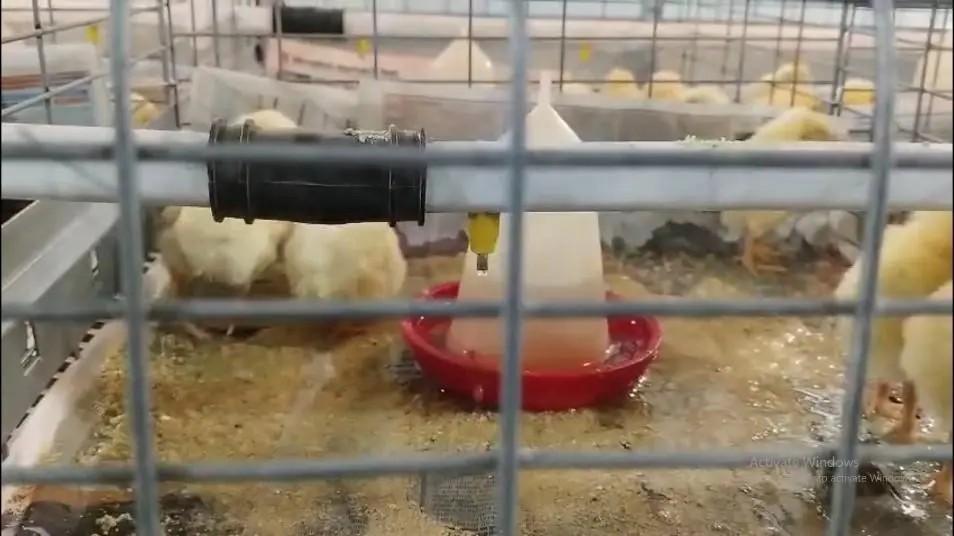
Having high-quality water freely available makes a huge difference in getting chicks off to a good start. One of the first things you should do when performance is inconsistent is have a water sample analyzed.
Contact your company or local County Extension Office for help with water sampling and analysis. If substantial water quality problems show up, consult a respected water quality expert.
Water quantity problems can be difficult to diagnose. A common-sense approach is to do a good job of routine drinker system maintenance. The importance of getting water into chicks as soon as possible cannot be overstated. Clean water systems and activate nipple drinkers before every flock arrives.
Pay close attention to initial drinker height. Make adjustments that reflect bird growth on a routine basis. Chicks consume much less water than older birds, so flush drinker lines are often in the beginning to keep water fresh and promote greater consumption. Monitor water filters, regulators, and any possible restriction points before and during each flock.
Don’t assume water quality and availability are adequate. Verify them.
6. Feed Availability
Feed availability runs hand in hand with water availability and is equally important. The quicker chicks access and consume quality feed, the better start they have.
The actual amount an individual chick consumes in the first seven days is very small. The tonnage of feed in the house on day one matters less than providing access for every chick to easily get to feed. Feeding space and opportunity are most important.
Chicks having sufficient access to feed is more than just a feeder pan, cha ick tray, and supplemental feed lid management. Environmental factors play a huge role. If a chick is uncomfortable near the feed trays or lines because it’s too hot, cold, or in a draft, it won’t eat or drink sufficiently. This is a severe problem that must be corrected.
Many companies look for about 95 percent of chicks with feed and water in their crops after 24 hours. Remember, if a chick must choose between comfort and feed or water, it will choose comfort. Make sure every chick gets feed and water quickly and easily.
7. Lighting
Chicks grow, gain, and perform better the quicker they access feed and water. Light stimulation encourages feed and water consumption.
Specific lighting programs are under constant revision and vary from one integrator to another. However, the most common recommendation for light intensity when lighting is on calls for a minimum average of three or more foot-candles for the first seven to 10 days, measured along the feed lines between grow lights.
Large shadows, blown bulbs, and insufficient lighting intensity and uniformity are problems that can be identified and corrected with a simple digital light meter costing $150-200. Don’t assume your light intensity is adequate. Verify it. Buy a meter and calibrate the dimmer in each house. Many growers are surprised at how far off their settings are after they measure them with a meter.
The Bottom Line on Brooding
Each of these brooding basics has evolved into what the industry considers standard procedures for brooding chicks today. Using the tools and equipment available to follow these procedures is not just the best but the only way to give your chicks the start they need to become a top-performing flock.
Growing chickens today is not a matter of managing by the day but by the hour. Mistakes made in the first 72 hours cannot be made up later in the flock. Taking the time to do brooding right pays off at catch time.
Reference: https://thepoultrysite.com/articles/the-seven-basics-of-better-brooding
Summary on Brooder House Management
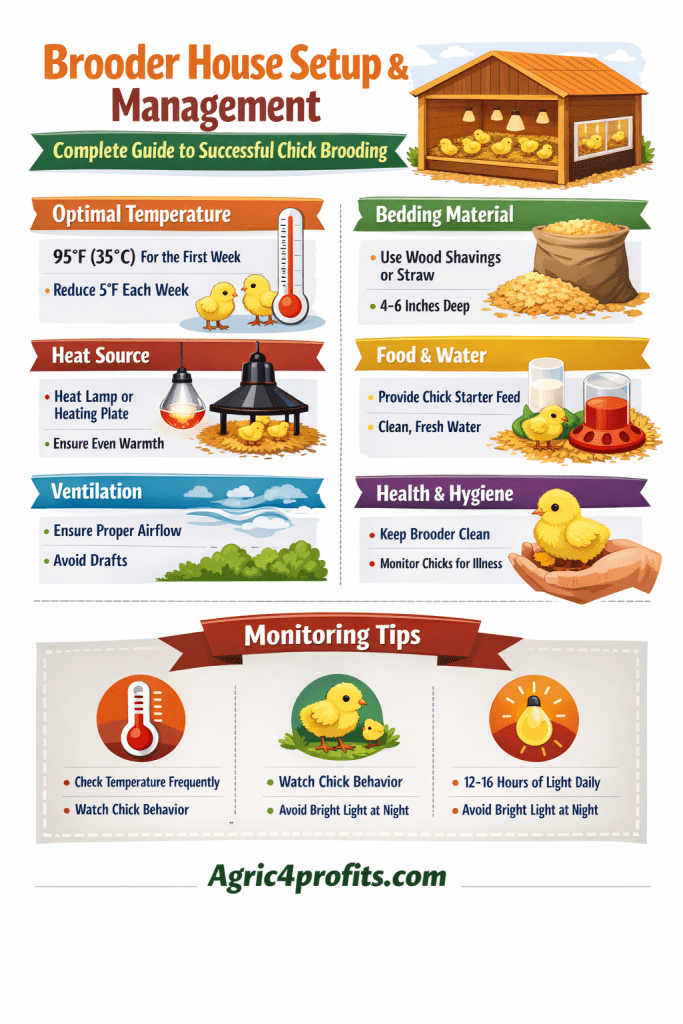
| Aspect | Key Points |
|---|---|
| Brooder House Purpose | Housing for chicks first 3-4 weeks; provides warmth, ventilation, feed, water |
| Separation from Growers | Better disease control, allows age-appropriate conditions for each group |
| Brooder Types | Wood-framed movable structures or large commercial facilities with automation |
| Litter Requirements | Minimum 4 inches dry bedding at 88-92°F; remove caked litter between flocks |
| Temperature Precision | 0.5-1.0°F differences impact health and growth; place sensors at feed/water lines |
| Humidity Target | Maintain 50-65% relative humidity; adjust ventilation run-time accordingly |
| Ammonia Control | Keep below 25ppm; use litter amendments and proper ventilation |
| Carbon Dioxide Limit | Below 3,000ppm; highest during pre-heating in tight houses |
| Ventilation Pressure | 0.15+ inches static pressure; 1cfm per square foot floor space |
| Water Access | Clean systems before flock; activate drinkers; adjust height as birds grow |
| Feed Access | 95% of chicks should have feed/water in their crops after 24 hours |
| Lighting Intensity | Minimum 3 foot-candles for first 7-10 days along feed lines |
| Critical Period | First 72 hours determine flock performance; mistakes can’t be corrected later |
Frequently Asked Questions About Brooder House Management
1. How long do chicks need to stay in the brooder house?
Chicks typically need supplemental heat for about six weeks. The exact timing depends on weather conditions and housing type. In warm climates or during summer, they may transition earlier. In cold weather, they might need heat longer. Watch the birds. When they stop huddling for warmth and spread out comfortably at lower temperatures, they’re ready to move. Most commercial operations move birds to grower houses around 3-4 weeks, but heat may continue for another couple of weeks.
2. What’s the ideal starting temperature for day-old chicks?
Start at 90°F measured at the feed and water lines where chicks spend their time. The temperature at the ceiling doesn’t matter. What matters is the temperature where the birds are. Some operations start slightly higher at 92°F and reduce gradually. Watch bird behavior. If they huddle tightly under the heat source, they’re cold. If they pant and move away from the heat, they’re too hot. Adjust based on what the birds tell you.
3. Why is litter depth so important?
Four inches of litter provides insulation between chicks and the cold floor. Thinner litter means chicks lose body heat to the ground. This forces them to use energy for staying warm instead of growth. Thin litter also gets saturated with moisture faster, leading to ammonia problems and poor air quality. The investment in proper litter depth pays for itself in better performance.
4. How do I know if my ventilation is working properly?
Use a smoke emitter to visualize airflow. The smoke should travel from the inlet vents up to the ceiling peak, then spread across and down. If smoke drops immediately or blows directly onto birds, your inlet opening or static pressure is wrong. Check static pressure with a manometer. Measure at 0.15 inches or more during minimum ventilation. If you can’t achieve this, your house is too leaky or your fans are undersized.
5. Can I reuse litter for the next flock?
Yes, but you must prepare it properly. Remove all caked litter immediately after birds leave. Use litter conditioning equipment or windrowing to break it up and expose it to air. Heat the house and ventilate to dry the litter and release ammonia. Apply approved litter amendments. Test the prepared litter. If it’s dry, has low ammonia, and is at the proper temperature when chicks arrive, reused litter works fine. Many operations successfully reuse litter for multiple flocks.
6. What causes high ammonia levels and how do I fix them?
Wet litter is the main cause. Moisture from bird droppings combines with nitrogen in the manure to produce ammonia gas. Poor ventilation allows ammonia to build up. Fix it by improving litter management, using ammonia-controlling amendments, and increasing ventilation run-time. Prevention is easier than correction. Start with dry litter, maintain proper humidity, and ventilate adequately from day one.
7. How much light do chicks really need?
Three foot-candles minimum along the feed lines for the first 7-10 days. This is brighter than many people realize. Measure it with a light meter, don’t guess. Insufficient lighting means chicks can’t find feed and water easily. They grow more slowly and convert feed poorly. After the first week or two, you can reduce intensity and adjust the lighting program based on your integrator’s recommendations.
8. Should I use heat lamps or whole-house heating?
It depends on your operation size and budget. Heat lamps (radiant brooders) work well for small flocks and allow chicks to move toward or away from the heat as needed. Whole-house heating with forced air systems is more common in commercial operations. It provides more uniform temperature but requires better ventilation management. Many operations use a combination, with supplemental radiant heat in the brooding area and whole-house heating for base temperature.
9. Why do the first 72 hours matter so much?
Chicks that don’t eat and drink adequately in the first three days never fully recover. Their digestive systems don’t develop properly. They grow more slowly for their entire lives. Early access to feed and water also stimulates immune system development. Poor early starts lead to higher mortality, worse feed conversion, and uneven flock performance. You can’t make up for a bad start later.
10. How often should I check on newly arrived chicks?
During the first 24-48 hours, check every 2-3 hours minimum. Look at bird distribution and behavior. Check crops to ensure chicks are eating and drinking. Monitor temperature and ventilation. Adjust as needed. After the first few days, you can reduce frequency to 3-4 times daily, but never go more than 12 hours without checking. Modern commercial operations often have remote monitoring systems that alert managers to problems, but physical inspection still matters.
Do you have any questions, suggestions, or contributions? If so, please feel free to use the comment box below to share your thoughts. We also encourage you to kindly share this information with others who might benefit from it. Since we can’t reach everyone at once, we truly appreciate your help in spreading the word. Thank you very much for your support and for sharing!
Read Also: Anatomy of Fishes: Female Fish and their Reproductive Strategies