


Fish pond management is critical for maximizing fish production while maintaining a healthy aquatic environment. Effective weed control, liming, fertilization, test cropping, harvesting, and water quality maintenance ensure high yields and fish health. This article provides detailed practices to achieve sustainable fish farming success.
Proper management enhances pond productivity by optimizing nutrient availability and controlling weeds and pests. Regular monitoring and maintenance prevent issues like low oxygen levels or disease outbreaks. By adopting these practices, farmers can achieve consistent growth and profitability in fish farming operations.
Weed Control in Fish Ponds
Aquatic weeds, or macrophytes, interfere with fish pond operations like feeding, test cropping, and harvesting. They compete with phytoplankton for nutrients, depriving planktivorous fish of food, provide havens for pests, and increase evapo-transpiration. Effective weed control is essential for maintaining pond productivity.
Weeds include floating plants like water lettuce, pondweed, and filamentous algae, as well as submerged, emergent, and marginal vegetation. Controlling these weeds requires a combination of chemical, biological, and mechanical methods to ensure a balanced pond ecosystem and optimal fish growth.
A. Types of Aquatic Weeds
1. Floating Plants: Examples include water lettuce (Pistia stratiotes) and pondweed (Lemna spp.), which float on the surface and block sunlight.
2. Submerged Weeds: Plants like Ceratophyllum grow underwater, competing for nutrients.
3. Emergent Plants: Water lilies (Nymphaea lotus) grow partially above water, affecting pond ecology.
4. Marginal Vegetation: Fringe plants grow along pond edges, contributing to nutrient competition.
B. Chemical Control Methods
Fertilizer application promotes dense plankton growth, shading the pond bottom and limiting solar energy to submerged and emergent weeds. This method works best in ponds deeper than 60 cm. Herbicides like copper sulphate and synthetic algicides (e.g., Simazine, Aquazine) control filamentous algae and phytoplankton.
Herbicides are safe for fish at recommended concentrations but can cause oxygen depletion as weeds decay. Repeated applications may be needed as herbicide levels drop, allowing weed regrowth. Synthetic algicides have longer residual action compared to copper sulphate but still risk low oxygen levels.
C. Biological and Mechanical Control
1. Biological Control: Grass-eating fish like grass carp (Ctenopharyngodon idella), Tilapia zilli, and Heterotis niloticus control weeds in polyculture systems.
2. Manual Removal: Hand-pulling weeds is effective for small infestations.
3. Mechanical Removal: Amphibious machines designed for weed removal offer efficient control for larger ponds. These methods reduce chemical use and maintain ecological balance.
Read Also: Guide on How to Start a No-till Garden
Liming for Pond Health
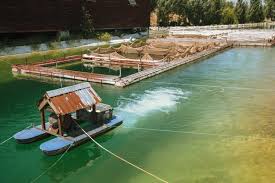
Liming, applied two weeks before refilling a pond, involves spreading lime over the pond bottom and working it into the surface layer. It raises the pH of acidic soils and water, accelerates waste decomposition, mobilizes nutrients, and eradicates disease vectors, promoting fish health.
Proper liming ensures a suitable environment for fish growth. Different lime types and application rates depend on soil pH, with hydrated lime being the most concentrated and cost-effective. Care must be taken to avoid over-liming, which can bind phosphates and reduce nutrient availability.
A. Functions of Liming
1. pH Adjustment: Raises pH of acidic soils and water, supporting fish growth.
2. Nutrient Mobilization: Accelerates decomposition of waste, releasing nutrients from pond soil.
3. Disease Control: Elevates pH above tolerance levels for disease vectors and parasite spores.
4. Soil Improvement: Enhances soil structure for better nutrient availability.
B. Types and Application Rates
1. Crushed Limestone: Apply at 1200 kg/ha for neutral soils.
2. Agricultural Lime: Use 2500 kg/ha for neutral soils or 4.5 tonnes/ha for pH 4.5 or lower.
3. Hydrated Lime: Apply at 100 kg/ha, the most concentrated and cost-effective option.
4. Quicklime: Use 200 kg/ha, but handle carefully due to its caustic nature.
C. Liming Considerations
For previously limed ponds, annual liming requires 20-25% of the initial rate. Over-liming should be avoided to prevent phosphate binding through insoluble calcium compounds. Hydrated lime is preferred for its efficiency, while quicklime requires caution to avoid skin burns during application.
Fertilization for Pond Productivity
Pond productivity depends on nutrient availability, which fertilization enhances to support fish growth without supplementary feeds. Phosphorus, nitrogen, and potassium are key nutrients for stimulating phytoplankton and zooplankton, forming the base of the food chain for fish.
Organic and inorganic fertilizers serve different roles in pond ecosystems. Inorganic fertilizers provide immediate nutrients, while organic fertilizers release nutrients slowly, supporting both autotrophic and detrital pathways. Application rates vary based on pond age and condition.
A. Inorganic Fertilizers
Inorganic fertilizers, like NPK mixtures (e.g., 20-20-20 or 20-20-5), dissolve quickly in pond water, stimulating phytoplankton and zooplankton growth. Phosphorus is the main limiting nutrient, supplied as basic slag, single super-phosphate, or triple super-phosphate for optimal results.
Food Chain with Inorganic Fertilizers:
Solar radiation → Inorganic fertilizers → Phytoplankton → Zooplankton → Fish.
B. Organic Fertilizers
Organic fertilizers, such as manure from cows, pigs, chickens, or crop residues like rice husk, release nutrients slowly as they decompose. They stimulate both phytoplankton and detrital pathways, and some fish feed directly on manure, utilizing surface bacteria as a food source.
Food Chain with Organic Fertilizers:
Solar radiation → Organic fertilizers → Phytoplankton → Zooplankton → Detritus → Fish → Benthic invertebrates.
C. Fertilizer Application Rates
1. Organic Fertilizers:
- i. Cow Dung: 500-700 kg/ha weekly for nursery ponds, 300-500 kg/ha for production ponds.
- ii. Pig Dung: 500-700 kg/ha weekly for nursery ponds, 600-1200 kg/ha for production ponds.
- iii. Chicken Dung: 500-700 kg/ha weekly for nursery ponds, 100-230 kg/ha for production ponds.
2. Inorganic Fertilizers: - i. 20-20-20 NPK: 20-40 kg/ha bi-weekly for nursery ponds, 40-50 kg/ha for production ponds.
3. Reduced Rates: In older ponds, nutrient recycling reduces application rates significantly.
Read Also: How to Start an Aquaponics System
Test Cropping for Fish Health
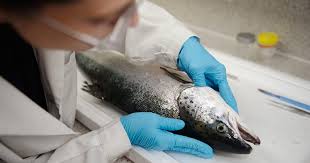
Test cropping involves checking fish survival, growth, and productivity to prevent high mortality from cannibalism or other factors. Conducted monthly or bi-monthly, it ensures healthy fish populations and informs management decisions for optimal pond performance.
This practice requires careful handling to minimize stress and maintain fish health. Observations during test cropping help farmers identify issues early, ensuring sustainable production and reducing losses in fish farming systems.
A. Test Cropping Procedures
1. Disease Monitoring: Check fish for disease to prevent contamination.
2. Careful Handling: Handle fish gently to avoid injury.
3. Temperature Control: Prevent exposure to sunlight to keep fish cool.
4. Size Separation: Group fish by size into different ponds to reduce cannibalism.
B. Equipment and Techniques
1. Appropriate Nets: Use nets that avoid damaging fish during removal.
2. Water Buckets: Keep buckets of water nearby to maintain fish vitality during examination.
3. Stress Reduction: Limit test cropping frequency to monthly or bi-monthly to minimize stress.
C. Importance of Test Cropping
Test cropping identifies potential issues like disease or size disparities early, allowing corrective actions. It ensures fish reach marketable sizes efficiently, improving overall pond productivity and reducing losses due to mortality or poor growth.
Harvesting Fish from Ponds
Harvesting involves removing cultured fish from the pond, typically after 6-9 months, depending on species, stocking size, and management. Test cropping determines when at least half the stock reaches marketable size (300-500g for carp, 200-250g for tilapia).
Harvesting can be partial or complete, depending on the purpose, such as sale, experimentation, or transfer. Proper techniques and timing ensure high-quality fish and efficient pond management for sustained production.
A. Types of Harvesting
1. Partial Harvesting: Involves removing some fish by lowering water levels for easy wading.
2. Complete Harvesting: Drains the pond completely to remove all or most fish.
B. Harvesting Criteria
1. Gear Selection: Choose appropriate gear based on fish size and pond shape.
2. Pond Shape: Consider pond design for efficient harvesting.
3. Fish Size and Type: Ensure fish meet marketable size requirements.
4. Timing: Harvest early morning when oxygen levels are low to reduce stress.
C. Daily Monitoring Post-Stocking
1. Stress Indicators: Check for gasping, poor feeding, erratic swimming, or lethargy.
2. Water Quality: Monitor oxygen levels, pH, and transparency daily.
3. Pond Infrastructure: Inspect banks, dams, and outlets for erosion or leaks.
4. Weed and Predator Control: Clear excessive weeds and remove predators like snakes or birds.
Water Quality Maintenance
Water quality directly impacts fish survival, growth, and production. Regular monitoring of depth, transparency, dissolved oxygen, pH, smell, and pollutants ensures a healthy pond environment. Proper management prevents stress and supports optimal fish growth.
Farmers must detect and address changes in water quality promptly. Maintaining steady water levels, appropriate transparency, and sufficient oxygen is critical. Pollution control and aeration are essential for intensive systems with high fish densities.
A. Water Depth Management
Maintain steady water depth through regular replenishment to counter losses from seepage and evaporation. Low water levels expose fish to predation and temperature fluctuations, while high levels risk dam overflow. Depths below 0.5m can cause early maturity and stunting.
B. Transparency Control
Use a Secchi disc to measure water transparency, ideally between 30-50 cm for optimal fish production. High transparency (>80 cm) indicates low productivity, requiring fertilizer application. Low transparency (<20 cm) due to silt or plankton can be managed by sedimentation systems or stopping fertilization.
C. Dissolved Oxygen and pH
1. Dissolved Oxygen: Maintain levels above 4-5 mg/L, measured early morning and at 14:00. Aerate between dusk and dawn if levels drop.
2. pH Levels: Keep pH between 6.5-8.0. Correct low pH with lime and high pH with ammonium-based fertilizers.
3. Aeration Needs: Intensive systems may require continuous aeration due to high fish density.
D. Smell and Pollution Control
Bad smells indicate anaerobic nutrient breakdown, toxic to fish. Stop nutrient inputs, aerate, or replenish water to address this. Prevent pollutants like oil or agrochemicals from entering ponds by analyzing inflow water and draining contaminated water, replacing it with clean sources.
Frequently Asked Questions
1. What are aquatic weeds, and why are they problematic?
Aquatic weeds, or macrophytes, compete with phytoplankton for nutrients, provide pest havens, and increase evapo-transpiration, interfering with pond operations like feeding and harvesting.
2. How does liming benefit fish ponds?
Liming raises pH, accelerates waste decomposition, mobilizes nutrients, and eradicates disease vectors, creating a healthier environment for fish growth.
3. What is the difference between organic and inorganic fertilizers?
Inorganic fertilizers provide immediate nutrients for phytoplankton, while organic fertilizers release nutrients slowly, supporting both autotrophic and detrital food chains.
4. How often should test cropping be conducted?
Test cropping should be done monthly or bi-monthly to monitor fish health and growth, minimizing stress and preventing mortality from cannibalism.
5. What is the ideal water transparency for fish production?
A Secchi disc transparency of 30-50 cm is optimal. Higher or lower values indicate low productivity, requiring fertilizer application or management adjustments.
6. How can dissolved oxygen levels be maintained?
Measure oxygen early morning and at 14:00, maintaining levels above 4-5 mg/L. Aerate between dusk and dawn or continuously in intensive systems.
7. What precautions should be taken during harvesting?
Use appropriate gear, consider pond shape and fish size, harvest early morning, and monitor fish for stress to ensure high-quality yield.
Do you have any questions, suggestions, or contributions? If so, please feel free to use the comment box below to share your thoughts. We also encourage you to kindly share this information with others who might benefit from it. Since we can’t reach everyone at once, we truly appreciate your help in spreading the word. Thank you so much for your support and for sharing!