


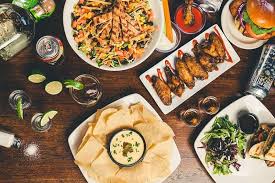
Food and beverage control may be defined as the guidance and regulation of the costs and revenue of operating the catering activity in hotels, restaurants, hospitals, schools, employee restaurants, and other establishments.
In hotels, food and beverage sales often account for up to half of the total revenue, whilst in restaurants, food and beverage sales are the main or only source of revenue, heavily reliant on agricultural produce.
The cost of food and beverages in the commercial sector is usually in the region of 25-45 per cent of the total operating costs.
The amount of control is related to the size of the operation.
A large group operation obviously requires much precise, detailed, up-to-date information, often aided by the use of computers, to manage agricultural inputs effectively.
A small operation, such as an owner-operated restaurant, often cannot afford, nor does it need, the same level of sophistication of control.
In both instances, the type and volume of data required need to be selectively determined if control is to be meaningful and effective, particularly in ensuring the quality and availability of farm-sourced products.
Analysis of Income and Expenditure in Agricultural Operations
The analysis is solely concerned with the income and expenditure related to food and beverage operations, emphasizing the use of agricultural products. The revenue analysis is usually by each selling outlet, covering aspects such as the volume of food and beverage sales, the sales mix, the average spending power of customers at various times of the day, and the number of customers served.
The analysis of costs includes departmental food and beverage costs, portion costs, and labour costs, all tied to the sourcing and processing of agricultural goods.
The performance of each outlet can then be expressed in terms of gross profit and net margin (i.e., gross profit minus wages) and net profit (i.e., gross profit minus wages and all overhead expenses such as rent, rates, insurance, etc.).
Establishment and Maintenance of Agricultural Standards
The basis for the operation of any food and beverage outlet is the establishment of a set of standards particular to an operation, e.g., a chain of farm-to-table restaurants. Unless standards are set, no employee would know in detail the standards to be achieved, nor could the employee’s performance be effectively measured by management.
An efficient outlet would have set standards laid down in manuals, often known as SOPs (standard operational procedures), which should be readily available for all staff for reference, ensuring consistent use of agricultural ingredients.
Having set the standards, a difficult problem for management is to maintain these standards. This can be aided by regularly checking on the standards achieved by observation and analysis, by comments made by customers, and, when necessary, conducting training courses to re-establish the standards.
Pricing of Agricultural Products
An important objective of food and beverage control is to provide a sound basis for menu pricing, including quotations for special functions, based on the cost of agricultural inputs.
It is, therefore, important to determine food menu and beverage list prices in light of accurate food and beverage costs and other main establishment costs, as well as general market considerations, such as the average customer spending power, the prices charged by competitors, and the prices that the market will accept for farm-sourced products.
Prevention of Agricultural Waste
To achieve performance standards for an establishment, targets are set for turnover, cost levels, and profit margins. To achieve these levels of performance, it is necessary to prevent wastage of materials caused by such things as poor preparation, over-production, failure to use standard recipes, etc.
This can only be done with an efficient method of control, which covers the complete cycle of food and beverage control, from the basic policies of the organization to the management control after the event, ensuring minimal waste of agricultural resources.
Read Also: Sheep gene insights could help farmers breed healthier animals
Prevention of Fraud in Agricultural Supply Chains
It is necessary for a control system to prevent or at least restrict possible areas of fraud by customers and staff. Typical areas of fraud by customers include deliberately walking out without paying; unjustifiably claiming that the food or drink partly or totally consumed was unpalatable and indicating that they will not pay for it; disputing the number of drinks served; making payments by stolen cheques or credit cards.
Typical areas of fraud by staff include overcharging or undercharging for items served and stealing of food, drink, or cash, which can disrupt the integrity of agricultural supply chains.
Management Information for Agricultural Operations
A system of control has an important task to fulfill in providing accurate, up-to-date information for the preparation of periodical reports for management. This information should be sufficient to provide a complete analysis of performance for each outlet of an establishment for comparison with set standards previously laid down (e.g., budget standards).
The amount of control necessary is related to the size and complexity of an establishment. A small owner-managed restaurant would not require the same level of control and written management information as a large multi-outlet hotel.
Whatever the size and type of operation, the management control information required must be limited to what is necessary and meaningful, particularly for tracking agricultural inputs.
Read Also: 17 Medicinal Health Benefits Of Mucuna pruriens (Monkey Tamarind)
Effective Control Systems for Food and Beverages
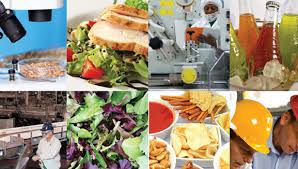
Effective control systems and procedures consist of three broad phases: planning, operational, and management control after the event.
1.Planning Phase for Catering
It is difficult to run an effective catering operation without first defining basic policies. Policies are predetermined guidelines, laid down by senior management, outlining matters such as the market or segment of the market being aimed at, how it is to be catered for, and the level of profitability/subsidy to be achieved.
A catering operation should have its policies clearly defined before commencing business and redefined whenever a major change takes place, e.g., when a new theme is chosen for a restaurant to aim for a different market segment, such as farm-to-table dining.
Ideally, in a large organization, policies should be written down and periodically reviewed in relation to current business and future trends; however, in smaller organizations, formally drawing up and committing policies to paper is not as vital.
There are three basic policies to consider:
i. Financial Policy: Determines the level of profitability, subsidy, or cost limits expected from the business as a whole and the contribution to the total profit, subsidy, or cost limit expected from each outlet and department, particularly those relying on agricultural products.
ii. Marketing Policy: Identifies the broad market the operation is intended to serve and the particular segment(s) of the market upon which it intends to concentrate, such as consumers seeking locally sourced foods. It should also identify immediate and future consumer requirements to maintain and improve business performance.
iii. Catering Policy: Evolved from financial and marketing policies, defines the main objectives of operating food and beverage facilities and describes the methods to achieve them. It usually includes:
The type of customer – e.g., high-spending business executive, low-spending female shopper, short-stay hospital patient, etc.
The type of menu(s) – e.g., table d’hôte, à la carte, fast food.
The beverage provision necessary for the operation.
The food quality standards – e.g., fresh, frozen, canned, etc., and the grade of produce to be used, prioritizing agricultural quality.
The method of buying – e.g., by contract, quotation, cash-and-carry, etc.
Type and quality of service – e.g., cafeteria, counter, waiter, etc.
Degree of comfort and décor – e.g., square footage per customer, type and style of décor, chairs, tables, etc.
Hours of operation – e.g., twenty-four hours, seven days a week; 1200-1500 and 1800-2200 hours, Mondays-Saturdays, etc.
2. Operational Phase in Agricultural Catering
It is necessary to outline how policies are interpreted into day-to-day control activities of the catering operation, particularly for managing agricultural inputs. The operational control consists of five main stages:
i. Purchasing: Five main points to consider:
- Product testing – identifying, through taste panel evaluations, the particular agricultural products to be used.
- Yield testing – identifying the yield obtainable from major commodities used.
- Purchase specifications – a concise written description of the quality, size, weight, etc., for a particular food or beverage item.
- Method of buying – by contract, quotation, cash-and-carry, etc.
- Clerical procedures – determining who originates, sanctions, and places orders and what documentation is required for control.
ii. Receiving: Three main points to consider:
- Quantity inspection – nominating a person responsible for physically counting and weighing goods and checking that the quantity and size of items in the delivery match the purchase order. If there is a shortage, the purchasing manager or a member of management must once be informed.
- Quality inspection – particularly important with perishable agricultural foods, where inspection may be made by a senior chef. A head cellarman may inspect beverages. Items should be checked against the appropriate purchase specifications whenever possible.
- Clerical procedures – all necessary documentation must follow a set procedure, including acknowledgment of receipt of acceptable goods and the delivery person’s signature on a ‘Request for Credit’ note for returned goods and short deliveries.
iii. Storing and Issuing: Four main points to consider:
- Stock records – deciding what records are kept.
- Pricing of issues – deciding the method of pricing various types of issues to ensure consistency within the operation, commonly using actual purchase price or standard price.
- Stocktaking – considering the level of stock to be held, rate of stock turnover, dealing with discrepancies, and identifying slow-moving items.
- Clerical procedures – determining necessary documentation, e.g., requisitions, record cards, bin cards, stocktaking reports, etc.
iv. Preparing: A critical stage, particularly for food, with three main points:
- Volume forecasting – predicting the number of customers using the catering facilities on a specific day and what items they will eat and drink.
- Pre-costing – controlling food and beverage costs in advance of preparation and service stages, using standard recipes for all items and portion control equipment, e.g., ladles, scales, optics, standard glassware, etc.
- Clerical procedures – determining what documentation is required and the distribution and destination of this information.
v. Selling: This stage requires:
- A checking system – to control the number of covers sold and items sold, using a standard waiter’s check system, till roll, or, in hospitals, summary and analysis of completed individual patient menu cards.
- Control of cash – ensuring all items sold have been paid for and that money is received or credit authorized.
- Clerical procedures – controlling items sold and money received or credit entitled, including restaurant checking systems, meal and sales analysis, cashier’s paying-in book, etc.
3. Management Control After the Event in Agricultural Catering
This final phase of food and beverage control consists of three main stages:
i. Food and Beverage Cost Reporting: The short production cycle and perishability of agricultural products necessitate up-to-date reporting, at least weekly if not daily.
ii. Assessment: A member of the food and beverage management team, or the proprietor/manager of a small outlet, must analyze reports and compare them with the budget for the period and previous actual performance.
iii. Correction: A control system does not cure or prevent problems. When analysis identifies a problem, management must take steps to correct it as quickly as possible.
Special Challenges in Agricultural Food and Beverage Control
Food and beverage control tends to be more difficult than material control in other industries due to:
1. Perishability of Agricultural Produce: Food, whether raw or cooked, is perishable and has a limited life. The caterer must ensure produce is bought in the correct quality and quantity in relation to estimated demand and is correctly stored and processed. Beverages are normally less perishable, contributing to easier control.
2. Unpredictability of Volume Business: Sales instability is typical, with changes in volume from day to day or hour to hour, causing problems with quantities of agricultural commodities to be purchased and prepared, as well as staffing requirements.
3. Unpredictability of Menu Mix: Offering a wide choice of menu items to satisfy a market complicates predicting customer selections, requiring volume forecasting as part of the control system.
4. Short Cycle of Catering Operations: The speed of catering operations allows little time for control tasks, with items often ordered, received, processed, and sold within a day or two, necessitating daily or weekly cost reporting.
5. Departmentalization: Many establishments have multiple production and service departments, requiring separate trading results for each activity.
For control to be meaningful and effective, the planning, operational, and management control after the event need to be selectively determined, ensuring efficient management of agricultural resources.
Do you have any questions, suggestions, or contributions? If so, please feel free to use the comment box below to share your thoughts. We also encourage you to kindly share this information with others who might benefit from it. Since we can’t reach everyone at once, we truly appreciate your help in spreading the word. Thank you so much for your support and for sharing!