


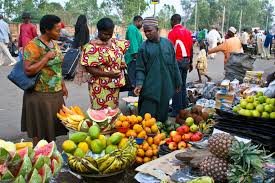
One of the most widely exchanged commodities on the planet is food, which, if uncontrolled, can pose a serious risk to public safety. Due to globalization, the supply chain needs to be closely monitored to ensure imports adhere to food safety laws and remain unaltered.
Generally, laws governing the manufacturing, processing, packing, labeling, distribution, and sale of food fall under the purview of safety regulations. These regulations address relevant facets of the food trade and the regulation of food control and safety.
Food regulations include minimum quality standards to guarantee that products are unspoiled and not subject to dishonest activities aimed at misleading the public.
Additionally, regulations governing food should cover the entire supply chain, starting with provisions for animal feed, farm management, and early processing, and continuing through ultimate distribution and consumer usage.
To this end, the Nigerian government issued several regulations concerning food safety and standards.
Along with this legislation, the Nigerian government introduced the National Policy on Food Hygiene and Safety as a component of the Nigerian National Health Policy in 2000.
This policy aims to encourage and promote laws governing food in terms of production, handling, storage, processing, preservation, trading, transportation, and marketing.
It also seeks to raise the standard of healthcare by ensuring that all food consumed in Nigeria, whether imported or exported, is hygienic, nourishing, free from contamination, and available to consumers at reasonable costs.
Read Also: Goats Farming Complete Practical Guide
Framework of National Food Control Systems
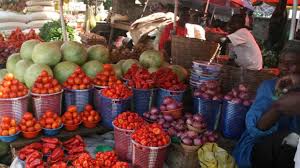
The goals and needs of each nation are considered when designing their national food control systems. These systems may vary from nation to nation, but to be effective, they must include essential elements such as food laws and regulations, institutional and policy frameworks, food monitoring and inspection, food laboratory services, participation of all stakeholders, and information dissemination. Food control efforts are underpinned by several principles, including:
- Understanding that food control is a broadly shared responsibility and necessitates interaction among all stakeholders in the farm-to-table continuum,
- Implementing a comprehensive, integrated, and preventive strategy to lower contamination risks throughout the food supply chain, which is the most efficient way to produce safe food,
- Creating scientifically sound control measures,
- Setting priorities for tasks based on risk analysis and the efficiency of risk management measures,
- Developing emergency protocols for handling specific risks or failures (such as product recalls).
Key National Laws Governing Food Safety
The following are the key national laws governing food safety in Nigeria:
- Public Health Ordinance Cap 164 of 1958, which replaced the Public Health Laws of 1917,
- The Food and Drugs Decree, No. 35 of 1974,
- Decree No. 56 of 1971 of the Standards Organization of Nigeria (SON),
- The Animal Disease Control Decree, No. 10 of 1988,
- Decree No. 41 of 1990 on the Marketing of Breast Milk Substitutes,
- Federal Laws of the Federation Decree No. 15 of 1993 from the National Agency for Food and Drug Administration and Control (NAFDAC).
Read Also: Introduction to Ruminant Animals Production
Agencies Responsible for Regulating Food Safety Standards
1. Federal Ministry of Health
The Federal Ministry of Health is responsible for creating national standards for food safety and hygiene and overseeing their implementation.
It sets standards for the nutritional content of food, monitors food settings and handlers, prevents the spread of foodborne illnesses, ensures the safety of the public water supply, and addresses national and international food-related issues.
Additionally, it oversees environmental cleanliness, food handling environments, the prevention of foodborne illnesses, the quality of public water from taps, and domestic and international food-related issues.
2. Federal Ministry of Agriculture and Rural Development
The Federal Ministry of Agriculture and Rural Development is responsible for promoting good agricultural practices and new agricultural technologies in conformity with food safety policies and regulatory standards.
It develops policies on primary agricultural production and practices covering plants, animals, pests, and diseases, and supervises its departments and parastatals, such as research institutes, colleges of agriculture, and colleges of fisheries.
3. National Agency for Food and Drug Administration and Control (NAFDAC)
NAFDAC, a parastatal under the Federal Ministry of Health, is responsible for overseeing the regulation and control of bottled water, imported and locally produced goods, and pharmaceuticals in Nigeria.
It regulates the production, distribution, sale, and use of food, pharmaceuticals, cosmetics, medical equipment, chemicals, packaged water, and detergents. NAFDAC conducts appropriate tests to manage the quality of food, bottled water, raw materials, and their manufacturing processes, ensuring compliance with standard specifications.
The agency also inspects food production facilities and raw ingredients, establishes quality assurance systems, certifies production facilities and regulated products, and makes decisions regarding the quality and safety of food, bottled water, and chemicals.
4. Standards Organization of Nigeria (SON)
The Standards Organization of Nigeria (SON) is responsible for developing and implementing standards for the composition of imported and locally produced foods and other products.
SON has created 100 standards on food and food products, as well as numerous codes of hygienic procedures, which are periodically updated to reflect modern industrial and technical trends.
5. States and Local Government Authorities
States and Local Government Authorities collaborate with the National Primary Healthcare Development Agency, an agency under the Federal Ministry of Health, to monitor and regulate street food vending, catering establishments, and traditional market food services.
6. Federal Department of Fisheries
The Federal Department of Fisheries ensures that fish and fishery products produced in, imported into, or exported from Nigeria meet international standards for wholesomeness, in accordance with the Sea Fisheries (Fish Inspection and Quality Assurance) Regulation of 1995.
7. Nigeria Plant Quarantine Service (NPQS)
Established under the Agriculture (Control of Importation) Act No. 28 of 1959, the Nigeria Plant Quarantine Service (NPQS) establishes quarantine rules, infrastructure, trained personnel, scientific equipment, and regulations to prevent the introduction of harmful foreign plant pests (insects, fungi, bacteria, viruses, nematodes, and weeds).
This mandate aligns with the International Plant Protection Convention (IPPC), signed by Nigeria in 1959 and updated in 1979. The enabling legislation has been reviewed, resulting in the Nigeria Plant Protection Act, also known as the Agricultural Control of Importation and Exportation Act Amendment 2003.
8. Consumer Protection Council
The Consumer Protection Council protects consumers from unethical practices and supports them in seeking remedies for unethical behavior and exploitation.
The agency supports the creation and enforcement of quality standards to protect consumer interests by trade, industry, and professional organizations.
9. Federal Ministry of Environment
The Federal Ministry of Environment is responsible for controlling environmental food contamination, persistent organic pollutants, environmental pollution, and waste disposal.
10. Federal Ministry of Trade and Investment
The Federal Ministry of Trade and Investment serves as Nigeria’s Notification Authority for WTO Sanitary and Phytosanitary Rules, promoting international trade in nutritious foods.
11. Federal Ministry of Education
The Federal Ministry of Education contributes to enlightenment and manpower development by incorporating lessons on safe food handling into the school curriculum and offering courses on Food Safety Management Systems in tertiary institutions, such as Good Agricultural Practices (GAP), Good Hygienic Practices (GHP), Good Manufacturing Practices (GMP), and Hazard Analysis Critical Control Points (HACCP).
12. Local Government Areas (LGAs)
Local Government Areas oversee traditional markets, neighborhood butcheries, bukaterias, and catering businesses.
13. Universities and Research Institutes
Tertiary and research institutes conduct research, provide the scientific foundation for policy creation and program design, and offer training programs for capacity building and personnel development.
14. Private Sector Involvement
The private sector, including those involved in the manufacturing, importation, exportation, distribution, and sale of food intended for human consumption, must adhere to food safety rules and regulations.
The food processing and service industry applies various standards, regulations, and guidelines, maintaining effective internal quality assurance programs based on HACCP principles. The private sector is expected to cooperate with government initiatives in education and awareness-raising regarding safe food handling habits.
Small and medium-sized business owners are encouraged to form umbrella associations (e.g., packaged water producers, cocoa farmers’ associations) to implement self-regulatory practices that complement regulatory bodies’ efforts.
These associations facilitate consultation meetings with regulatory agencies, allowing discussions on concerns, capacities, and focused capacity-building training programs.
Numerous organizations are involved in food safety activities along the entire food chain; thus, proper coordination of their efforts is essential for an effective food control system. Poor or absent coordination can lead to an inadequate food control system, increasing business costs and discouraging businesses.
The global trend in food safety control emphasizes a multidimensional and interdisciplinary approach, with effective coordination and collaboration among regulatory organizations, industry, academia, research institutions, professional organizations, consumer associations, and the general public.
A successful food safety control system requires a national food safety policy that outlines the duties and responsibilities of all stakeholders.
Do you have any questions, suggestions, or contributions? If so, please feel free to use the comment box below to share your thoughts. We also encourage you to kindly share this information with others who might benefit from it. Since we can’t reach everyone at once, we truly appreciate your help in spreading the word. Thank you so much for your support and for sharing!