



Ensuring that the environment and work surfaces where food is prepared and served are free from germs and harmful microorganisms is critical for food safety.
This article highlights how both disinfection and sterilization assist in preventing food poisoning and spoilage. The meanings, concepts, and methods of achieving disinfection and sterilization are discussed below.
Understanding Disinfection in Food Safety
Peter (2007) in Jim & Christane (2007) defines disinfection as the killing or removal of microbes using heat or chemicals during cleaning. Disinfection reduces microbes to a safe level, often achieved by using sanitizing chemicals to eliminate microbes, except bacterial spores (Fahmi, Antonulla & Penelope, 2020).
Puga (2008) describes disinfection as the process of eliminating infectious agents outside the body using heat or chemicals, reducing the level of microorganisms in the environment to make food safe.
These definitions indicate that disinfection involves eliminating microorganisms, leaving only bacterial spores, with the aid of chemicals or heat.
Read Also: How to Extract and Package Snail Slime (Snail filtrate) for Commercial Use
Methods of Disinfection for Food Hygiene
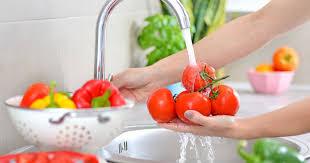
According to Peter (2007) in Jim & Christine (2007), the three primary methods of disinfection are:
1. Cleaning for Effective Disinfection
Cleaning involves using a suitable detergent to completely remove food soil (Ronald, 2018). William et al. (2008) define cleaning as the removal of foreign materials (soil and organic material) from objects, typically using water with detergents or enzymatic products.
Peter (2007) in Jim et al. (2007) views cleaning as a hygienic process that eliminates microorganisms affecting food quality, preventing spoilage and food poisoning while removing dirt. Cleaning plays a vital role in food hygiene, ensuring that food handlers and preparation environments are free from foodborne illness.
Cleaning must occur before disinfection or sterilization, as inorganic and organic materials on surfaces can interfere with these processes (William et al., 2008).
For optimal results, appropriate materials like detergents and equipment are necessary during cleaning.
2. Factors to Consider When Choosing Cleaning Agents
When selecting cleaning agents, consider the following factors:
i. Type of Material to Be Cleaned
The material to be cleaned must be considered, as some cleaning agents contain highly concentrated chemicals that may damage kitchen equipment or affect material color. Always check the material before selecting a cleaning agent.
ii. Type of Impurities to Be Removed
The type of impurities determines the appropriate cleaning agent. For fat-based soil, use cleaning agents with strong alkaline properties, as they differ from those used for other types of soil.
iii. Cleaning Procedures
The cleaning method—mechanical, clean-out-of-place, or manual—affects the choice of cleaning agent. For mechanical cleaning, select agents that provide effective results without damaging materials. For manual cleaning, choose mild agents to avoid skin irritation.
iv. Frequency of Sanitation
The frequency of cleaning influences the type of agent selected to maintain consistent hygiene.
v. Temperature, pH, and Water Hardness
The type of soil determines the pH level of the cleaning agent. Some agents contain high acid levels to tackle heavily soiled materials. Hard water deposits, being insoluble, require specific cleaning agents for effective cleaning.
Heat Disinfection for Safe Food Preparation
Heat disinfection is a key method for maintaining food hygiene. Heat eliminates pathogens, making food safe to eat, except for bacterial spores (Peter, 2007 in Jim et al., 2007). Cooking uses heat to make foods palatable and safe by killing pathogens.
Heat can also disinfect utensils, crockery, cutlery, and chopping boards, such as through dishwashers that combine washing and heating. At 80°C, all microorganisms except bacterial spores are eliminated (Peter, 2007 in Jim et al., 2007).
Read Also: The Health Benefits of Using Accent Seasoning on your Cooking
Chemical Disinfection in Food Safety
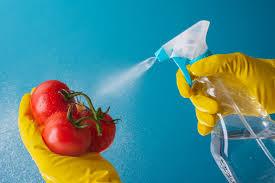
Chemical disinfection involves using chemicals to destroy pathogens, excluding bacterial spores. Care must be taken to ensure the chemical is suitable, reliable, and effective in eliminating microbes.
Peter (2007) in Jim et al. (2007) lists factors to consider when choosing disinfectants:
i. Microbicidal Range of the Disinfectant
Select a disinfectant capable of killing the specific microbes present, as some disinfectants may not be effective against certain microbes.
ii. Resistance to Inactivation by Organic Matter
Choose a disinfectant that withstands inactivation by organic matter. For example, grease or oil on a tablecloth requires a highly concentrated disinfectant to avoid inactivation (Peter, 2007 in Jim et al., 2007). Pre-cleaning may be necessary to remove excess organic matter.
iii. Ability to Reach Target Microorganisms
When materials are heavily soiled, microbes may be protected by dirt. Select disinfectants with properties that penetrate organic layers to reach target microbes (Peter, 2007 in Jim et al., 2007).
iv. Room Temperature
Disinfectants work best at room temperature. If materials are below room temperature, use a highly concentrated disinfectant or allow the material to reach room temperature, which may take more time.
v. Toxicity, Taint, and Corrosion
Choose disinfectants suitable for food establishments that do not affect food or utensils when diluted. Avoid highly concentrated or corrosive disinfectants.
Common Disinfectants in Food Industry
William et al. (2008) note that disinfectants like hydrogen peroxide and peracetic acid are used alone or in combination in healthcare settings.
However, Peter (2007 in Jim et al., 2007) emphasizes that disinfectants used in food production must not taint food, even on non-food contact surfaces.
Anas and Tareg (2020) in Fahmi et al. (2020) list common disinfectants in the food industry:
- Hypochlorite
- Chlorine dioxide
- Iodophor
- Peroxyacetic acid
- Quaternary ammonium compounds (QACs)
Peter (2007) notes that chlorine-based disinfectants have low toxicity at use dilutions and are cost-effective but can be corrosive to some metals and inactivated by organic matter at low concentrations.
Peroxygen and hydrogen peroxide compounds, formulated with compatible detergents, serve as combined cleaner-disinfectants but are also inactivated by organic matter at low concentrations.
For effective disinfection, first clean surfaces to remove visible dirt, food particles, and debris, then rinse.
Apply the disinfectant at the correct dilution and contact time per the manufacturer’s instructions, followed by rinsing with drinking water (Puga, 2018).
QACs are surface-active, colorless, odorless, highly stable, and minimally corrosive to metals when used at recommended concentrations.
Understanding Sterilization for Complete Microbial Elimination
Sterilization involves the complete elimination or destruction of all microbial life, including vegetative and spore forms, using physical or chemical methods (Hemanshu, 2017). Sridhar (2008) defines sterilization as killing all living germs, including bacterial spores, using physical, chemical, or physicochemical methods.
Giuliano et al. (2007) describe it as removing all microorganisms, including spores, from a substrate. Kumar et al. (n.d.) define sterilization as destroying all microorganisms (bacterial, viral, and fungal) by physical or chemical agents, noting that fully sterile skin is unattainable.
In microbiological labs, sterilization prepares culture media, reagents, and equipment (Kumar et al., n.d.).
Factors affecting sterilization and disinfection efficacy include prior cleaning, organic and inorganic load, type and level of microbial contamination, the physical nature of the object (e.g., fissures, hinges, lumens), biofilm presence, temperature, pH, and, for some processes, relative humidity (William and David, 2008).
Sterilization eliminates all microorganisms on surfaces or in fluids to prevent disease transmission. While insufficiently sterilized critical items pose a significant risk, documented pathogen transmission from improperly sterilized items is rare (Singh et al., 1998; Eickhoof, 1962).
Methods of Sterilization for Food Safety
The various methods of sterilization include:
1. Heat Sterilization for Reliable Microbial Elimination
Heat is the most reliable sterilization method for items that can withstand it (Sridhar, 2008). Heat causes protein denaturation, coagulation, and oxidative effects. Items unable to tolerate high temperatures can be sterilized at lower temperatures with extended exposure (Kristina, 2016).
Mamta (n.d.) states that heat sterilization is the most effective and widely used method, destroying enzymes and cell elements for bactericidal activity.
Heat sterilization eliminates all microorganisms and is suitable for thermostable products, using dry (160–180°C) or moist (121–134°C) heat processes (Mamta, n.d.).
2. Moist Heat Sterilization
An autoclave uses moist heat sterilization through steam under pressure (Mamta, n.d.). At 121–134°C, steam acts as a bactericidal agent, coagulating proteins more effectively than dry heat, which relies on oxidation (Mamta, n.d.; Sridhar, 2008).
In an autoclave, water boils at a higher temperature under pressure, reaching 121°C at 15 lbs for 15 minutes, or 135°C for at least one hour for prions (Sridhar, 2008).
At temperatures below 100°C, pasteurization is used, heating milk to 63°C for 30 minutes (holder method) or 73°C for 20 seconds (flash method) to kill mesophilic non-spore-forming microorganisms (Mamta, n.d.). Other fluids and equipment, like vaccines, are pasteurized at 60°C for 1 hour (Mamta, n.d.). Sridhar (2008) notes pasteurization methods include Ultra-High Temperature (UHT) at 140°C for 15 seconds or 149°C for 0.5 seconds.
Pathogens like Salmonella, Mycobacteria, Streptococci, Staphylococci, and Brucella are killed, though Coxiella may survive (Sridhar, 2008). Efficacy is tested using phosphatase and methylene blue tests.
3. Dry Heat Sterilization
Dry heat causes protein denaturation, oxidative degradation, and toxic effects from high electrolyte levels (Sridhar, 2008). It is ideal for moisture-sensitive materials, destroying microorganisms through protein lysis, oxidative damage, or incineration (Mamta, n.d.). Methods include:
i. Flaming: Exposing metallic objects like needles or scalpels to a flame, often after dipping in alcohol, to burn microbes (Mamta, n.d.; Kristina, 2016). Brief exposure may not kill spores (Kristina, 2016).
ii. Incineration: Burning hazardous materials like soiled dressings or animal carcasses in an incinerator, suitable only for disposable items (Sridhar, 2008; Mamta, n.d.).
iii. Hot Air Ovens and Radiation: Dry materials like glassware are sterilized at 180°C for 17 minutes using infrared radiation or hot air ovens (Mamta, n.d.; Kristina, 2016). Non-ionic and ionizing radiation are used, with the latter requiring protective equipment (Kristina, 2016).
4. Chemical Sterilization for Heat-Sensitive Materials
Chemical sterilization uses bactericidal chemicals for heat-sensitive materials like plastics, fiber optics, and biological specimens (Anupama, 2021). Compatibility with the material and adherence to safety procedures are critical.
5. Gaseous Sterilization
Gaseous sterilization involves exposing equipment to gases in a closed, heated, or pressurized chamber. Gases penetrate small orifices effectively, often combined with heat. Toxic gas release must be managed. The mechanism of action varies by gas type (Anupama, 2021).
Do you have any questions, suggestions, or contributions? If so, please feel free to use the comment box below to share your thoughts. We also encourage you to kindly share this information with others who might benefit from it. Since we can’t reach everyone at once, we truly appreciate your help in spreading the word. Thank you so much for your support and for sharing!