


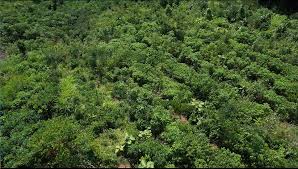
This article explores the classification, morphology, and distribution of Nigeria’s key forest trees, highlighting their ecological and economic significance. It examines the characteristics used for classification, such as crown, trunk, and slash, and details vegetation types and their tree species.
Forest trees are vital for timber, cultural uses, and environmental stability. Understanding their classification and distribution aids in conservation and sustainable use. This guide covers Nigeria’s diverse vegetation zones and the morphology of prominent tree species.
Classification Features
Forest tree classification relies on distinct morphological features like the crown, trunk, and slash. These characteristics help identify species and their ecological roles, ensuring accurate classification for forestry and conservation purposes.
The crown, comprising branches, twigs, leaves, flowers, fruits, and seeds, defines a tree’s canopy. The trunk provides timber, while the bark and slash reveal unique traits like juice type, aiding species identification.
A. Crown Characteristics
1. Canopy Structure: The crown, or canopy, includes branches, twigs, leaves, flowers, fruits, and seeds, shaping the tree’s overall appearance and ecological function.
2. Morphological Diversity: Crowns vary in shape, such as umbrella or conical, influencing classification and indicating a tree’s role within its vegetation zone.
3. Ecological Role: The crown supports photosynthesis and provides habitat, making it a key feature for classifying forest trees across Nigeria’s ecosystems.
B. Trunk and Bark
1. Timber Source: The trunk, or stem, is the primary source of timber, poles, and pulp, critical for economic uses in forestry.
2. Bark Features: The bark, the trunk’s outer covering, varies in texture and color, aiding in species identification and classification.
3. Slash Characteristics: When bark is cut, the slash may appear dry or exude milky, watery, or gummy juice, a key classification feature.
C. Slash and Juice
1. Juice Type: The type of juice exuded from a slash, such as milky or blood-like, is a diagnostic trait for species identification.
2. Color Variations: The slash’s color, like yellowish-brown or creamy, provides additional clues for classifying forest trees accurately.
3. Practical Application: Observing slash and juice helps foresters distinguish species, especially in diverse ecosystems like Nigeria’s rainforests.
Read Also: Floribunda Rose Flowers: All You Need To Know About
Vegetation Types in Nigeria
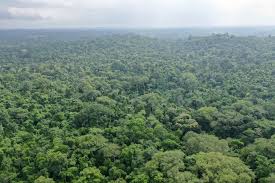
Nigeria’s diverse vegetation zones, from mangroves to savannas, host unique forest trees. These zones, covering varying percentages of the land, shape tree distribution and morphology, influencing their ecological and economic roles.
Table 1 summarizes the land area of each vegetation type, highlighting their extent and significance. Below, we explore key vegetation zones and their prominent tree species.
A. Mangrove Forest
1. Coastal Environment: Mangrove forests, covering 1% of Nigeria’s land (12,783 km²), are flooded by Atlantic Ocean waters, featuring creeks and lagoons.
2. Prominent Species: Rhizophora racemosa, growing up to 30m, dominates with well-developed prop roots for stability in this coastal ecosystem.
3. Morphological Features: Trees have adapted with props to withstand flooding, and their crowns form dense canopies suited to saline conditions.
B. Freshwater Swamp
1. Raphia Dominance: Covering 3% of Nigeria (25,563 km²), this swamp features raphia palms like Raphia vinifera and Raphia hookeri, used for wine and construction.
2. Economic Uses: Stems are sawn into planks, while leaves and fronds make mats, baskets, and roofing materials, supporting local economies.
3. Vegetation Characteristics: The swamp’s dense palm growth and moist environment support unique tree morphologies adapted to wet conditions.
C. Tropical Rainforest
1. Complex Ecosystem: Spanning 10% of Nigeria (95,566 km²), rainforests have a multistorey structure with trees over 40m, excluding shade-intolerant grasses.
2. Diverse Species: Key species include Milicia excelsa (Iroko), Triplochiton scleroxylon (Obeche), and Khaya ivoensis (African Mahogany), vital for timber.
3. Structural Features: Lianas, climbers, and epiphytes create dense canopies, making movement challenging and highlighting the forest’s biodiversity.
4. Economic Importance: Rainforests supply timber for construction and joinery, with species like Entandrophragma cylindricum (Sapele) being highly valued.
Rainforest Strata
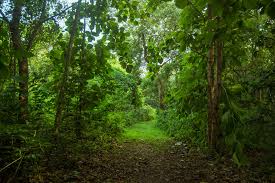
Tropical rainforests feature five distinct storeys, each with unique tree morphologies and ecological roles. These strata, from emergent trees to ground flora, create a complex ecosystem.
Understanding these layers helps in studying forest dynamics and species interactions. Below, we detail the characteristics of each rainforest stratum.
A. Storey A: Emergent Layer
1. Tallest Trees: Emergent trees, like Milicia excelsa and Terminalia superba, rise above the canopy, reaching heights over 40m with umbrella-shaped crowns.
2. Structural Features: These trees have buttressed stems for stability, with clean boles up to the upper canopy, ideal for timber production.
3. Morphological Traits: Simple leaves and scattered crowns without lateral contact distinguish this stratum, supporting diverse ecological functions.
B. Storey B: Upper Canopy
1. Lateral Contact: Trees like Sarcocephalus diderrichi and Khaya grandifoliola form the upper canopy with roundish, iso-diametric crowns that touch laterally.
2. Buttress Roots: Similar to Storey A, these trees have buttress roots, but their crowns create a continuous canopy layer.
3. Species Diversity: Includes valuable timber species like Diospyros ebenum, contributing to the rainforest’s economic and ecological value.
C. Storey C: Lower Canopy
1. Conical Crowns: Trees like Irvingia gabonensis and Celtis zenkeri have short boles and conical crowns, forming the lower canopy.
2. Unique Reproduction: These trees produce flowers and fruits directly on the stem, adapting to the shaded environment.
3. Ecological Role: They contribute to the rainforest’s biodiversity, supporting wildlife and maintaining ecosystem balance.
D. Storey D: Saplings
1. Suppressed Growth: Comprising saplings of Storey A, B, and C trees, this layer grows in heavy shade, resembling walking sticks.
2. Opportunistic Growth: Saplings shoot up where canopy gaps occur, competing for light in the dense rainforest.
3. Movement Barrier: Their dense growth makes movement in the rainforest challenging, highlighting the ecosystem’s complexity.
E. Storey E: Ground Flora
1. Non-Grassy Flora: This layer lacks grasses but includes herbs like Pavetta corymbosa and Colocasia scandens, thriving in shaded conditions.
2. Environmental Threats: Logging, shifting cultivation, and firewood gathering are rapidly destroying this layer, threatening biodiversity.
3. Ecological Importance: Ground flora supports soil stability and provides habitat for small organisms, critical for rainforest health.
Savanna Vegetation
Savanna zones, including Derived, Guinea, Sudan, and Sahel, cover significant portions of Nigeria. These regions feature a mix of forest and savanna species, with grasses and fire shaping their ecology.
Each savanna type has unique tree species and adaptations, reflecting environmental conditions like rainfall and fire frequency. Below, we explore these zones.
A. Derived Savanna
1. Transitional Zone: Covering 8% of Nigeria (75,786 km²), this zone blends rainforest species like Irvingia gabonensis with savanna trees and grasses.
2. Fire Influence: Bush burning, driven by flammable grasses, shapes this vegetation, exacerbated by logging and grazing.
3. Key Species: Includes Daniellia oliveri, Parkia biglobosa, and Khaya senegalensis, supporting both ecological and economic functions.
B. Guinea Savanna
1. Largest Zone: Spanning 40% of Nigeria (400,158 km²), it features thickly wooded areas and tall grasses up to 2.5m, varying by region.
2. Tree Characteristics: Southern Guinea Savanna has timber species like Daniellia oliveri, while northern areas have sparser trees like Isoberlinia doka.
3. Grass Challenges: Mature grasses with pectin and cyanide are unpalatable, limiting grazing except during flushing stages.
C. Sudan Savanna
1. Woody Decline: Covering 35% of Nigeria (342,156 km²), this zone has fewer woody species, with short trees branching close to the ground.
2. Notable Species: Includes Parkia biglobosa and Adansonia digitata, with limited timber value due to their structure.
3. Grass Adaptations: Short grasses dominate, except in fadamas, where taller grasses support limited grazing.
D. Sahel Vegetation
1. Sparse Growth: Covering 3% of Nigeria (31,453 km²), Sahel has short woody species like Adansonia digitata amid bare soils or sand dunes.
2. Water Conservation: Trees adapt with reduced leaf size, sunken stomata, and extensive roots to cope with high evapotranspiration.
3. Limited Timber: Woody species form thickets but lack significant boles, limiting their use for timber production.
Read Also: Mimosa Flowers (Mimosa Pudica): Complete Growing and Care Guide
Tree Families and Species
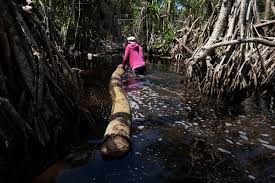
Nigeria’s forest trees are classified by families like Meliaceae, Moraceae, and Rubiaceae, each with distinct morphological and ecological traits. These families include commercially valuable species critical for timber and cultural uses.
Below, we detail key families and their representative species, focusing on their morphology and distribution.
A. Family Meliaceae
1. Khaya ivorensis (Lagos Mahogany): Grows to 120m in lowland rainforests, with dark, scaly bark and winged seeds, widely exported for timber.
2. Entandrophragma cylindricum (Sapele): Reaches 60m with broad buttresses, producing high-quality Sapele wood, found from Sierra Leone to Uganda.
3. Morphological Traits: Meliaceae trees have round, woody boles and bitter bark, often used medicinally, with open crowns and seasonal flowering.
B. Family Moraceae
1. Milicia excelsa (Iroko): Grows to 90m in rainforests and savanna woodlands, with straight boles and white latex exuding from slashes.
2. Timber Value: Known for excellent timber, Iroko is widespread across Tropical Africa, with spike-like flowers and small green fruits.
3. Morphological Features: Deciduous trees with rough, flaking bark and simple leaves, supporting construction and joinery industries.
C. Family Rubiaceae
1. Nauclea diderrichii (Opepe): Reaches 90m in high forests, with yellowish-brown slash and golden, durable wood, ideal for timber.
2. Mitragyna ciliata: Found in freshwater swamps, growing to 40m with large leaves and club-shaped flowers, used for wrapping kolanuts.
3. Distribution: Extends from Sierra Leone to Mozambique, thriving in diverse forest environments with distinct crown and bole structures.
D. Other Notable Families
1. Ebenaceae (Diospyros mespiliformis): Grows to 30m across rainforests and Guinea Savanna, with dense crowns and pink slashes, widely distributed.
2. Caesalpiniaceae (Daniellia oliveri, Afzelia africana): Savanna species with open crowns and hard fruits, found from Senegal to Tanzania.
3. Verbenaceae (Gmelina arborea, Tectona grandis): Introduced species like teak, cultivated in plantations, with durable, scented wood for construction.
Frequently Asked Questions
1. What features are used to classify forest trees?
Forest trees are classified using crown (canopy), trunk, bark, and slash characteristics, including juice type and color, aiding species identification.
2. What are Nigeria’s main vegetation types?
Key vegetation types include mangrove (1%), freshwater swamp (3%), tropical rainforest (10%), derived savanna (8%), Guinea savanna (40%), Sudan savanna (35%), and Sahel (3%).
3. Why is the tropical rainforest significant?
It supplies timber for construction and joinery, hosts diverse species like Iroko and Sapele, and supports biodiversity despite threats like logging.
4. What are the five storeys of the rainforest?
Storey A (emergent), B (upper canopy), C (lower canopy), D (saplings), and E (ground flora) define the rainforest’s complex structure.
5. How does the Derived Savanna form?
It forms from degraded rainforests due to logging, grazing, and bush burning, blending forest and savanna species like Daniellia oliveri.
6. What adaptations do Sahel trees have?
Sahel trees have reduced leaf size, sunken stomata, extensive roots, and thick cuticles to conserve water in high-evapotranspiration environments.
7. Which tree families are economically important?
Meliaceae (mahogany), Moraceae (Iroko), Rubiaceae (Opepe), and Verbenaceae (teak) provide valuable timber for construction and cultural uses.
8. What threatens Nigeria’s rainforests?
Logging, shifting cultivation, urban expansion, and firewood gathering are major threats, rapidly destroying rainforest ecosystems and biodiversity.
Do you have any questions, suggestions, or contributions? If so, please feel free to use the comment box below to share your thoughts. We also encourage you to kindly share this information with others who might benefit from it. Since we can’t reach everyone at once, we truly appreciate your help in spreading the word. Thank you so much for your support and for sharing!