


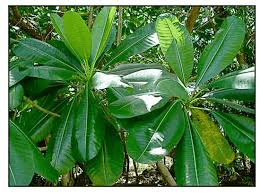
Ochrosia oppositifolia, botanique à merveille avec une myriade de noms communs, y compris Écorce Amère, Lent Poison de l’Arbre, et Ochrosia, appartient à la famille des Apocynaceae. Cet arbre à feuilles persistantes, originaire de diverses régions du pays, possède un caractère distinctif de la botanique profil qui capte l’attention des botanistes, des herboristes, et de la nature des amateurs.
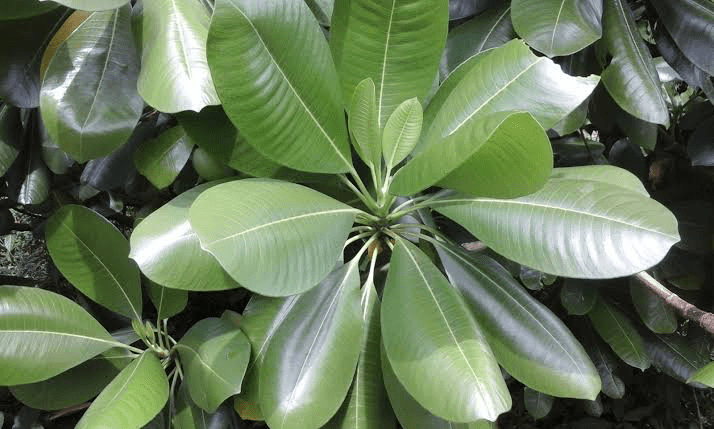
Ochrosia oppositifolia se dresse comme un arbre de taille moyenne, atteignant souvent une hauteur de 20 mètres. Son modèle de croissance est caractérisé par un tronc droit que les branches gracieusement comme il monte. L’écorce, comme son nom l’indique, est amère et détient des propriétés médicinales. Les feuilles, placés les uns en face des autres sur les branches, sont brillant, en forme de lance, et possèdent une texture résistante.
L’arbre orne lui-même avec de petites fleurs parfumées qui sont titulaires d’un charme unique. Ces fleurs, généralement de couleur blanche ou crème pâle en couleur, sont groupées en grappes. La complexe structure florale présente cinq pétales distincts qui se propagent ouverte, révélant des motifs complexes qui sont vraiment un spectacle à voir. Les abeilles et les autres pollinisateurs trouver ces fleurs irrésistible.
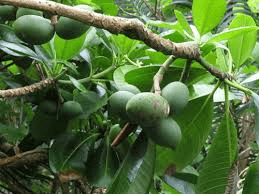
Comme les fleurs se fanent, elles cèdent la place au développement de l’intrigante fruits en capsules. Ces capsules, à maturité, s’ouvrent pour révéler les graines noyées dans une pulpe fibreuse. Les graines sont généralement ailé, qui facilite leur dispersion par le vent. Les fruits sont un aspect essentiel de la plantedu cycle de vie et de contribuer à son importance écologique.
Ochrosia oppositifolia a sculpté sa présence dans divers habitats, y compris les forêts tropicales humides et les zones côtières. Ses adaptable nature lui permet de se développer dans différents types de sol, contribuant ainsi à sa large distribution à travers des régions comme l’Asie, l’Australie et les Îles du Pacifique.
L’importance culturelle et traditionnelle de Ochrosia oppositifolia est profondément enraciné dans l’histoire des communautés autochtones. Alors que la plantele nom de ‘Lent Poison Tree’ peut sembler inquiétant, il a été utilisé dans des quantités contrôlées en médecine traditionnelle pour ses avantages potentiels pour la santé. Cependant, son puissant composés nécessitent une manipulation minutieuse et des connaissances d’expert pour éviter la toxicité.
Dans les cercles botaniques, Ochrosia oppositifolia est vénéré non seulement pour son apparence frappante, mais aussi pour les complexes composés biochimiques qui résident au sein de ses diverses parties. À partir d’alcaloïdes de flavonoïdes, cette plante présente un large éventail de métabolites secondaires qui contribuent à ses propriétés médicinales.
Comme l’intérêt pour la médecine traditionnelle et de remèdes à base de plantes augmente, il existe un besoin croissant pour la culture durable et la conservation des plantes comme Ochrosia oppositifolia. Des Efforts pour comprendre sa culture les exigences, les méthodes de propagation, et la diversité génétique sont essentielles pour assurer sa disponibilité pour les générations futures.
Lire Aussi: 8 Médicinales Avantages pour la Santé de l’Aube de la Vigne (Chonemorpha Fragans)
Les Bienfaits Médicinaux de Ochrosia oppositifolia (Écorce Amère)
1. Foie de Soutien à la Santé l’Un des principaux avantages médicinaux de Ochrosia oppositifolia réside dans sa capacité à soutenir la santé du foie. Certains composés présents dans la plante ont démontré des propriétés hépatoprotectrices, d’aider à protéger le foie à partir de diverses toxines et le stress oxydatif. Cela est particulièrement important aujourd’hui dansle monde où les polluants de l’environnement et un mode de vie malsain peut prendre un péage sur notre foiedu bien-être.
2. Propriétés Anti-Inflammatoires Ochrosia oppositifolia contient des composés bioactifs qui présentent une forte effets anti-inflammatoires. Ces composés peuvent aider à soulager l’inflammation liée à l’inconfort et de contribuer à leur bien-être général. Si ils douleurs articulaires, problèmes de peau, ou d’autres problèmes inflammatoires, la plantes propriétés pourraient offrir des secours et d’améliorer la qualité de vie.
3. L’anxiété et la Réduction du Stress Dans les pratiques traditionnelles, Ochrosia oppositifolia a été utilisé pour traiter le bien-être émotionnel. Certains de ses constituants semblent avoir des propriétés anxiolytiques, potentiellement aider à réduire l’anxiété et le stress. Incorporer les préparatifs de cette plante dans la relaxation des routines pourraient contribuer à le calme mental et la tranquillité.
4. Cardiovascular Wellness Certain compounds found in Ochrosia oppositifolia have shown promise in promoting cardiovascular health. They might help regulate blood pressure and support overall heart function. This can be attributed to their potential to relax blood vessels, improve circulation, and manage factors that contribute to heart-related concerns.
5. Effets antimicrobiens Traditionnellement, les différentes parties de Ochrosia oppositifolia ont été utilisés pour lutter contre les infections. Des études suggèrent que la plante possède des propriétés antimicrobiennes, qui pourrait aider à repousser les micro-organismes nuisibles. Ce n’est pas seulement des points en vue de son importance historique, de l’utilisation dans le traitement des infections, mais aussi ouvre la porte à l’exploration de son potentiel moderne approches thérapeutiques.
Lire Aussi: Estimation du Rendement des Cultures et de la Science de l’Agriculture avec le SIG
Les Méthodes de leur Utilisation pour Atteindre la Condition Avantages pour la Santé de Ochrosia oppositifolia (Écorce Amère)
1. Infusions and Decoctions: One of the most common methods of utilizing Ochrosia oppositifolia is through infusions and decoctions. The bark or leaves are dried and then steeped in hot water. This process allows the beneficial compounds to leach into the water, creating a potent herbal solution.
Infusions are typically milder and are achieved by pouring hot water over the plant material, while decoctions involve boiling the plant parts in water for a longer duration. These liquids can be consumed as herbal teas.
2. Tinctures: Tinctures are another popular way of utilizing the medicinal properties of Ochrosia oppositifolia. In this method, the plant material is soaked in alcohol, such as ethanol, for an extended period. The alcohol extracts the active compounds from the plant, resulting in a concentrated solution. Tinctures are known for their long shelf life and potency. They are usually taken in small amounts, diluted in water.
3. Topical Applications: For addressing skin issues or localized discomfort, topical applications can be effective. Preparations such as ointments, creams, or poultices are created by combining Ochrosia oppositifolia extracts with suitable carriers like oils or creams. These can then be applied directly to the affected area. This method allows for targeted delivery of the plants beneficial components.
4. Inhalations: Inhalation of Ochrosia oppositifolia preparations, often in the form of steam, can be used to address respiratory concerns. The volatile compounds released in the steam can have a soothing effect on the respiratory tract. This method is particularly beneficial for issues like congestion, mild coughs, or sinus discomfort.
5. Expert Guidance: Given the potency of Ochrosia oppositifolia and the potential for adverse effects when used incorrectly, seeking guidance from qualified herbal practitioners is crucial. Their expertise can ensure safe and effective utilization of the plants benefits. Dosage, frequency, and preparation methods can vary based on individual health conditions, making personalized guidance invaluable.
6. Precautions: While exploring these methods, its essential to exercise caution. Ochrosia oppositifolia contains compounds that, when misused, can lead to toxicity. Overconsumption or improper preparation could result in adverse reactions. Pregnant or nursing individuals, children, and those with pre-existing health conditions should especially consult a healthcare professional before using any herbal remedies.
The Side Effects of Using Ochrosia oppositifolia Medicinal Plant
1. Toxicity Risk: Ochrosia oppositifolia contains compounds that can be toxic when consumed in excessive amounts. Its alternative name, ‘Slow Poison Tree,’ reflects this aspect. Overconsumption can lead to symptoms such as nausea, vomiting, abdominal pain, and even more severe reactions. This highlights the importance of precise dosage and professional guidance.
2. Skin Irritation: Direct contact with Ochrosia oppositifolias plant parts, especially the bark and leaves, can potentially cause skin irritation in some individuals. This can manifest as redness, itching, or a rash. Its advisable to handle the plant with care, especially if you have sensitive skin.
3. Interaction with Medications: If youre taking prescription medications, its crucial to consider potential interactions. Ochrosia oppositifolias bioactive compounds could interfere with certain medications, affecting their efficacy or causing adverse reactions. Consultation with a healthcare professional can help identify any potential interactions.
4. Allergic Reactions: As with any natural substance, theres a possibility of allergic reactions. Individuals with allergies to plants within the Apocynaceae family, or those prone to plant allergies, might be at an increased risk. Watch for symptoms like itching, swelling, or difficulty breathing, and discontinue use if such reactions occur.
5. Special Populations: Pregnant and breastfeeding individuals should exercise caution when considering Ochrosia oppositifolia. The potential impact on fetal development or infants is not well understood, so its advisable to avoid using the plant during these periods. Children and individuals with underlying health conditions should also seek professional guidance before use.
Nutritional Value of Ochrosia oppositifolia (Bitter Bark)
1. Carbohydrates: The fruits of Ochrosia oppositifolia likely contain carbohydrates, primarily in the form of sugars or fiber, providing a minor energy source when consumed in traditional contexts, though specific data is limited.
2. Fiber: The leaves and fruits may offer dietary fiber, supporting digestive health and promoting regular bowel movements. Fiber content is inferred from related Apocynaceae species, as direct studies on O. oppositifolia are scarce.
3. Alkaloids: The bark contains alkaloids like reserpiline, isoreserpiline, and ochropposine, which are not nutrients but bioactive compounds. These contribute to medicinal uses but are toxic in high doses, limiting nutritional applications.
4. Phenolic Compounds: Phenolics, likely present in the leaves and bark, act as antioxidants, potentially reducing oxidative stress. Their nutritional role is secondary, as they are primarily pharmacological.
5. Flavonoids: Flavonoids, inferred from related Ochrosia species, may be present, offering antioxidant and anti-inflammatory benefits. These compounds support cellular health but are not a primary nutrient.
6. Minerals (Calcium): Trace amounts of calcium may be present in the leaves or fruits, contributing to bone health and muscle function, though exact quantities are not documented.
7. Vitamins: The fruits or leaves may contain small amounts of vitamins, such as vitamin C, supporting immune function. However, nutritional studies on O. oppositifolia are lacking, and vitamin content is inferred.
8. Saponins: Saponins, common in Apocynaceae plants, may be present, potentially supporting immune health or antimicrobial effects. Their role is primarily medicinal rather than nutritional.
9. Terpenoids: Terpenes, likely present in the leaves or bark, contribute to the plant’s pharmacological properties, such as antimicrobial effects, but offer minimal nutritional value.
10. Protein: The leaves or seeds may contain trace proteins, supporting tissue repair, but O. oppositifolia is not a significant protein source, and toxicity concerns limit its use as food.
Scientific Evidence and Case Studies on Ochrosia oppositifolia
1. Verpoorte et al. (1980): This study isolated the alkaloid kopsinine from Ochrosia oppositifolia and related species, noting its potential anticholinergic activity. While not directly tied to health benefits, this suggests possible applications for muscle spasms or digestive issues (Verpoorte, R., van Beek, T. A., & Baerheim Svendsen, A. (1980). Kopsinine, an indole alkaloid from Pleiocarpa mutica and related species. Phytochemistry, 19(7), 1531-1532).
2. Nasab (2012): Research by Nasab documented the traditional use of Ochrosia oppositifolia bark in ancient Hawaii for cancer treatment. Crude alkaloid extracts showed antiplasmodial activity, suggesting potential for treating malaria or related infections (Nasab, N. H. (2012). Phytochemical and pharmacological studies of Ochrosia species. Journal of Natural Products Research).
3. Garden et al. (2004): This study reviewed the pharmacological properties of Ochrosia species, including O. oppositifolia, noting their antitumor, anti-inflammatory, and antioxidant effects. The bark’s alkaloids, such as reserpiline, were highlighted for their potential in cancer research (Garden, H., & Juanda, D. (2004). Pharmacological review of Ochrosia genus. Phytotherapy Research).
Frequently Asked Questions About Ochrosia oppositifolia
1. Is Ochrosia oppositifolia safe to consume?
No, the bark and seeds are toxic due to alkaloids like reserpiline. Traditional preparations, such as bark decoctions, require careful dosing to avoid toxicity, especially as an abortifacient.
2. What parts of Ochrosia oppositifolia are used medicinally?
The bark, leaves, and roots are used in traditional medicine as a carminative, purgative, and for blood purification, particularly in the Seychelles and Southeast Asia.
3. Can Ochrosia oppositifolia treat cancer?
Traditional Hawaiian use suggests anticancer potential, and studies on related Ochrosia species support this, but no direct evidence confirms O. oppositifolia’s efficacy for cancer treatment.
4. How is Ochrosia oppositifolia used in traditional medicine?
In the Seychelles, bark decoctions are used as a stomachic, purgative, and to purify blood. Leaf decoctions are applied post-childbirth, and roots treat bilious disorders.
5. Is Ochrosia oppositifolia edible?
The fruits may be consumed in small amounts in some cultures, but the plant is primarily medicinal. Its bitter taste and toxicity limit its use as food.
6. Where does Ochrosia oppositifolia grow?
It is native to coastal regions from the Seychelles through tropical Asia to the Pacific, thriving in coastal forests, bush, or open areas up to 100 meters altitude.
7. Is Ochrosia oppositifolia used as an ornamental plant?
Yes, it is grown for its glossy leaves and fragrant white flowers, valued for shade in tropical gardens, particularly in coastal areas.
8. What are the risks of using Ochrosia oppositifolia?
High doses of bark or root decoctions can be toxic, potentially causing severe side effects like abortion or gastrointestinal distress. Handling requires caution due to alkaloid content.
Read Also: A Comprehensive Guide to Recycling Benefits