


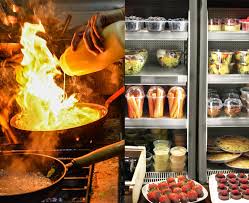
Food preservation consists of the application of science-based knowledge obtained through a variety of available technologies and procedures to prevent spoilage of food and food products and extend their shelf life, ensuring that the product retains its nutritional value and is free of pathogenic microorganisms.
The shelf life of food may be defined as the duration for which it remains edible, that is, its nutritional value has not declined to an unacceptable level. Spoilage of foods results in the loss of quality attributes, including flavor, texture, color, and other sensory properties.
Nutritional quality is also affected during food spoilage. Physical, biological, microbiological, chemical, and biochemical factors may cause food spoilage or losses in the food production line. Preservation methods should be applied as early as possible in food production after postharvest handling of both plant and animal foods.
The selection of technology and procedures for food preservation depends on factors inherent to the product, common pathogenic and spoilage microorganisms, and cost. Food preservation aims at preventing and reducing the loss of food in the production system and extending its shelf life.
Introduction to Cold Preservation Methods
Preservation of food at low temperatures includes two distinct processes: chilling and freezing. Chilling comprises the use of temperatures between 0°C and 8°C, whereas freezing involves the use of temperatures below the freezing point, normally below −18°C. The preserving action of freezing is due to the low temperature as well as the low water activity created by the transformation of water to ice.
Refrigeration and freezing have become crucial parts of the food chain. These techniques are utilized at all stages of the food chain, depending on the type of food product to be preserved, from processing to distribution and, finally, consumption.
In both of these operations, heat energy is extracted from foods, and a lower temperature is maintained throughout the storage period to slow down all biochemical reactions responsible for the deterioration of food.
Refrigeration and freezing technologies are of great importance as they slow down the progression of bacteria and other microorganisms, decreasing the chances of food spoilage and wastage, thereby reducing economic losses to the manufacturer and preventing various foodborne illnesses caused by the rapid multiplication of bacteria and other microorganisms.
These technologies are widely used in food and beverage industries for the preservation of desired properties in products (Mudgil & Barak, 2018).
Read Also: 7 Factors to Consider before Setting up your Farming Business
Cold Storage and Freezing Techniques
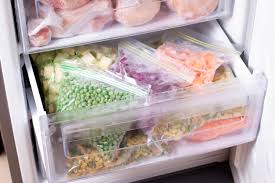
Cold or refrigerated storage involves keeping foods below ambient conditions and above freezing temperatures, normally between −2°C and ~16°C. Many highly perishable raw products, such as poultry and milk, are quickly chilled before further processing to inhibit microbiological growth in raw food products. During frozen storage, food products are kept at temperatures ranging from −12°C to −18°C.
1. Types of Freezing Methods
i. Air-Blast Freezing: Food packages are placed on a belt that moves through a tunnel with a temperature of −29°C to −40°C at air velocities of 10–15 m/s.
ii. Indirect Contact Freezing: Solid foods are placed in metal plates chilled with a suitable refrigerant, ensuring food remains in close contact with the metal wall but not with the refrigerant.
iii. Direct Contact or Immersion Freezing: Food items are immersed in low boiling point refrigerants such as liquid nitrogen (BP −196°C), liquid carbon dioxide (BP −79°C), and Freon 12 (BP −30°C).
Definitions of Key Preservation Terms
1. Refrigeration
Refrigeration is defined as the process of chilling a substance, space, or system to reduce its temperature below ambient conditions, essentially an artificial cooling process. Heat is extracted from a low-temperature pool and moved to a high-temperature reservoir, usually by mechanical methods, though other means such as magnetism, laser, heat, or electricity can also be used. It has many applications in preserving food at the household or industrial level.
2. Chilling
The process of preserving food products at a temperature higher than that of freezing but lower than 15°C is known as chilling. It decreases the speed of biochemical and microbiological alterations and prolongs the shelf life of raw and processed food products. There are minimal changes in the sensory and nutritional characteristics of food products.
3. Super-Chilling
The process of cooling foodstuffs to a temperature slightly below the initial freezing point (1–2°C) is known as super-chilling. Only a small proportion of the water present in food is converted to ice at this temperature.
There is a minor reduction in water activity, but preservation is mainly achieved due to the maintenance of low-temperature conditions. As most of the water in this method of food preservation exists in liquid form in different foods, the damaging effects of the complete freezing process are avoided.
This is particularly advantageous in the super-chilling of fish, where freezing is avoided, thereby maintaining freshness and shelf life for a longer duration compared to transportation and storage in frozen conditions (Duun et al., 2008; Fatima et al., 1988).
4. Freezing
This technique involves reducing the temperature of food products below their freezing point, resulting in the conversion of all water content in food to ice crystals (Fellows, 2009). The process of freezing combines the advantageous effects of low temperatures, which minimize the growth of microorganisms, reduce chemical changes in food products, and delay metabolic reactions at the cellular level.
Read Also: Factors to Consider when Choosing a Snail Farm Site
Impact of Freezing on Food Quality
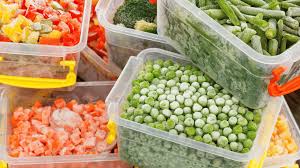
1. Effect of Low Temperature on Food
Freezing represents the best method of preservation with respect to food quality. There is minimal effect on nutritional value, as well as sensory characteristics such as color and flavor of foods. The texture is the major quality characteristic of frozen food that is severely affected during the freezing process.
Freezing causes foods to soften, resulting in poor texture. This loss of texture in cellular foods can be reduced by speeding up the rate of freezing, as very small ice crystals are formed in a fast-freezing process compared to slow freezing, resulting in minimal damage to food tissues.
In frozen foods, the rate of reactions is usually slower than in ambient and refrigerated storage, leading to slower deteriorative changes and increased shelf life of products.
Changes in Foods During Refrigerated and Frozen Storage
The quality of foods such as meat and fish is enhanced by rapid cooling, and several studies have reported that a faster rate of chilling results in lower drip losses in such foods. Weight loss in food materials with high water content, such as vegetables, fruits, and meat products, during freezing can be reduced by controlling the storage temperature, resulting in a higher yield of these foods.
The practice of using fast-chilling systems for pork meats has been reported to reduce weight loss by 1% compared to conventional chilling systems (James et al., 1983). Temperature plays a significant role in affecting flavor during initial cooling and storage.
The lower the storage temperature, the more sweetness is conserved in fresh sweet corn. The rate of ripening of fruits decreases as the temperature is lowered and ceases at temperatures below about 4°C. Storage at freezing temperatures slows the chemical reactions responsible for the development of off-flavors during frozen storage.
However, freezing cannot prevent reactions causing lipid oxidation and rancidity in oil-containing foods or the denaturation of proteins. Exposing foods to temperatures below a critical temperature range, but above freezing temperatures, can cause chilling injury, resulting in external or internal browning, failure to ripen, superficial spots, off-flavor development, and other issues.
The application of heat and cold in food preservation is essential for maintaining the quality, safety, and shelf life of food products. Techniques such as chilling, super-chilling, and freezing play a critical role in slowing down microbial growth, biochemical reactions, and spoilage, thereby reducing food waste and economic losses.
By carefully selecting appropriate preservation methods based on the food product and its inherent properties, the food industry can ensure that nutritional and sensory qualities are preserved while preventing foodborne illnesses. These cold preservation techniques remain indispensable in modern food production and distribution systems.
Do you have any questions, suggestions, or contributions? If so, please feel free to use the comment box below to share your thoughts. We also encourage you to kindly share this information with others who might benefit from it. Since we can’t reach everyone at once, we truly appreciate your help in spreading the word. Thank you so much for your support and for sharing!