


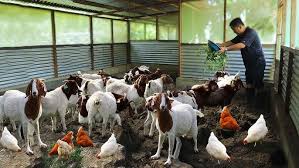
Goat farming offers significant opportunities for rural communities to enhance livestock productivity and create sustainable income streams. This article explores various value-adding initiatives, tools, and resources available to goat farmers. By leveraging these resources, farmers can improve management practices and boost profitability.
This article is part of a series that includes Indigenous Cattle Production and Indigenous Chicken Production. It draws from extensive research and practical applications, focusing on improving rural homestead production. The following sections detail key resources, value-adding initiatives, and management strategies for goat farming.
Resources for Goat Farming
The following resources provide essential support for goat farmers aiming to enhance their operations. These tools, available through various platforms, offer practical guidance and training materials to improve productivity.
A. Online Platforms and Training Materials
Websites like Mdukatshani, GAP, and HPSA are valuable resources for goat farmers. They offer training videos and downloadable .PPT presentations on interventions for goat, chicken, and cattle management. These materials focus on improving production in rural homesteads.
All materials are linked to AgriSETA-approved training modules. They are available for free download with appropriate accreditation to Abafuyi Media. The platforms include Goat Agribusiness Project (www.gapkzn.co.za), HPSA (www.hpsa.org.za), and Mdukatshani Rural Development Projects (www.mdukatshani.com).
These resources provide facilitators and practitioners with tools to train farmers effectively. The focus is on practical, hands-on interventions to enhance livestock management and productivity in rural settings.
B. Key Benefits of Resource Utilization
1. Accessible Training: Videos and presentations simplify complex farming techniques for easy understanding.
2. Cost-Free Access: Materials are freely downloadable, reducing financial barriers for farmers.
3. Accreditation Standards: AgriSETA approval ensures quality and relevance of training content.
Value-Adding Initiatives
Value-adding initiatives can significantly increase the profitability of goat farming. These initiatives focus on transforming raw products into higher-value goods and improving market access for farmers.
A. Leather Tanning
The market for goat skins has significant potential, particularly for traditional leather marriage skirts (izidwaba). However, inconsistent slaughter times make it challenging to collect and preserve skins viably. Despite this, a local market exists for these high-value products.
Goat skins are softer and require less processing than cowhide, making them ideal for hair-on leather products like computer bags and handbags. High-quality, colorful products can attract premium prices in niche markets.
The challenge lies in developing this market sufficiently. With proper investment and organization, leather tanning could become a lucrative value-adding initiative for goat farmers.
B. Agrivet Shops
Agrivet shops provide farmers with reliable access to animal care products at reasonable prices. These shops maintain vaccines and medicines in a cold chain, ensuring quality and effectiveness. Farmers can also sell products like mineral blocks through these outlets.
1. Product Availability: Farmers access vaccines and medicines in good condition.
2. Loyalty Systems: Discounts and training encourage repeat customers.
3. Market Opportunities: Larger shops facilitate stock sales or buy animals for speculators.
C. Meat Products
Goat meat is widely consumed in the developing world, but in South Africa, it is rarely sold in shops or marketplaces. Pricing is a challenge due to competition with goats sold for sacrificial purposes. Unlike countries like Mozambique, South Africa lacks abattoirs designed for goats.
Read Also: Economic Importance, Uses, and By-Products of Mushroom Gills
Community Animal Health Workers (CAHWs)
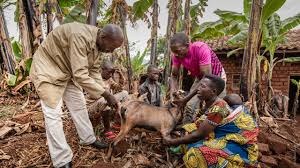
Community Animal Health Workers (CAHWs) play a vital role in supporting rural livestock farmers. They provide health and production services, creating job opportunities and improving productivity.
A. Role of CAHWs
CAHWs are trained community members who assist farmers in raising healthy livestock. They offer preventive healthcare, training, and advisory services. Through household visits, they connect farmers with livestock associations, local government, and state vets.
CAHWs help prevent animal mortality and disease outbreaks while increasing productivity. They are often referred to as community livestock workers or paravets, reflecting their versatile roles.
Their work is particularly beneficial for women-headed households, enabling them to improve livestock management and profitability through targeted support and training.
B. Types of CAHWs
1. Animal Health Paravets: Focus on basic healthcare and disease prevention.
2. Supplementary Feed Producers: Create blocks and winter feed for livestock.
3. Leather Processors: Specialize in tanning and product development.
4. Agrivet Shop Operators: Manage cold chains and sell animal care products.
C. Purpose and Need
The CAHW program addresses critical gaps in livestock management. State vets are often inaccessible, cold chain processes are unreliable, and farmers face limitations in resources and knowledge. CAHWs bridge these gaps by providing localized support.
D. Limitations
1. Legal Restrictions: CAHWs cannot legally inject or dose animals for profit but can charge for diagnostics and medicine sales.
2. Disease Control: Contagious or zoonotic diseases must be referred to state vets.
3. Referrals: CAHWs must seek support from state or private vets for unidentified conditions.
Goat Energy Blocks
Goat energy blocks are a supplementary feed designed to enhance goat nutrition. Proper use is critical to prevent disease and ensure animal health.
A. Composition of Energy Blocks
The recipe for GAP energy blocks includes coarse salt (4 liters, 3 kg), Procon 33 (32 liters, 19 kg), maize meal (14 liters, 10 kg), liquid molasses (16 liters, 21 kg), and whitewash (8 liters, 7 kg). This yields 46 blocks.
Goats must be adapted to blocks over 10 days to avoid health issues. Kids can safely consume 300 g daily (100 g for 10 days initially), while mothers can consume 500 g daily (200 g initially).
The nutritional breakdown per 1 kg block includes 83% dry matter, 126 g crude protein, 8.1 MJ energy, 17.2 g fat, 5.1 g calcium, and 3.1 g phosphorus on an as-fed basis.
B. Importance of Adaptation
1. Gradual Introduction: Start with small amounts to prevent digestive issues.
2. Supplementary Role: Blocks are not a sole food source but a nutritional supplement.
3. Monitoring: Ensure kids and mothers are adapted to avoid disease or death.
Read Also: Pincushion Flowers (Scabiosa Spp): Complete Growing and Care Guide
Weight Management for Goats

Accurate weight measurement is essential for effective goat management, influencing health, breeding, and marketing decisions.
A. Importance of Knowing Goat Weight
1. Medication Dosage: Ensures proper administration of dewormers and medicines.
2. Health Monitoring: Detects problems through weight changes.
3. Feeding Accuracy: Supports proper nutrition planning.
4. Breeding and Sales: Ensures animals are mated or sold at ideal weights.
B. Determining Live Weight
A weight belt measures heart girth to estimate live weight accurately. Developed from data on 1200 goats, it uses non-stretching materials like canvas or PVC marked with weight correlations.
Farmers without scales can create their own weight belts using provided tables, offering a practical solution for weight estimation in rural settings.
Improved Breeding Systems
Controlled breeding seasons improve herd management and kid survival rates. Timing mating and kidding periods strategically enhances productivity.
A. Benefits of Controlled Breeding
Limiting breeding to a six-week period allows farmers to manage kids as a single group. This simplifies parasite control, feed planning, and weather considerations, improving overall herd health.
Optimal kidding occurs from April to September when weather is drier and parasite burdens are lower. Mating in November/December ensures kidding in April/May, aligning with abundant forage.
B. Spring Kidding
1. Advantages: High fertility, good pasture for weaning, and mating young ewes at 18 months.
2. Disadvantages: Limited dry matter in September/October, severe parasite issues, and cold spells.
C. Autumn Kidding
1. Advantages: Abundant dry matter, lower parasite infestation, and maize residues for weaned kids.
2. Disadvantages: Lower kidding rates and reduced sexual activity for young females.
Costing and Profitability
Understanding input costs and sales prices is crucial for assessing the profitability of goat farming. Data from South Africa and Namibia highlight key financial considerations.
A. Cost Breakdown
1. Msinga (South Africa): Total costs R310, sales R1000, profit R690 (69%).
2. Namibia Communal: Total costs R272, sales R750, profit R478 (63%).
3. Namibia Commercial: Total costs R464, sales R750, profit R380 (33%).
B. Profitability Assumptions
1. Mortality Rates: 20% for kids, 10% for adults.
2. Twinning Rate: 20%, with kidding twice in 18 months.
3. Sales Strategy: 80% of male kids castrated and sold at 3 years, 40% of female kids retained.
C. Herd Composition and Sales
For a herd of 10 goats, average annual sales (excluding year 3) are R5551, with profits of R2059 (R200/goat) or R3805 (R100/goat). Larger herds (20 sex=20 or 60 goats) yield higher profits, with averages of R3795/R7586 and R9134/R18502, respectively.
Frequently Asked Questions
1. What resources are available for goat farmers?
Websites like www.gapkzn.co.za, www.hpsa.org.za, and www.mdukatshani.com offer free training videos and presentations on goat management, accredited by AgriSETA.
2. How can leather tanning benefit goat farmers?
Tanning goat skins for products like marriage skirts or handbags can add value, but inconsistent slaughter times make it challenging to collect and preserve skins.
3. What are Agrivet shops?
Agrivet shops provide animal care products at fair prices, maintain cold chains, and may facilitate stock sales or offer loyalty discounts and training.
4. What is the role of CAHWs?
CAHWs provide preventive healthcare, training, and advisory services, linking farmers with vets and associations to improve livestock productivity.
5. How should goat energy blocks be used?
Energy blocks must be introduced gradually over 10 days as a supplement, not a sole food source, to prevent disease in kids and mothers.
6. Why is weight measurement important for goats?
Accurate weight measurement ensures proper medication dosage, health monitoring, feeding, and optimal breeding and sales timing.
7. What are the benefits of controlled breeding seasons?
Controlled breeding simplifies kid management, reduces parasite issues, and aligns kidding with favorable weather and forage availability.
8. How profitable is goat farming?
Profitability varies by region, with Msinga farmers earning 69% profit margins, while Namibia communal and commercial farmers earn 63% and 33%, respectively.