


In the previous article, the focus was on selecting and storing eggs and preparing various egg dishes. This article explores the diverse types and forms of grains available for culinary use in agriculture.
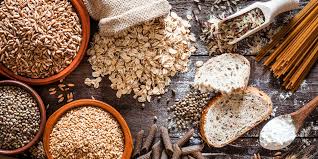
Grains are cereal crops, primarily grasses, cultivated for their edible seeds or grains. These crops are rich in nutrients and contribute significantly to a healthy diet. Various grains can be used in multiple forms for cooking and baking.
Read Also: Methods of Castration in Sheep and Goat
Major Types of Grains in Culinary Use
1. Barley: A Versatile Cereal Crop
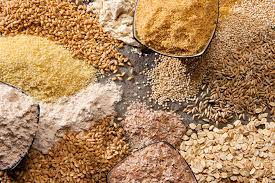
After wheat, rice, and corn, barley ranks as the fourth most important cereal crop globally. Its hardiness allows cultivation in diverse climates, planted in either spring or fall. A staple in Asia and Mediterranean countries, barley is also grown in the northwest quarter of the contiguous United States, from Minnesota to Washington.
Barley offers a nutty, slightly sweet flavor, with grain colors ranging from light tan to shades of brown or purple. The outer husk and bran layers are often removed, producing “pearled” or “polished” barley, which is used to create barley flour, flakes, malt, and malt syrup.
2. Buckwheat: A Nutritious Herb
Though processed like a cereal grain, buckwheat is an herb related to rhubarb and sorrel, native to Russia. It thrives in poor, rocky soil and is ready for harvest in less than 60 days, allowing two crops per season in colder climates. Naturally pest-resistant, it requires no fertilizer.
Grown in temperate regions like northeastern Europe, Russia, the northeastern United States, the Great Lakes area, and parts of Canada, buckwheat is exported, particularly to Japan for soba noodles.
Its triangular seeds are used in hot cereals, sausage fillers, soups, and savory side dishes. Ground into flour, buckwheat is ideal for pancakes, crepes, muffins, and soba noodles. With an earthy, grassy flavor and a slight cocoa note, roasted buckwheat (kasha) is darker and stronger than unroasted varieties.
2. Corn: A Global Staple
Corn, alongside rice and wheat, is one of the three most important grain crops worldwide. This tall cereal plant, reaching up to 10 feet, is recognizable by its drooping leaves and large ears, ranging from half a foot to one foot, containing kernels.
Native to the Western Hemisphere, most corn production occurs in the Midwest and Plains states of the United States. Globally, corn is often called maize, and in some regions, the term “corn” refers to any local cereal grain.
i. Flint Corn
Flint corn is known for its multicolored ears, often used as autumn decorations, called “Decorative Corn” or “Indian Corn.” Its vibrant kernels—yellow, orange, red, blue, purple, or black—are hard but can be ground into meal for human consumption. Flint corn is commonly used for polenta, hominy (posole), and masa farina for tamales and tortillas.
ii. Flour Corn
Flour corn is grown specifically for corn flour production. Its starchy, soft kernels make milling easier compared to harder varieties like flint corn, which are typically ground into coarse meal.
iii. Popcorn
Popcorn, a dried corn variety with high moisture content (about 14% water), creates steam when heated, causing kernels to explode. This unique property makes it ideal for popping.
iv. Sweet Corn
Often considered a vegetable due to its fresh consumption, sweet corn has higher sugar content than other corn types. Its sugar converts to starch post-harvest, so it is best eaten fresh. Varieties include white corn, yellow corn, and a hybrid known as peaches and cream or butter and sugar corn.
3. Farro: An Ancient Italian Grain
Farro, an ancient Italian grain similar to barley, is a type of spelt or wheat in the United States. A hulled grain, its hull adheres during harvest, like barley and oats, and is removed during processing. Available whole or cracked, farro varies in texture, with cracked farro resembling bulgur. It is used in polenta, breads, salads, soups, stews, side dishes, and meat stuffing, offering a nutty flavor.
4. Flaxseed: A Nutrient-Rich Seed
Flax, native to Europe and Asia, is grown for its fiber or seeds in cool, moist climates. Though not a true grain, its seeds are used like one, historically ground into flour or meal.
Today, flaxseed is often a food additive, valued for its nutty flavor and nutritional benefits. It is added to yeast breads, cereals, and salads. Most U.S. flax is used for linen, paper, twine, and linseed oil for paints and varnishes.
5. Job’s Tears: A Teardrop-Shaped Grain
Job’s Tears, a tall cereal grass from Asia and Africa, is rarely found in the Western world. Its teardrop-shaped, polished grains resemble barley and are boiled or steamed for soups and casseroles.
6. Kamut: An Ancient Egyptian Grain
Kamut, a brand name for an ancient Egyptian grain related to durum wheat, is grown mainly in Montana and Canada. Its large kernels, two to three times the size of typical wheat, have a nutty, buttery flavor. Sold as whole grain, flour, or flakes, Kamut is used in soups, salads, pilafs, side dishes, cereals, crackers, breads, and pasta.
7. Millet: A Versatile Small-Seeded Grain
Millet, a group of plants bearing small seeds, grows up to six feet with large seed heads. Cultivated for centuries in Europe and Asia, it is a key food source in African developing nations and used as birdseed in the United States.
Varieties like foxtail, pearl, proso, finger (bajra), and bulrush millet suit different climates. With a mild sweetness and crunchy texture, millet is used in cereals, side dishes, polenta, soups, stews, and desserts, especially when toasted.
8. Oats: A Cool-Climate Crop
Oats thrive in cool, moist climates, unsuitable for wheat or corn. Grown in the northern United States, oats are classified as winter or summer varieties, with colors ranging from beige to black. After hull removal, the bran and germ remain, preserving nutrition. About 90% of U.S. oats are used for animal feed, with the rest processed into oat bran, flakes, oatmeal, and flour.
9. Quinoa: A Nutrient-Dense Pseudo-Grain
Quinoa, pronounced “KEEN-wah,” is not a true grain but is used as one. Part of the beet family, it grows up to 10 feet, producing tiny bead-shaped seeds in colors from beige to black.
Thriving in poor soil and high altitudes, quinoa was vital to the Incan civilization. Mostly imported from South America, it is also grown in Colorado’s Rocky Mountains. Cooked quinoa swells significantly, offering a tender, springy texture.
10. Rice: A Global Dietary Staple
Rice provides nearly 50% of daily calories for half the world’s population. Grown in river deltas, coastal plains, or terraced hillsides, rice thrives in subtropical and temperate climates. Asia dominates global production, while the U.S. grows rice in the lower Mississippi Valley and California, exporting over half.
White rice, with husk, bran, and germ removed, cooks quickly but is less nutritious unless enriched. Brown rice retains the bran and germ, and rice bran oil is used for cooking.
11. Rye: A Hearty Northern Grain
Rye is widely used In northern and eastern Europe, including Scandinavia and Russia, due to its suitability for cool climates. With an assertive, slightly bitter flavor, rye grains range from beige to dark gray. Processed into whole kernels, flakes, meal, or flour, rye is used in stews, stir-fries, soups, and alcoholic beverages like whiskey and vodka.
12. Sorghum: A Drought-Tolerant Crop
Sorghum, native to Africa, is cultivated globally and often confused with millet. Growing up to 20 feet, it thrives in hot, arid climates. White sorghum is used for food, red sorghum for brewing beer. Its sweet, nutty flavor suits steaming, soups, and casseroles. In the U.S., most sorghum is used for animal fodder and syrup, but it is a staple in India, China, and arid African nations.
13. Spelt: An Ancient European Grain
Spelt, related to wheat, originated in southern Europe. Its hull remains intact until processing, protecting the kernel but requiring more milling time. With a mild, nutty flavor and a hint of hazelnut, spelt is used in European polenta, breads, and pasta, known as “farro” in Italy and “dinkel” in Germany.
14. Teff: Ethiopia’s Tiny Staple
Teff, a staple in Ethiopia, grows in poor soil and rugged highlands. Its tiny grains 150 equal one wheat grain range from white to brown. White teff has a mild flavor, while red and brown varieties suit spicy dishes. Teff is used for porridge, polenta, and injera, a sour Ethiopian flatbread.
15. Triticale: A Wheat-Rye Hybrid
Triticale, a high-protein grain from crossbreeding wheat and rye, combines wheat’s bread-making qualities with rye’s durability. Developed in the late 19th century and commercialized after 1970, it resembles wheat but has larger heads and a nuttier flavor. Used in breads and baked goods, triticale adapts to various climates but remains less popular.
16. Wheat: A Cornerstone of Global Diets
Wheat, with rice and corn, is one of the three most important grain crops, primarily used for human consumption. Grown in temperate climates, especially the U.S. Great Plains, wheat plants reach over four feet. Wheat is categorized by:
i. Kernel Hardness
Hard wheat, high in protein (10–14%), forms strong gluten, ideal for yeast breads. Soft wheat (6–10% protein) suits cakes and pastries.
ii. Bran Color
Bran is red or white.
iii. Growing Season
Spring wheat is planted in spring and harvested in late summer or fall in cold-winter areas. Winter wheat, planted in autumn, is harvested in early summer in milder climates.
iv. Key Wheat Varieties
a. Hard Wheat: Includes hard white, hard red winter, and hard red spring, used for yeast breads.
b. Soft Wheat: Includes soft white and soft red winter, used for cakes, cookies, and pastries.
c. Durum Wheat: The hardest wheat, used for pasta as semolina, high in protein and gluten.
17. Wild Rice: An Aquatic Grass
Wild rice, an aquatic grass from Minnesota, Wisconsin, and Canada, bears edible seeds. Known as “Mahnomen” (good berry) by Native Americans, true wild rice is hand-harvested, making it expensive. Cultivated wild rice, grown in controlled paddies, is more affordable.
Requiring cold water (below 40ºF) for germination, wild rice grows in shallow, clear water. Harvested manually in canoes, its grains vary in length (½ to 1 inch) and color (yellow to black). With a chewy texture and nutty flavor, wild rice is used alone, in blends, or in soups, casseroles, salads, and as a side dish with poultry or fish.
Read Also: Ruminant Animals: A Comprehensive Guide
Forms of Grains for Culinary Applications
1. Whole Grains
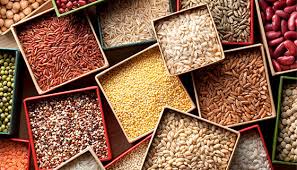
Whole grains undergo minimal processing, with only the outer hull removed. Retaining the nutrient-rich bran and germ, they require the longest cooking time but are the most nutritious.
2. Pearled Grains
Pearled grains have the bran layers removed, reducing fiber but allowing faster cooking and a tender texture. Also known as polished grains.
3. Grits
Grits are kernels cut into smaller pieces, enabling quick cooking. Also called steel-cut or cracked grains.
4. Grain Flakes
Grain flakes are steamed and rolled into flattened kernels, cooking faster. Also known as rolled grains.
5. Meal
Meal is grain ground into a coarse, sandy texture, used in breads and cereals.
6. Bran
Bran, the nutrient-packed outer layers of the kernel, is high in fiber and often sold separately, like oat or rice bran, as a supplement or additive.
7. Germ
The germ, the embryo of the kernel, is nutrient-rich but contains fat, reducing shelf life. It is located at the kernel’s base.
8. Flour
Flour is grain ground and sifted into a powder, varying from soft to coarse. It is the primary ingredient for breads, cakes, pastries, and other baked goods.
Do you have any questions, suggestions, or contributions? If so, please feel free to use the comment box below to share your thoughts. We also encourage you to kindly share this information with others who might benefit from it. Since we can’t reach everyone at once, we truly appreciate your help in spreading the word. Thank you so much for your support and for sharing!