


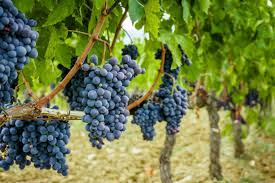
The grapevine was introduced to Nigeria by pilgrims from the Middle East and Christian missionaries from Europe. Previously, grapevine cultivation was limited to a few stands in backyards and vegetable gardens, with little success due to the lack of knowledge in its cultivation.
Successful grapevine cultivation requires substantial capital investment and intensive maintenance. A well-managed vineyard will yield good harvests and, in turn, generate significant profits. Ripe fruits are eaten fresh as dessert, and grape juice, raisins, and wine are also produced from them.
Read Also: The Most Lucrative between Production of Fish Fingerlings or Raising them to Table Size
Climate and Soil
Grapes are primarily grown in temperate and subtropical regions. The vines shed their leaves to rest in winter, produce new shoots in spring, and mature in summer. In tropical regions, however, the vines remain evergreen and yield poorly unless special pruning techniques are applied.
Humid tropical conditions favor pests and diseases, making them unsuitable for grape cultivation. Rain during flowering leads to poor fruit set, and during ripening, it causes berry splitting.
The grapevine can tolerate temperatures up to 35°C during the dry season, provided it is adequately irrigated. Grapes can be grown on a variety of soils with good drainage.
Since the root system of the grapevine does not exceed one meter in depth, silty and loam soils are ideal. Acidic soils may require fortification with calcium for optimal growth.
Propagation of Grapevine
For large-scale cultivation, grapevines are typically propagated by cuttings. Seed propagation is mainly used for breeding work. Grafting and budding on rootstocks can also be practiced to obtain resistance to phylloxera pests or nematodes, or to increase the vigor of weak-growing grapevine varieties.
However, if propagation through seed or rootstock is unnecessary, cuttings should be the preferred method. When selecting cuttings, choose mature wood from the previous season’s growth during grape pruning.
Each cutting should be at least 8mm thick (about the thickness of a pencil), and the basal cut should be made just below a bud. Mallet cuttings (those that bear a small portion or heel of the previous growth) root more easily. The cutting should also be at least three buds long.
To prevent the cuttings from drying out, store them in moist sacks or in wet soil, sand, or sawdust. The cuttings should be planted before any root or shoot growth occurs.
Plant the cuttings in well-prepared nursery soil, ensuring it is well-fertilized and free of weeds. Polythene bags can be used to raise seedlings for transplanting. For the soil mixture, use two parts topsoil to one part sand in a 2:1 ratio. For every kerosene tin-full of this mixture, add a handful of super phosphate fertilizer.
Fill the polythene bags with the soil mixture, water thoroughly, and plant one cutting per bag with one or two buds above the soil surface. Firm the soil around the cutting. Water the cuttings as needed until good sprouts and sufficient roots are established, before transplanting.
Grapevine Land and Planting Preparation

Grapevines are typically planted in pits, although it is preferable to plough and harrow the land at the start of the rainy season. Plant the vines at equal distances using the square system with the following spacing:
1. Anab-e-shahi: 5 x 5 m
2. Thompson seedless: 2.5 x 2.5 m
3. Black Hambury: 3.5 x 3.5 m
4. Blue grapes: 3.5 x 3.5 m
Dig rectangular pits measuring 72 cm deep by 50 cm wide at the specified distances. During digging, place half of the topsoil on one side and the other half of the dug soil on the opposite side.
To the top half of the soil, add an equal amount of well-decomposed organic matter, preferably animal manure, and mix them thoroughly. Then, add 5 kg of single phosphate and mix well. Plant vigorous, healthy rooted cuttings aged 6 to 12 months.
The rooted cuttings can be planted anytime between January and June. Place the plant deep in the center of the pit, ensuring that half of the plant is exposed. Compact the soil around the plant with your foot and water generously.
Staking of Grapevine
Support the vine with a stick of approximately two meters in height. Paint the stick with tar or old engine oil to prevent termite attacks. It will take about one month for the transplanted young plant to establish itself. As the vine grows, leave only one single shoot to develop.
Tie the shoot to the stick at every half-meter distance using a 1 cm wide strip of polythene. Regularly nip all side branches that appear, allowing the main shoot to climb up to a height of 2 meters.
Training and Pruning

The following are the terms used in training and pruning grapevines. Understanding these terms is essential before discussing the training and pruning process:
1. Trunk or main stem: This refers to a single stem that is raised to a height of 2 meters.
2. Arms or secondary stems: These are two horizontal branches (one on each side of the vine along the bower), which branch off at a height of 2 meters.
3. Tertiary: These are shoots initially produced up to 1 meter in length, which are allowed to extend up to a maximum of 2 meters. A vine typically has 20 tertiary shoots, with 10 on each side.
4. Cane: A shoot that is pencil-thick and turns brown as it ripens. This ripening process occurs 100 days after pruning the vine.
5. Spur: A cane that has been cut back to one bud in order to produce the next year’s fruiting cane.
Vines are trained to take on various shapes and forms, typically in relation to the type of support used, which dictates the positioning of the trunk, arms, and canes.
Numerous modifications of grapevine training have been adopted worldwide. In Nigeria, the overhead horizontal bower system (also known as the A-bower system) is considered the most suitable for achieving high yields.
Pruning is an essential operation performed when the vine reaches one year of age. It is carried out twice a year: once in September for fruit security, and again in March after the harvest. In March, cut back the cane to produce the spur.
Tendrils, which are hair-like structures resembling coiled springs and are located opposite each leaf, should be removed every three days. After pruning, bury all leaves in the soil, leaving the vine leafless for three weeks. Apply manure to the vine three to five days before pruning, as outlined in the manuring section.
In September, after the rains, pruning should be done. Only the canes or ripened shoots are to be cut back, leaving three to twelve buds, depending on the variety grown:
1. Anab-e-shahi: 5-7 buds
2. Thompson seedless: 10-12 buds
3. Blue grapes and others
4. Black Hambury: 3-5 buds
Any mistakes in cutting or pruning can result in crop loss. All leaves and green shoots removed during pruning should be buried in the vineyard, as they serve as good manure.
Manuring and Irrigation of Grapevine
From the outset, it is important to understand that grapevines are voracious feeders and require large quantities of manure and fertilizers. The initial manure and fertilizer requirements were described above at planting.
Apply a compound fertilizer (15:15:15) at a rate of 50 g per plant, broadcasting it in a 1-meter radius around the vine at fortnightly intervals, starting one month after planting and continuing up to five months. Gently rake the soil with a hoe every week.
As the vine grows, apply 100 kg of manure per plant over a 2-meter radius around the plant and hoe the manure into the soil to a depth of 5 cm. This manure application should be done twice a year during each pruning session. Following this, apply 15:15:15 compound fertilizer at 2.5 kg per plant in six doses, spaced at fortnightly intervals.
One year after transplanting, apply muriate of potash at a rate of 2 kg per plant, and do so only during the September pruning.
Young vines typically require watering every alternate day with 75 liters of water, while older vines need 350 liters every three days. Water should be applied in a basin with a 2-meter diameter around each plant. Irrigation is not necessary during the wet season unless there is a break in rainfall lasting more than two weeks.
Read Also: The Ultimate Step-by-Step Guide to Vegetable Gardening
Weeding and Harvesting of Grapevine

Special attention should be given to keeping the vineyard free from weeds through occasional shallow cultivation. Young grapevines are very sensitive to herbicides, so no herbicides should be used during the first 3 to 4 years.
Fruits do not ripen or improve much after harvesting, so grapes should only be plucked when fully ripe. Grape bunches typically ripen 125 to 150 days after manuring.
Ripeness in grapes is determined by several indicators, such as the waxy bloom on the fruits, the development of characteristic color, slight thickening of the juice, easy detachment of berries, browning of cluster stems, separation of seeds from the pulp, and the sweetness of the berries.
Grapevines begin bearing fruit from the second year of planting, with yields increasing as the vine ages. However, if the vines produce a heavy yield one year, the following year will likely see a reduced yield due to exhaustion.
Yields can vary from 10 to 25 tons per hectare, depending on the variety, method of training, pruning, irrigation, and manuring.
Under tropical conditions, grapevines may continue to produce fruit for up to 25 years with good management. Severely heading or pruning the vine back to the ground can help revive an old grapevine.
Pest and Disease of Grapevine

Fruits in grapevines are produced during the dry season, meaning there are fewer disease problems to contend with. However, some important diseases and pests may still occur, including the following:
1. Birds: Birds can seriously damage fruits just as they ripen. Protect the fruits by covering them with cloth bags, plastic netting, or chicken mesh wire. Bird scarers can also be used during the day.
2. Powdery mildew: This disease affects the berries and leaves. It can be controlled by spraying 30g of sulphur in 18 liters of water at weekly intervals.
3. Downy mildew: This affects the twigs, buds, flowers, and fruit, causing white growth on the lower surface of the leaves, which later turn brown. Control it by pruning and burning the affected parts.
4. Anthracnose: This presents as dark brown oval spots on the leaves, twigs, and fruits, especially during the rainy season. Prune the affected parts and spray with difiltom or dithane M 45 at 0.1% in water at weekly intervals.
5. Termites: Termites damage the roots and stems, potentially killing plants. Control them by applying diedrex, aldrex T, or gamlin at the rate of one tablespoon in a liter of water per plant, applied every 4 weeks.
In conclusion, grapevine cultivation is typically associated with temperate and sub-temperate regions of the world. However, with proper management, it can be successfully cultivated in tropical regions that experience distinct rainy and dry seasons, as well as dry and cool spells.
Grapevines can be successfully grown in the northern parts of Nigeria, provided there is good management and intensive care. The fruits are used for desserts, eaten fresh, or processed in wine factories.
Do you have any questions, suggestions, or contributions? If so, please feel free to use the comment box below to share your thoughts. We also encourage you to kindly share this information with others who might benefit from it. Since we can’t reach everyone at once, we truly appreciate your help in spreading the word. Thank you so much for your support and for sharing!
Read Also: What You Need to Know About Osteospermum
Frequently Asked Questions
We will update this section soon.