



Public Group
Active 8 months, 1 week ago
Group Type By Country
Group Leadership
- Group Administrators
-

Egypt Farmers Community
Strawberry Export Process in Egypt
- This topic is empty.
- AuthorPosts
- August 11, 2025 at 2:24 pm #671712

 Agric4ProfitsModerator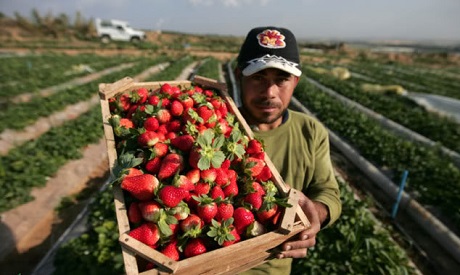
Strawberries are one of Egypt’s most successful export crops, contributing significantly to the country’s agricultural export revenues. Thanks to its favorable climate, fertile soil, and extended growing seasons, Egypt has become one of the top strawberry exporters globally. Egyptian strawberries are especially popular in European and Middle Eastern markets due to their high quality, competitive pricing, and availability during winter months when European production is low.
This article provides a step-by-step guide to the strawberry export process in Egypt. It outlines the major production areas, export requirements, post-harvest handling practices, quality and packaging standards, and the logistics involved in reaching international markets.
Whether you are a farmer, exporter, or investor, understanding the strawberry export process can help you navigate compliance, increase profitability, and tap into global demand. With strong government support, improved infrastructure, and strict quality controls, Egypt is well-positioned to maintain its leadership in strawberry exports. By the end of this article, readers will have a clear roadmap for entering the strawberry export business and scaling it successfully.
1. Major Strawberry Production Areas in Egypt.
Strawberries are mainly cultivated in specific regions of Egypt known for their optimal growing conditions. The most prominent production areas include Ismailia, Qalyubia, Beheira, Sharqia, and parts of Giza and Alexandria. These regions benefit from sandy soils, abundant sunlight, and relatively mild winters, all of which are ideal for strawberry growth.
Farmers in these regions typically plant between October and November, allowing for a harvesting season that runs from December to May, which aligns perfectly with high-demand periods in European and Gulf markets. The availability of irrigation from the Nile and modern agricultural practices has significantly boosted yield and fruit quality. Export-focused farmers in these areas often use varieties such as Festival, Florida, and Fortuna, which are favored for their firmness, shelf life, and taste.
The proximity of these regions to air and sea ports also facilitates timely transport, preserving freshness. Understanding these production zones is key for exporters looking to establish supply partnerships or invest in high-yield farms geared for international trade.
2. Meeting Export Quality and Safety Standards.
To successfully export strawberries from Egypt, growers and exporters must adhere to international quality and food safety standards. Export markets, especially in Europe and the Gulf, have strict requirements concerning pesticide residue levels, hygiene, packaging, and traceability.
Compliance with standards such as GlobalG.A.P., ISO 22000, or BRC Food Safety is often mandatory. Exporters must work closely with certified farms that follow Good Agricultural Practices (GAP), including safe use of agrochemicals, proper irrigation methods, and hygiene protocols during harvesting.
Strawberries destined for export must be uniform in size, free from damage, mold, or pests, and picked at the correct ripeness to ensure they arrive in optimal condition. Pre-harvest intervals for pesticides must be observed strictly. Samples from each batch are usually tested by accredited laboratories to ensure residue levels comply with destination country regulations.
Certifications must be obtained in advance and updated annually. Adhering to these quality and safety measures not only ensures compliance but also enhances brand reputation and access to premium international markets.
Read Also: Mango Farming in Egypt
3. Post-Harvest Handling and Cold Chain Management.
Post-harvest handling is one of the most critical phases in the strawberry export process due to the fruit’s delicate nature and short shelf life. After harvesting, strawberries must be immediately cooled to reduce respiration and slow spoilage. This begins with field cooling, followed by pre-cooling in refrigerated storage within hours of harvest.
The strawberries are then graded, sorted, and packaged in climate-controlled facilities to maintain freshness. Packaging typically involves plastic punnets or clamshell containers with ventilation holes, which are then placed in cartons for easier transport. Packaging must be secure and labeled according to import country regulations, including origin, variety, net weight, and barcodes.
Cold chain management must be strictly maintained from the farm to the export terminal. The ideal temperature for strawberries is between 0 to 2°C, and relative humidity should be kept at around 90 to 95%. Any breaks in the cold chain can cause rapid deterioration, leading to rejected shipments and financial loss.
Proper post-harvest handling ensures that Egyptian strawberries arrive fresh and attractive in global markets, preserving their reputation for high quality.
4. Export Documentation and Regulatory Compliance.
Successful strawberry export from Egypt involves careful handling of all legal and logistical documentation. Exporters must first register with the Egyptian General Organization for Export and Import Control (GOEIC) and ensure their products are listed among permitted export commodities.
Key documents required include:
a. Commercial invoice
b. Packing list
c. Phytosanitary certificate (issued by the Egyptian Ministry of Agriculture)
d. Certificate of origin
e. Export license
f. Laboratory residue test reports
g. Bill of lading (for sea freight) or Airway bill (for air freight)
The phytosanitary certificate confirms that the strawberries are free from pests and meet the importing country’s plant health standards. Residue tests must be conducted by approved labs to ensure pesticides are within safe limits.
Documentation must be carefully verified before customs clearance. Errors or omissions can delay shipments and result in penalties. Many exporters hire experienced freight forwarders and customs brokers to ensure that all paperwork complies with both Egyptian and foreign regulations.
Regulatory compliance protects both the exporter and importer while ensuring that Egyptian strawberries meet global food safety expectations.
5. Transport and Market Access for Egyptian Strawberries.
Transport plays a vital role in maintaining the quality of exported strawberries. Due to their perishable nature, strawberries are usually shipped by air freight to reach markets within 24 to 48 hours. However, advancements in cold chain logistics have made sea freight a viable option for closer destinations such as Gulf countries and parts of Europe.
Transport vehicles and containers must be refrigerated and pre-cooled to maintain optimal temperatures. Coordination between farms, logistics providers, and customs is essential to avoid delays.
Egypt’s main export markets for strawberries include:
a. European Union countries (Germany, the UK, Netherlands)
b. Gulf Cooperation Council countries (Saudi Arabia, UAE, Kuwait)
c. Russia and Eastern Europe
Exporters often work with international distributors, supermarket chains, and wholesalers. Participating in trade fairs and export promotion programs organized by Egypt’s Agricultural Export Council can also help establish new market links.
Understanding destination market regulations, labeling preferences, and consumer behavior helps exporters better position their products. With the right infrastructure and planning, Egyptian strawberry exporters can expand their global footprint and increase profitability.
- AuthorPosts
- You must be logged in to reply to this topic.