



Public Group
Active 8 months, 1 week ago
Group Type By Country
Group Leadership
- Group Administrators
-

Ghana Farmers Community
Palm Oil Production in Ghana
- This topic is empty.
- AuthorPosts
- August 19, 2025 at 10:50 am #673042

 Agric4ProfitsModerator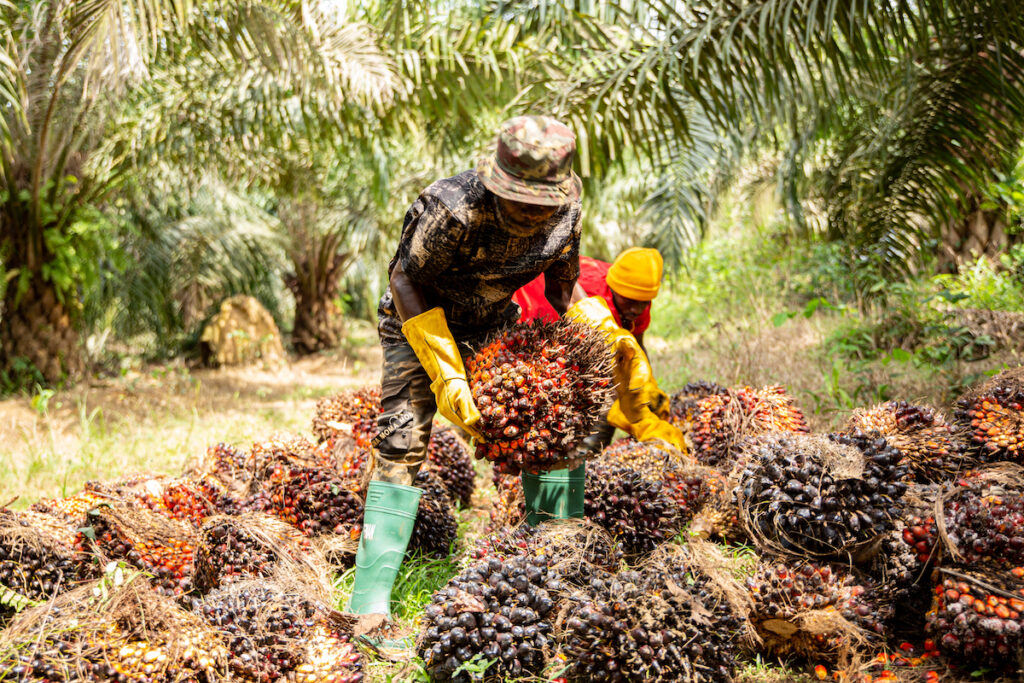
Palm oil production plays a significant role in Ghana’s agricultural and industrial economy. Derived from the fruit of the oil palm tree (Elaeis guineensis), palm oil is widely used for cooking, soap making, cosmetics, biofuel, and in food processing industries. It is one of the most consumed vegetable oils in Ghana and across West Africa. Beyond domestic consumption, palm oil also has export potential, making it a vital income-generating crop for smallholder farmers and agro-industries.
Ghana has a suitable climate for oil palm cultivation, particularly in the Western, Central, Ashanti, Eastern, and parts of the Volta regions. These areas offer the high rainfall and humid conditions needed for oil palm to thrive. The country has both wild groves and commercial plantations, with small-scale processors dominating local palm oil production.
Despite its importance, the palm oil sector in Ghana faces challenges such as low yields, outdated processing techniques, post-harvest losses, and competition from imported oil. However, growing demand and government efforts through initiatives like the Tree Crop Development Authority (TCDA) are creating new opportunities for investment and modernization in the sector.
This article provides a detailed guide to palm oil production in Ghana. It outlines the major stages involved, from oil palm cultivation to harvesting, processing, and marketing. It also covers key issues such as variety selection, processing technologies, value addition, and challenges in the industry.
Whether you’re a smallholder farmer looking to improve productivity or an entrepreneur exploring agro-processing opportunities, palm oil production offers profitable and sustainable potential. With the right practices, tools, and market knowledge, you can tap into one of Ghana’s oldest yet most promising agricultural sectors.
Let’s explore how palm oil is produced in Ghana and how to make it a successful agribusiness venture.
1. Cultivation of Oil Palm in Ghana
The first step in palm oil production is cultivating the oil palm tree, a crop that thrives in Ghana’s tropical climate. The ideal growing zones are the southern and middle belt regions, especially the Western, Central, Ashanti, Eastern, and parts of Volta Region. These areas receive the required 1,500–2,500 mm of rainfall annually and have warm temperatures ranging from 24 to 32°C.
There are two main varieties of oil palm grown in Ghana: Dura, which has thick shells and lower oil content, and Tenera, a hybrid of Dura and Pisifera, which produces higher oil yields and is the most commonly planted variety for commercial production.
Oil palms are typically propagated using seedlings from certified nurseries. It takes about 3 to 4 years for the trees to begin fruiting, with peak yields achieved from years 7 to 18. Proper site selection is crucial—choose deep, well-drained loamy soils and avoid waterlogged or stony lands.
Planting is usually done at a spacing of 9 meters by 9 meters in a triangular pattern to allow adequate sunlight and airflow. Weed control, mulching, pruning, and regular fertilization are essential to ensure healthy growth and high fruit yield.
a. Organic manure or NPK fertilizers are commonly used depending on soil tests.
b. Pests like rhinoceros beetles and diseases like fusarium wilt can affect yields, so regular monitoring and integrated pest management practices should be adopted.
c. Intercropping with crops like maize, cassava, or legumes during the first few years is a common strategy for income diversification and weed suppression.With good management, a well-maintained plantation can yield between 10 to 20 tonnes of fresh fruit bunches (FFB) per hectare annually, laying a strong foundation for profitable palm oil production.
Read Also: The Role of Palm Oil in Afang Soup Production and Local Economies
2. Harvesting and Post-Harvest Handling
Harvesting is a critical stage in palm oil production that directly affects the quality and quantity of oil extracted. In Ghana, oil palm trees begin producing fresh fruit bunches (FFB) between 3 to 4 years after planting. Each mature bunch can weigh between 10 to 25 kilograms and contains hundreds of oil-rich fruits.
The ideal time to harvest is when the fruit bunch begins to loosen and some fruits naturally fall to the ground. This indicates maximum oil content. Harvesting too early leads to lower oil yield, while late harvesting increases the risk of spoilage.
a. Harvesting is typically done manually using a chisel or sickle attached to a long pole, especially for taller trees.
b. Once harvested, the FFBs must be processed within 24 to 48 hours to prevent fermentation, which can spoil the oil and reduce its quality.
c. Delays in processing also increase the level of free fatty acids (FFAs), which negatively affect oil purity and shelf life.Post-harvest handling involves stripping fruits from bunches, cleaning, and preparing them for processing. Fruits should be stored in shaded, dry areas and not heaped in large piles to prevent internal heating and fermentation.
a. Transport to the processing site should be timely and careful to avoid fruit damage.
b. Community-based collection centers can be helpful for smallholders with limited transport access.
c. Proper timing and handling at this stage can significantly improve the quality and quantity of oil produced.Effective harvesting and handling ensure that the palm fruits retain their oil content, reduce wastage, and contribute to overall profitability in the production process.
3. Palm Oil Processing Methods in Ghana
Palm oil processing involves converting fresh fruit bunches into crude palm oil through a series of mechanical and chemical steps. In Ghana, processing methods range from traditional, labor-intensive systems to modern, mechanized facilities depending on scale and investment.
a. Traditional methods involve boiling fruits, pounding them manually, and squeezing out the oil.
b. While affordable, this method yields lower-quality oil and is time-consuming.
c. Semi-mechanized and fully mechanized processing is more efficient, hygienic, and scalable.A typical modern palm oil mill includes stages such as:
a. Sterilization – Boiling or steaming bunches to loosen fruits and deactivate spoilage enzymes.
b. Stripping – Separating fruits from the bunches, manually or using machines.
c. Digestion – Crushing and mashing fruits to release the oil.
d. Pressing – Using hydraulic or screw presses to extract oil.
e. Clarification – Boiling or settling oil to remove impurities.
f. Storage – Drying and storing oil in clean, sealed containers or tanks.These machines improve oil yield, reduce contamination, and allow the recovery of by-products such as palm kernel oil and cake.
a. Locally fabricated machines are available and cost-effective.
b. Some producers start with manual pressing and scale up gradually.
c. Training is essential for machine operation and maintenance.Modernizing your processing system ensures product consistency, meets food safety standards, and improves competitiveness in the growing domestic and export markets.
4. Value Addition and By-Products in Palm Oil Production
Palm oil production offers various opportunities for value addition and full utilization of the oil palm tree. Beyond crude palm oil (CPO), a variety of profitable by-products can be developed to diversify income streams and reduce waste.
a. Refined palm oil – Crude oil can be refined, bleached, and deodorized into cooking oil.
b. Palm kernel oil (PKO) – Extracted from the inner seed, used in soaps, cosmetics, and food production.
c. Palm kernel cake (PKC) – A protein-rich by-product used in animal feed.Other by-products and value-added products include:
a. Palm oil sludge – Can be turned into soap or organic fertilizer.
b. Empty fruit bunches (EFB) – Used for compost, mulching, or bioenergy.
c. Fronds and trunk fibers – Serve as raw material for crafts, fencing, and construction.Packaging and branding palm oil for retail adds value and expands market reach.
a. Small bottles with attractive labels sell well in urban centers.
b. Products labeled “organic,” “local,” or “pure” can command higher prices.
c. Soap making and cosmetic industries offer additional business avenues.Investing in value addition improves profitability, supports sustainable farming, and builds resilience in case of price fluctuations in the crude oil market.
5. Marketing, Challenges, and Opportunities in the Sector
Marketing is crucial to the success of any palm oil business. Ghana has a strong local demand for palm oil, used daily in homes, food services, and industries. However, reaching the right market with the right product requires strategy and adaptability.
a. Local markets, retailers, food vendors, and cosmetic producers are key buyers.
b. Branded and bottled palm oil can attract supermarkets and urban consumers.
c. Export markets offer high returns, especially with value-added products.Challenges in the sector include:
a. Limited access to finance for equipment and working capital.
b. Competition from cheaper, imported vegetable oils.
c. Inconsistent supply of fresh fruit bunches due to seasonal and logistical issues.Infrastructure challenges such as poor roads and lack of storage facilities also affect transportation and product preservation. In addition, regulatory hurdles such as FDA certification and labeling standards must be met to sell to formal markets.
However, there are significant opportunities for growth.
a. Government initiatives like the Tree Crop Development Authority (TCDA) support oil palm farming.
b. Growing consumer awareness is creating demand for healthier, locally produced oils.
c. Processing cooperatives and aggregators are reducing costs and improving efficiency for smallholders.With proper branding, adherence to quality standards, and investment in value addition, palm oil producers in Ghana can tap into a large, expanding market both locally and internationally.\
Read Also: Concept and principles of water quality
- AuthorPosts
- You must be logged in to reply to this topic.