



Public Group
Active 8 months, 1 week ago
Group Type By Country
Group Leadership
- Group Administrators
-

Kenya Farmers Community
Onion Farming Guide in Kenya: From Planting to Profit
- This topic is empty.
- AuthorPosts
- July 22, 2025 at 1:59 pm #668527

 Agric4ProfitsModerator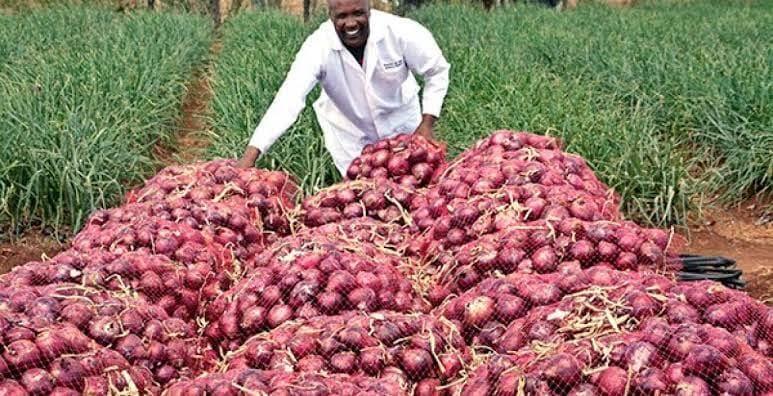
Onion farming is one of the most profitable horticultural ventures in Kenya, with high demand both locally and in neighboring countries. Onions are a staple ingredient in nearly every Kenyan household, hotel, restaurant, and food processing business, making them a reliable crop for income generation. Whether grown on a small scale or commercial level, onions offer good returns when grown under the right conditions and with proper management.
Kenya’s climate supports onion production in various regions such as Nyeri, Narok, Kajiado, Meru, Kitui, and parts of Rift Valley. Farmers can choose to grow red onions or spring onions depending on market preference, climate, and available resources. While red bulb onions are more popular for long-term storage and transport, spring onions are ideal for quick harvest and fresh market sales.
This guide provides a step-by-step overview of onion farming in Kenya, covering seed selection, nursery establishment, transplanting, soil and climate requirements, pest and disease control, harvesting, storage, and marketing. It also includes useful tips on irrigation, fertilizer application, and recordkeeping to help both new and experienced farmers maximize their profits.
The onion crop requires careful planning, especially because it is sensitive to poor drainage, diseases like downy mildew, and fluctuating market prices. Success depends on choosing the right variety, proper land preparation, pest control, and timing the planting to target high-demand seasons.
With proper agronomic practices, one acre of onions in Kenya can yield up to twenty to twenty five thousand kilograms. At a conservative farm-gate price of thirty to fifty shillings per kilogram, the potential income is significant.
Whether you are starting small or planning to scale up, this guide will equip you with the essential knowledge to succeed in onion farming and tap into one of Kenya’s most consistent horticultural markets.
1. Choosing the Right Onion Variety
The success of onion farming in Kenya begins with selecting the right variety for your region and market. Onion varieties differ in color, bulb size, maturity period, disease resistance, and storage ability. The most common types grown in Kenya include red creole, red passion, Jambar F1, Red Pinoy F1, and Bombay red.
Red creole is a popular open-pollinated variety that performs well in dry areas and is suitable for both short rains and irrigation. It has a deep red color, matures in about ninety to one hundred and twenty days, and stores well. It is ideal for farmers looking for a low-cost seed option and is commonly grown in places like Kajiado and Makueni.
Red passion and Red Pinoy F1 are hybrid varieties that are high-yielding, uniform in size, and mature quickly. They are suitable for regions with moderate rainfall or irrigation systems and offer better disease resistance than traditional varieties. These hybrids require more investment but give higher returns due to superior market quality and shelf life.
Jambar F1 is a new high-performing hybrid known for large bulbs and high yield. It is suitable for commercial farmers targeting supermarkets and bulk buyers. This variety requires good nutrition and proper spacing but gives excellent returns under good management.
Bombay red is a widely grown variety known for its strong aroma, deep color, and good shelf life. It is often used for local markets and performs well in dry, warm regions. However, it is more susceptible to fungal diseases in humid climates.
When choosing a variety, consider factors such as rainfall, temperature, soil type, market preference, and your budget. Certified seeds from reputable agro-dealers are recommended to ensure quality and disease-free planting. Avoid recycled or unknown seeds, which may give poor yields or bring disease to your farm.
Read Also: How to Cultivate Onions in Nigeria
2. Nursery Establishment and Land Preparation
Onions are first planted in a nursery before being transplanted into the main field. A well-prepared nursery ensures healthy seedlings, uniform growth, and strong resistance to diseases during the early stages. The nursery should be located near a water source, on well-drained soil, and protected from animals and heavy rain.
Prepare the nursery bed by digging to a fine tilth and raising it about fifteen to twenty centimeters above ground level to prevent waterlogging. Beds should be one meter wide and any convenient length. Mix in well-decomposed manure and a handful of DAP or starter fertilizer to encourage root development.
Sow seeds in shallow furrows spaced ten centimeters apart, then cover lightly with soil or fine compost. Water gently using a watering can and cover the bed with mulch such as dry grass to preserve moisture. Remove the mulch after germination, which occurs in about seven to ten days.
Seedlings take about thirty five to forty five days to reach transplanting size, which is when they are fifteen to twenty centimeters tall and pencil-thick. Harden the seedlings by gradually reducing watering for about one week before transplanting. This helps reduce transplant shock and increases survival rate in the field.
Meanwhile, prepare the main field thoroughly. Onion soil should be loose, well-drained, and rich in organic matter. Avoid waterlogged or compacted soils, which lead to bulb rot. Apply well-rotted manure and plow the land deeply. If possible, do soil testing to determine nutrient levels and pH, which should be between 6.0 and 6.8.
Prepare ridges or raised beds for better drainage. If using drip irrigation, lay out the lines before transplanting. A spacing of 10 cm by 15 cm or 10 cm by 20 cm is recommended for bulb onions to give them enough space to form healthy, uniform bulbs.
3. Fertilizer Use and Irrigation
Fertilizer application is critical for high yields in onion farming. Onions are heavy feeders and require a steady supply of nutrients, especially nitrogen, phosphorus, and potassium. However, applying too much or too little can lead to poor bulb formation or excess leaf growth without good yields.
At transplanting, apply DAP or TSP to promote strong root development. This should be banded near the roots and well incorporated into the soil. After two to three weeks, begin top-dressing with CAN or urea to encourage vegetative growth. Repeat every two to three weeks depending on crop condition and rainfall.
In mid-season, switch to potassium-rich fertilizers such as NPK or Sulphate of Potash to support bulb formation and improve storage quality. Always follow recommended application rates based on soil tests and manufacturer instructions. Excess nitrogen in late stages can delay maturity and reduce bulb storage life.
Irrigation is especially important in dry regions or during off-season production. Onions require consistent moisture during early growth and bulb development stages. However, overwatering causes rot and fungal diseases. Water deeply but less frequently to encourage deep root growth.
Drip irrigation is the best method for onions, as it delivers water directly to the roots, reduces disease spread, and saves water. If using furrow irrigation, make sure the beds are properly drained to avoid waterlogging.
Reduce irrigation during the last two to three weeks before harvest to allow bulbs to harden and dry properly. This also helps reduce the risk of rot and prepares the crop for better storage.
Monitoring crop health and adjusting irrigation and fertilizer based on weather and plant performance ensures higher yields, quality bulbs, and improved profitability for Kenyan onion farmers.
4. Pest and Disease Management
Like many horticultural crops, onions are vulnerable to pests and diseases, especially when grown under poor management or in humid conditions. Common onion pests in Kenya include thrips, cutworms, and onion flies. Diseases include downy mildew, purple blotch, bacterial soft rot, and fusarium basal rot.
Thrips are small, sucking insects that cause silvering and curling of onion leaves, leading to reduced photosynthesis and smaller bulbs. Thrips populations increase in hot, dry weather and can be controlled using insecticides such as lambda-cyhalothrin or natural methods like neem oil. Crop rotation and maintaining weed-free fields also help reduce infestations.
Cutworms attack young seedlings by cutting them at the base. They can be managed through proper field sanitation and by applying suitable pesticides at planting. Onion flies lay eggs at the base of plants, and the maggots feed on roots, causing wilting and death. Proper crop rotation and early planting reduce risks.
Downy mildew is a common fungal disease that causes whitish patches on leaves, stunted growth, and premature death. It thrives in cool, moist conditions and spreads rapidly. Use of fungicides like mancozeb, ridomil, or copper-based sprays can help control it. Ensuring good airflow between plants also reduces disease pressure.
Purple blotch causes purplish spots on leaves and stalks. It is controlled through crop rotation, proper spacing, and fungicide sprays. Soft rot and fusarium rot are soilborne and more common in poorly drained fields. Using raised beds, avoiding over-irrigation, and planting disease-free seedlings are key prevention measures.
Good crop hygiene, timely scouting, and alternating chemical groups help prevent resistance. Integrating cultural practices with chemical and biological control offers the most sustainable way to manage onion pests and diseases.
5. Harvesting, Storage, and Marketing
Onions are ready for harvest three to four months after transplanting, depending on the variety and growing conditions. Harvesting is done when the necks of the plants soften and the tops start falling over. This is a sign that the bulbs have matured and curing should begin.
Stop watering at least two weeks before harvest to allow the bulbs to firm up and reduce the risk of rot. Carefully uproot the onions using a hoe or by hand, making sure not to damage the bulbs. Leave the bulbs on the field for a few days to dry under shade and cure.
After curing, remove the tops to about five centimeters from the bulb and clean off excess soil. Proper drying is essential to reduce moisture content, which improves storage life. Onions can be stored in well-ventilated stores, baskets, or mesh bags. Avoid plastic bags as they trap moisture and promote rot.
Storage conditions should be cool, dry, and free from pests. Properly cured onions can last for up to six months, allowing farmers to sell them gradually when market prices are favorable.
Marketing onions involves finding reliable buyers such as supermarkets, hotels, food processors, and open markets. Value addition such as sorting by size and packaging improves market access and prices. Farmers should keep records of sales and prices to identify the best sales periods.
Many Kenyan farmers benefit from cooperative societies that help aggregate produce and negotiate better prices. Export opportunities exist for high-quality onions, especially to neighboring countries like Uganda and Tanzania.
By planning harvest and marketing strategically, onion farmers can maximize profits and reduce losses due to spoilage or price fluctuations.
Read Also: Guidelines for making a windmill
- AuthorPosts
- You must be logged in to reply to this topic.