



Public Group
Active 8 months, 1 week ago
Group Type By Country
Group Leadership
- Group Administrators
-

Nigeria Farmers Community
Best Feed for Broilers in Nigeria
- This topic is empty.
- AuthorPosts
- July 15, 2025 at 1:55 pm #667536

 Agric4ProfitsModerator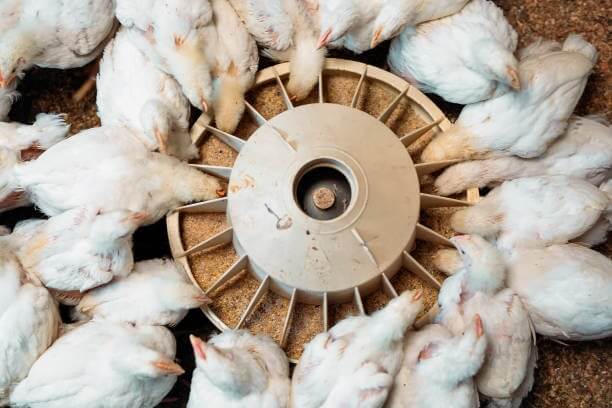
Feeding is one of the most important factors that determine the success of broiler farming in Nigeria. Whether you are raising broilers on a small backyard scale or running a large commercial poultry farm, the quality of feed you provide will directly impact the health, weight gain, and profitability of your birds.
Broilers are bred to grow quickly and convert feed into meat efficiently, but this only happens when they are given balanced, high-quality diets that meet their nutritional requirements at every stage of growth.
In Nigeria, feed accounts for more than sixty percent of the total cost of broiler production. As such, using the right type of feed not only ensures fast growth but also reduces waste and helps you achieve better returns on your investment. However, many farmers either use low-quality feeds or feed their birds incorrectly, resulting in slow growth, disease outbreaks, or high mortality rates.
This article provides a practical guide to choosing the best feed for broilers in Nigeria. It is designed for both beginner and experienced poultry farmers who want to understand what makes a good broiler feed, how to feed according to age stages, whether to use commercial or self-mixed feed, and how to avoid common feeding mistakes.
By the end of this article, you will have a clear understanding of the feed types suitable for broilers, what ingredients to look for, how much and how often to feed, and how to manage feed to improve conversion efficiency and profit. Let us begin by looking at the nutritional needs of broilers and the stages of feeding from day-old chicks to market-ready birds.
1. Nutritional Requirements and Feeding Stages of Broilers
Broilers require different levels of nutrients depending on their age and stage of growth. The three main nutritional components that must be present in broiler feed are protein, energy, and essential vitamins and minerals. Protein is vital for muscle development and body mass, energy comes mainly from carbohydrates and fats, while minerals and vitamins support bone development, immune function, and overall health.
Broiler feeding is typically divided into three stages. These are starter, grower, and finisher phases.
The starter phase runs from day 1 to around day 14. During this stage, chicks require high-protein and energy-rich feed to support rapid early growth. A good starter feed should contain between 20 and 24 percent crude protein and be easy to digest. Most farmers prefer feeding in mash form during this period to ensure the chicks can peck and eat comfortably.
The grower phase usually spans from week 3 to week 5. At this stage, the protein requirement drops slightly to about 18 to 20 percent, but energy levels should remain high to support ongoing weight gain and body structure. Grower feed can be given in either mash or pellet form depending on farm preference and feeding system.
The finisher phase starts from week 6 until market weight is reached, usually around week 7 to 8. The focus here is on bulking up meat, so energy content is increased while protein is maintained at around 16 to 18 percent. Finisher feed helps birds put on flesh and reach market weight faster. Pellets are more commonly used in this phase to encourage higher feed intake and reduce feed wastage.
Feeding according to these stages helps ensure that the birds get the right nutrients at the right time, which improves growth performance and reduces the cost of production.
Read Also: Vaccination Program for Broiler Chickens
2. Choosing Commercial Broiler Feeds in Nigeria
Many broiler farmers in Nigeria rely on commercial feeds due to their convenience and professionally formulated nutrient content. Commercial feeds are available in different brands, and each brand usually offers starter, grower, and finisher rations tailored to meet the needs of broilers at various stages. When selecting commercial feed, it is important to consider feed quality, brand reputation, consistency, and cost.
Some of the most popular and widely trusted broiler feed brands in Nigeria include Topfeeds, Vital Feeds, Hybrid Feeds, Animal Care, Livestock Feeds, and Premier Feeds. These companies have established feed mills and produce rations that meet nutritional standards required by fast-growing broiler breeds like Cobb, Ross, and Arbor Acres.
Good commercial broiler feed should have the following characteristics. It should have a high protein content at the starter stage, contain digestible energy sources such as maize or wheat, and include additives like amino acids, enzymes, vitamins, and minerals. You should also look for feeds with a pleasant smell, uniform texture, and free from molds or foreign materials.
Before buying commercial feed, inspect the packaging date and storage condition. Avoid feeds that have been stored in hot, damp, or open environments as they may have lost nutrient value or become contaminated. Buying from authorized dealers also reduces the risk of buying fake or substandard products.
Some farmers may also look for feeds that are medicated, especially in the starter phase, to help prevent common infections such as coccidiosis. However, over-reliance on medicated feeds should be avoided, and vaccination or hygiene should be maintained as the primary form of disease control.
Using high-quality commercial feed ensures steady weight gain, strong immunity, and better feed conversion rates, which are crucial for profitability in broiler production.
3. Formulating Broiler Feed at Home or On-Farm
Formulating your own broiler feed is another option for farmers in Nigeria, especially those who want to reduce production costs or have access to raw materials in bulk. Home or on-farm feed formulation allows you to control the quality of ingredients, avoid adulterated feed, and adapt the formula to suit your birds’ specific growth stage.
However, formulating broiler feed requires accurate knowledge of feed ingredients, nutrient balancing, and mixing techniques. Mistakes in formulation can lead to undernourished birds, low weight gain, and even disease. Therefore, only farmers who have access to proper training, feed formulation software, or guidance from animal nutritionists should attempt to mix their own feed.
Typical ingredients used in homemade broiler feed include maize or sorghum as the main energy source, soybean meal or groundnut cake as the protein source, wheat offal or rice bran for fiber, bone meal or limestone for minerals, salt, premix of vitamins and minerals, and sometimes fishmeal or blood meal for added protein. Enzymes or probiotics may also be added to improve digestibility.
A basic starter feed formula might include about 50 percent maize, 20 percent soybean meal, 10 percent groundnut cake, and the remaining portion made up of other ingredients like wheat offal, fishmeal, and premix. The exact ratios will depend on the nutritional composition of each ingredient.
The feed must be properly mixed to ensure uniform distribution of nutrients. Manual mixing is possible for small quantities, but large farms require mechanical mixers for consistency.
While feed formulation can save money in the long run, it demands strict quality control, regular review of feed composition, and consistent access to clean, high-quality ingredients.
4. Feeding Schedule and Quantity for Optimal Growth
Feeding broilers at the right time and in the correct quantity is just as important as the quality of the feed itself. A good feeding schedule helps maximize feed efficiency, reduce waste, and ensure uniform growth among the birds. Broilers are fast-growing birds and require constant access to feed and clean water throughout the day.
From day one, broilers should be given feed ad libitum, meaning they should have continuous access to feed. Chicks should be fed small amounts frequently during the first few days to encourage them to eat and reduce feed spillage. Use chick trays or shallow feeders during the first week to make feed easily accessible.
By the second week, switch to standard feeders and raise them gradually to the level of the birds’ backs to minimize contamination and wastage. Feeders should never be more than half full to avoid waste. Broilers should be fed throughout the day, and lights may be kept on during the night in the first few weeks to allow feeding.
On average, a broiler bird consumes between four to five kilograms of feed from day old to market age. Feed consumption increases as the bird grows, and it is important to adjust the quantity accordingly. Daily feed intake for a bird may start at 25 grams and rise to over 150 grams by the sixth week.
Water intake should also be monitored closely, as it directly affects feed intake and digestion. Ensure clean, cool water is available at all times. Add electrolytes or vitamins in the water during periods of heat stress or vaccination to support bird health.
A consistent feeding schedule ensures the birds gain weight efficiently, reach market size faster, and maintain uniform body size across the flock.
5. Common Feeding Mistakes and How to Avoid Them
Feeding mistakes are among the leading causes of poor broiler performance in Nigeria. Understanding these errors and learning how to avoid them can help farmers increase productivity and reduce losses.
One common mistake is feeding poor-quality or moldy feed. Such feed can introduce toxins into the birds’ system, resulting in slow growth, disease, or death. Always inspect feed before use, store it in a dry and ventilated space, and never use feed that has an unusual smell or discoloration.
Another mistake is inconsistent feeding schedules. Broilers thrive on consistency. Skipping feed times or changing feed suddenly can disrupt growth and stress the birds. Transition between feed stages (starter to grower to finisher) should be done gradually over two to three days to help birds adjust.
Overcrowding is another issue that affects feeding. When too many birds share the same feeder, weaker ones may not get enough to eat. Maintain proper stocking density and provide adequate feeders so all birds have equal access to feed.
Incorrect feeder height and design can also result in wastage. Feeders placed too low get contaminated, while feeders placed too high may be inaccessible. Adjust feeder height as birds grow, and clean them regularly to prevent feed spoilage.
Feeding too much or too little is also a problem. Overfeeding increases costs and can lead to obesity and leg issues, while underfeeding results in poor growth and uneven bird sizes. Monitor feed consumption and adjust quantities based on bird age and breed.
Avoid relying only on medicated feed for disease prevention. Good hygiene, vaccination, and proper housing are equally important for bird health.
Avoiding these mistakes helps you achieve better feed conversion, reduce cost, and produce healthy broilers ready for market.
- AuthorPosts
- You must be logged in to reply to this topic.