



Public Group
Active 8 months, 1 week ago
Group Type By Country
Group Leadership
- Group Administrators
-

Nigeria Farmers Community
Irrigation Systems Suitable for Nigeria: Enhancing Agricultural Productivity Through Water Management
- This topic is empty.
- AuthorPosts
- July 17, 2025 at 2:03 pm #667893

 Agric4ProfitsModerator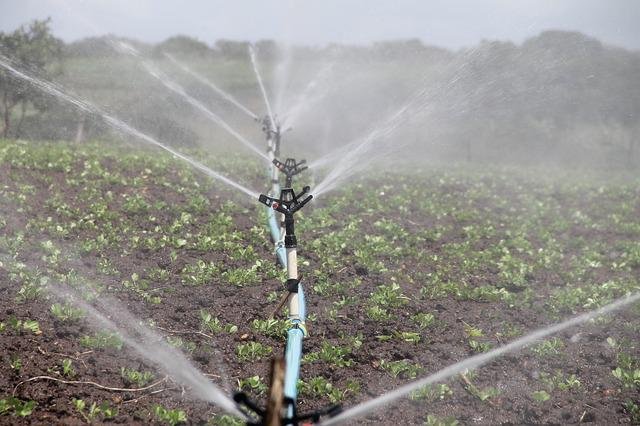
Water is a critical factor in agricultural production, and in a country like Nigeria where rainfall is seasonal and unreliable in many regions, irrigation plays a vital role in boosting crop yields and ensuring food security.
Irrigation refers to the artificial application of water to soil or crops at the right time and quantity. It enables year-round farming, improves crop quality, and reduces dependence on unpredictable rainfall. With climate change leading to irregular weather patterns and droughts, adopting effective irrigation systems is becoming increasingly important for Nigerian farmers.
Nigeria has diverse climatic zones, from the dry Sahel in the north to the humid forests in the south. Therefore, irrigation systems must be selected based on local soil type, water availability, crop type, and budget.
Farmers also need systems that are affordable, easy to maintain, and adaptable to both small and large-scale operations. Several types of irrigation methods are used across Nigeria, each with its advantages and challenges. Some are traditional and labor-intensive, while others use modern technologies and automated controls.
This article outlines five major irrigation systems suitable for Nigerian conditions. These include surface irrigation, sprinkler systems, drip irrigation, manual methods, and solar-powered systems.
Each system is discussed in terms of how it works, where it is best applied, cost implications, and maintenance needs. The goal is to help farmers, agribusiness owners, and agricultural planners make informed decisions about water use and improve farm efficiency.
With the right irrigation method, Nigerian farmers can increase productivity, reduce crop loss, and practice sustainable agriculture even in areas with low rainfall. The following sections provide detailed information about each system, highlighting their practical applications, benefits, and suitability for different farming environments across Nigeria.
1. Surface Irrigation Systems in Nigerian Agriculture
Surface irrigation is one of the oldest and most widely used irrigation methods in Nigeria. It involves applying water directly to the surface of the soil, where it flows across the field by gravity. This method is commonly practiced in flat and low-lying areas, especially in rice farming communities and vegetable production zones. It is simple, low-cost, and does not require advanced equipment, making it popular among smallholder farmers.
There are different forms of surface irrigation including basin, furrow, and border irrigation. In basin irrigation, water is applied to small plots surrounded by earth bunds. This is suitable for rice and crops that require standing water.
Furrow irrigation uses small channels dug between crop rows to guide water through the field, often used for maize, vegetables, and other row crops. Border irrigation divides land into strips with raised borders, allowing water to flow evenly across each strip.
The main advantage of surface irrigation is its affordability. Farmers can use locally available tools and materials to dig canals or furrows. It is also easy to operate with minimal technical knowledge. However, it requires a reliable water source such as a river, stream, or dam nearby. It is less effective on sandy or highly porous soils because water may drain too quickly.
One major challenge of surface irrigation is water wastage. Uneven application can lead to overwatering in some areas and underwatering in others. It can also cause erosion and nutrient leaching if not managed properly. To improve efficiency, farmers should level their fields, control the flow rate, and monitor water distribution.
Despite its limitations, surface irrigation remains a practical option in regions with suitable topography and access to gravity-fed water. With proper field layout and water management, Nigerian farmers can achieve good yields and minimize labor costs using this traditional irrigation method.
Read Also: Best Irrigation for Small Farms in Nigeria
2. Sprinkler Irrigation for Improved Water Distribution
Sprinkler irrigation is a modern method that simulates rainfall by spraying water into the air through nozzles connected to a pressurized system. It is widely used in Nigeria for vegetable farming, maize production, and even small fruit orchards. Sprinklers can be mounted on fixed stands, movable pipes, or rotating heads depending on the field size and layout.
This system consists of a water source such as a borehole, dam, or river, connected to a pump that delivers water through pipes to the sprinkler heads. The water is then sprayed evenly across the farm, covering large areas within a short time. Sprinklers can be designed for permanent, semi-permanent, or portable use. Portable systems are common in small farms and allow flexibility in water application.
One of the main benefits of sprinkler irrigation is its uniform water distribution. It reduces water loss through deep percolation and ensures that crops receive moisture directly on their leaves and roots. This system is especially useful in areas with sandy soil, sloped land, or irregular farm shapes where surface irrigation may be inefficient.
However, sprinkler systems are more expensive to set up and maintain. They require good water pressure, durable pipes, and proper design to avoid clogging and uneven spraying. Wind can also affect water distribution, especially in open fields. In addition, continuous use can lead to leaf wetness and increase the risk of fungal diseases in sensitive crops.
Despite these challenges, many commercial and peri-urban farms in Nigeria are adopting sprinkler irrigation due to its efficiency and labor-saving advantages. Government irrigation projects and donor programs have also supported its expansion in regions with adequate water sources. When properly installed and maintained, sprinkler irrigation can greatly improve crop yield and water use efficiency in Nigerian agriculture.
3. Drip Irrigation for Water-Saving Precision
Drip irrigation is a highly efficient method of delivering water directly to the root zone of plants through a network of pipes, tubes, and emitters. In Nigeria, drip irrigation is becoming increasingly popular among vegetable farmers, greenhouse operators, and high-value crop growers. It is ideal for regions with limited water supply or poor water infrastructure, as it uses water very sparingly and precisely.
The system consists of a main pipe connected to a water source, with smaller lateral pipes running along each row of crops. Emitters or drippers are placed at regular intervals to release water slowly and directly to the base of each plant. This minimizes evaporation, runoff, and water loss, allowing plants to absorb moisture effectively.
One major advantage of drip irrigation is that it improves water-use efficiency and saves labor. Farmers can control the amount and timing of irrigation, reducing overwatering or under-irrigating. It also enables fertigation, where fertilizers are applied through the irrigation water, enhancing nutrient uptake and reducing waste. Weed growth is minimized since only the plant roots receive moisture.
However, drip systems are relatively expensive to install, especially for large fields. They require technical knowledge for layout, filtration, and pressure control. Emitters can clog due to dirty water or lack of filtration. Regular maintenance and monitoring are needed to ensure uniform flow and prevent blockage.
Drip irrigation is particularly suitable for crops like tomatoes, pepper, cucumber, watermelon, and garden eggs. It is used in both open fields and greenhouses across Nigeria. Government programs and NGOs are promoting drip systems among smallholder farmers by offering subsidies or training. With proper design and management, drip irrigation can significantly boost yields, conserve water, and support year-round farming in dry and semi-arid parts of Nigeria.
4. Manual and Traditional Irrigation Techniques
Manual irrigation is a traditional method still widely used by smallholder farmers in Nigeria. It involves applying water to crops using basic tools such as watering cans, buckets, or hand-dug channels. This method is most common in backyard gardens, urban farms, and small plots near rivers, wells, or boreholes. It is labor-intensive but affordable and does not require machines or complex infrastructure.
In regions where water is readily available but funds are limited, manual irrigation provides an entry point for growing vegetables, spices, and short-cycle crops. Farmers fetch water in buckets or containers and pour it around the base of the plants. Alternatively, they may dig shallow channels or furrows to guide water across the plot. In hilly areas, water may be collected from nearby streams using small hoses or gravity-fed bamboo pipes.
One of the advantages of manual irrigation is its low cost. It requires little or no capital to start and can be implemented immediately using available resources. It also allows close observation of crop conditions and precise watering in small areas. This makes it suitable for home gardens, school farms, or community demonstration plots.
However, manual irrigation is very time-consuming and physically demanding. It limits the size of the farm and the types of crops that can be grown efficiently. Water application is often uneven, leading to overwatering or underwatering in some parts of the farm. During dry seasons, water scarcity and labor fatigue may reduce productivity.
Despite its limitations, manual irrigation remains a useful tool for beginners, hobby farmers, or those experimenting with small-scale agriculture. With proper planning and effort, it can support household food production and income. It is also the starting point from which many Nigerian farmers eventually transition into more advanced irrigation systems as their operations grow.
5. Solar-Powered Irrigation Systems for Sustainable Farming
Solar-powered irrigation is an innovative and sustainable method that uses solar energy to pump water from boreholes, rivers, or tanks to irrigate crops. In Nigeria, where access to electricity is limited in rural areas and fuel costs are high, solar irrigation offers a clean and reliable alternative. It is especially suitable for off-grid communities, arid regions, and environmentally conscious farms.
The system typically includes solar panels, a solar pump, control units, and water delivery pipes connected to drip or sprinkler systems. During daylight, the solar panels generate electricity that powers the pump, drawing water from the source and distributing it to the field. Excess water may be stored in tanks for use during cloudy days or at night.
One major benefit of solar irrigation is its long-term cost savings. Although the initial investment is high, farmers save on fuel, electricity, and labor over time. The system requires minimal maintenance and has a lifespan of 10 to 20 years if properly managed. It also reduces carbon emissions and supports eco-friendly farming.
Solar-powered irrigation is adaptable to different farm sizes and can be scaled up as needed. It works well with drip irrigation systems, allowing for precise water delivery and efficient use of resources. It is ideal for vegetables, tree crops, and greenhouse farming where controlled watering is essential.
However, the main challenge is the initial cost of installation, which may be beyond the reach of many smallholder farmers. Training is also required to operate and maintain the system effectively. Government support, grants, and microfinance schemes can help bridge this gap and make solar irrigation more accessible.
With Nigeria’s abundant sunlight and increasing demand for sustainable agriculture, solar-powered irrigation is a practical solution. It empowers farmers to irrigate their crops consistently, increase yields, and reduce environmental impact while operating independently of national power grids.
Read Also: Importance and uses of dry cleaning solvents
- AuthorPosts
- You must be logged in to reply to this topic.