


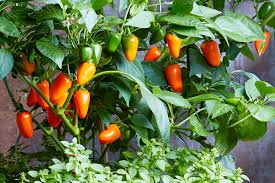
Hot peppers are a highly profitable export crop in Trinidad and Tobago, with wholesale prices averaging TTS144.00 per 40-pound bag as of April 2006. This article provides detailed guidance on cultivating hot peppers effectively for both local and export markets.
The pungent flavor of hot peppers, derived from capsaicin, makes them a global favorite, available in various colors and shapes. As part of the solanaceous family, they share lineage with crops like tomatoes and eggplants. Trinidad and Tobago is renowned for producing some of the world’s hottest peppers, boasting Scoville ratings exceeding 100,000 units.
Read Also: Measures of Improving Field Crop Production
Choosing Hot Pepper Varieties
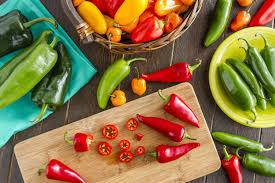
Selecting the right variety is crucial for successful hot pepper cultivation. Trinidad and Tobago offer several popular varieties tailored for local and export markets. Each variety has unique characteristics, such as color, size, and disease resistance, to suit different growing conditions.
A. Popular Varieties
1. Scotch Bonnet: This variety transitions from light green to yellow, with a medium size. It is primarily grown for the local market and lacks resistance to Tobacco Mosaic Virus (TMV).
2. Faria Series: Known for its large size and dark green to yellow coloration, this variety is ideal for export markets. It does not have TMV resistance.
3. Hood: This medium-sized pepper shifts from dark green to red and is suited for export. It also lacks TMV resistance.
4. CARDI Green: A large variety changing from dark green to red, it is TMV-resistant and targeted for export markets.
5. West Indies Red: This medium-sized pepper, moving from light green to red, is TMV-resistant and primarily grown for local consumption.
Preparing the Land
Proper land preparation sets the foundation for a healthy hot pepper crop. This involves clearing vegetation, tilling the soil, and ensuring proper drainage to optimize growth conditions. Soil testing is critical to assess nutrient levels and pH.
Soil preparation begins with brush-cutting and clearing vegetation. Plough and rotavate the soil to a depth of 8-10 inches, incorporating 1-2 tons of cured manure per acre. Tailor the approach based on soil type for best results.
A. Soil-Specific Preparation
1. Heavy Clay Soils: Create cambered beds 20 feet wide with ridges for planting rows. Establish drains between beds and on plot edges to ensure good runoff.
2. Loam or Sandy Soils: Prepare simple ridges and furrows. Ensure proper drainage to prevent waterlogging, which can harm pepper plants.
B. Soil Testing
1. Importance of Testing: Conduct soil tests before planting to determine nutrient status and pH. Contact the District Extension Officer or the Soil Test Laboratory at Centeno.
2. Optimal pH Range: Aim for a pH of 5.8-6.5 for ideal hot pepper production. Acidic soils may require limestone treatment to enhance nutrient uptake.
3. Impact of Acidity: Acidic soils can hinder nutrient absorption and promote bacterial diseases, affecting crop health and yield.
Fertilizer Application
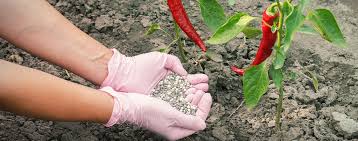
Fertilizers are essential for robust hot pepper growth, with application varying by plant stage. Soil test recommendations guide precise nutrient management to maximize yield and quality.
A. Dry Salting Method
1. Young Plants (Weeks 1-2): Apply half an ounce of high phosphorus fertilizer (12:24:12 or 10:52:10) per plant at 7 and 14 days after transplanting.
2. Growing Stage (Weeks 3-6): Use one ounce of high nitrogen fertilizer (20:10:10) per plant at the end of weeks 4 and 6. Add foliar calcium nitrate at these stages.
3. Flowering Stage (Week 6 Onward): Apply two ounces of high potassium fertilizer (12:12:17:2, 9:6:24, or 13:13:21) per plant every 14 days from week 7, continuing foliar calcium nitrate.
B. Water Salting Method
1. For Flowering Plants: In a 45-gallon drum filled to one-third, mix 10 pounds of 12:12:17-2, 2 pounds of potash, half a pound of 20:20:20, and 1 pint of blossom booster.
2. For Young Plants: Combine 10 pounds of 12:24:12, half a pound of 20:20:20, and 5 pounds of calcium nitrate in the drum, then fill with water.
3. Application Frequency: Apply half a pint to young plants and one pint to flowering plants every 3-4 days, stirring before each use.
Transplanting and Spacing
Transplanting and spacing are critical for healthy plant development. Proper techniques ensure strong root systems and optimal growth conditions.
Transplanting should occur during cooler parts of the day, preferably late afternoon, to reduce plant stress. Keep the seedling plug intact and water immediately after planting to promote root establishment.
A. Transplanting Guidelines
1. Timing and Conditions: Transplant during cool periods to minimize stress. Late afternoon is ideal for planting seedlings.
2. Pest and Disease Protection: Apply soil insecticide as a root drench to protect against insects like mole crickets. Use a soil fungicide in the rainy season.
3. Fungal Prevention: Spray plants with a copper-based fungicide post-transplanting to prevent fungal infections.
B. Spacing Recommendations
1. High Density Spacing: Use 3 feet within rows and 5 feet between rows, yielding approximately 2,700 plants per acre.
2. Low Density Spacing: Space plants 4 feet within rows and 6 feet between rows, resulting in about 2,200 plants per acre.
Read Also: 10 Interesting Wolf Spiders (Lycosidae spp) Facts
Irrigation and Maintenance
Effective irrigation and field maintenance are vital for sustaining healthy hot pepper crops. Proper water management and sanitation practices reduce disease risks and enhance yield.
Young plants require daily watering, while mature plants need irrigation every two days in dry weather. Field sanitation, including weed control and mulching, supports crop health.
A. Irrigation Systems
1. Sprinkler Irrigation: Effective for washing insects off plants but may spread soil-borne diseases due to splashing.
2. Drip Irrigation: Delivers water directly to the root system, minimizing water loss and disease spread.
3. Fountain Tubing Irrigation: Emits water spouts 6 inches to 2 feet high, adjustable based on water pressure.
B. Field Sanitation
1. Cleanliness: Maintain a weed-free field, clean tools and boots, and keep drains clear to prevent pest and disease spread.
2. Mulching Benefits: Use mulch to reduce water loss, control weeds, and minimize insect issues, potentially reducing weeding by 90%.
3. Moulding Practices: Mould plants two weeks after transplanting and after fertilizer application, avoiding high soil placement on stems.
C. Weed Control
1. Pre-Emergent Herbicides: Apply after land preparation to control germinating weed seeds.
2. Post-Emergent Herbicides: Use during crop growth to eliminate weeds in the field, on edges, and in drains.
3. Mulching and Intercropping: Use mulch and intercrop with short-term crops like beans to reduce weed growth.
Frequently Asked Questions
1. Why are soil tests important for hot pepper cultivation?
Soil tests determine nutrient levels and pH, ensuring optimal conditions. A pH of 5.8-6.5 is ideal, as acidic soils can limit nutrient uptake and increase disease risk.
2. What is the best time to transplant hot pepper seedlings?
Transplant in the late afternoon during cooler periods to reduce plant stress and promote successful root establishment.
3. How does mulching benefit hot pepper crops?
Mulching reduces water loss, controls weeds, and minimizes insect problems, potentially reducing weeding efforts by up to 90%.
4. What are the differences between high and low density spacing?
High density spacing (3 feet within rows, 5 feet between) yields 2,700 plants per acre, while low density (4 feet within rows, 6 feet between) yields 2,200.
5. How often should I apply water salting to hot pepper plants?
Apply half a pint to young plants and one pint to flowering plants every 3-4 days, stirring the mixture before each application.
6. Which hot pepper varieties are resistant to TMV?
CARDI Green and West Indies Red varieties are resistant to Tobacco Mosaic Virus, making them suitable for disease-prone areas.
7. How can I prevent soil-borne diseases during irrigation?
Avoid splashing during irrigation and use drip or fountain tubing systems to deliver water directly to the root zone, reducing disease spread.
Do you have any questions, suggestions, or contributions? If so, please feel free to use the comment box below to share your thoughts. We also encourage you to kindly share this information with others who might benefit from it. Since we can’t reach everyone at once, we truly appreciate your help in spreading the word. Thank you so much for your support and for sharing!