


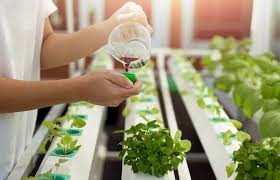
Hydroponic nutrient solution is a crucial element in the world of hydroponics, which allows plants to grow without soil. In this innovative growing method, plants receive their nutrients directly from a carefully balanced mix of water and essential minerals.
This nutrient solution supplies all the necessary elements that plants need to thrive, including macronutrients like nitrogen, phosphorus, and potassium, as well as micronutrients such as iron, magnesium, and zinc.
Understanding the components and preparation of a hydroponic nutrient solution is essential for anyone looking to start or improve their hydroponic system.
The advantages of hydroponics are numerous, ranging from space efficiency to faster growth rates. Since the plants are not reliant on soil, they can be grown closer together, maximizing the use of available space.
Furthermore, because the nutrients are delivered directly to the plant roots in a liquid form, hydroponically grown plants can absorb them more quickly and efficiently than those grown in soil. This often results in faster growth and higher yields, making hydroponics an attractive option for both commercial growers and hobbyists.
In hydroponic systems, the nutrient solution can be tailored to meet the specific needs of different plant types at various growth stages. For instance, seedlings may require a different nutrient balance than mature plants or flowering crops.
This flexibility allows growers to optimize their nutrient delivery based on the specific demands of their crops, resulting in healthier plants and improved harvests.
There are various formulations available for hydroponic nutrient solutions, which can be divided into two primary categories: liquid and dry. Liquid nutrient solutions are ready to use and typically come in concentrated forms that require dilution before application.
On the other hand, dry nutrient solutions usually come in powdered form and need to be mixed with water before use. The choice between liquid and dry solutions often depends on the grower’s preference and the specific hydroponic system being employed.
Creating the right nutrient solution requires careful consideration of water quality, as well. The pH level and electrical conductivity (EC) of the solution must be monitored and adjusted to ensure optimal nutrient absorption.
Most hydroponic plants thrive in a pH range of 5.5 to 6.5, where nutrients are most available to the plants. Regular testing and adjustment of the pH and EC levels can help prevent nutrient deficiencies or toxicities that can arise from imbalanced solutions.
Another critical aspect of hydroponic nutrient solutions is the use of additives and supplements. Depending on the specific growth conditions and plant requirements, growers may choose to include beneficial microbes, organic fertilizers, or growth enhancers in their nutrient solutions.
These additions can enhance plant health, promote root development, and improve overall growth rates, providing an extra edge in maximizing crop productivity.
Understanding Plant Nutrient Requirements

1. Macronutrients: Plants need large quantities of macronutrients, which include nitrogen (N), phosphorus (P), and potassium (K). These nutrients are crucial for growth, flowering, and fruiting.
2. Micronutrients: Essential micronutrients, such as iron, manganese, zinc, copper, molybdenum, boron, and chlorine, are required in smaller amounts but are vital for various physiological functions and overall plant health.
3. Balanced Nutrition: A balanced nutrient solution should provide both macronutrients and micronutrients in appropriate ratios to promote optimal growth. Deficiencies or excesses can lead to poor plant health and reduced yields.
4. pH and Nutrient Availability: The pH level of your nutrient solution affects nutrient availability. Most nutrients are readily absorbed by plants in a pH range of 5.5 to 6.5. Regular pH monitoring and adjustments are crucial.
5. Growth Stages: Different growth stages of plants require varying nutrient compositions. For example, during the vegetative stage, plants need more nitrogen, while the flowering stage requires higher phosphorus and potassium.
Key Nutrients in Hydroponic Systems
1. Nitrogen (N): Essential for vegetative growth, nitrogen supports leaf development and overall plant vigor. A deficiency often results in yellowing leaves (chlorosis).
2. Phosphorus (P): Critical for root development and energy transfer, phosphorus is necessary for flowering and fruiting. Symptoms of deficiency include stunted growth and dark green or purplish leaves.
3. Potassium (K): Important for water regulation and enzyme activation, potassium enhances overall plant health and stress resistance. Deficiency can cause leaf scorching and poor fruit quality.
4. Calcium (Ca): Vital for cell wall structure and stability, calcium aids in root development and prevents blossom end rot in fruiting plants. Deficiency symptoms include leaf curling and blossom end rot.
5. Magnesium (Mg): A key component of chlorophyll, magnesium plays a significant role in photosynthesis. Deficiency often manifests as interveinal chlorosis, where leaf veins remain green while surrounding tissue turns yellow.
6. Sulfur (S): Important for protein synthesis and enzyme function, sulfur supports overall growth. Deficiency symptoms include yellowing leaves and stunted growth, similar to nitrogen deficiency.
Read Also: 16 Medicinal Health Benefits Of Sophora flavescens (Kushen)
Types of Hydroponic Nutrient Solutions

1. Pre-Mixed Solutions: These commercially available solutions come pre-formulated with the necessary macronutrients and micronutrients. They are convenient for beginners, as they require no additional mixing.
2. Custom Nutrient Solutions: Experienced growers may choose to create their own nutrient solutions by mixing individual components. This allows for precise control over nutrient ratios and concentrations based on plant requirements.
3. Liquid Nutrients: Available in concentrated form, liquid nutrients can be diluted in water to create nutrient solutions. They are easy to apply and adjust according to plant needs.
4. Dry Nutrients: Dry fertilizers can be mixed with water to create solutions. They typically have a longer shelf life and can be more economical for larger-scale operations.
5. Organic Nutrients: Some growers prefer organic nutrient solutions derived from natural sources, such as compost teas or fish emulsion. These solutions can enhance soil health and promote beneficial microbial activity in the growing medium.
How to Prepare Hydroponic Nutrient Solutions
1. Gather Materials: Collect all necessary materials, including water (preferably distilled or reverse osmosis water), hydroponic nutrient salts, measuring tools, a pH meter or test kit, and an EC (Electrical Conductivity) meter.
2. Follow Instructions: Refer to the manufacturer’s instructions for the nutrient salts you are using, as concentrations may vary. Generally, mix the specified amount of each nutrient salt in water based on the desired concentration.
3. Mix Thoroughly: Stir the solution well to ensure all nutrient salts are fully dissolved. This will prevent nutrient imbalances and ensure uniform distribution.
4. Measure pH and EC: After mixing, use a pH meter to check the pH level of your nutrient solution. Ideally, it should be between 5.5 and 6.5. Also, measure the electrical conductivity (EC) to determine the nutrient strength.
5. Adjust pH and EC: If the pH is outside the optimal range, adjust it using pH up or down solutions. If the EC is too high, dilute the solution with more water; if it’s too low, add more nutrient salts.
6. Store Appropriately: If not using the solution immediately, store it in a cool, dark place, and ensure it is well-sealed to prevent contamination. Shake well before use.
Measuring pH and Electrical Conductivity
1. pH Measurement: Use a calibrated pH meter or pH test strips to measure the pH of your nutrient solution. Rinse the probe with distilled water before taking a measurement for accuracy.
2. Optimal pH Range: The ideal pH for hydroponic nutrient solutions is typically between 5.5 and 6.5, as this range maximizes nutrient availability to plants.
3. Adjusting pH: If the pH is too high, add a few drops of pH down solution (often phosphoric acid); if too low, use pH up solution (often potassium hydroxide). Recheck the pH after adjustments.
4. Electrical Conductivity (EC): Use an EC meter to measure the nutrient solution’s strength, which indicates the concentration of dissolved salts. This is crucial for ensuring plants receive adequate nutrients.
5. Ideal EC Levels: Recommended EC levels vary by plant type but generally fall between 1.0 to 2.5 mS/cm. Adjust the nutrient concentration based on your plant’s needs and growth stage.
Common Hydroponic Nutrient Brands
1. General Hydroponics: Known for its three-part nutrient system (Flora Series), General Hydroponics offers a comprehensive range of products for different growth stages and plant types.
2. Advanced Nutrients: This brand focuses on high-quality, specialized nutrient formulations designed to enhance growth and yield. They offer solutions tailored for specific crops and growth phases.
3. FoxFarm: FoxFarm provides a variety of organic and mineral-based nutrient solutions, including liquid fertilizers and soil amendments, ideal for both beginners and experienced growers.
4. Botanicare: This brand offers a range of hydroponic nutrients, including liquid fertilizers and supplements, suitable for different hydroponic systems and crop types.
5. Dyna-Gro: Known for its all-in-one nutrient solutions, Dyna-Gro is popular for its simplicity and effectiveness, making it a great choice for both beginners and experienced growers.
Nutrient Solution Schedules for Different Plants
1. Leafy Greens: For crops like lettuce and spinach, provide a nutrient solution with higher nitrogen levels. A typical schedule includes a nutrient solution change every 1-2 weeks, with EC around 1.5 mS/cm and pH at 5.5-6.0.
2. Fruiting Vegetables: For tomatoes and peppers, use a nutrient solution with higher phosphorus and potassium during flowering. Change the solution every 1-2 weeks, maintaining an EC of 1.8-2.2 mS/cm and a pH of 5.8-6.5.
3. Herbs: For basil and cilantro, use a balanced nutrient solution with moderate nitrogen levels. Change the solution every 1-2 weeks, keeping the EC between 1.5-2.0 mS/cm and pH at 6.0-6.5.
4. Flowering Plants: For flowering plants like cucumbers and zucchinis, increase potassium levels during fruiting. Change the solution every 1-2 weeks, aiming for an EC of 1.8-2.5 mS/cm and a pH of 5.8-6.2.
5. Root Vegetables: For crops like carrots and radishes, ensure a balanced nutrient solution with moderate potassium levels. Change the solution every 2-3 weeks, maintaining an EC of 1.5-2.0 mS/cm and a pH of 6.0-6.5.
Read Also: 18 Medicinal Health Benefits Of Psilopeganum
Signs of Nutrient Deficiency in Hydroponics

1. Yellowing Leaves (Chlorosis): A common sign of nitrogen deficiency, which causes older leaves to turn yellow while the veins remain green. This often indicates that the plant is not receiving enough nitrogen for healthy growth.
2. Leaf Tip Burn: Browning or necrosis at the tips of leaves can suggest potassium deficiency or excessive nutrient concentration. It is crucial to monitor EC levels to prevent nutrient burn.
3. Stunted Growth: When plants exhibit slower than normal growth, it may indicate a deficiency in multiple nutrients, such as nitrogen, phosphorus, or potassium. Regular nutrient checks can help address this issue.
4. Dark Green Leaves: While it may seem desirable, overly dark green leaves can indicate an excess of nitrogen, leading to poor fruiting and flowering. Balance is essential in nutrient management.
5. Purple Streaking: If leaves develop purple streaks, especially on the underside, this may indicate phosphorus deficiency. This is especially visible in young plants and during cooler temperatures.
6. Leaf Curling or Distortion: Curling leaves can result from deficiencies in calcium or magnesium. Checking nutrient balance and adjusting can help prevent these symptoms.
7. Blossom Drop: When flowers drop prematurely, it can signal inadequate levels of potassium or phosphorus. Ensuring proper nutrient ratios is vital for flowering plants.
Adjusting Nutrient Solutions for Growth Stages
1. Seedling Stage: Start with a diluted nutrient solution with lower concentrations (EC around 1.0-1.2 mS/cm). Focus on balanced nutrients with higher nitrogen levels to promote healthy foliage growth.
2. Vegetative Stage: Increase nutrient concentration (EC around 1.5-2.0 mS/cm) as plants grow. Maintain higher nitrogen levels while introducing moderate amounts of phosphorus and potassium to support overall growth.
3. Flowering Stage: Shift the nutrient solution to higher phosphorus and potassium levels (EC around 1.8-2.5 mS/cm) to encourage blooming and fruiting. Reduce nitrogen slightly to avoid excessive leafy growth at this stage.
4. Fruiting Stage: Maintain elevated levels of potassium and phosphorus (EC around 2.0-2.5 mS/cm) to support fruit development and enhance flavor. Regularly monitor for signs of nutrient deficiencies.
5. Post-Harvest Stage: After harvesting, adjust the nutrient solution to lower concentrations (EC around 1.0-1.2 mS/cm) to support recovery and prepare plants for the next growth cycle.
Best Practices for Maintaining Hydroponic Nutrient Solutions
1. Regular Monitoring: Check pH and EC levels regularly (at least once a week) to ensure they remain within optimal ranges. Adjust as needed to maintain plant health.
2. Scheduled Nutrient Changes: Change the nutrient solution every 1-2 weeks to prevent nutrient imbalances and ensure that plants receive fresh nutrients for optimal growth.
3. Clean Equipment: Regularly clean and sterilize all equipment, including reservoirs, tubing, and net pots, to prevent algae and bacteria buildup that can affect nutrient solutions.
4. Use Quality Nutrients: Choose high-quality nutrient brands and follow their guidelines for mixing. Using reliable products ensures that plants receive the necessary nutrients for growth.
5. Maintain Water Quality: Use distilled or reverse osmosis water to prepare nutrient solutions, as tap water can introduce unwanted minerals and contaminants that may affect plant health.
6. Keep Records: Maintain a log of pH, EC readings, nutrient changes, and plant growth observations. This helps track plant health and make informed adjustments to nutrient management strategies.
Do you have any questions, suggestions, or contributions? If so, please feel free to use the comment box below to share your thoughts. We also encourage you to kindly share this information with others who might benefit from it. Since we can’t reach everyone at once, we truly appreciate your help in spreading the word. Thank you so much for your support and for sharing!
Read Also: How to Make Your Own Organic Pesticides
Frequently Asked Questions
We will update this section soon.