


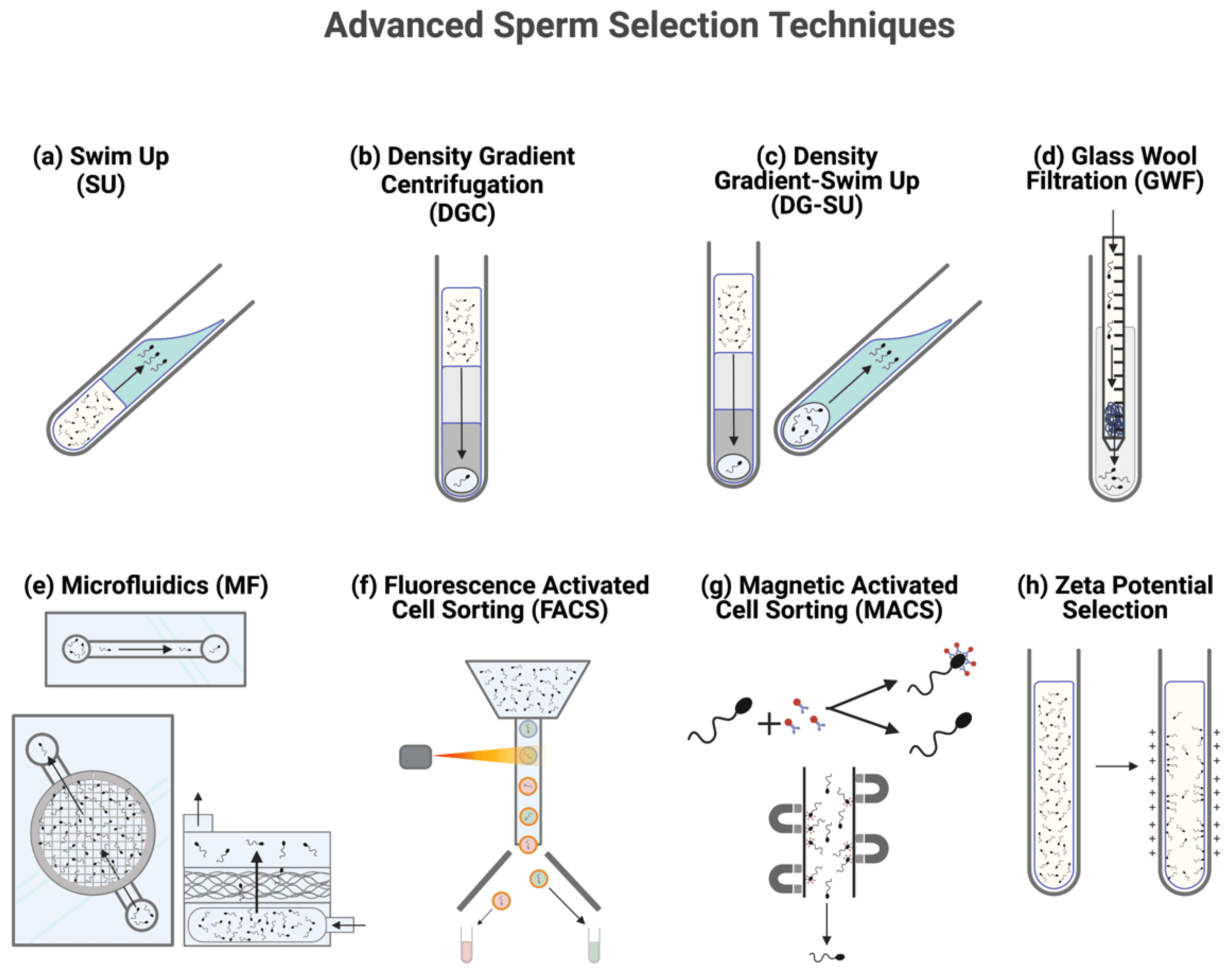
It is highly important to evaluate the semen that will be used for AI. Evaluation of the semen will help save time and cost ensuring successful fertilization after insemination.
The procedure entails both physical (visual) and biochemical evaluation.
Variables to Be Evaluated For In the Semen
1. Physical Variables to Consider During Semen Evaluation:
1. Colour and appearance: The normal semen color should be creamy-white in appearance although there may be species variation and sometimes individual variation.
Example: most bull semen is milky-white which can vary to a creamy colour and occasionally, a yellow semen may be obtained.
Any other type of color is an indication of a pathological condition. If the semen looks translucent, it is an indication of low spermatozoa concentration.
The appearance of a relatively opaque appearance is an indication of high sperm concentration. If the semen has bloody stains, urine, dirt, or hair, it is indicative of a contaminated semen sample.
2. Semen volume: Sexually mature males of different species produce differing volumes of semen containing different amounts of spermatozoa related to the physiological function of the sexual glands.
The volume and concentration of are related although there are no direct correlations between semen volume and fertility.
The male should release a sufficient volume of ejaculate which would aid the success of the AI if the procedure of insemination needs to be repeated.
Differences observed in the volume of ejaculate in individuals may be due to differences in thrust at the time of collection hence it is important not to distract the animal during the procedure.
The type of nutrients fed to the male animal, the breed of animal (within breed differences could be due to age differences and size of the animal), health status and frequency of semen collection are some of the factors which also affect semen volume.
Read AlsoSignificance And Uses of Cattleya Orchids
How to Measure the Semen Volume
| Specie | Volume (ml) |
| Boar | 80-200 |
| Bull | 5-8 |
| Billy | 0.3-1.5 |
| Ram | 0.8-1.2 |
| Horse | 60-100 |
2. Semen Quality Analytical Procedure:
1. Volume: Collect the semen in a calibrated pipette, then read the volume and enter the value appropriately.
2. Colour: You will depend on your eyes (I hope you are not color blind) The color of the semen must consistently be either milky or greyish.
3. Morphology: You must check for both unstained samples and those stained with Nigrosin/Eosin stain. On a glass slide, place one drop of unstained semen making a smear then view the smear. For the staining, Nigrosin-eosin stain smear was made by
Place two drops of semen together with a drop of 10% Nigrosin and 2 drops of 5% eosin in a vial, Mix them thoroughly but gently. Make a smear from the mixture and view it under a high-power (x100) microscope.
Mass motility: You must evaluate the motility immediately after semen collection. Place a drop of semen on a warmed glass slide then observe with a microscope using low power (X10, X40) without a cover slip. The mass activity can be graded 0 meaning no motility triple + for highest motility.
4. Sperm count (Concentration): You will require a Neubauer hemacytometer for sperm count. Dilute the semen with normal saline at 1:400; Fill the hemacytometer with the diluted semen through the capillary action of the red cell pipette. Then mount the hemacytometer and count the sperm cells.
5. Live and Dead Ratio: Determined live-dead ratio using nigrosin/eosin stain (5% eosin, 10% nigrosin). Live sperm cells will not absorb the stain. The cells that you observed to stain pink were so colored because they have absorbed the stain. Only dead cells can absorb the stains.
When a high number of the spermatozoa are found to be clear, it means they’ve not absorbed the stain and were therefore live sperm cells, while a small number of them will be stained pink which means they’ve absorbed the eosin component and are therefore dead.
6. Motility of the spermatozoa: This is a measure of the rate of movement of the spermatozoa. This is usually carried out microscopically using an ordinary light microscope and viewing a drop of semen on a glass slide with a cover slip.
The rate of motility varies with species, health status, and the medium in which it is observed. A semen sample with motility above 65 percent is considered good for use in AI.
The evaluation of motility is a subjective estimate mainly influenced by the thickness of the semen and the temperature of the slide on which the semen is placed (the ideal temperature should be 37-39oC under x40 magnification).
The importance of a motility test is because if there are no movements, there is an odd chance that the sperm will reach the oviduct which is necessary for fertilization of the eggs or ova.
When the tail of the sperm cell is impaired, motility may cease or the sperm cell may move in circles or backwards. The condition, circular or reverse, may also be indicative of cold shock or that the media is not isotonic with the semen. Oscillatory motility is indicative of aged semen.
The gross motility of spermatozoa can be determined by examining a drop of raw undiluted semen on a pre-warmed slide under a light microscope at x40 magnification. A scale of 0-5 or a percentage can then be used to assess the motility.
The ratings are as follows;
1. A 5-point score means a motility of 80 percent or more. This is when virtually all the spermatozoa are viewed to have a progressive forward movement.
2. A 4-point score means good motility. This is when approximately 70-80 percent of the spermatozoa are in vigorous, rapid movement.
3. A 3-point score is good. This is when 60-70 percent of the sperm cells are motile.
4. A 2-point score is fair, indicating that 30-60 percent of sperm cells are motile.
5. A 1-point score is indicative of poor motility. Less than 30 percent of the sperm cells are motile resulting in sluggish movement.
6. 0-point (zero point) means all the sperm cells are dead.
Read Also Importance of a Sick Bay in a Ruminant House
| Specie | Motility (%) |
| Boar | 70 |
| Bull | 65 |
| Billy | 75 |
| Ram | 75 |
| Horse | 65 |
It is rare to see semen samples with motility higher than 90 percent. Semen samples with motility less than 50 percent should not be used for insemination.
7. Live to dead sperm: Live to dead sperm can be estimated using the eosin-nigrosin stain technique. The proportion of live to dead cells is estimated by supra-vital staining in which the cells that are alive when the stain is applied do not absorb the stain while the dead sperm cells take up the red eosin and appear red against the dark background of the nigrosin.
8. Semen Concentration: The determination of the semen concentration is very important because it is used to know the ideal dilution rate of the semen. It is also used to predict the fertility of the male. The sperm concentration is influenced by the following factors.
They include the stage of sexual development and maturity of the male animal, the status of the development of the testes, over- or under-feeding which could result in the deposition of excess fat on the testes, the deficiency of essential nutrients required for sperm cell formation, species difference, seasons of the year and frequency of semen ejaculation.
There are several methods for determining semen concentration and they include;
1. Haemocytometer count.
2. Estimation of total nitrogen.
3. Weight of dry semen.
4. Visual comparison with standard capacity tubes by passing light through.
5. The electrical resistance of sperm suspension.
6. The spectrophotometer method.
However, the two most commonly used methods are the hemocytometer count and spectrophotometer methods. The hemocytometer count is used to determine semen concentration by using a white blood cell pipette to draw up to the halfway mark on the stem.
A spermicide (such as 5% triphenyltetrazaline chloride or 5% chlorine mixed with a physiological saline solution) solution is added to the parallel mark at the top of the bubble chamber.
The preparation is mixed thoroughly using standard pipette shakers. A drop of this mixture is added to both sides of the hemocytometer slide. The hemocytometer slide is then kept in a humid or damp chamber for one hour to incubate.
This will increase the accuracy of the sperm cell count as they would have precipitated into the hemocytometer instead of floating. The hemocytometer is partitioned into 5×5 squares.
The number of sperm cells in the middle and outside squares are counted. The sperm cells that lie inside the squares are counted and those on the top and right-hand sides too are counted diagonally from top left to bottom right.
The sperm cell concentration is calculated by reference to the number of sperm cells per ml of semen as;
Sperm cell concentration = Number of sperm cell count X Dilution faction X multiplication factor
The spectrophotometer method works by taking absorbance readings of diluted semen at 600nm calibrated against hemocytometer counts.
The rate of semen dilution is based on the volume of the ejaculate. When the information on semen volume, motility, and concentration are known, the total number of sperm in an ejaculate can be estimated.
9. Sperm morphology: It is essential to evaluate semen samples microscopically as they always contain any of the following; abnormal sperm cells, bacteria, and protozoa; per ejaculate. The presence of these conditions may aid diagnosis of the cause of sterility or poor conception rate.
A diluted semen sample will be examined and the result will determine whether to accept or reject for particular semen sample for AI. The normal sperm cell consists of the head, neck, mid-piece, and the tail. These parts must be present and structurally complete to ensure fertility. When there is a deviation from the normal structure, it is regarded as an abnormality.
In any ejaculate, there will always be abnormal sperm cells but in instances where the proportion of abnormality exceeds 5%, then the fertility of the semen sample would be impaired. Such semen samples should be rejected. These abnormalities are in the form of damaged heads or tails or those with separate parts.
Sperm cell abnormalities are classified as primary or secondary abnormalities. Primary abnormalities occur during the process of spermatogenesis. They include giant heads, double heads, double midpieces, double tails, abnormal shapes of heads, and dented heads.
Secondary abnormalities are those morphological aberrations that have taken place during the passing of the sperm cells through the male duct or in vitro handling of the sperm cell.
The secondary abnormalities include cytoplasmic droplets on the midpiece or tail, bent tail, and detached head cap (acrosome). A phase contrast microscopy at x1000 magnification under oil immersion is used to assess sperm morphology.
10. pH: The pH of a fresh ejaculate is dependent on the secretions from the other glands. Variation in pH is influenced by breed or species differences. For example, bull pH is 6.7 while boar is slightly higher; the semen of bulls and dogs is slightly acidic while that of rabbits is alkaline.
The pH of poultry is between 7.2 -7.6. The pH is also influenced by the method of semen collection. The pH from the massage method is about 8.0 while that from AV is 6.3.
Normal sperm cells can survive at about neutral pH hence should be kept in diluents that will aid in maintaining that pH until required.
Biochemical Variables to Consider During Semen Evaluation
In evaluating semen samples, several biochemical and metabolic processes should be monitored. They include; a measure of respiratory rate, methylene blue reduction time (MBRT), and rezasurine reduction time (RRT).
These tests are carried out by evaluating or measuring the metabolic rate of freshly collected or stored semen samples.
1. Respiratory Rate:
This test employs the use of the Warburg apparatus and the respiratory rate of the sperm cell is manometrically measured. There is a high correlation between the respiratory rate and sperm motility and between respiratory rate and semen concentration.
Thus it is expected that the higher the motility and concentration of the semen sample, the faster the rate at which carbon dioxide is produced.
2. Methylene Blue Reduction Time:
The principle of this test is based on the phenomenon that active cells use oxygen therefore semen samples containing a high concentration of active spermatozoa will use up oxygen more rapidly than those containing poor-quality sperms.
The use of oxygen will result in an excess of hydrogen ions that are free to combine with the chloride ion in methyl blue to form a leukemethylene complex and the time required for the blue color to bleach out.
There is a positive correlation between reduction time and sperm cell concentration. There is also an inverse relationship between reduction time and number of dead sperm cells.
For example, good quality boar semen will require 1-3 minutes to bleach out whereas a medium quality semen sample requires 3-5 minutes and poor quality semen requires 5-10 minutes
In conclusion, the importance of evaluating the semen quality of ejaculate meant for AI purposes will aid in the prior determination of potentially fertile semen samples. There are both physical and biochemical tests involved in semen quality evaluation.
The physical variables to evaluate in collected semen meant for AI are as follows; color and appearance, semen volume, motility of sperm, live to dead sperm, semen concentration, and semen pH and sperm morphology.
The biochemical tests for semen quality evaluation are to measure the metabolic rate of semen samples. They include respiratory rate and methylene blue reduction time.
Both physical and biochemical evaluation of semen samples collected for AI will save time and resources by pre-determination the potential of fertility of spermatozoa.
Read Also How to Convert Organic Waste (Composting) into Compost for Gardening and Agriculture