


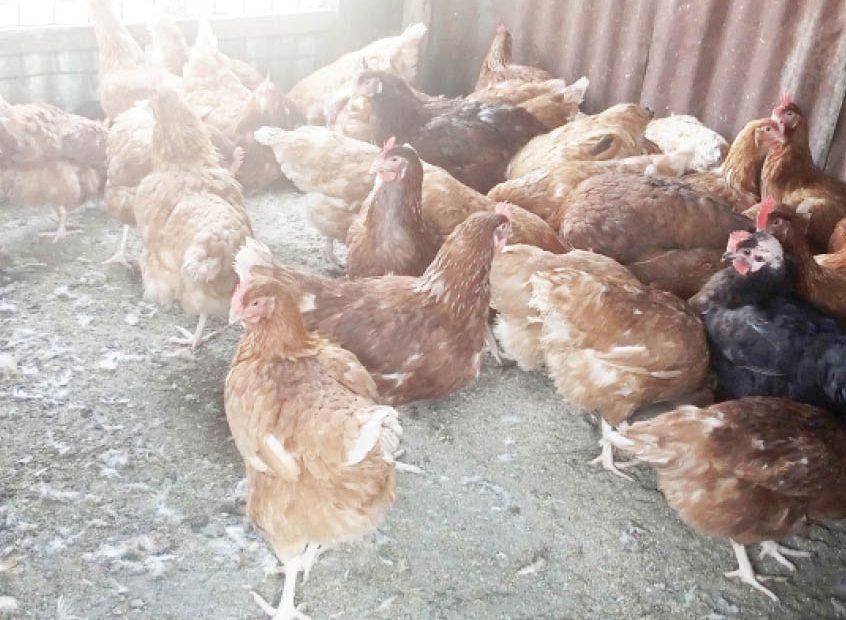
Harmattan season is one of the most dreaded periods for poultry farmers across West Africa. Every year, as the dry winds begin to blow, many farmers make the decision to stop stocking birds entirely. Some cover up their entire chicken houses to block out the cold, not realizing that in doing so, they cut off ventilation and end up stressing the very birds they are trying to protect.
The fears are real. Cold kills chicks. Dust triggers respiratory diseases. Egg production drops. Disease outbreaks become more frequent. These are not imaginary concerns. But the truth is, harmattan is just like any other season. The farmers who struggle during this period are not struggling because of the weather alone. They are struggling because they do not know what to do, when to do it, and how to do it well.
Here is a glimpse of what real farmers say about harmattan season. One farmer said harmattan is the most fearful time of his farming life because cold kills his birds and dust adds to the problem. Another said egg production drops drastically during the period. A third refuses to brood day-old chicks at all, convinced the cold will wipe them all out. And a fourth shuts down completely after December sales and waits until March before stocking again.
But here is the other side of that story. While everyone else is afraid to stock, day-old chicks become cheaper and more available. The farmer who understands how to manage harmattan conditions is the one who profits most during this period, buying at lower prices while others wait on the sidelines.
This article breaks down what harmattan is, how it affects your birds, and exactly what you can do to keep your flock healthy and productive throughout the season.
Read Also: How to Make Money in Poultry Farming
1. What is Harmattan?
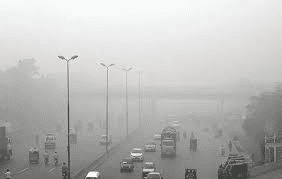
Harmattan is a dry and dusty weather condition that occurs between the end of November and the middle of March. It is characterized by cold, dry, and dusty winds that blow in from the Sahara, typically felt most strongly in the evenings through the early hours of the morning.
The reason harmattan creates such difficult conditions is because the atmosphere holds very little moisture during this period. Low humidity leads to increased stuffiness, which makes it much easier for infections and diseases to spread.
Harmattan wind is considered a natural hazard because it picks up dust particles and pushes large quantities of sand across long distances, promoting the spread of airborne diseases. For poultry, this is particularly dangerous. Chickens are highly vulnerable to pulmonary diseases during this season, which compromises their respiratory systems and affects overall farm performance.
The most common health challenges poultry face during harmattan include common cold, eye problems, catarrh, pneumonia, nose bleeding, bronchitis, chronic respiratory disease, and other cold related conditions. Protecting your birds from these infections is key to keeping them healthy and productive.
2. Healthy Practices to Manage Poultry During Harmattan
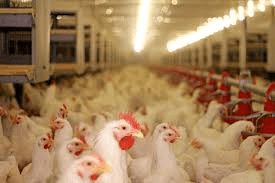
The following practices will help you scale through harmattan season with better performance and fewer losses.
i. Provide plenty of cool, fresh water: Birds must have access to clean, cool drinking water at all times to prevent dehydration. Birds generally dislike warm water because it raises body temperature and causes heat stress. In the afternoon, you can use ice blocks to keep the water cool.
ii. Add more drinkers and watering space: For layers and broilers on deep litter systems, extra drinkers reduce competition and give all birds easy access to water. Shade the overhead water tanks to prevent direct sunlight from warming the water.
iii. Use lighting to generate heat at night: Temperatures drop significantly in the early morning and late at night during harmattan. Keep lights on in the poultry house during these hours to raise the temperature to a comfortable level for your birds.
iv. Feed high energy feeds early in the morning: Energetic, high density feeds help the birds generate body heat. Serve these feeds very early in the morning. During the hotter parts of the day, reduce or hold back feed to avoid overfeeding when heat is already present.
v. Wet the ground around the pen: If carpet grass is not planted around the poultry house, wet the ground with plenty of water in the afternoon and evening. This prevents dust and heat from rising off the ground and filtering into the birds’ respiratory systems.
vi. Clean cobwebs and dusty nets regularly: Use a wet rag, foam, or hand brush to clean the nets and remove cobwebs routinely. Be careful not to startle the birds during this process, as stress weakens their immunity.
vii. Do not burn bush near the farm: Avoid burning bushes anywhere close to your farm. Smoke causes respiratory problems in birds and raises the temperature of the surrounding air.
viii. Provide anti-stress agents and electrolytes in water: Add vitamins and electrolytes to your birds’ drinking water. These act as thermal regulators, helping the birds manage both cold and heat, while supporting daily metabolism and immune function.
ix. Sprinkle cold water on the rooftop and birds: During the hottest part of the day, use sprinklers or sprayers to apply cold water on the rooftop and occasionally on the birds. Where foggers and fans are available, use them to cool the environment further.
x. Control stocking density: Overcrowding makes disease spread faster. Keep stocking density at a reasonable level so birds have enough space, especially during a season when respiratory diseases are already a serious threat.
xi. Maintain strict biosecurity measures: Follow all standard biosecurity practices without compromise. Good management and hygiene during harmattan can be the difference between a healthy flock and a disease outbreak.
Read Also: Feeding Methods for Poultry Chicks / Birds
3. Fire and Safety Precautions During Harmattan
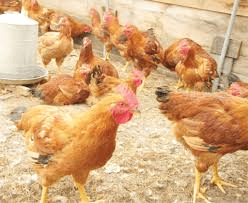
Harmattan conditions are dry and windy, which makes fire outbreaks a serious risk on any farm. Take the following precautions to protect your farm, your workers, and your birds.
i. Switch off electrical appliances: Turn off all electrical equipment on the farm after use. Never leave devices running unattended.
ii. Quench all naked fire: Any open flame that is not actively in use should be put out completely.
iii. Inspect and replace wooden structures: Check all wooden parts of the farm buildings regularly and replace any that are damaged or rotten to prevent structural collapse.
iv. Encourage use of nose covers: Farm workers should wear nose covers during harmattan to protect their respiratory health while working around dust.
v. Store inflammable substances safely: Petrol and other flammable materials should be properly stored away from the birds and any heat source.
vi. Have a working fire extinguisher on site: Keep at least one functional fire extinguisher on the farm at all times. Train at least two workers on how to use it correctly.
Summary on Harmattan and Its Effect on Poultry Production
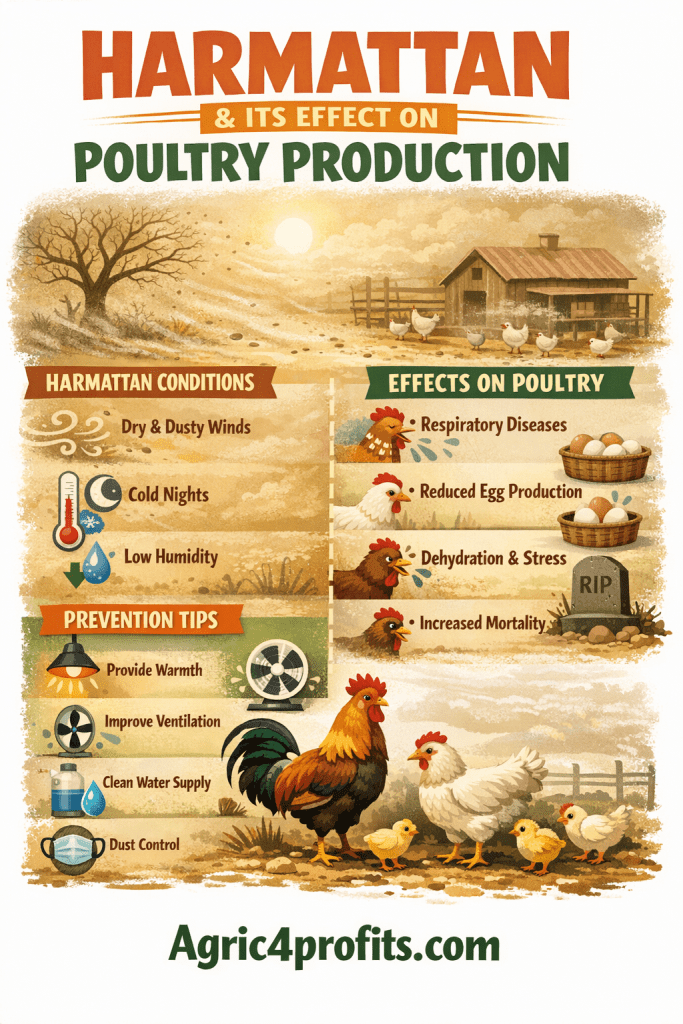
| Topic | Key Points |
|---|---|
| What is Harmattan | Dry, cold, dusty winds from late November to mid-March |
| Main Cause | Low atmospheric humidity promotes disease spread |
| Common Diseases | Cold, bronchitis, pneumonia, eye problems, catarrh, chronic respiratory disease |
| Water Management | Provide cool, fresh water always; use ice blocks in the afternoon |
| Feeding | High energy feeds early morning; reduce feed during hot hours |
| Lighting | Use lights at night and early morning to generate warmth |
| Dust Control | Wet the ground; clean nets and cobwebs regularly |
| Stocking Density | Avoid overcrowding to reduce disease spread |
| Biosecurity | Maintain strict hygiene and management practices |
| Fire Safety | Switch off appliances, store flammables properly, keep fire extinguisher on site |
| Opportunity | Lower chick prices during harmattan; smart farmers stock when others are afraid |
Frequently Asked Questions About Harmattan and Its Effect on Poultry Production
1. What months does harmattan season occur?
Harmattan typically runs from the end of November through the middle of March. It is most intense in December and January across most parts of West Africa.
2. Why do chickens get sick more during harmattan?
The low humidity during harmattan dries out the airways of birds, making them more vulnerable to dust particles and airborne pathogens. Respiratory diseases spread easily under these conditions.
3. Can I brood day-old chicks during harmattan?
Yes, you can. With proper heating, clean housing, and good management, day-old chicks can be successfully brooded during harmattan. Many smart farmers actually take advantage of this period because chick prices drop when other farmers are afraid to stock.
4. What diseases are most common in poultry during harmattan?
The most common ones include chronic respiratory disease, bronchitis, pneumonia, catarrh, common cold, eye infections, and nose bleeding.
5. How do I keep my poultry house warm during harmattan?
Use electric bulbs or other lighting systems inside the pen during cold hours, especially at night and in the early morning. For day-old chicks, a brooder with the right temperature settings is essential.
6. Should I cover my poultry pen completely during harmattan?
No. Completely covering the pen blocks ventilation and causes a buildup of harmful gases and moisture, which stresses the birds. Instead, manage airflow strategically by partially covering sides and using lighting for warmth.
7. What should I add to my birds’ water during harmattan?
Add anti-stress vitamins and electrolytes to the drinking water. These help the birds regulate body temperature, support immunity, and maintain healthy daily metabolism throughout the season.
8. How does overcrowding affect birds during harmattan?
Overcrowding makes it much easier for respiratory and infectious diseases to spread from one bird to another. During harmattan, when birds are already vulnerable, overcrowding significantly increases the risk of a disease outbreak.
9. How can I control dust around my poultry farm during harmattan?
Plant carpet grass around the pen to hold the soil in place. If grass is not available, wet the ground with water regularly in the afternoon and evening to reduce dust movement. Also clean pen nets and remove cobwebs frequently.
10. What fire safety steps should I take on my farm during harmattan?
Switch off all electrical appliances after use, put out any open flames, store petrol and flammables safely, inspect wooden structures for damage, ensure workers wear nose covers, and keep at least one working fire extinguisher on the farm with trained staff who know how to use it.
Do you have any questions, suggestions, or contributions? If so, please feel free to use the comment box below to share your thoughts. We also encourage you to kindly share this information with others who might benefit from it. Since we can’t reach everyone at once, we truly appreciate your help in spreading the word. Thank you very much for your support and for sharing!
Read Also: Comprehensive Guide on How to start Cockerel Farming Business