



Oranges are tropical fruits of the citrus species that are grown worldwide, containing several phytochemicals and flavonoids. Oranges are a round, segmented citrus fruit with a pitted peel. The taste can vary from juicy and sweet to bitter, depending on the variety—more common ones include Valencia, Seville, and Hamlin. Most oranges are available year-round, except for varieties such as blood oranges, which have a shorter season.
Oranges are among the world’s most popular fruits, also called sweet oranges. They grow on orange trees (Citrus x sinensis) and belong to a large group of fruits known as citrus fruits. Their true origin is a mystery, but the cultivation of oranges is thought to have started in eastern Asia thousands of years ago. Oranges are a healthy source of fiber, vitamin C, thiamine, folate, and antioxidants. They have multiple health benefits.
Orange fruits serve as the main source of the vitamin and are also rich in dietary fibre and other nutritional values with a range of health benefits. Oranges are a type of low-calorie, highly nutritious citrus fruit. As part of a healthful and varied diet, oranges contribute to strong, clear skin and can help lower a person’s risk of many conditions.

Oranges are popular due to their natural sweetness, the many different types available, and the diversity of uses. For example, a person can consume them in juices and marmalades, eat them whole, or use zested peel to add a tangy flavor to cakes and desserts.
This popular citrus fruit is particularly known for its Vitamin C content. However, oranges contain a range of other plant compounds and antioxidants that may reduce inflammation and work against disease. Sweet, juicy oranges make a delicious and healthy snack or addition to a meal.
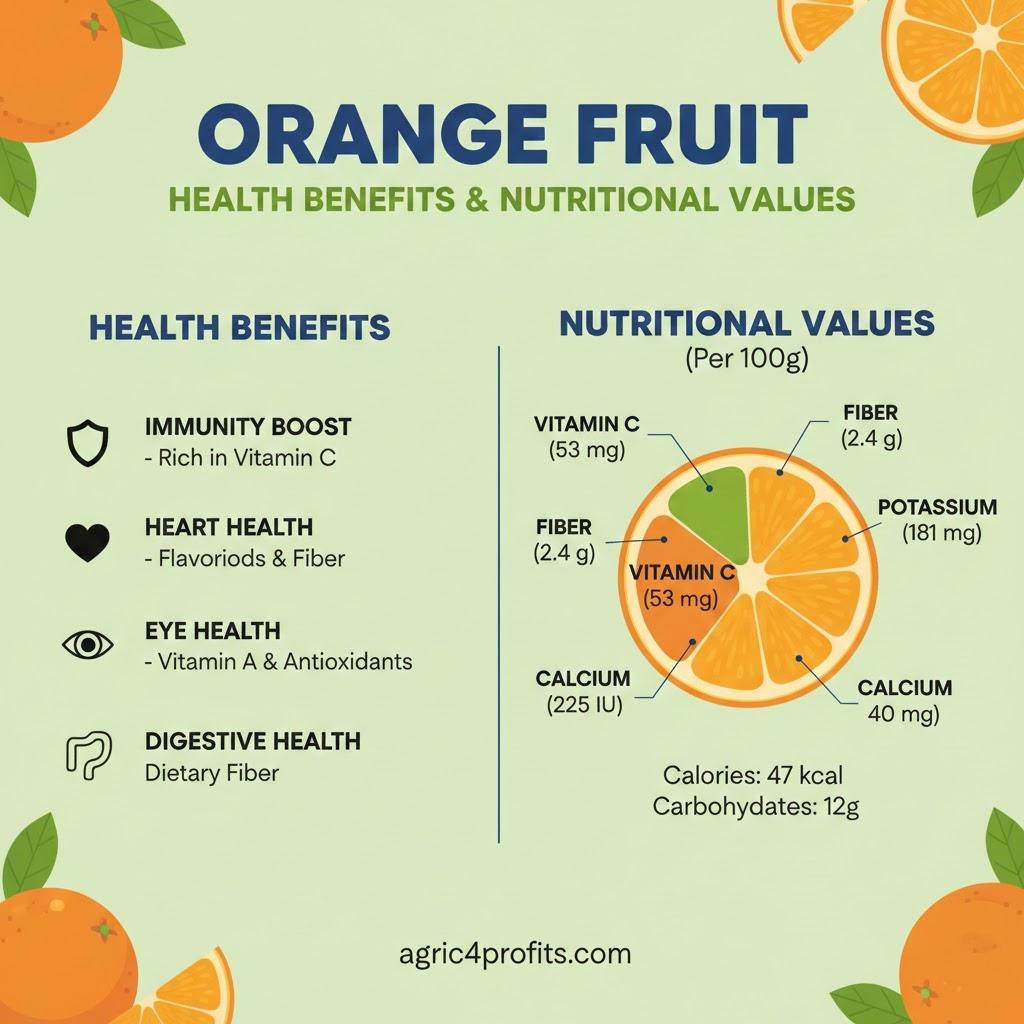
A whole orange contains only about 60 calories and has no fat, cholesterol or sodium, and oranges are well known for their vitamin C content. Indeed, oranges offer many health benefits: they may boost your immune system, give you better skin, and even help improve your heart health and cholesterol levels.
In addition, some evidence suggests that eating oranges may help reduce the risk of respiratory diseases, certain cancers, rheumatoid arthritis, ulcers, and kidney stones.
According to research, one medium orange provides four ounces or a half cup of water. Roughly 60-70% of the human body is made of water, and it’s required for every bodily process.
According to the Institute of Medicine, women 19 and over need 2.7 liters of total fluid per day which is about 11 8-oz cups and men need 3.7 which is about 15 8-oz cups, but that’s total fluid, not just beverages. Foods can provide 20% of your daily fluid needs, and water-rich foods like oranges contribute even more to the daily requirement.
Consuming enough daily fluid helps support mental and physical energy, improve circulation, optimize organ function, flush out waste, and maximize metabolism.
Read Also: Trends in Crop Production Nationally and Globally
10 Health Benefits and Nutritional Values of Orange Fruit

1. They contain phytochemicals such as citrus limonoids: which helps to protect the body against cancerous diseases.
2. It serves as a source of vitamin A: that helps in the production of the red blood cells that fight against certain diseases.
3. Oranges contain fructose: which prevents the blood sugar level normal after eating because of its fibre and low sugar content.
4. Oranges help to boost the immune system: because of the presence of high vitamin C content, manganese, niacin, vitamin B-6, folate, pantothenic acid, phosphorus, magnesium, selenium, thiamin, riboflavin and copper.
5. Orange juice helps in prevention and deformation of kidney stones in the body: because of the presence of potassium in it.
6. The thiamine contained in orange is a type of vitamin B known as Vitamin B1: which helps in converting carbohydrate into glucose that produces energy in the body. In this case, one sizable orange can produce 100% thiamine recommended daily for the body.
7. Orange fruits are rich in beta-carotene: which is the antecedent of vitamin A that the body converts beta-carotene into and it helps to keep the skin and the mucous membrane healthy.
8. The presence of vitamin B6 in orange is to help reduce the level of homocysteine in the blood: When homocysteine is accumulated in the body system, it can cause heart disease; intake of oranges will always normalize its level in the body.
9. Hesperidin is a compound found in oranges: that supply flavonoid hesperidin which protects the body from poor circulation of blood and brain-protective effects.
10. Oranges are a good source of polyphenols: which protects cell constituents in the body from oxidative damage through scavenging of free radicals.
Orange is a nice fruit with lots of vitamin C content and a very sweet taste that everyone likes taking including the aged people but while consuming orange it is good to bear in mind that excessive intake of oranges might lead to digestion related issues like cramping due to the high fiber content which might lead to diarrhoea in some cases.
Read Also: 34 Amazing Benefits of Paw-Paw (Papaya) Fruit and Leaves
Scientific Evidence and Case Studies on 10 Health Benefits and Nutritional Values of Orange Fruit
1. Citrus limonoids and cancer protection: Citrus limonoids in oranges help protect against cancerous diseases by inhibiting tumor growth and reducing oxidative stress.
2. Vitamin C and immune support: High vitamin C content in oranges boosts the immune system and supports antioxidant activity to reduce inflammation and disease risk.
3. Citrates and kidney stone prevention: Oranges increase urinary citrate levels, which helps prevent the formation of calcium oxalate kidney stones.
4. Flavonoids like hesperidin and heart health: Hesperidin in oranges supports better blood circulation, reduces cholesterol risks, and protects against cardiovascular issues.
5. Polyphenols and antioxidant effects: Polyphenols in oranges scavenge free radicals, protecting cells from oxidative damage linked to chronic diseases.
Summary of 10 Health Benefits and Nutritional Values of Orange Fruit
| Aspect | Description |
|---|---|
| Origin and Description | Tropical citrus fruit (Citrus x sinensis), round with pitted peel, sweet to bitter taste, varieties like Valencia, Seville, Hamlin; available year-round mostly. |
| Nutritional Profile | Low calorie (~60 per whole orange), rich in vitamin C, fiber, thiamine, folate, antioxidants, phytochemicals, no fat/cholesterol/sodium; high water content. |
| Key Health Benefits | Boosts immunity (vitamin C), supports skin health (beta-carotene), aids heart health (reduces homocysteine, improves circulation via hesperidin), prevents kidney stones (potassium/citrates), provides energy (thiamine), stabilizes blood sugar (fructose/fiber), offers anticancer protection (limonoids/polyphenols), reduces inflammation. |
| Other Advantages | Hydration support, versatile uses (whole, juice, zest), antioxidant and anti-inflammatory effects from flavonoids and plant compounds. |
| Potential Drawbacks | Excessive intake may cause digestive issues like cramping or diarrhea due to high fiber. |
Frequently Asked Questions
1. What is the main nutritional benefit of oranges?
Oranges are primarily known for their high vitamin C content, which acts as a powerful antioxidant and supports immune function.
2. How do oranges help prevent cancer?
Oranges contain phytochemicals like citrus limonoids and polyphenols that help protect cells from oxidative damage and may reduce the risk of certain cancers.
3. Can oranges improve heart health?
Yes, compounds like hesperidin and vitamin B6 in oranges help reduce homocysteine levels, improve blood circulation, and lower risks associated with heart disease.
4. Do oranges prevent kidney stones?
Oranges, especially orange juice, increase urinary citrate and provide potassium, which helps prevent the formation of kidney stones.
5. Are oranges good for the immune system?
Oranges boost immunity due to high levels of vitamin C along with other nutrients like manganese, folate, and selenium.
6. How do oranges benefit skin health?
Beta-carotene in oranges converts to vitamin A, helping maintain healthy skin and mucous membranes.
7. Can oranges help with energy levels?
Thiamine (vitamin B1) in oranges converts carbohydrates to energy, with one orange potentially providing a significant portion of daily needs.
8. What antioxidants are found in oranges?
Oranges are rich in polyphenols, flavonoids (like hesperidin), and vitamin C, which scavenge free radicals and reduce oxidative stress.
9. Are there any side effects of eating too many oranges?
Excessive consumption may lead to digestive issues such as cramping or diarrhea due to high fiber content.
10. How do oranges support hydration?
A medium orange provides substantial water content, contributing to daily fluid needs and supporting overall bodily functions.
Do you have any questions, suggestions, or contributions? If so, please feel free to use the comment box below to share your thoughts. We also encourage you to kindly share this information with others who might benefit from it. Since we can’t reach everyone at once, we truly appreciate your help in spreading the word. Thank you very much for your support and for sharing!
Disclaimer: This article is for educational and informational purposes only. The health benefits described are based on scientific research and traditional knowledge. They ayre not a substitute for professional medical advice, diagnosis, or treatment. Always consult a healthcare professional before using any herb or natural remedy for medical purposes.
Read Also: The Ultimate Step-by-Step Guide to Vegetable Gardening