


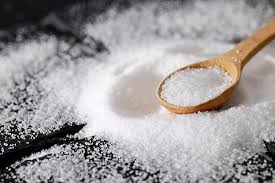
Salt is a mineral substance composed primarily of sodium chloride (NaCl) and is commonly used as a seasoning and preservative in food. It is also an essential nutrient for the human body, as sodium plays a vital role in regulating fluid balance, nerve function, and muscle contraction.
Salt can be found naturally in the Earth’s crust and is often extracted from salt mines or saltwater sources. It is also produced through the evaporation of seawater or brine in salt pans.
Salt is essential for life, and the human body requires a certain amount of sodium to function properly. However, consuming too much salt can lead to health problems, such as high blood pressure, which in turn can increase the risk of heart disease and stroke.
Salt is found naturally in seawater, as well as in salt mines and underground deposits. It can also be produced by evaporating saltwater, a process known as solar evaporation.
There are many different types of salt available, each with its own unique characteristics and uses. Some common types of salt include table salt, sea salt, kosher salt, and Himalayan pink salt.
In addition to its culinary uses, salt is also used in various industrial processes, such as the production of chemicals, paper, and textiles. It can also be used in water softeners to remove minerals from hard water.
However, excessive consumption of salt has been linked to several health problems, including high blood pressure, heart disease, and stroke. It is recommended that adults limit their daily sodium intake to less than 2,300 milligrams, or about one teaspoon of salt.
Read Also: The Major Causes of Cannibalism among Poultry Birds
Description of Salt
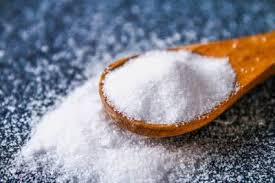
Salt is a naturally occurring mineral that is composed primarily of sodium chloride (NaCl). It is a white crystalline substance that is commonly used as a seasoning in cooking and baking, as a preservative for food, and for various industrial applications. Salt is a crystalline substance that typically appears as small, white or colorless granules or cubes.
The granules are often very fine, with a texture that ranges from powdery to coarse. The shape and size of the salt crystals depend on various factors, including the method of production and the source of the salt.
Table salt, which is the most common type of salt, is typically a fine-grained substance that is often iodized. It is usually sold in small containers or shakers and has a slightly metallic taste.
Sea salt, which is made by evaporating seawater, typically has larger and coarser crystals than table salt and may contain trace amounts of minerals that give it a slightly different flavor. Sea salt can range in color from white to grey, depending on the source.
Kosher salt, which is used in kosher cooking, is usually coarser than table salt and is typically free of additives like iodine. It has a flakier texture than table salt and is often used to season meat or to salt pasta water.
Himalayan pink salt is a type of rock salt that is mined from the Himalayan Mountains. It has a distinctive pink color and is typically sold in large chunks or as small crystals. It is believed to have health benefits due to its high mineral content.
Overall, salt can come in a variety of shapes and sizes depending on the type of salt and the method of production. However, all types of salt are characterized by their crystalline structure and their ability to add flavor and preserve food.
20 Health Benefits of Salt
While excessive consumption of salt can be harmful to health, moderate intake of salt can provide various health benefits. Below are 20 health benefits of salt:
1. Regulates fluid balance: Salt helps regulate fluid balance in the body, which is essential for proper hydration and overall health.
2. Supports nerve function: Salt is important for proper nerve function and can help prevent nerve damage.
3. Aids in muscle function: Salt is essential for proper muscle function, including the contraction and relaxation of muscles.
4. Enhances taste: Salt enhances the taste of food and can make it more enjoyable to eat.
5. Boosts digestion: Salt stimulates the production of digestive juices in the stomach, which can improve digestion and nutrient absorption.
6. Improves circulation: Salt can help improve circulation by promoting the relaxation of blood vessels and reducing blood pressure.
7. Reduces inflammation: Salt has anti-inflammatory properties and can help reduce inflammation in the body.
8. Supports immune function: Salt can help support immune function and prevent infections.
9. Helps prevent dehydration: Salt can help prevent dehydration by increasing the retention of fluids in the body.
10. Aids in wound healing: Salt can help promote wound healing by reducing inflammation and preventing infection.
11. Improves respiratory function: Salt therapy has been used to improve respiratory function and alleviate symptoms of respiratory conditions like asthma and bronchitis.
12. Balances pH levels: Salt can help balance the pH levels in the body, which is important for overall health.
13. Helps maintain healthy bones: Salt is important for the maintenance of healthy bones and can help prevent osteoporosis.
14. Promotes healthy skin: Salt can help promote healthy skin by reducing inflammation and preventing bacterial growth.
15. Reduces stress: Salt has a calming effect on the nervous system and can help reduce stress and anxiety.
16. Supports thyroid function: Salt is important for proper thyroid function, which is essential for metabolism and overall health.
17. Promotes better sleep: Salt can help promote better sleep by calming the nervous system and reducing stress.
18. Boosts energy levels: Salt can help boost energy levels by supporting proper nerve and muscle function.
19. Prevents muscle cramps: Salt can help prevent muscle cramps by supporting proper muscle function.
20. Aids in weight loss: Salt can help aid in weight loss by promoting the feeling of fullness and reducing cravings for salty and high-fat foods.
Overall, salt can provide various health benefits when consumed in moderation and as part of a balanced diet. However, it is important to note that excessive consumption of salt can have negative health effects, so it is important to consume salt in moderation.
Read Also: Amazing Advantages of eating Raw Cabbage
Uses of Salt
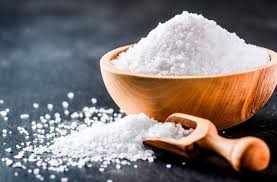
Below are the basic uses of salt:
Cooking: Salt is an essential ingredient in cooking as it enhances the flavor of food and helps to balance the taste of other ingredients.
Preservation: Salt has been used for centuries to preserve food, such as meats, fish, and vegetables, by inhibiting the growth of bacteria and other microorganisms.
Cleaning: Salt can be used as a natural cleaning agent to remove stains and grime from surfaces. It can also be used to clean kitchen utensils such as cutting boards and cast iron pans.
Exfoliation: Salt can be used as a natural exfoliant to remove dead skin cells and improve skin texture. It is often used in body scrubs and bath salts.
Mouthwash: Salt can be dissolved in warm water to make a natural mouthwash that can help to freshen breath and kill bacteria in the mouth.
Deodorizer: Salt can be used to absorb odors in the home, such as in shoes or on carpets. Simply sprinkle salt on the affected area and let it sit for a few hours before vacuuming it up.
Antiseptic: Salt can be used as a natural antiseptic to clean wounds and prevent infection. Dissolve salt in warm water and use a clean cloth to apply the solution to the affected area.
De-icing: Salt can be used to melt ice on roads and sidewalks during the winter months. When salt is spread on icy surfaces, it lowers the freezing point of water and causes the ice to melt.
Fire extinguisher: Salt can be used to extinguish small fires, such as in a pan on the stove. Simply sprinkle salt on the flames to smother them.
Water softening: Salt can be used to soften hard water by removing minerals such as calcium and magnesium. This can help to prevent the buildup of scale in pipes and appliances, and improve the effectiveness of soaps and detergents.
Industrial Uses of Salt
Salt has a variety of industrial uses due to its unique physical and chemical properties. Here are some examples of the industrial uses of salt:
Chemical manufacturing: Salt is used to produce a variety of chemicals, such as chlorine, caustic soda, and soda ash.
Water treatment: Salt is used in the treatment of water to remove impurities and improve the taste of drinking water.
Metal processing: Salt is used to remove impurities from metals during the refining process. It is also used to produce aluminum and other metals through the electrolysis process.
Textile manufacturing: Salt is used in the dyeing process to fix the color of the fabric.
Soap and detergent manufacturing: Salt is used in the production of soaps and detergents as a thickening agent and to improve cleaning performance.
Oil and gas drilling: Salt is used as a drilling fluid in the oil and gas industry to prevent the collapse of well walls and to help cool and lubricate the drill bit.
Animal feed: Salt is added to animal feed to provide essential minerals and improve the palatability of the feed.
Snow and ice control: Salt is used to de-ice roads and sidewalks during the winter months.
Glass manufacturing: Salt is used to lower the melting point of silica and other minerals in glass manufacturing.
Leather tanning: Salt is used in the process of leather tanning to preserve the hides and improve the quality of the leather.
The article is about salt (primarily sodium chloride, used as a seasoning, preservative, and essential nutrient), with emphasis on its health benefits in moderation, various uses, types, and risks of excess intake.
Scientific Evidence and Case Studies on Salt
1. Fluid and electrolyte balance: Sodium from salt is essential for maintaining proper hydration, fluid balance, and nutrient transport in cells.
2. Nerve and muscle function: Adequate sodium supports nerve impulse transmission and muscle contractions, preventing issues like cramps or dysfunction.
3. Blood pressure effects in moderation: Studies indicate that very low sodium intake can activate stress hormones and raise risks in some populations, while moderate levels support cardiovascular health without extremes.
4. Potential protective effects from natural salts: Consumption of natural sea salt has shown less hypertension and kidney damage compared to refined salt in certain animal models.
5. Overall health correlations: Some population analyses link appropriate sodium intake to better life expectancy and reduced certain risks when not excessive.
Nutritional Value Of Salt
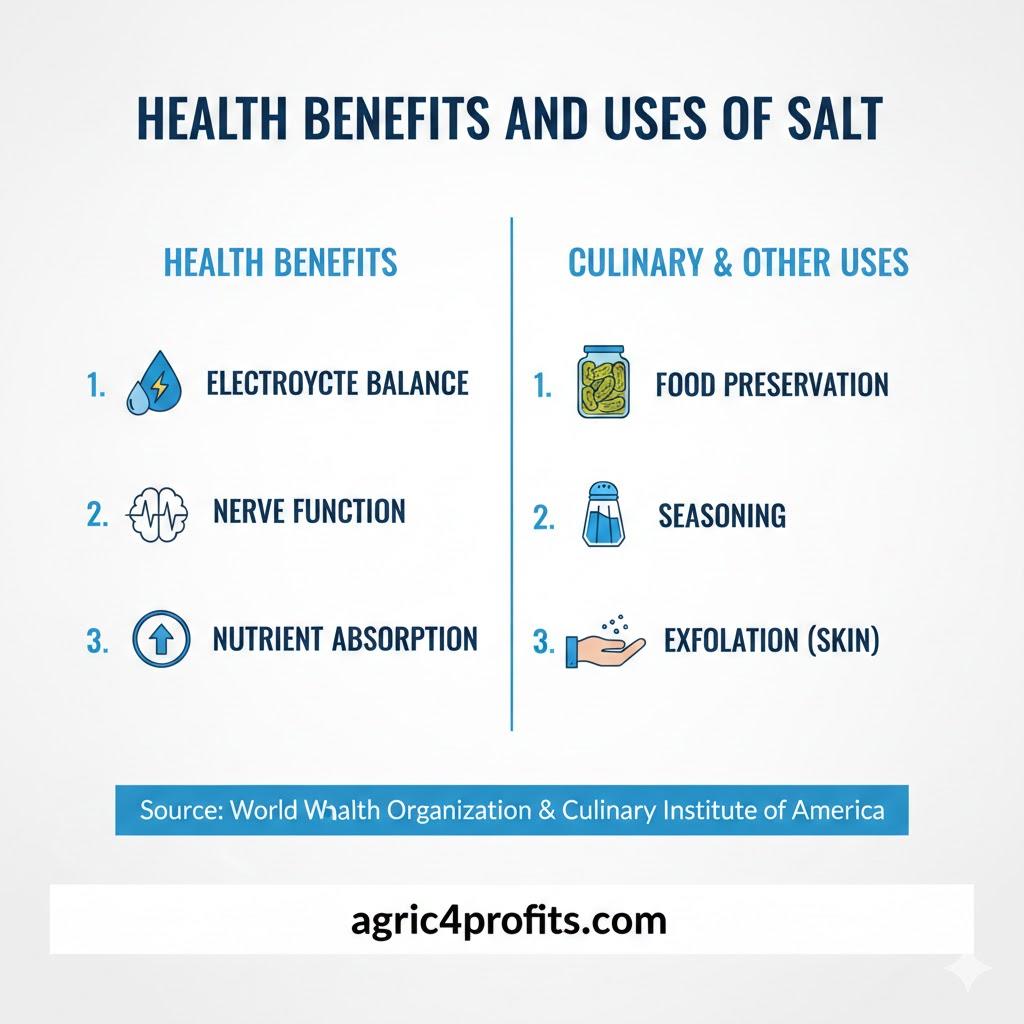
Salt (table salt) is nearly pure sodium chloride, providing minimal calories but key minerals:
1. Sodium: Primary component (about 40% by weight), essential for fluid balance, nerve signals, and muscle function.
2. Chloride: Makes up about 60%, aids in digestion by forming hydrochloric acid in the stomach and maintaining acid-base balance.
3. Iodine (in iodized salt): Added to prevent iodine deficiency, supporting thyroid hormone production and metabolism.
4. Trace minerals (in unrefined salts): Varieties like sea salt or Himalayan salt contain small amounts of magnesium, potassium, calcium, and others for minor electrolyte support.
5. Electrolyte support: Helps regulate hydration and prevent imbalances during physical activity or heat.
6. Zero calories and macronutrients: Contains no fat, protein, carbohydrates, or fiber, making it a pure mineral seasoning.
7. Osmotic regulation: Sodium enables cells to maintain proper water content and pressure for overall bodily functions.
Summary of Salt
| Aspect | Description |
|---|---|
| What is Salt | Mineral composed mainly of sodium chloride (NaCl), essential nutrient used for seasoning, preservation, and various applications. |
| Types of Salt | Table salt (often iodized), sea salt (with trace minerals), kosher salt, Himalayan pink salt, differing in texture, color, and additives. |
| Key Health Benefits | Regulates fluid balance, supports nerve/muscle function, enhances taste, aids digestion, improves circulation (in moderation), reduces inflammation, supports immune/bone/skin health, prevents cramps/dehydration, promotes sleep/energy (when balanced). |
| Common Uses | Culinary (flavoring/preservation), household (cleaning, exfoliation, mouthwash, deodorizer, de-icing, fire suppression, water softening), industrial (chemical production, textiles, detergents, etc.). |
| Nutritional Role | Provides essential sodium and chloride for electrolyte balance, thyroid support (iodized), trace minerals in unrefined forms; zero calories/macros. |
| Risks and Moderation | Excessive intake linked to high blood pressure, heart disease, stroke; recommended limit under 2,300 mg sodium daily (about 1 tsp salt); benefits from moderation only. |
| Overall | Versatile essential mineral with health importance in balanced amounts, wide daily/industrial uses, but overconsumption poses serious risks. |
Frequently Asked Questions About Salt
1. What is salt primarily made of?
Salt is mainly sodium chloride (NaCl), with about 40% sodium and 60% chloride.
2. Is salt essential for the human body?
Yes, sodium from salt is vital for fluid balance, nerve function, muscle contraction, and overall hydration.
3. How much salt should I consume daily?
Limit sodium to less than 2,300 mg per day (about one teaspoon of salt) for most adults to avoid health risks.
4. What are the main health benefits of moderate salt intake?
It supports fluid regulation, nerve/muscle function, digestion, and prevents cramps or dehydration.
5. Does salt help with wound healing or skin health?
Yes, in moderation or as saline solutions, it can reduce inflammation, prevent infection, and promote healthy skin.
6. Is sea salt healthier than table salt?
Sea salt may contain trace minerals, but sodium content is similar; both are comparable nutritionally when used moderately.
7. Can too much salt cause health problems?
Yes, excessive salt is linked to high blood pressure, heart disease, stroke, and other issues.
8. What are common non-food uses of salt?
Uses include cleaning surfaces, exfoliating skin, de-icing roads, softening water, and as a natural deodorizer.
9. Does iodized salt provide extra benefits?
Yes, added iodine helps prevent thyroid issues and supports metabolism in areas with iodine deficiency.
10. Can salt aid in weight loss or energy levels?
In balance, it may promote fullness, reduce cravings, and support energy through proper muscle/nerve function.
Do you have any questions, suggestions, or contributions? If so, please feel free to use the comment box below to share your thoughts. We also encourage you to kindly share this information with others who might benefit from it. Since we can’t reach everyone at once, we truly appreciate your help in spreading the word. Thank you very much for your support and for sharing!
Disclaimer: This article is for educational and informational purposes only. The health benefits described are based on scientific research and traditional knowledge. They ayre not a substitute for professional medical advice, diagnosis, or treatment. Always consult a healthcare professional before using any herb or natural remedy for medical purposes.
Read Also: The Products Derived From Hazardous Waste