


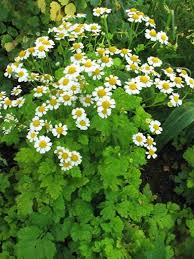
Feverfew, scientifically known as “Tanacetum parthenium”, is a plant that some people grow as an ornamental flower because of its aesthetically pleasing blossoms, but it is much more frequently employed in traditional medicine and contemporary herbal remedies.
Due to their hardiness and propensity to quickly colonize huge amounts of land, these flowers are regarded as invasive weeds in various cultures. Feverfew’s robust and resilient nature is valued by those who understand its value, though. Feverfew, a native of Eurasia, is now widespread and can be found on all major continents.
Although there has been substantial research on feverfew, some of the therapeutic claims have generated debate. The main active component of feverfew is parthenolide, although it also contains a number of oils and tannins that have an impact on human health.
It can be applied in its dry or fresh form, but volatile oil extracts are also utilized in skin washes, tinctures, and dietary supplements. Feverfew has a wide range of possible advantages, but its use should be carefully supervised and guided by a qualified expert because it can interact with other medications or therapies in a variety of ways, some of which can be hazardous. Let’s now examine the several health advantages of feverfew in more detail.
The ragweed family, which is a frequent allergy for many individuals, is closely related to feverfew. Feverfew shouldn’t be used if you have ragweed plant allergies.
Mouth ulcers are a common adverse effect that some people experience; if this happens, stop using the medication and consult a doctor. Despite its analgesic and calming properties, this herb should not be used when pregnant.
Always get advice from a doctor or certified herbalist before introducing a new component to your herbal health routine, as there is always the possibility of harmful drug interactions with such potent plants.
Supplements for feverfew are available as capsules, pills, or liquid extracts. Each supplement contains either fresh, freeze-dried, or dried feverfew.
Parthenolide is included in standardized doses in the supplements used in clinical research. They ought to be standardized to have parthenolide content of no less than 0.2 percent.
Take 100–300 mg of feverfew, standardized to contain 0.2–0.4 percent parthenolide, up to four times per day to stop or prevent an adult migraine headache.
Adjust the recommended adult dosage for children over two years old according to their weight. Most herbal dosages for adults are determined based on an adult weighing 150 pounds on average.
Read Also: 7 Unique Health Benefits of Chicory Roots (Cichorium Intybus)
11 Unique Health Benefits of Feverfew (Tanacetum parthenium)
1. Helps Relieve Migraine
The most well-known and well-known advantage of feverfew is its undeniable reduction of headaches and migraines. Its active elements have several effects, one of which is the suppression of platelet accumulation in capillaries and blood vessels.
The cardiovascular system becomes tense, resulting in headaches and migraines. Feverfew has a quick-acting ability to relieve and relax these vessels, hence removing these unpleasant situations.
2. For Anxiety and Stress
Feverfew has a reputation for lowering stress levels and easing anxiety in certain users, while the exact mechanism is still unclear. This is crucial for people who experience chronic stress since the body’s long-term exposure to stress chemicals can be harmful.
3. Lowers Inflammation
The anti-inflammatory properties of certain of the volatile ingredients in feverfew efficiently reduce inflammation throughout the body. Feverfew herbal therapy is a painless and efficient treatment for people who have chronic joint pain, arthritis, gout, and other inflammatory disorders.
4. Pain Relief
Although any analgesic medication is worthy of attention, this is closely tied to feverfew’s anti-inflammatory qualities.
Since ancient times, feverfew has been used to relieve pain in numerous areas of the body, not simply headache and migraine symptoms.
After surgery or an injury, it can be used efficiently to provide rapid and enduring comfort.
5. Fights Fever
Feverfew has long been used to lower and get rid of fevers. The plant’s name should give some clue of this propensity.
Whether or not you have another, more serious sickness, having a fever can help to encourage sweating and remove toxins from the body, accelerating recovery and minimizing inflammation.
Read Also: 10 Health Benefits Cayenne Pepper (Capsicum annuum)
6. Helps With Menstrual Discomfort
Feverfew is frequently used to ease menstrual discomfort, among other things.
The menstrual cycle can be a terrible monthly occurrence for the billions of women who experience cramps, bloating, hormonal swings, pain, and heavy bleeding.
It can successfully reduce inflammation, get rid of cramps, and provide a calmness to lessen anxiety and mood swings.
7. Helps Boost Appetite
In order to gain weight or heal from an injury or surgery, it can be crucial to increase appetite. Feverfew has been connected to particular hormonal processes that cause hunger.
While dieters may not find this to be the best option, it can undoubtedly aid in healing and weight gain efforts for those who may be underweight or calorie deficient.
8. Improves Respiratory System
Feverfew’s soothing properties also extend to the respiratory system, where it can lessen inflammation and irritation that frequently aggravate diseases like asthma or coughing. It can ease these symptoms and enhance general respiratory health by letting the respiratory tracts unwind.
9. Skin Care Benefits
Feverfew’s contribution to skin health is one of its more recent health advantages.
The complete benefits of feverfew on the skin are still being studied, but when it comes to dermatitis and other frequent types of irritation, it has been demonstrated that topically applying it reduces symptoms.
10. Heart Health
Certain prostaglandins that are produced by the body and raise blood pressure can be inhibited by feverfew.
Feverfew can safeguard general heart health and reduce the risk of developing atherosclerosis and the subsequent heart attacks and strokes associated with that specific obstruction of the cardiovascular system by easing the symptoms of hypertension.
11. Prevents Blood Clot
In most cases, blood moves through our arteries and veins smoothly and effectively, but if a clot, or thrombus, prevents the blood from flowing freely, the resulting condition, known as thrombosis, can be exceedingly dangerous and even fatal. Heart attack and stroke are two serious issues brought on by blood vessel blockages.
According to research, feverfew may have antithrombotic properties. As an antithrombotic agent, it can lessen the chance of dying from a heart attack or stroke by assisting in preventing blood clots from forming and developing.
Read Also: Sheep 101: Wool Production Complete Guide
Here is the additional section to add to the provided article link (https://agric4profits.com/health-benefits-of-feverfew-tanacetum-parthenium/). These new sections follow the requested structure and are based on the article’s content about Feverfew (Tanacetum parthenium), incorporating credible details where applicable.
Nutritional value of Health Benefits of Feverfew (Tanacetum parthenium)

1. Parthenolide: The primary sesquiterpene lactone provides strong anti-inflammatory and antimigraine effects by inhibiting inflammatory pathways and platelet activity.
2. Flavonoids (e.g., Apigenin, Luteolin): These antioxidants protect cells from oxidative stress, reduce inflammation, and support overall cellular health.
3. Camphor: A volatile compound contributing to mild analgesic properties and the plant’s characteristic pungent aroma.
4. Sesquiterpene Lactones (other than parthenolide): Offer additional anti-inflammatory, antimicrobial, and pain-relieving benefits.
5. Volatile Oils (e.g., Borneol, Cineole): Provide aromatic qualities with potential antimicrobial and calming effects.
6. Terpenes: Contribute to anti-inflammatory and antimicrobial activities in the essential oil fraction.
7. Tannins: Astringent compounds that help reduce inflammation and soothe tissues.
8. Phenolic Compounds: Act as antioxidants to combat free radicals and support anti-inflammatory actions.
9. Alpha-Pinene (in volatile oils): Offers mild sedative and tranquilizing effects along with anti-inflammatory potential.
10. Other Phytochemicals (e.g., Germacranolides): Include related lactones that enhance the plant’s broad therapeutic profile for pain and inflammation.
Scientific Evidence and Case Studies on Health Benefits of Feverfew (Tanacetum parthenium)
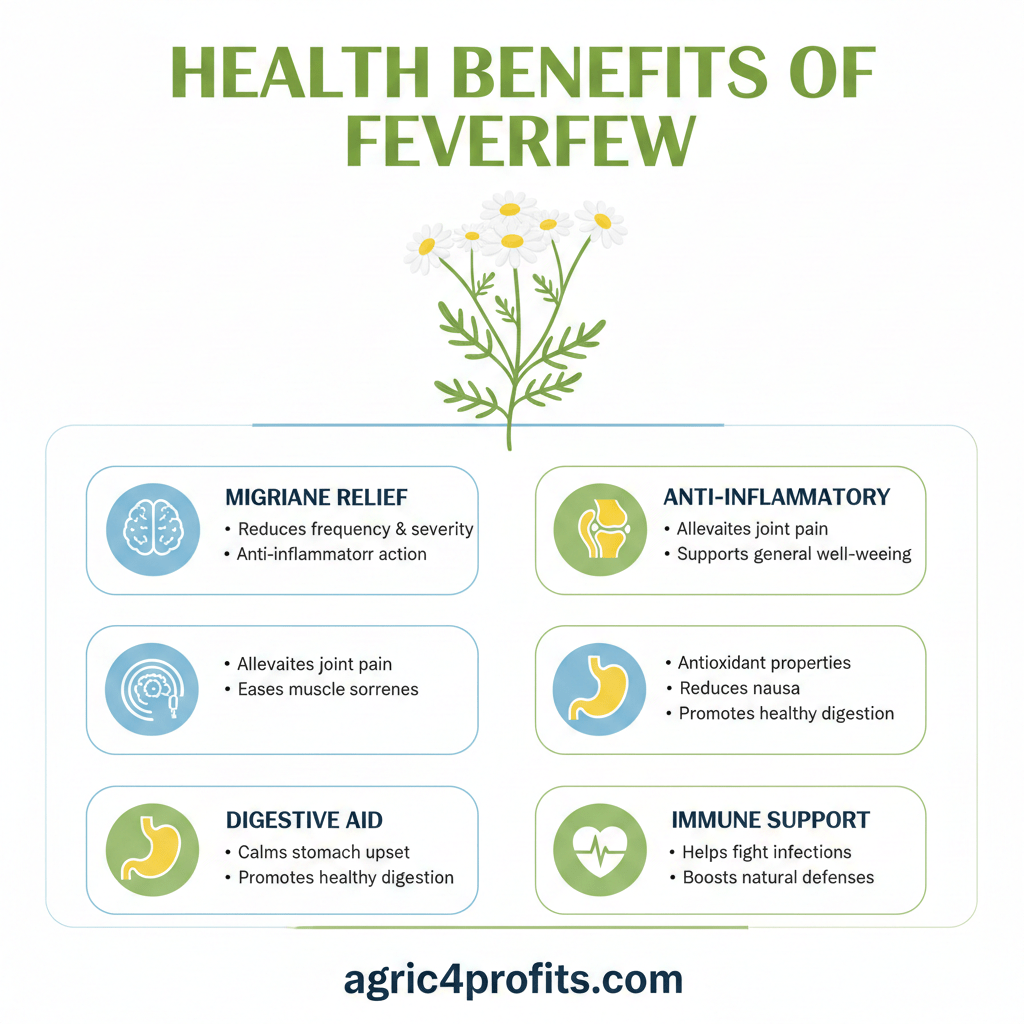
1. Migraine Prevention: Johnson et al. (1985) conducted a randomized controlled trial showing daily feverfew leaf intake significantly reduced migraine frequency, severity, duration, and associated symptoms like nausea compared to placebo.
2. Migraine Prophylaxis Dose-Response: Pfaffenrath et al. (2002) in a double-blind multicenter trial found 6.25 mg t.i.d. of a stable CO2 extract (MIG-99) effective in reducing migraine attacks with good tolerability.
3. Anti-inflammatory Mechanism: Parthenolide inhibits phospholipase A2 in platelets, reducing inflammatory prostaglandins and supporting uses in arthritis and inflammation (various studies referenced in reviews).
4. Antimicrobial Activity: Pinto et al. (2011) demonstrated extracts active against Staphylococcus aureus and herpes simplex virus due to sesquiterpene lactones.
5. Anxiolytic Effects: Cárdenas et al. (2017) showed aqueous extract exhibited anxiolytic and antidepressant activities in mice via GABA and serotonin modulation.
6. Antinociceptive and Anti-inflammatory: Oral extract produced dose-dependent pain relief in acetic acid writhing in mice and reduced paw edema in rats (Jezewska-Trzebiatowska et al., 1999).
7. Platelet and Vascular Effects: Extracts irreversibly inhibited vascular responses in rabbit aorta to various agonists, supporting antimigraine mechanisms (Barsby et al., 1992).
8. Overall Systematic Review: Pareek et al. (2011) compiled evidence highlighting multifarious uses, particularly antimigraine via parthenolide, with growing support from preclinical and clinical data.
Evidence is strongest for migraine prevention (mixed but positive in some rigorous trials) and anti-inflammatory effects, primarily preclinical for other benefits; more large-scale human studies are needed.
Summary of Health Benefits of Feverfew (Tanacetum parthenium)
| Aspect | Key Details |
|---|---|
| Plant Overview | Perennial herbaceous plant in Asteraceae family, native to Balkans/Eurasia; 30-60 cm tall with aromatic, deeply lobed leaves and daisy-like white/yellow flowers; known historically as febrifuge. |
| Primary Benefits | Migraine prevention/reduction in frequency and severity, headache relief, anti-inflammatory effects for arthritis/pain. |
| Other Benefits | Fever reduction, menstrual cramp relief, digestive aid (indigestion/flatulence), skin conditions (psoriasis/eczema topical), allergy management, immune support, cardiovascular aid, potential anticancer properties, dental health (gum inflammation), anxiety/stress reduction, anti-insect repellent. |
| Key Constituents | Parthenolide (main active), flavonoids (apigenin/luteolin), sesquiterpene lactones, camphor, volatile oils (borneol/cineole), terpenes, tannins, phenolic compounds. |
| Usage Forms | Fresh/dried leaves (chewed or tea), tinctures/extracts, capsules/tablets, topical creams/ointments, herbal combinations. |
| Precautions | Mouth ulcers, digestive upset, allergies (Asteraceae family), bleeding risk (blood-thinning), avoid in pregnancy/lactation (uterine stimulation), drug interactions (anticoagulants/antiplatelets), rebound headaches on stopping, photosensitivity; consult professionals, not for children. |
Frequently Asked Questions About Health Benefits of Feverfew (Tanacetum parthenium)
1. What is feverfew mainly used for?
It is primarily used for preventing and reducing the frequency/severity of migraine headaches due to its anti-inflammatory and vascular effects.
2. How does feverfew help with migraines?
Parthenolide inhibits inflammation, serotonin release, and platelet activity, helping prevent blood vessel changes associated with migraine attacks.
3. Can feverfew relieve other headaches?
Yes, it may ease tension headaches and general head pain through its anti-inflammatory and analgesic properties.
4. Is feverfew effective for arthritis?
It shows anti-inflammatory potential that may reduce pain and discomfort, though clinical evidence is limited compared to migraine use.
5. Does feverfew help with menstrual pain?
Traditionally used to relieve cramps via muscle-relaxant and anti-inflammatory actions.
6. What are common side effects of feverfew?
Mouth ulcers (from chewing fresh leaves), nausea, digestive issues, allergic reactions, or increased bleeding risk.
7. Is feverfew safe during pregnancy?
No; avoid it as it can stimulate uterine contractions and pose risks.
8. How should feverfew be taken for migraines?
Typically as capsules or tea with standardized parthenolide content; consistent daily use for prevention, often 50-150 mg dried leaf.
9. Does feverfew interact with medications?
Yes, potentially with blood thinners, antiplatelets, or migraine drugs; consult a healthcare provider.
10. Can feverfew be used topically for skin issues?
Yes, creams or ointments may help soothe psoriasis, eczema, or irritations due to anti-inflammatory effects.
Do you have any questions, suggestions, or contributions? If so, please feel free to use the comment box below to share your thoughts. We also encourage you to kindly share this information with others who might benefit from it. Since we can’t reach everyone at once, we truly appreciate your help in spreading the word. Thank you very much for your support and for sharing!
Disclaimer: This article is for educational and informational purposes only. The health benefits described are based on scientific research and traditional knowledge. They ayre not a substitute for professional medical advice, diagnosis, or treatment. Always consult a healthcare professional before using any herb or natural remedy for medical purposes.
Read Also: 7 Health Benefits of Dill Weed (Anethum Graveolens)