



Pawpaw (Papaya) is one of the fruiting plants that originate in southern Mexico, and also comes from southern America. However, now you can find it in almost all tropical regions, including Indonesia. Pawpaw is sometimes also called papaya.
The Nutritional Contents of Pawpaw
The nutritional content of pawpaw in 100 grams includes:
- High water content for hydration.
- Phosphorus for bone health.
- Carbohydrates for energy.
- Calcium for bone and teeth development.
- Vitamin A (365 SI) for vision and immune support.
- Vitamin C (78 mg) as a powerful antioxidant.
- Calories (46 cal) as an energy source.
- Protein (5 mg) for tissue repair.
- Folic acid for fetal neural development.
- Zinc for immune function.
- Iron for blood formation.
- Beta-carotene as a vitamin A precursor.
- Fiber for digestion.
- Potassium for blood pressure regulation.
- Beta-cryptoxanthin and other carotenoids for antioxidant protection.
- Selenium as an antioxidant.
- Lutein and zeaxanthin for eye health.
Health Benefits of Eating Pawpaw (Papaya) Fruit during Pregnancy
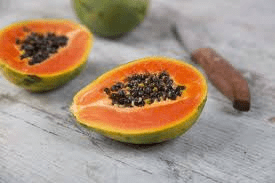
The nutrients and compounds in pawpaw fruit provide many general benefits of papaya. Specifically for pregnancy, ripe pawpaw offers targeted advantages when consumed in moderation.
1. Smooth Digestion
Pawpaw contains high fiber and the enzyme papain (in ripe fruit), which aids protein digestion, prevents constipation, reduces heartburn, eases morning sickness, and alleviates abdominal cramps common in pregnancy.
2. The Right Amount of Protein
Pawpaw provides a small but highly digestible amount of protein (about 0.5g per 100g), which supports fetal development without overwhelming the digestive system during pregnancy.
Read Also: How to Grow Paw-Paw (papayas): Beginners Business Guide
3. Formation of Fetal Vision Organs
Rich in vitamin A and beta-carotene, pawpaw supports eye health and helps form the infant’s vision organs for healthy eyesight later.
4. Preventing Dehydration
High water content helps meet increased fluid needs during pregnancy, preventing dehydration and related issues.
5. Rich in Vitamin C
Pawpaw’s high vitamin C boosts immunity, prevents infections, colds, and flu, and supports overall stability.
6. Maintaining Blood Pressure
Potassium in pawpaw helps regulate sodium levels, maintains healthy blood pressure, and supports mental alertness.
7. Boost Immunity
Beta-carotene and antioxidants strengthen the immune system, crucial for protecting both mother and fetus.
8. Ward off Free Radicals
Antioxidants protect cells and support fetal development by combating oxidative stress.
9. Increases Hemoglobin
Iron and other minerals help boost hemoglobin, improve oxygen absorption, prevent anemia, and address respiratory issues.
10. Gives Energy
Natural sugars (about 17.9g per medium fruit) and calories provide quick, healthy energy to combat fatigue.
11. The Benefits of Galactagogue
A mixture of ripe pawpaw with milk and honey acts as a tonic, supports nutrition, and promotes milk production during breastfeeding.
12. Healthy Cardiovascular Organs
Vitamin C supports heart function and cardiovascular health when consumed moderately (1-2 pieces daily with other foods).
Read Also: Comprehensive Paw-Paw (Papaya) Farming Guide
13. Helping Fetal Development
Folate aids neural tube development in the fetus, ensuring proper growth.
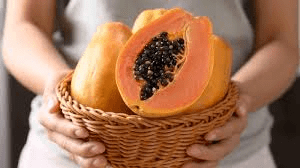
Cautions!
While ripe pawpaw offers benefits, unripe or raw pawpaw poses risks:
- Raw pawpaw contains latex and papain/pepsin compounds that may cause uterine contractions, early miscarriage, or premature birth.
- Latex can trigger allergies, edema, bleeding, slowed circulation, or weaken fetal membranes.
- Excessive consumption (even ripe) may lead to kidney stones from high vitamin C.
- Avoid in early pregnancy weeks and limit amounts; always choose fully ripe, clean fruit without sap.
Consume only fully ripe pawpaw to maximize benefits and avoid risks.
Scientific Evidence and Case Studies on Pawpaw (Papaya) during Pregnancy
1. Digestive Support: Fiber and papain in ripe papaya aid digestion and prevent constipation, a common pregnancy issue, supported by its enzyme activity in breaking down proteins.
2. Nutrient Supply for Fetal Health: High folate, vitamin C, and vitamin A provide essential nutrients for neural development, immunity, and vision formation in the fetus.
3. Safety of Ripe vs. Unripe: Studies on rat models show ripe papaya does not induce uterine contractions, while unripe/semi-ripe papaya’s latex causes contractions, supporting avoidance of unripe forms.
4. Antioxidant and Immune Benefits: Vitamin C and carotenoids act as antioxidants, helping ward off infections and support maternal-fetal health without adverse effects in moderation.
5. No Strong Evidence for Miscarriage from Ripe Papaya: Multiple reviews and animal studies confirm limited risk from ripe papaya, with risks mainly linked to unripe fruit’s papain and latex causing potential contractions.
Nutritional Value Of Pawpaw (Papaya)
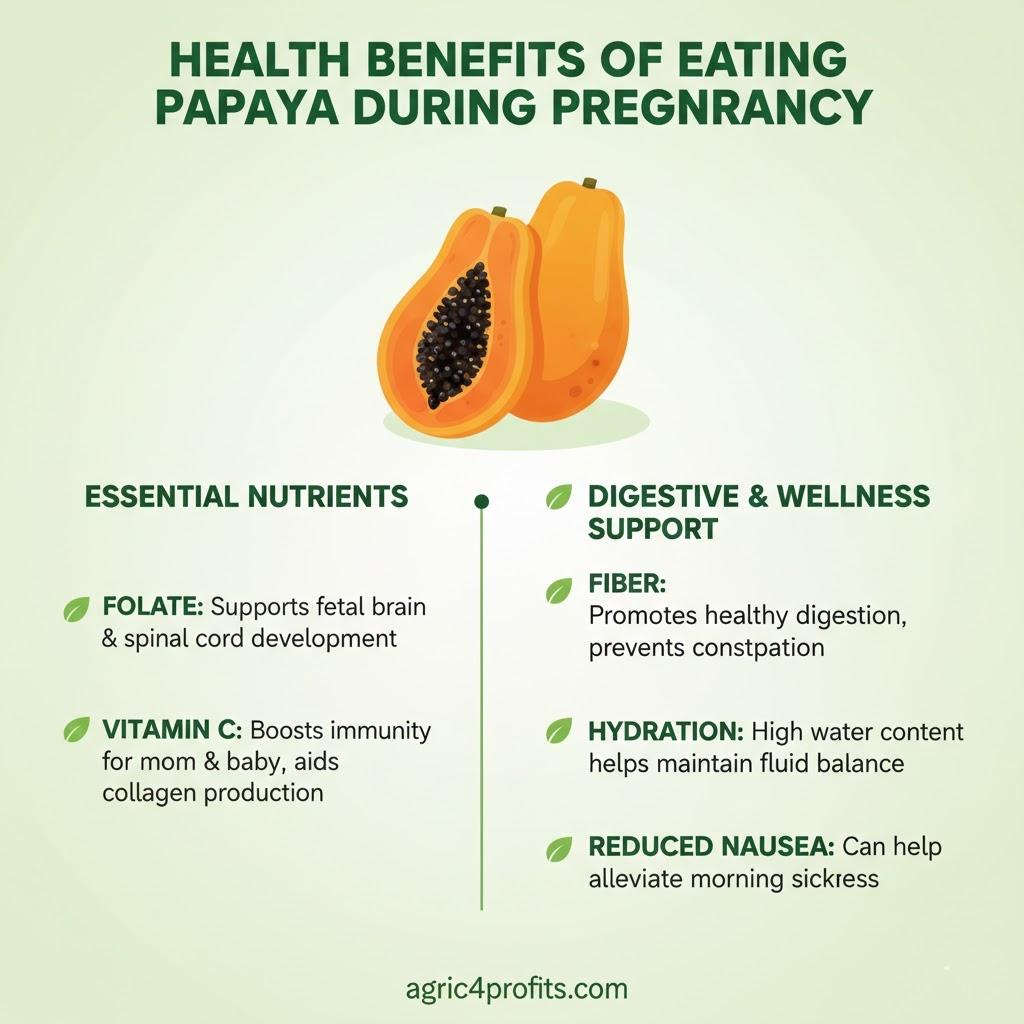
1. High Vitamin C: Provides about 61-78 mg per 100g, boosting immunity and collagen formation for maternal and fetal health.
2. Vitamin A and Beta-Carotene: Around 950 IU vitamin A activity per 100g, supporting vision development and immune function.
3. Folate (Folic Acid): Essential for preventing neural tube defects in the fetus.
4. Dietary Fiber: Aids digestion, prevents constipation, and supports gut health.
5. Potassium: Helps regulate blood pressure and fluid balance.
6. Low Calories with Natural Sugars: About 43-46 calories per 100g, offering energy without excess.
7. Minerals (Iron, Zinc, Calcium): Support hemoglobin production, immune health, and bone development.
Summary of Pawpaw (Papaya) during Pregnancy
| Aspect | Key Points |
|---|---|
| Primary Benefits | Improves digestion, provides energy, boosts immunity, supports fetal development (vision, neural tube), prevents dehydration/anemia, maintains blood pressure. |
| Nutrient Highlights | Vitamin C, vitamin A/beta-carotene, folate, fiber, potassium, iron, natural sugars, low protein/calories. |
| Recommended Form | Only fully ripe (yellow/orange, soft); avoid raw/unripe/semi-ripe due to latex/papain risks. |
| Cautions | Unripe can cause contractions, miscarriage, premature birth, allergies, edema; limit intake to avoid kidney stones; avoid early pregnancy excess. |
| Recommendations | Consume moderately (1-2 pieces ripe daily); pair with balanced diet; consult doctor; choose clean, sap-free fruit for safe benefits. |
Frequently Asked Questions
1. Is ripe papaya safe to eat during pregnancy?
Yes, fully ripe papaya is generally safe and beneficial in moderation, providing essential vitamins and fiber without the risks associated with unripe fruit.
2. Why should pregnant women avoid unripe papaya?
Unripe papaya contains high levels of latex and papain, which can trigger uterine contractions, potentially leading to miscarriage or premature birth.
3. Does papaya help with constipation during pregnancy?
Yes, its high fiber and papain enzyme promote smooth digestion, prevent constipation, and ease related issues like heartburn.
4. Can papaya support fetal development?
Yes, nutrients like folate aid neural tube formation, vitamin A supports vision organs, and iron helps prevent anemia for better oxygen supply.
5. How does papaya boost immunity for pregnant women?
Rich in vitamin C, beta-carotene, and antioxidants, it helps prevent infections, colds, and supports overall immune strength.
6. Is papaya good for energy and preventing fatigue in pregnancy?
Yes, natural sugars and calories provide a healthy energy boost to combat common pregnancy tiredness.
7. What risks come from eating too much papaya during pregnancy?
Excess (especially if overconsumed) may lead to kidney stones from high vitamin C or digestive upset; always moderate intake.
8. Should papaya be avoided in the first trimester?
It’s best to avoid or limit even ripe papaya early on, and strictly avoid unripe forms due to potential contraction risks.
9. Can papaya increase milk production after pregnancy?
Yes, ripe papaya mixed with milk and honey has galactagogue properties that may help boost breast milk production.
10. Is papaya better than other fruits for pregnant women?
It offers unique benefits like high vitamin C and folate, but should be part of a varied diet with other fruits for balanced nutrition.
Do you have any questions, suggestions, or contributions? If so, please feel free to use the comment box below to share your thoughts. We also encourage you to kindly share this information with others who might benefit from it. Since we can’t reach everyone at once, we truly appreciate your help in spreading the word. Thank you very much for your support and for sharing!
Disclaimer: This article is for educational and informational purposes only. The health benefits described are based on scientific research and traditional knowledge. They are not a substitute for professional medical advice, diagnosis, or treatment. Always consult a healthcare professional before using any herb or natural remedy for medical purposes.
Read Also: 31 Healing Powers of Bitterleaf (Vernonia Amygdalina)