


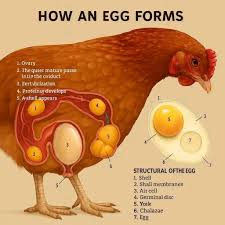
Have you ever cracked open an egg and found two yolks inside? It is a surprising moment, and it leaves many people wondering how that happens. Double yolk eggs are not random accidents. They follow a specific biological process tied to the hen’s reproductive system, age, and hormonal balance.
Before getting into how double yolk eggs form, it helps to understand what an egg actually is. An egg is a spherical body produced by birds, insects, snakes, chickens, and other animals. It houses the embryo during development. In domestic poultry, the hen’s egg is widely used as food and is one of the most nutrient-dense foods available.
Eggs are rich in proteins, lipids, vitamins, and minerals. They also contain growth factors needed by the developing embryo and defense factors that help protect against viral infections and bacteria. Research shows that 90 to 95 percent of all eggs are free of contamination at the point they are laid.
The yolk forms first in the hen’s ovary. Once the yolk reaches the right size, it is released into the oviduct, where the rest of the egg forms around it. The next layer to be added is the egg white, known as the albumen, which takes about three hours to form. The egg yolk itself contains most of the egg’s nutritional value, including the bulk of its iron, vitamins, and folate. It also contains two key nutrients, lutein and zeaxanthin, which support eye health, brain health, and heart health.
Read Also: How to Increase Egg Production in Commercial Layers
1. What Causes Double Yolk Eggs

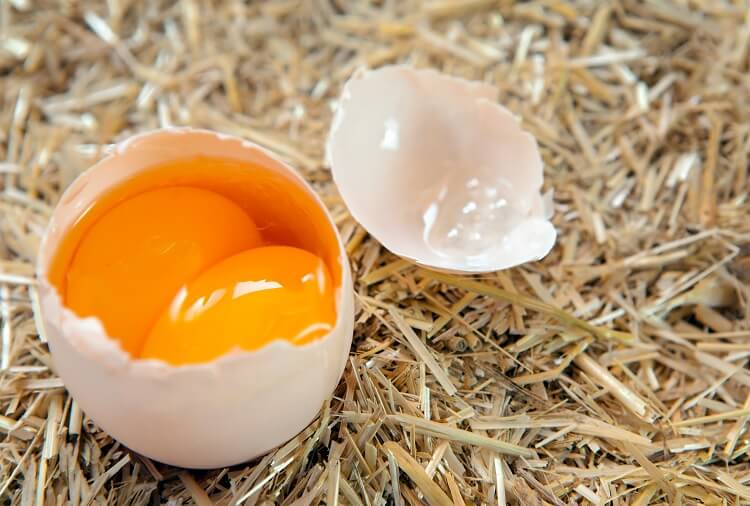
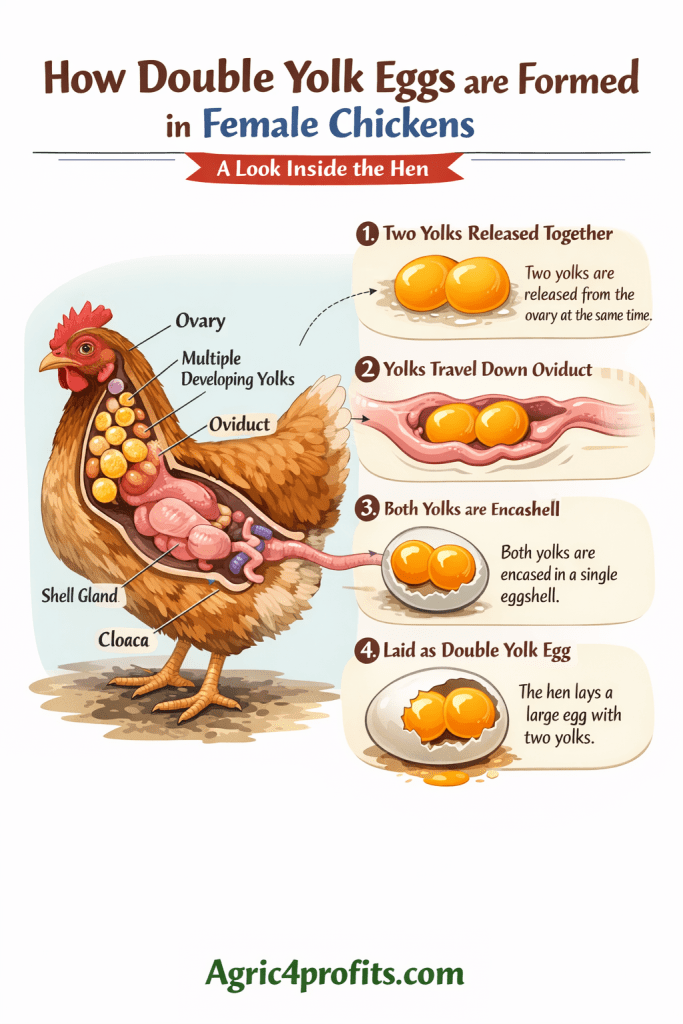
Double yolk eggs are produced when two yolks end up inside the same shell. This happens when two yolks are released into the hen’s oviduct very close together and become enclosed in a single shell before the process is complete.
According to research, about an hour after a hen lays an egg, the next yolk is released. But due to hormonal changes or imbalances, an overstimulated ovary can sometimes fail to time this release correctly and discharge the yolk too early. When this happens, the shell forms around both yolks, resulting in one larger egg with two yolks inside.
Double yolk eggs are most commonly produced by young hens whose reproductive systems have not yet fully matured. They can also appear in older hens that are nearing the end of their egg-laying period. The chance of getting a double yolk egg is roughly 1 in 100, though this varies depending on the age and breed of the bird.
Read Also: How to Select the Best Quality Egg Laying Chickens at Point of Lay (P.O.L)
2. Key Facts About Double Yolk Eggs
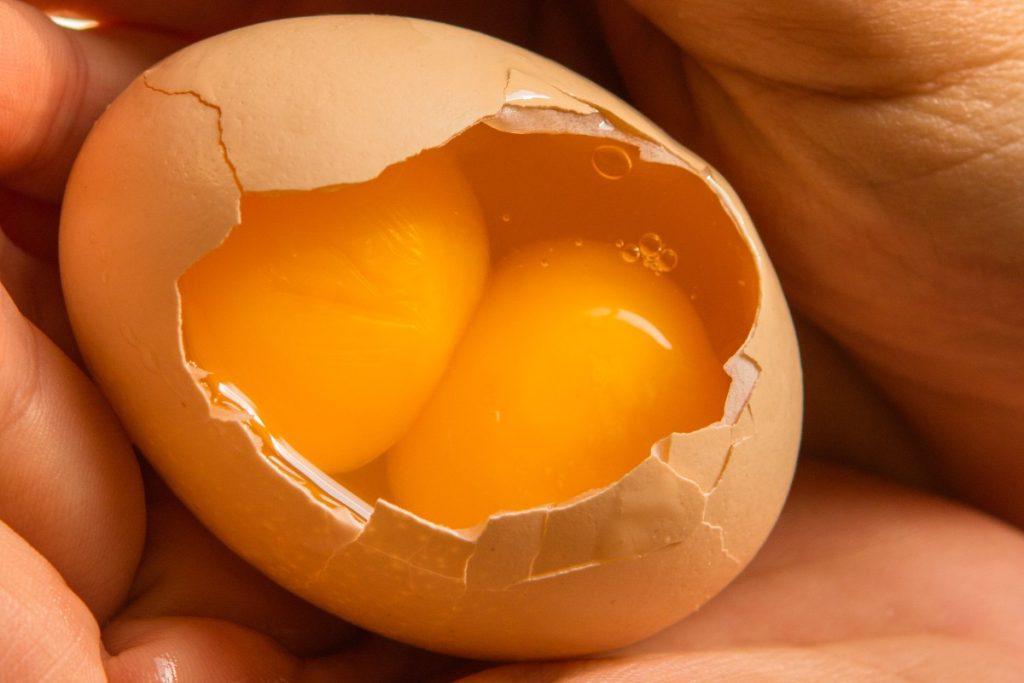
i. They are safe to eat: Double yolk eggs are perfectly safe for consumption. They taste the same as regular eggs and contain the same nutrients, just in larger quantities.
ii. They are rare: The odds of finding a double yolk egg are roughly 1 percent. They are not something you will come across every day.
iii. They can be genetic: In some cases, the tendency to produce double yolk eggs can be hereditary. This trait is rare among heavier breeds and hybrid chickens.
iv. They usually do not hatch: Double yolk eggs normally will not hatch successfully if incubated. The space inside the shell is not sufficient to support the development of two embryos to full term.
v. They can cause health problems in hens: Hens that regularly lay large or double yolk eggs are at risk of becoming egg bound or suffering from vent prolapse, both of which are serious conditions that require prompt attention.
3. The Yolk Sac and Its Role in Development
The yolk sac is an important structure that develops during early pregnancy in mammals. While it is different from the egg yolk in a hen’s egg, understanding its role gives useful context to how yolk-based nutrition works in early development.
The yolk sac is a pouch-shaped structure that develops inside the uterus during the second week of pregnancy. It provides the embryo with nourishment and helps circulate gases between the mother and the developing fetus. It also produces cells that eventually form important structures like blood cells, the umbilical cord, and reproductive organs.
The yolk sac is also one of the first structures a healthcare provider can identify during a prenatal ultrasound, making it a key indicator of early pregnancy health. Its size, location, and appearance provide important information. If any of these appear abnormal, it may indicate a problem with the pregnancy.
The yolk sac gradually gets smaller as the pregnancy progresses and typically disappears after ten weeks.
A. Functions of the Yolk Sac in Pregnancy
i. Blood cell development: It develops the earliest form of blood cells in the embryo.
ii. Cell production: It produces cells that turn into the umbilical cord and reproductive organs.
iii. Nutrient delivery: It helps deliver nutrients directly to the embryo during early development.
iv. Gas circulation: It helps circulate gases between the pregnant person and the embryo.
v. Immune and metabolic function: It provides early immune function and supports the embryo’s early metabolism.
The yolk sac is located inside the gestational sac, which is a large fluid-filled cavity inside the uterus that surrounds the embryo. It is usually attached to the outside of the developing embryo and appears round or pear-shaped.
Summary on How Double Yolk Eggs are Formed in Female Chickens
| Topic | Key Points |
|---|---|
| What is an Egg | A spherical body that houses the embryo during development |
| Egg Nutrients | Protein, lipids, vitamins, minerals, iron, folate, lutein, zeaxanthin |
| How Yolk Forms | Forms in the ovary, released into the oviduct when ready |
| What Causes Double Yolk | Two yolks released too close together due to hormonal imbalance |
| Who Produces Them | Young hens with immature systems or old hens near end of laying life |
| How Common Are They | Roughly 1 in 100 eggs |
| Are They Safe to Eat | Yes, perfectly safe and nutritious |
| Can They Hatch | No, double yolk eggs normally do not hatch successfully |
| Health Risk to Hens | Risk of becoming egg bound or suffering vent prolapse |
| Yolk Sac Role | Provides nutrients, produces blood cells, supports early embryo development |
Frequently Asked Questions About How Double Yolk Eggs are Formed in Female Chickens
1. What causes a double yolk egg?
A double yolk egg forms when two yolks are released into the oviduct too close together due to a hormonal imbalance in the hen. The shell then forms around both yolks, resulting in one large egg with two yolks.
2. Are double yolk eggs safe to eat?
Yes. Double yolk eggs are completely safe to eat. They taste the same as regular eggs and are just as nutritious, sometimes even more so because of the larger yolk.
3. How rare is a double yolk egg?
The chance of getting a double yolk egg is approximately 1 in 100. The exact odds depend on the age and breed of the hen.
4. Which hens are most likely to produce double yolk eggs?
Young hens whose reproductive systems have not yet matured are the most common producers of double yolk eggs. Older hens nearing the end of their laying period can also produce them.
5. Can a double yolk egg hatch into two chicks?
In most cases, no. Double yolk eggs very rarely hatch successfully because there is not enough space inside the shell for two chicks to fully develop. It is possible but extremely uncommon.
6. Is the tendency to lay double yolk eggs hereditary?
Yes, in some cases it can be. The trait is considered genetic and is rare among heavier breeds and hybrid chickens.
7. Can double yolk eggs cause health problems in hens?
Yes. Hens that frequently lay large or double yolk eggs can become egg bound or suffer from vent prolapse. Both conditions are serious and need quick attention.
8. What is the difference between a normal egg and a double yolk egg?
A double yolk egg is larger than a normal egg and contains two yolks instead of one. Everything else, including the shell, albumen, and nutritional content, follows the same basic structure.
9. What is a yolk sac and how does it relate to egg development?
The yolk sac is a structure that forms in early pregnancy and provides nourishment to the developing embryo. In poultry, the egg yolk serves a similar purpose, supplying nutrients to the developing chick during incubation.
10. How does the egg form inside a hen?
The yolk forms in the hen’s ovary and is released into the oviduct once it reaches the right size. The albumen, or egg white, forms around it in the oviduct over about three hours, followed by the shell before the egg is laid.
Do you have any questions, suggestions, or contributions? If so, please feel free to use the comment box below to share your thoughts. We also encourage you to kindly share this information with others who might benefit from it. Since we can’t reach everyone at once, we truly appreciate your help in spreading the word. Thank you very much for your support and for sharing!
Read Also: Used Cooking Oil Recycling Process: Complete Guide