


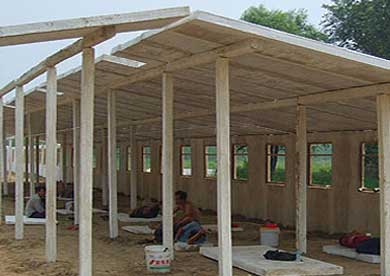
Starting a poultry farm can feel overwhelming, especially when you’re trying to figure out space requirements. You don’t want to overcrowd your birds, but you also don’t want to waste land or resources. The truth is, space planning can make or break your poultry business.
Many new farmers jump into poultry farming without properly understanding space needs. They either build too small and struggle with disease outbreaks and poor bird performance, or they build too large and waste money on unnecessary construction costs. Neither scenario is ideal for your bottom line or your birds’ health.
The space you need depends on several factors. Your flock size matters most, but you also need to consider the type of birds you’re raising, your housing system, and what other structures you’ll build on your property. Are you planning just chicken houses, or do you need space for a feed mill, storage buildings, worker housing, and an egg collection area?
Getting this right from the start saves you headaches later. You won’t have to relocate or rebuild because you miscalculated. You won’t face complaints from neighbors about overcrowding or odor. And your birds will perform better, which means more profit for you.
This guide breaks down exactly how much space you need for different poultry operations. We’ll cover space requirements for broilers and layers, different housing systems, construction guidelines, and the additional structures you might need. By the end, you’ll know exactly how to plan your poultry farm layout without guessing.
1. Understanding Basic Space Requirements for Poultry
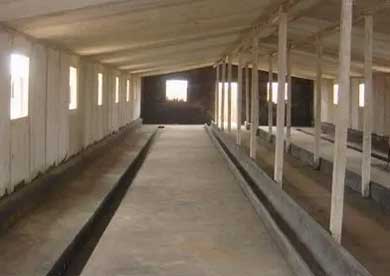
Every bird needs a minimum amount of floor space to stay healthy and productive. This requirement changes as birds grow and depends on what type of poultry you’re raising.
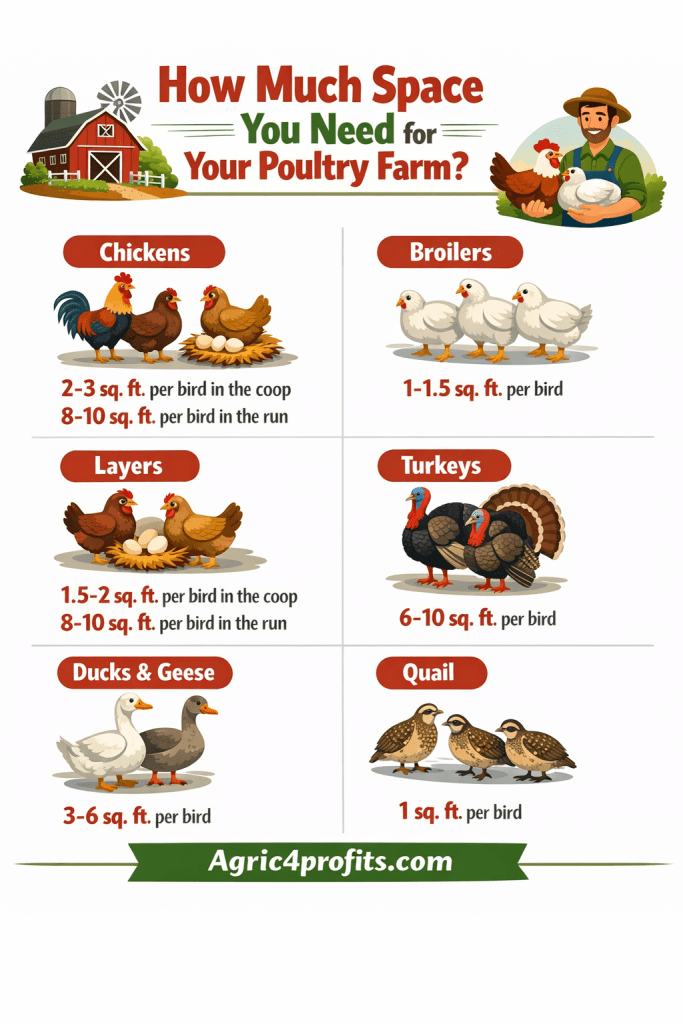
The general rule is simple. Broilers need less space than layers because they have shorter lives. A broiler requires about one square foot of floor space under a deep-litter system. Layers need roughly two square feet per bird because they live longer and need more room to move around.
These numbers assume you’re using a deep-litter housing system. Other systems have different requirements. Battery cages pack birds more densely, while free-range systems need significantly more space.
Temperature also affects space needs. Young chicks require proper brooding temperatures to survive. The brooder temperature decreases each week as chicks grow older and develop feathers. If chicks don’t have adequate warmth and space, you’ll see high mortality rates.
A. Space Requirements by Bird Age
Chicks need different amounts of space as they grow. Here’s what you should plan for:
i. Day-old to 4 weeks: Young chicks need about 0.25 to 0.5 square feet per bird. They stay close to heat sources during this period and don’t roam much.
ii. 5 to 8 weeks: Growing birds need 0.75 square feet each. They’re more active now and need room to develop properly.
iii. Adult broilers: Commercial broilers need 0.8 to 1.0 square feet per bird. This keeps them comfortable without wasting space.
iv. Adult layers: Laying hens require 1.5 to 2.0 square feet per bird. They need more space because they live longer and move around more.
v. Breeders: Breeding stock needs even more room, about 2.0 to 2.5 square feet per bird. This ensures better mating behavior and egg production.
B. Converting Space Measurements
If you work with metric measurements, here’s the conversion. One square foot equals 0.083 square meters. One inch equals 2.54 centimeters. Keep these conversions handy when planning your farm or ordering materials.
Read Also: Poultry Housing Management: Poultry Pen/House Construction Guide
2. Calculating Total Space for Your Poultry Farm
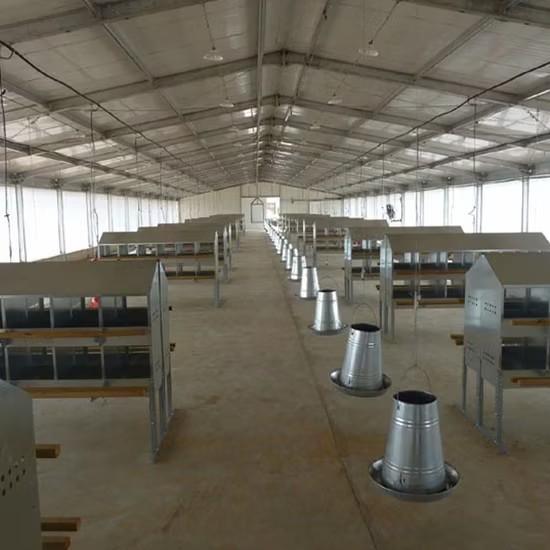
The total space you need goes beyond just housing for birds. You must account for several structures and areas to run a functional farm.
Your calculation should include the chicken houses, worker accommodation if needed, feed storage buildings, a feed mill if you’re mixing your own feed, egg collection and storage areas, equipment storage, and pathways between buildings. Don’t forget space for waste management and future expansion.
For example, if you plan to raise 1,000 broilers, you need about 500 square feet just for the birds. Add another 100 square feet for walkways, proper lighting, and ventilation. That’s 600 square feet for the chicken house alone. Then add space for all your other structures.
Many farmers make the mistake of calculating only bird space. They forget about feed storage, which is critical. Running out of feed storage means you can’t buy in bulk, and that increases your costs. Plan for at least two weeks of feed storage as a minimum.
A. Space for Different Farm Sizes
Here’s a rough guide for different operation sizes:
i. Small backyard operation (25-100 birds): You can manage with 50 to 200 square feet of housing plus some outdoor space. This fits in most backyards if local regulations allow it.
ii. Small commercial (500-1,000 birds): You need roughly 500 to 1,000 square feet for housing, plus additional space for feed storage and equipment. Total land requirement is about 2,000 to 3,000 square feet.
iii. Medium commercial (5,000-10,000 birds): Plan for 5,000 to 10,000 square feet of housing. Your total land need jumps to about half an acre to one full acre when you include all structures.
iv. Large commercial (20,000+ birds): A typical commercial broiler house measures 40 to 50 feet wide by 400 to 600 feet long. This provides 16,000 to 30,000 square feet of space and can hold 20,000 to 40,000 birds.
B. Additional Structures to Consider
Don’t overlook these important areas when calculating space:
i. Feed storage: Plan for a dedicated building to protect feed from moisture and pests. Size depends on your flock size and how often you receive deliveries.
ii. Equipment storage: You need somewhere to keep feeders, waterers, and maintenance tools dry and organized.
iii. Worker housing: If you employ staff who live on-site, allocate space for their accommodation.
iv. Waste management area: Designate space for manure composting or storage. A 50,000-bird broiler farm produces roughly 300 tons of litter annually.
v. Egg depot: Layer farms need a clean, cool area for egg collection, grading, and storage before sale.
Read Also: Extensive System/Free Range Poultry Production System
3. Different Housing Systems and Their Space Requirements
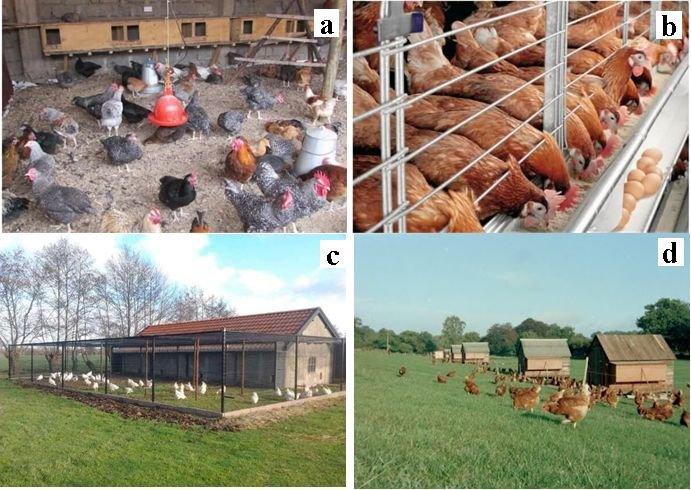
The housing system you choose dramatically affects your space needs. Each system has trade-offs between cost, bird density, and management ease.
A. Deep-Litter System
This is the most common system for broilers. Birds live on a bedding material like wood shavings or rice husks. The bedding absorbs droppings and gets replaced periodically.
Space requirement is about 1 square foot per broiler and 2 square feet per layer. This system works well if you have moderate land availability and want to keep costs reasonable. The litter eventually becomes valuable fertilizer.
Advantages include lower construction costs than cage systems and better bird comfort. The main disadvantage is more labor for litter management.
B. Battery Cage or Stall-Fed System
This system houses birds in cages stacked in rows. It’s the most space-efficient option, allowing you to raise more birds per square foot of land.
You can fit significantly more birds in the same building compared to floor systems. A 1,000-bird operation might need only 200 to 300 square feet with cages, compared to 1,000 square feet with deep litter.
The downsides are higher initial costs for cages and some consumers prefer eggs from non-caged birds. Also, waste management requires different handling since manure drops below the cages.
C. Free-Range or Extensive System
This traditional system gives birds maximum freedom. They have a shelter but roam freely on the ground during the day.
Space requirements jump dramatically. You need about 10 square feet per bird minimum, and many operations provide even more. For good grassland, allow 220 to 260 square feet per bird to ensure adequate foraging.
On cultivated, sandy soil, you can support about 1,000 birds per acre. On regular pasture with good grass, that number drops.
Benefits include lower construction costs and premium pricing for free-range products. The challenges are predator protection, weather exposure, and disease control.
D. Semi-Intensive System
This combines elements of confined and free-range systems. You keep half your birds in cages or houses and let the other half roam outdoors.
Space needs fall between intensive and extensive systems. This approach protects birds from predators and bad weather while giving them some outdoor access.
Many farmers find this system offers a good balance. You get some of the marketing benefits of free-range without the full space and management requirements.
4. Poultry House Construction Guidelines
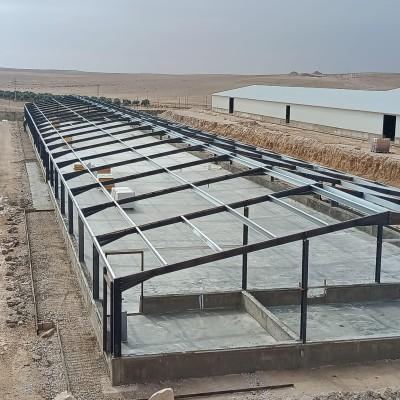
Building your poultry house correctly affects both space efficiency and bird performance. Here are the key construction factors that influence space planning.
A. House Orientation and Direction
Position your poultry house so the long axis runs east to west. This prevents direct sunshine from hitting birds during the hottest part of the day. The side walls should face north and south.
This orientation keeps the house cooler naturally, reducing stress on birds and lowering cooling costs. In tropical climates especially, proper orientation can mean the difference between good and poor production.
B. House Width and Length
The width of your house affects ventilation. In tropical countries, open-sided poultry houses should be no more than 22 to 25 feet wide. This allows adequate air movement through the middle of the house.
You can make the house any length you want. Length depends on how many birds you’re raising and how much land you have available. Most commercial operations use standardized lengths of 400 to 600 feet.
For backyard laying houses, 12 to 16 feet deep works fine because floor space is smaller. Commercial layer houses go 18 to 24 feet deep to accommodate more birds. Deeper houses actually provide more comfort because the higher bird density protects against drafts.
C. Foundation and Floor
A good foundation prevents water seepage and keeps the house dry. Build your foundation with concrete extending 1 to 1.5 feet below ground and 1 to 1.5 feet above ground level.
The floor should be concrete with rat-proof features. Extend the floor 1.5 feet beyond the walls on all sides. This prevents rats and snakes from burrowing under walls to enter the house.
Make sure the floor has proper drainage. Wet conditions cause hypothermia in chicks, which is a leading cause of death in small farms. Keep the floor dry at all times.
D. Walls and Openings
Side walls should be 1 to 1.5 feet high, generally at the birds’ back height. This protects them during rain or cold weather while maintaining good ventilation.
In cage houses, you don’t need side walls since birds are elevated off the ground. This saves on construction costs.
Doors should open outward in deep-litter houses and measure about 6 feet by 2.5 feet. At the entrance, build a foot bath for disinfectant to prevent disease transmission.
E. Roof Options
You have several roofing choices depending on your budget. Options include thatch, tiles, asbestos sheets, or concrete. Each has different costs and durability.
In hot climates, choose roofing materials that reflect heat rather than absorb it. Proper roofing keeps the interior temperature manageable and protects birds from weather extremes.
5. Temperature and Brooding Space Considerations
Temperature control is critical for chicks and affects how you plan brooding space. Young birds cannot regulate their body temperature well and depend on external heat.
A. Brooder Temperature Requirements
Start chicks at about 95°F under the hover (the canopy-type brooding lamp). Measure temperature 4 to 6 inches above the floor at the outer edge of the hover.
Reduce temperature by about 5°F each week as chicks develop feathers. By week four or five, they can handle normal room temperature.
Keep room temperature below 75°F during the first few weeks. This encourages rapid feathering, which helps chicks regulate their own temperature sooner.
B. Brooding Space Per Chick
Newly hatched chicks crowd together under heat. You need less floor space per chick initially, but they still need room to access feed and water.
Plan for about 0.25 square feet per day-old chick in the brooding area. As they grow and need less heat, you can expand their access to the full house.
Watch chick behavior to know if temperature and space are right. If they huddle tightly under the hover, they’re too cold. If they scatter far from the heat source, they’re too hot. Properly warmed chicks spread out evenly around the brooder.
C. Separate Zones for Different Ages
If possible, design your poultry house with separate zones. Keep a brooding area for chicks at 95°F and a growing area for older birds at 75 to 85°F.
This temperature gradient improves efficiency. You don’t waste energy heating the entire house when only young chicks need high temperatures.
6. Feeder and Waterer Space Requirements
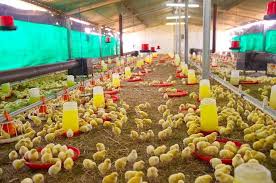
Birds need adequate access to food and water. Overcrowding at feeders and waterers reduces performance and increases aggression.
A. Feeder Space Guidelines
Each bird needs enough feeder space to eat comfortably. For 100 chicks, provide appropriate trough length based on their age.
The general rule is that feeders should be impossible to tip over, have adequate size and depth, and discourage birds from scratching feed out. They should not cause injury and must allow full access to all birds.
Don’t overfill food troughs. This leads to wastage as birds spill feed while eating. Adjust feed levels so birds can access it easily without spilling it.
B. Waterer Requirements
Water is even more critical than feed. Birds will die quickly without water, especially in hot weather.
Provide enough waterers so all birds can drink when they want. In hot climates, birds drink frequently and need easy access to prevent heat stress.
Waterers should be stable and impossible to tip over. They need adequate depth but should be designed so birds can’t drown. Clean and refill waterers daily.
C. Equipment Placement
Position feeders and waterers to maximize space efficiency. Arrange them so birds can move freely between feeding, drinking, and resting areas.
In houses with artificial lighting, concentrate the brightest light on feeders and waterers. This encourages proper feeding patterns and ensures birds find food and water easily.
Read Also: How Often to Wash Poultry Feeding Equipment
7. Outdoor Space and Yard Requirements
If you give birds outdoor access, plan that space carefully. The outdoor yard is the area surrounding the poultry house where birds can range.
A. Yard Space Per Bird
For good grassland, allow 220 to 260 square feet per bird. This gives enough roaming room and foraging opportunity without depleting the grass.
On poorer quality grass, increase the space allowance. Birds need more area to find enough insects and green material to supplement their diet.
Cultivated, sandy soil can support more birds, about 1,000 per acre. This assumes you’re rotating the area or managing it to maintain vegetation.
B. Securing the Outdoor Area
Separate your flock from other livestock and wildlife to minimize disease transmission. Use fencing that keeps birds in and predators out.
The yard should have clean, green space to add value to bird health and egg quality. Birds benefit from foraging opportunities, fresh air, and room to roam.
Many commercial farms skip outdoor access entirely to maximize production efficiency. This is a business decision based on your market and management preferences.
8. Site Selection and Location Factors
Where you build your poultry farm affects space usage and operational success. Choose your site carefully before construction.
A. Distance from Residential Areas
Poultry farms produce odor and noise. Site your farm far enough from residential areas to avoid complaints and legal issues.
Birds in cages produce more noticeable odor than deep-litter systems. If you must locate near homes, use a deep-litter system and maintain excellent hygiene.
Environmental laws prohibit farms that create a nuisance. If neighbors start complaining about smell or noise, you may be forced to relocate. Plan ahead to avoid this expensive problem.
B. Access Roads and Transportation
Your site needs good road access year-round. Feed trucks, chick delivery vehicles, and live-haul trucks must reach your farm in all weather conditions.
Check for weight limits on bridges and road restrictions that might affect heavy trucks. Calculate the cost of building an access road from the public road to your buildings.
Make sure loaded trucks can travel easily on your access road during rain or snow. Poor access disrupts operations and increases costs.
C. Utilities and Infrastructure
Verify that water, electricity, and fuel are available at your chosen site. Poultry farms need reliable water supply for drinking and cleaning.
Check if well water quality and quantity suit a poultry operation. Plan a backup water system in case your primary source fails.
Confirm that propane or natural gas is available at competitive prices if you’ll use it for heating. Some locations have limited fuel options that increase operating costs.
D. Topography and Drainage
Choose high, well-drained ground with a south or southeast slope if possible. Good drainage prevents water from pooling around buildings.
Water accumulation causes foundation problems and creates unsanitary conditions. Poor drainage also increases disease risk because damp conditions favor pathogen growth.
E. Future Expansion Space
Leave room for growth. Many farmers start with one or two houses and add more later as the business succeeds.
Plan your initial layout to accommodate future buildings. This prevents you from building yourself into a corner where expansion becomes impossible or expensive.
Also allocate space for support buildings like composting facilities and litter storage. These often get overlooked during initial planning but become necessary as you operate.
9. Land Requirements for Feed Production
If you want to grow your own feed, you need additional land beyond the poultry houses.
About 3 acres can grow enough feed for roughly 1,000 broilers per year. The manure from those birds provides enough fertilizer for that same 3 acres.
This creates a closed-loop system that reduces input costs. You grow feed, birds eat it and produce manure, and manure fertilizes the next feed crop.
If you can’t grow all your feed on-site, you’ll need to purchase it. This increases dependence on external suppliers and can affect your profit margins.
10. Special Considerations for Layer Farms
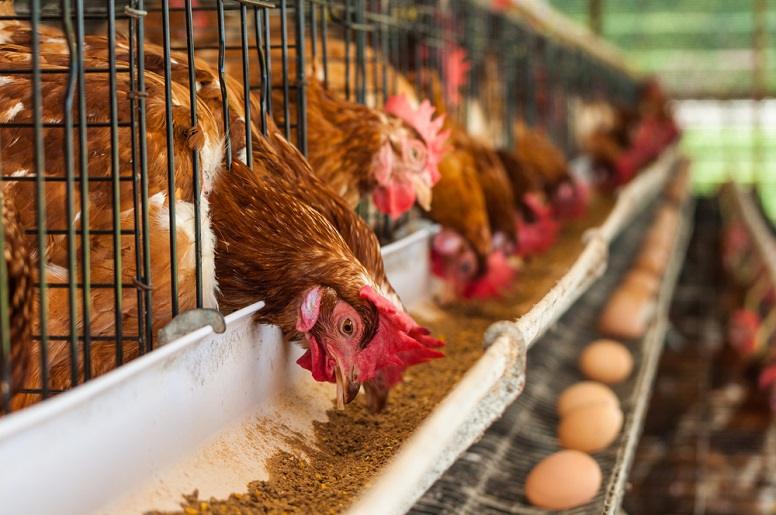
Layer farms have some unique space requirements compared to broiler operations.
Layers live longer, so you need more durable housing. Plan for birds to occupy the space for several years rather than a few weeks.
A. Nest Box Space
Provide adequate nest boxes for egg laying. Generally, one nest box serves four to five hens. Position boxes in quiet, darker areas of the house.
Insufficient nest boxes lead to floor eggs, which are dirty and harder to collect. They also increase egg breakage and reduce saleable product.
B. Perch Space
Layers need perches for nighttime roosting. This is a natural behavior that affects bird welfare and egg production.
Allow about 8 to 10 inches of perch space per bird. Position perches higher than nest boxes to discourage birds from roosting in laying areas.
C. Egg Collection and Storage Areas
Plan dedicated space for egg collection, cleaning, grading, and storage. This area should be cool and clean, separate from bird housing.
The size depends on your production level and how often you sell or ship eggs. Larger operations need climate-controlled storage.
11. Lighting and Its Impact on Space Use
Artificial lighting affects how birds use available space and influences production levels.
A. Lighting for Layers
Layers need 12 to 14 hours of light daily to maintain egg production. In winter, use artificial lights to extend daylight hours.
Use 40-watt lamps spaced 10 feet apart. For a pen of 20 square feet, two lights provide even distribution. Hang lights 6 feet high with reflectors about 16 inches in diameter and 4 inches deep.
Focus the brightest light on feeders and waterers. This encourages birds to eat and drink properly, especially during early morning and late evening hours.
Program lights on a timer to automate lighting schedules. This reduces labor and ensures consistent light patterns that optimize production.
B. Lighting for Broilers
Broilers have different lighting needs than layers. They need sufficient light to find feed and water but not so much that it encourages excessive activity.
Lower light intensity promotes calmer behavior and better feed conversion. This affects space needs because calm birds tolerate slightly higher densities better than stressed birds.
12. Waste Management Space Requirements
Every poultry farm produces waste that needs proper handling. Allocate space for this from the start.
A 50,000-bird broiler farm generates about 300 tons of litter annually. You need somewhere to compost or store this until you can use or sell it.
A. Composting Area
If you compost manure and dead birds on-site, you need dedicated space. Composting reduces volume and converts waste into valuable fertilizer.
The composting area should be downwind from bird housing and away from water sources. It needs good drainage to prevent runoff contamination.
B. Litter Storage
If you sell litter to crop farmers or use it on your own fields, you need dry storage. Wet litter loses nitrogen value and becomes harder to handle.
Build a covered storage area large enough to hold litter between cleaning cycles. Some farmers prefer to apply litter to fields immediately, but this isn’t always possible due to weather or crop timing.
C. Dead Bird Disposal
Plan how you’ll dispose of dead birds. Options include composting, burial, or incineration. Each requires specific space and equipment.
Composting is often the most practical choice. It requires designated space and proper management to prevent odor and pest problems.
Summary on How Much Space You Need for Your Poultry Farm
| Aspect | Details |
|---|---|
| Broiler Space Requirement | 1 square foot per bird (deep-litter system); 0.8-1.0 square feet (commercial intensive) |
| Layer Space Requirement | 2 square feet per bird (deep-litter system); 1.5-2.0 square feet (commercial) |
| Breeder Space Requirement | 2.0-2.5 square feet per bird |
| Chick Space (0-4 weeks) | 0.25-0.5 square feet per bird |
| Growing Birds (5-8 weeks) | 0.75 square feet per bird |
| Commercial Broiler House Size | 40-50 feet wide × 400-600 feet long (16,000-30,000 sq ft) |
| House Width (Tropical Climate) | Maximum 22-25 feet for proper ventilation |
| House Orientation | Long axis east-west direction to prevent direct sunshine |
| Foundation Height | 1-1.5 feet below ground; 1-1.5 feet above ground |
| Side Wall Height | 1-1.5 feet (at bird’s back height) |
| Door Size | 6 × 2.5 feet, opening outward |
| Floor Extension | 1.5 feet beyond walls (prevents rats and snakes) |
| Brooder Temperature (Week 1) | 95°F, reduce by 5°F weekly |
| Room Temperature During Brooding | Not over 75°F for rapid feathering |
| Free-Range Space | 220-260 square feet per bird (good grassland) |
| Intensive Cage System | 200-300 square feet for 1,000 birds |
| Feed Production Land | 3 acres for 1,000 broilers per year |
| Litter Production | ~300 tons annually (50,000-bird broiler farm) |
| Small Operation (100 birds) | 50-200 square feet housing |
| Medium Operation (5,000-10,000 birds) | 5,000-10,000 square feet housing; 0.5-1 acre total land |
| Large Operation (20,000+ birds) | 16,000-30,000 square feet per house |
| Nest Boxes for Layers | 1 nest box per 4-5 hens |
| Perch Space for Layers | 8-10 inches per bird |
| Lighting for Layers | 12-14 hours daily; 40-watt lamps 10 feet apart |
Frequently Asked Questions About How Much Space You Need for Your Poultry Farm
1. How much space do I need for 100 chickens?
For 100 chickens, you need 100-200 square feet of housing space depending on the housing system. Broilers in a deep-litter system need about 100 square feet (1 square foot each), while layers require around 200 square feet (2 square feet each). Add extra space for walkways, feeders, and waterers, bringing the total to roughly 250-300 square feet for the housing alone.
2. Can I start a poultry farm in my backyard?
Yes, you can start a small poultry farm in your backyard if you have 200-500 square feet of available space and local regulations permit it. However, you must maintain excellent hygiene to prevent odor complaints from neighbors. Deep-litter systems managed properly work better for backyard operations than cage systems. Check your local zoning laws before starting, as many residential areas restrict poultry farming.
3. What is the minimum land size for a commercial poultry farm?
A small commercial poultry farm with 1,000 birds needs at least 2,000-3,000 square feet total when including housing, feed storage, and walkways. For 5,000-10,000 birds, you need about 0.5-1 acre. Large commercial operations with 20,000+ birds typically require 2-5 acres or more to accommodate multiple houses, feed storage, waste management, and access roads.
4. Which housing system requires the least space?
Battery cage or stall-fed systems require the least space. You can raise 1,000 birds in just 200-300 square feet using cages, compared to 1,000 square feet needed for the same number in a deep-litter system. However, cage systems have higher initial costs and some markets prefer non-caged products, which affects your pricing and market access.
5. How far should my poultry farm be from residential areas?
There’s no universal distance requirement, but you should site your poultry farm far enough to prevent odor and noise complaints. Deep-litter systems with good hygiene can operate closer to homes than intensive cage systems. Generally, aim for at least 100-200 feet from the nearest residence for small farms and 500+ feet for larger commercial operations. Check local environmental regulations for specific setback requirements.
6. Do I need separate space for different age groups?
Yes, separating different age groups improves disease control and allows better temperature management. Young chicks need brooding areas maintained at 95°F, while older birds need only 75-85°F. Keeping them separate prevents disease transmission from older birds to vulnerable chicks and lets you optimize heating costs by only warming the brooding area.
7. How much space do I need for feed storage?
Feed storage space depends on your flock size and delivery frequency. Plan for at least two weeks of feed storage as a minimum. For 1,000 broilers, you need roughly 50-100 square feet of covered, dry storage. Larger operations need proportionally more space. Proper feed storage protects against moisture, pests, and allows you to buy in bulk for cost savings.
8. What happens if I don’t provide enough space for my birds?
Overcrowding leads to increased aggression, pecking injuries, higher disease rates, poor growth, reduced egg production, and higher mortality. Birds become stressed, which weakens their immune systems. You’ll spend more on medication and lose more birds to disease. Poor performance means less profit despite seemingly saving on construction costs.
9. How much outdoor space do free-range chickens need?
Free-range chickens need 10-260 square feet per bird depending on pasture quality. Good grassland supports birds at about 220-260 square feet each to allow adequate foraging. On cultivated, sandy soil with good management, you can raise up to 1,000 birds per acre. Poor quality pasture requires more space per bird to prevent overgrazing and soil damage.
10. Should I plan for future expansion when calculating space?
Yes, always plan for expansion from the start. Many farmers begin with one or two houses and add more as the business grows. Layout your initial buildings to leave room for additional houses, feed storage, and waste management facilities. Building yourself into a corner makes future expansion expensive or impossible and limits your growth potential.
Do you have any questions, suggestions, or contributions? If so, please feel free to use the comment box below to share your thoughts. We also encourage you to kindly share this information with others who might benefit from it. Since we can’t reach everyone at once, we truly appreciate your help in spreading the word. Thank you very much for your support and for sharing!
Read Also: Methods of Livestock Breeding in the Tropical Environment