


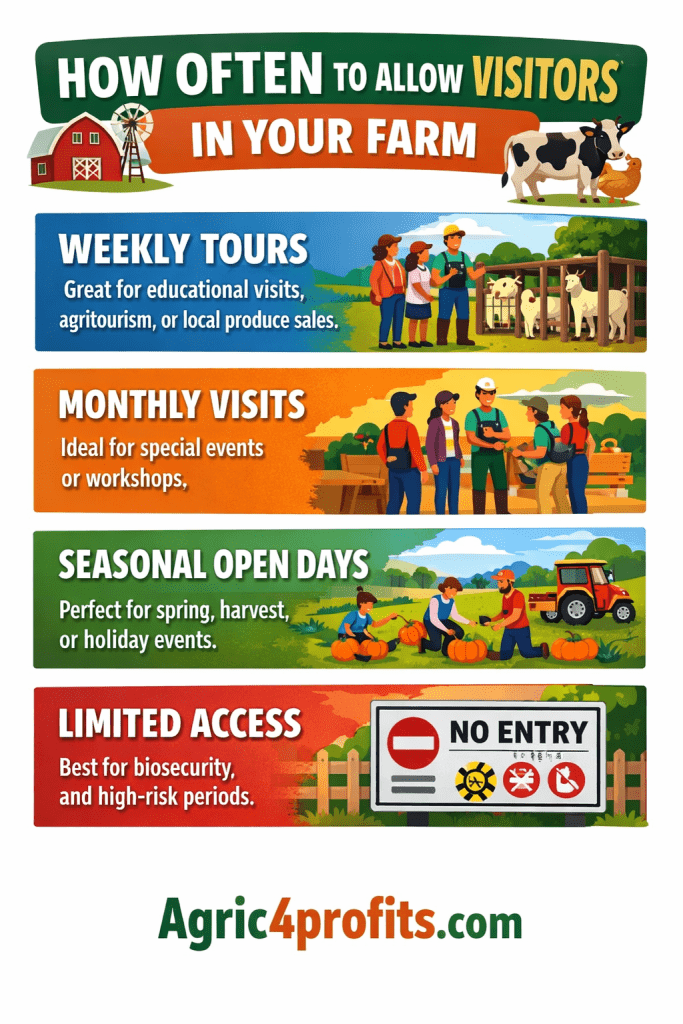
Farm visitors are a double-edged sword. On one hand, they bring opportunities for education, sales, and community building. On the other hand, they bring risks. Disease risks. Biosecurity risks. Liability risks. The question is not whether you should allow visitors, but how often and under what conditions.
Many farmers underestimate the damage one careless visitor can cause. A person who stepped in contaminated soil at another farm can bring disease to your entire herd. Someone who handled sick chickens yesterday can wipe out your flock today. Kids who climb fences can get injured and leave you facing lawsuits. These are not hypothetical scenarios. They happen all the time.
But closing your farm completely is not realistic either. You might need veterinarians, feed suppliers, equipment technicians, and buyers. If you run agritourism activities, visitors are your income source. The key is finding the right balance between access and protection.
The timing between visits matters more than most farmers realize. So does who visits, where they have been, what they touch, and how they behave on your property. Smart visitor management is not about being unfriendly. It is about protecting your livelihood and your animals.
This guide will walk you through the science and practice of farm visitor management. You will learn exactly how long to wait between visits, what precautions to take, and how to set up systems that protect your farm without turning away everyone who wants to visit. Whether you run a commercial operation, a small hobby farm, or an agritourism business, these principles apply.
The goal is simple. Keep your animals healthy. Keep your business profitable. Keep visitors safe. And do it all without making your life more complicated than it needs to be.
1. Understanding the 48-Hour Rule
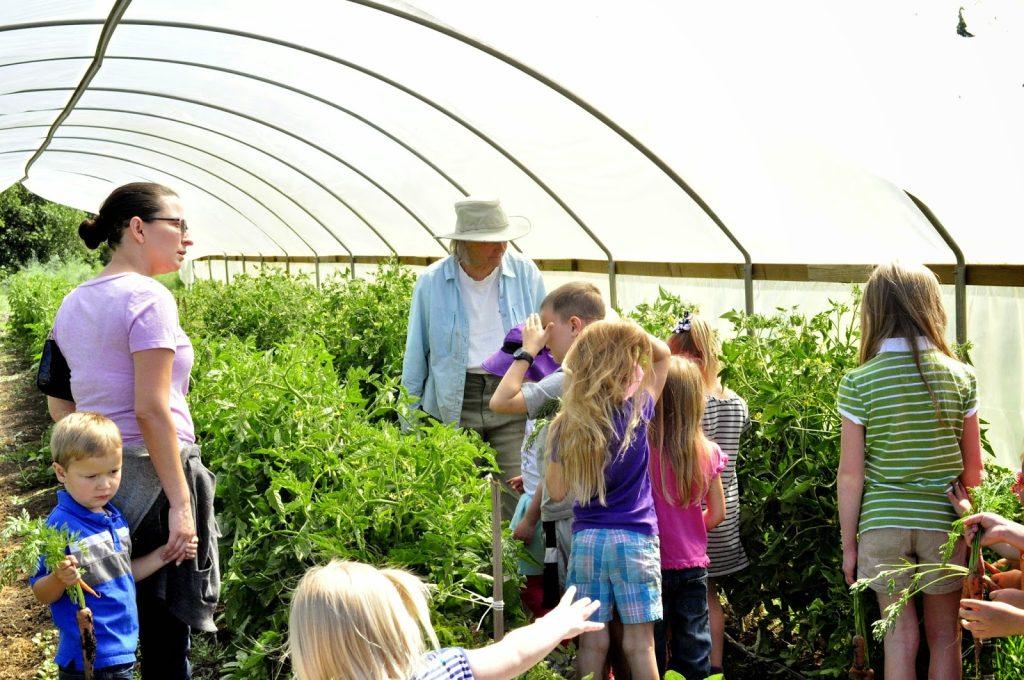
The basic rule is simple. Wait at least 48 hours between farm visits for most situations.
A. Why 48 Hours Matters
Many diseases have incubation periods of 24 to 72 hours. When someone visits Farm A on Monday and your farm on Tuesday, they can transfer pathogens before symptoms appear. The 48-hour window gives most common diseases time to show symptoms at the source farm.
This rule applies to visitors who have been to other farms, livestock auctions, feed mills, or anywhere animals congregate. It does not mean the visitor must stay home for 48 hours. It means they should avoid contact with livestock during that period.
B. When 48 Hours Is Not Enough
Some situations require longer waiting periods.
i. Foreign travel: Require one week minimum for anyone who visited farms or agricultural areas in other countries. Foreign animal diseases can devastate domestic livestock. Foot and mouth disease, African swine fever, and avian influenza are just a few examples.
ii. Disease outbreaks: During known outbreaks in your region, extend the waiting period to one week or more. Check with your local agricultural extension office for current recommendations.
iii. High-value or vulnerable animals: Breeding stock, show animals, and young animals need extra protection. Consider a one-week minimum for anyone visiting these groups.
C. Exceptions to the Rule
Emergency services like veterinarians may need immediate access. Keep disposable protective equipment ready for these situations. Provide clean boots, coveralls, and hand sanitizer. The vet should use these before entering animal areas.
Regular service providers like feed deliverers should follow strict protocols. They should never enter animal housing. Designate delivery points near the road, away from livestock areas.
2. Screening Your Visitors
Not all visitors pose the same risk. Screen people before they set foot on your property.
A. Essential Questions to Ask
i. Have you visited another farm in the past 48 hours? If yes, they wait or reschedule.
ii. Have you been to a livestock auction, fair, or show recently? These are high-risk locations. Require 48 hours minimum since last contact.
iii. Have you traveled internationally in the past week? Foreign visitors or recently returned travelers need seven days clear.
iv. Do you own livestock at home? Home livestock owners need extra precautions. They should not bring farm clothing or boots to your property.
v. Have you been around sick animals? Anyone with recent sick animal contact should not visit until the animals recover and the appropriate waiting period passes.
B. Creating a Visitor Log
Keep a written record of everyone who visits your farm. Include:
i. Name and contact information
ii. Date and time of visit
iii. Purpose of visit
iv. Areas accessed on your property
v. Last farm visit date
vi. Any foreign travel in past week
This log helps with disease tracing if problems arise. It also shows you patterns in visitor traffic that might need adjustment.
C. The Pre-Visit Questionnaire
For scheduled visits, send a questionnaire in advance. This saves time on visit day and lets you prepare appropriate precautions. Include all screening questions plus any specific concerns for your operation.
Some farms require visitors to sign a biosecurity agreement. This document outlines rules and gets written commitment to follow them.
3. Physical Biosecurity Measures
Rules only work if you enforce them with physical barriers and systems.
A. Single Entry and Exit Point
Have one designated entrance for all visitors. This makes it easier to monitor who comes and goes. It also concentrates your biosecurity measures in one location instead of spreading them across multiple access points.
Gate the property if possible. A simple chain across the driveway with a sign works for many farms. The sign should list visiting rules and provide contact information.
B. Footwear Requirements
Shoes and boots are the biggest disease carriers. Implement strict footwear protocols.
i. Provide disposable boot covers: Keep a box of disposable plastic or paper boot covers at the entry point. Visitors put these over their shoes before entering animal areas.
ii. Farm boot system: Maintain clean boots on site. Visitors remove their shoes at the boundary and wear your boots while on the property. Clean and disinfect these boots between users.
iii. Footbath stations: Set up footbaths with disinfectant solution at entry points. Use 4 ounces of bleach per gallon of water. Replace the solution when it looks dirty or at least daily.
C. Clothing Protocols
Clothes carry disease just like boots. For high-risk situations, provide clean coveralls or require visitors to change into clean clothes you provide. This is especially important for anyone entering barns or direct contact areas.
Visitors should not wear clothing they wore to other farms. Ask them to dress in clean clothes from home. No barn jackets. No work boots. No feed caps from other operations.
D. Hand Washing Stations
Install hand washing stations at key points:
i. Entry to animal areas
ii. Exit from animal areas
iii. Before eating or drinking
iv. Before leaving the property
Provide soap, clean water, and disposable towels. If running water is not available, hand sanitizer works but soap and water is better.
E. Vehicle Management
Vehicles are often overlooked disease vectors.
i. Keep all vehicles away from animal areas: Designate parking areas near the road, away from barns and pastures.
ii. Never allow vehicle traffic over feed delivery routes: Contamination from tires can get into feed and sicken your entire herd.
iii. Spray disinfectant on tires: For vehicles that must enter animal areas, spray tires with disinfectant before entry.
iv. Use separate equipment for sick animals: Never use equipment from sick animal pens on healthy animals without thorough cleaning and disinfection.
Read Also: The Major Causes of Cannibalism among Poultry Birds
4. Restricting Visitor Access
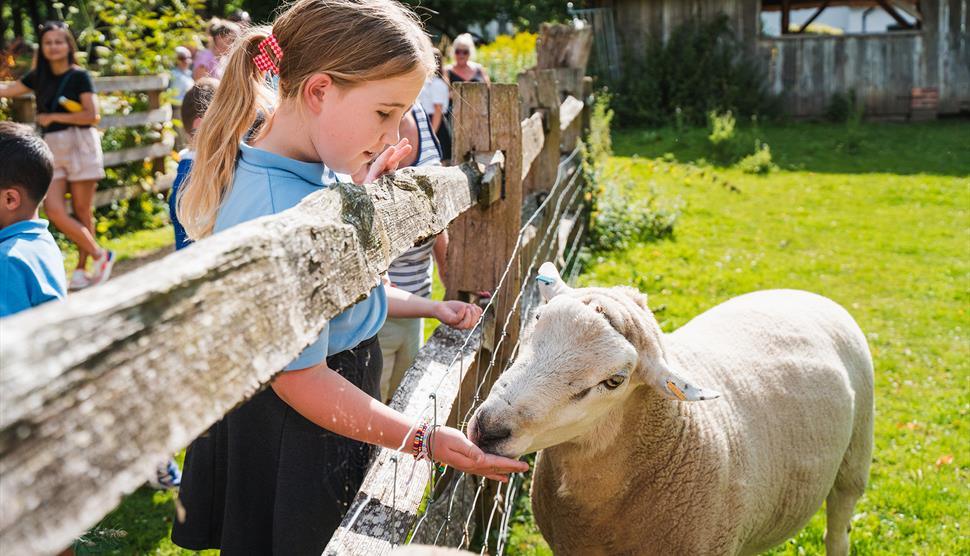
Not everyone needs to see everything on your farm.
A. Essential Visitors Only
Limit animal area access to people who absolutely must be there. Curious neighbors, casual friends, and sales representatives do not need to enter barns or pastures.
Create designated viewing areas where visitors can see animals from a safe distance. A 10-foot buffer between visitors and animals works well for visual-only access.
B. No-Go Zones
Certain areas should be completely off-limits to non-essential personnel:
i. Maternity areas: Newborn animals are highly vulnerable. Allow only staff and veterinarians.
ii. Sick animal isolation areas: These areas contain infected animals. Even trained staff should use extra precautions here.
iii. Feed storage and preparation areas: Contamination here affects every animal. Keep it restricted.
iv. Equipment storage: Liability and biosecurity both argue for restricted access.
C. Age-Based Restrictions
Young children pose unique challenges. They touch everything. They put hands in mouths. They can startle animals and get hurt.
Consider minimum age requirements for certain activities. Children under 12 might be restricted to observation-only areas. Require adult supervision at all times for children who are allowed near animals.
D. Tour Route Planning
For group tours, establish fixed routes that minimize disease risk and maximize safety.
i. Move from youngest to oldest animal groups: This prevents carrying pathogens from adults to vulnerable babies.
ii. Avoid crossing feed alleys: Keep visitors away from areas where feed is delivered or stored.
iii. Use external walkways when possible: Outside viewing is safer than inside barns.
iv. Provide barriers: Fences, gates, and ropes keep visitors in safe zones.
5. Special Considerations for Agritourism
Farm tourism brings its own set of challenges and opportunities.
A. Balancing Safety and Experience
Customers want authentic farm experiences. They want to touch animals, pick vegetables, and walk through barns. Your job is letting them do this safely.
The solution is controlled access. Create designated interaction zones where visitors can have hands-on experiences under supervision. Keep production areas separate and restricted.
B. Staff Training Requirements
Anyone who interacts with visitors needs training in:
i. Biosecurity protocols
ii. Animal behavior and safety
iii. Emergency procedures
iv. Customer service
v. First aid and CPR
Well-trained staff prevent most problems before they happen. They also handle problems that do occur more effectively.
C. Insurance and Liability
Before opening your farm to the public, talk to an insurance professional. Regular farm insurance may not cover agritourism activities.
You need liability coverage that protects you if visitors get hurt. You also need to understand your legal responsibilities. Some states have agritourism liability laws that provide some protection if you follow specific safety protocols.
D. Signage and Communication
Signs are your first line of communication. Use them to:
i. Direct traffic: Show visitors where to go and where not to go.
ii. Explain rules: List hand washing requirements, no-touch zones, and safety guidelines.
iii. Educate: Explain why biosecurity matters and what you are protecting.
iv. Warn of hazards: Mark areas with machinery, deep water, or other dangers.
Signs work best when they are simple, clear, and placed at eye level. Too many signs get ignored. Focus on critical information.
E. Food and Beverage Services
If you serve food, health department regulations apply. Get proper licenses and permits. Have your food preparation areas inspected and approved.
Never serve food in or near animal areas. Create separate dining spaces away from livestock. Require hand washing before eating.
Read Also: The Benefits of Farm-To-Table and Local Food Movements
6. Managing Different Visitor Types
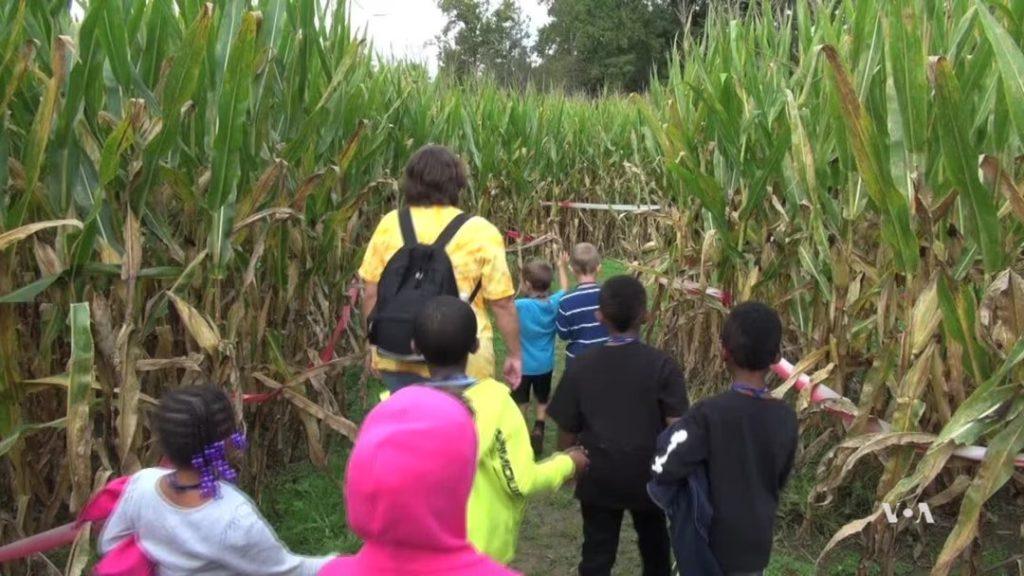
Different visitors require different protocols.
A. Veterinarians and Animal Health Professionals
Vets visit multiple farms daily. They are trained in biosecurity but can still carry disease.
i. Schedule vet visits at the end of your vet’s day when possible: This minimizes the number of farms the vet visits before yours.
ii. Provide clean protective equipment: Even if the vet brings their own, having extras available is smart.
iii. Designate examination areas: If possible, bring animals to a designated area rather than having the vet walk through your entire operation.
iv. Clean up after the visit: Disinfect any areas the vet accessed.
B. Feed and Supply Deliveries
These are regular, necessary visitors. Make their access easy but controlled.
i. Create delivery-only access points: These should be near the road, not near animals.
ii. Do not allow delivery drivers to enter barns or animal areas: You or your staff handle feed from the delivery point to storage.
iii. Keep delivery schedules consistent: The same driver on the same day makes monitoring easier.
C. Buyers and Livestock Haulers
People coming to pick up animals pose significant risk. They visit multiple farms and handle many animals.
i. Create holding pens near the road: Load animals in these pens, away from your main herd.
ii. Never allow buyer or hauler equipment into your barns: Use your own halters, gates, and loading equipment.
iii. Clean and disinfect holding areas immediately after use: Do not let sold animals or buyer equipment contaminate production areas.
D. Casual Visitors and Neighbors
The hardest people to manage are often friends and neighbors. They think farm visits are casual and take offense at biosecurity protocols.
You need to be firm but polite. Explain the rules. Show them you apply the same standards to everyone. Most people understand when you explain the risks to your livelihood.
For persistent rule-breakers, you may need to ban visits entirely. Your animals and your business are more important than someone’s hurt feelings.
E. School and Educational Groups
These groups bring special challenges. Large numbers of children with varying levels of farm knowledge create both biosecurity and safety risks.
i. Limit group size: 20-25 people maximum is manageable. Break larger groups into shifts.
ii. Require adult supervision: One adult per 5-10 children depending on ages.
iii. Conduct pre-visit briefings: Explain rules before anyone gets near animals.
iv. Use outdoor viewing when possible: This is safer and easier to manage than barn tours.
v. Provide hand washing or sanitizer: Make it mandatory before leaving.
7. Seasonal Visitor Management
Visitor policies may need seasonal adjustments.
A. Disease Season Variations
Some diseases are seasonal. Avian influenza peaks during migration seasons. Respiratory diseases increase in cold weather. Adjust visitor restrictions during high-risk periods.
During outbreaks in your region, consider closing to non-essential visitors completely. The short-term loss of agritourism income is worth avoiding disease that could wipe out your operation.
B. Fair and Show Season
If you show animals, you are traveling to high-risk locations. After returning from shows, quarantine show animals for two weeks minimum. During this period, restrict all visitor access to show animal areas.
Anyone who traveled with animals to shows should not have visitor contact during the quarantine period. This includes you, your family, and staff.
C. Breeding Season
During breeding season, limit all non-essential access to breeding animals. Stress from visitors can affect breeding success. Disease risk to breeding stock puts your entire future production at risk.
D. Birthing Season
Maternity areas should be restricted year-round, but enforcement becomes critical during birthing season. Newborns have minimal disease resistance. A single contaminated visitor can cause mass mortality in newborn animals.
Only allow essential staff and emergency vet access during birthing season. Even family members should limit contact with maternity areas.
8. Setting Up Visitor Zones
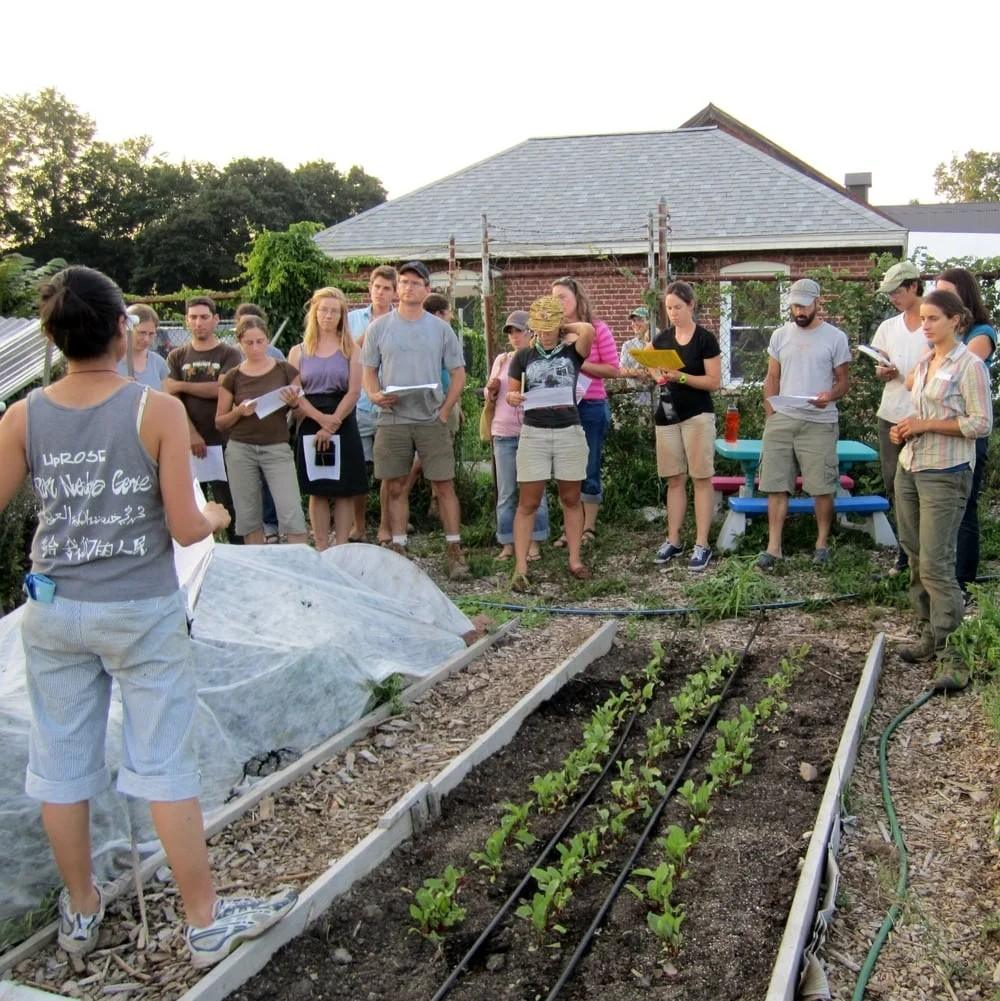
Physical separation makes management easier and more effective.
A. The Red Zone
This is your highest biosecurity area. It includes:
i. Animal housing
ii. Feed storage and preparation
iii. Maternity areas
iv. Sick animal isolation
Only essential personnel with full biosecurity protocols. No exceptions.
B. The Yellow Zone
Medium risk areas where some visitor access is acceptable with precautions:
i. Pastures and outdoor areas
ii. Equipment storage
iii. Processing facilities
Supervised access only. Boot covers or farm boots required. Hand washing required on exit.
C. The Green Zone
Low-risk areas where general visitors are welcome:
i. Farm store or sales area
ii. Parking lot
iii. Picnic areas
iv. Walking trails away from animal areas
Minimal restrictions but still maintain basic sanitation facilities.
D. Transition Points
Where zones meet, create clear transition points with:
i. Physical barriers: Fences, gates, or marked boundaries
ii. Biosecurity stations: Footbaths, hand washing, protective equipment
iii. Signage: Clear indication of zone changes and new requirements
Documentation and Record Keeping
Good records protect you legally and help with disease investigation.
A. Visitor Logs
As mentioned earlier, log every visitor. Keep these records for at least two years. Some disease traces go back months.
Digital logs work well if you have tablet or smartphone access at entry points. Paper logs work fine too. The key is consistent use.
B. Incident Reports
Document any biosecurity breaches, no matter how small:
i. Unauthorized entry to restricted areas
ii. Failure to use protective equipment
iii. Contact with sick animals
iv. Injuries to visitors
These records help you identify patterns and improve systems. They also protect you legally if problems arise later.
C. Disease Event Tracking
If disease appears in your herd, detailed visitor logs help identify the source. You can track which visitors had access when symptoms likely began.
This information is valuable for your vet and essential if regulatory authorities get involved with reportable diseases.
Communication Strategies
How you communicate visitor policies affects compliance.
A. Pre-Visit Communication
For scheduled visits, send information in advance:
i. Visitor policies and requirements
ii. What to wear and what not to bring
iii. Waiting period confirmations
iv. Liability waivers if applicable
This gives people time to prepare and reduces conflicts on arrival.
B. On-Site Signage
Signs should be:
i. Visible from a distance
ii. Written in simple language
iii. Specific about requirements
iv. Positive in tone when possible
Instead of “No Entry,” try “Staff Only – Please See Office.”
C. Verbal Reinforcement
Someone should greet each visitor and explain key rules. This personal touch increases compliance and lets you answer questions.
D. Educational Approach
People follow rules better when they understand why. Brief explanations of biosecurity help:
“We ask everyone to use boot covers because shoes can carry disease from other farms. One sick animal can cost us thousands of dollars and months of work.”
Most people respect this reasoning.
Handling Conflicts and Non-Compliance
Not everyone will like your rules. Some will resist.
A. Stay Professional
Never lose your temper with difficult visitors. Calmly restate the rules. Explain consequences if they refuse to comply.
“I understand this seems excessive. These rules protect our animals and our business. If you cannot follow them, I will have to ask you to leave.”
B. Be Consistent
Apply rules equally to everyone. No exceptions for friends, family, or important customers. Inconsistency undermines your entire system.
C. When to Refuse Access
Some situations require denying entry:
i. Visitor from another farm within 48 hours
ii. Recent foreign agricultural travel
iii. Refusal to follow basic biosecurity
iv. Visible illness
v. Intoxication
Stand firm. Reschedule if possible. But do not compromise your biosecurity.
D. Dealing with Repeat Offenders
People who repeatedly ignore rules should lose visiting privileges. This is your property and your livelihood. You have the right to control access.
Read Also: Basics of Bio-Security in a Poultry Farm
Cost-Benefit Analysis of Visitor Management
Biosecurity costs money. So does disease. The math is simple.
A. Direct Costs
i. Boot covers and protective equipment: $100-500 per year depending on volume
ii. Disinfectants and cleaning supplies: $200-1000 per year
iii. Signage: $200-500 one-time cost
iv. Hand washing stations: $100-1000 depending on setup
Total annual cost for basic visitor biosecurity: $500-3000 for most operations.
B. Disease Cost Comparison
One disease outbreak can cost:
i. Treatment: $500-5000
ii. Lost production: $1000-50000
iii. Quarantine costs: $1000-10000
iv. Depopulation if necessary: $10000-100000+
v. Lost reputation: Incalculable
Biosecurity is cheap insurance.
C. Agritourism Revenue Considerations
If visitor fees provide income, you might worry that restrictions reduce revenue. The opposite is usually true.
Professional, well-managed visitor systems increase trust. They show you care about quality and safety. Most customers appreciate visible biosecurity measures.
One disease outbreak that closes your agritourism operation for weeks or months costs far more than any visitors you turn away for biosecurity reasons.
13. Special Situations
Some visitor scenarios need unique approaches.
A. Media and Photographers
Press visits raise farm profiles but can spread disease. Apply the same biosecurity standards. Most professional media understand.
Keep media to designated areas unless they absolutely need barn access. If barn access is necessary, provide full protective equipment and supervision.
B. Government Inspectors
Regulatory inspectors have legal right to access. But they should still follow biosecurity protocols.
Politely request they follow your procedures. Most inspectors appreciate farms that take biosecurity seriously. If they resist, document their behavior.
C. Emergency Services
Fire, police, or medical emergencies take priority over biosecurity. Have a plan for these situations:
i. Designate emergency access routes
ii. Keep protective equipment near emergency access points
iii. Have disinfection equipment ready
iv. Document any emergency entry for follow-up cleaning
After emergencies, clean and disinfect all areas accessed by emergency personnel.
D. Contractors and Repair Services
Building contractors, well drillers, fence installers, and similar workers need access but pose disease risk.
i. Schedule work during low-risk periods when possible
ii. Keep contractors away from animals
iii. Cover or isolate nearby animals during construction
iv. Clean up thoroughly after work completes
Monitoring and Adjusting Your System
Visitor management is not set-it-and-forget-it. Regular review and adjustment improve effectiveness.
A. Monthly Reviews
Check visitor logs monthly. Look for patterns:
i. How many visitors?
ii. What types?
iii. Any biosecurity breaches?
iv. Any correlations with animal health issues?
B. Annual Policy Updates
Review and update policies annually. Changes might include:
i. New disease threats in your region
ii. Changes in your operation
iii. New regulations
iv. Lessons from the past year
C. Staff Feedback
The people enforcing policies daily have valuable insights. Listen to their suggestions. They see what works and what does not.
D. Visitor Feedback
Ask visitors about their experience. Were rules clear? Were requirements reasonable? Did staff explain things well?
This feedback helps you maintain effective biosecurity without unnecessary friction.
Building a Biosecurity Culture
The best visitor management comes from a farm-wide commitment to biosecurity.
A. Staff Training
Everyone on the farm should understand:
i. Why biosecurity matters
ii. What diseases threaten your operation
iii. How disease spreads
iv. Their role in prevention
v. Visitor management protocols
Regular training sessions keep this knowledge fresh.
B. Leading by Example
Farm owners and managers must follow the same rules they impose on others. If you skip biosecurity steps, staff and visitors will too.
C. Making It Easy
Systems that are complicated or inconvenient get ignored. Design biosecurity protocols that:
i. Are simple to understand
ii. Use readily available equipment
iii. Fit into normal workflow
iv. Take minimal extra time
Easy compliance is consistent compliance.
D. Recognition and Accountability
Acknowledge staff who maintain excellent biosecurity. Address those who do not. Accountability keeps standards high.
Summary on Farm Visitor Management and Timing
| Aspect | Key Points |
|---|---|
| Basic Waiting Period | 48 hours minimum between farm visits for most situations |
| Foreign Travel | 1 week minimum waiting period for visitors who traveled to foreign agricultural areas |
| Disease Outbreak Periods | Extend waiting period to 1 week or longer, consider closing to non-essential visitors |
| Visitor Screening Questions | Ask about recent farm visits, livestock auction attendance, international travel, home livestock ownership, contact with sick animals |
| Visitor Log Contents | Name, contact info, date/time, purpose, areas accessed, last farm visit, foreign travel |
| Footwear Protocols | Disposable boot covers, farm boot system, or footbath with 4 oz bleach per gallon water (change daily) |
| Vehicle Management | Park away from animal areas, never cross feed routes, spray tires with disinfectant if entry needed |
| Essential Visitors Only | Limit animal area access to necessary personnel only, create 10-foot viewing buffers for casual visitors |
| Restricted Zones | No visitor access to maternity areas, sick animal isolation, feed storage, or equipment storage |
| Tour Route Planning | Move from youngest to oldest animals, avoid feed alleys, use external walkways, provide barriers |
| Agritourism Staff Training | Biosecurity, animal behavior, emergency procedures, customer service, first aid/CPR |
| Veterinarian Scheduling | Schedule visits at end of vet’s day when possible, provide protective equipment, designate exam areas |
| Feed Deliveries | Delivery-only access points near road, no driver entry to barns, consistent schedules |
| Livestock Buyer Protocol | Holding pens near road, no buyer equipment in barns, immediate cleaning after animal removal |
| School Group Management | Maximum 20-25 people, require adult supervision (1:5-10 ratio), pre-visit briefings, outdoor viewing preferred |
| Show Animal Quarantine | 2 weeks minimum isolation after fairs or shows, restricted visitor access during quarantine |
| Red Zone Access | Animal housing, feed storage, maternity, sick animals – essential personnel only with full protocols |
| Yellow Zone Access | Pastures, equipment storage, processing – supervised access with boot covers and hand washing |
| Green Zone Access | Farm store, parking, picnic areas, trails – general visitors welcome with basic sanitation |
| Record Retention | Keep visitor logs for minimum 2 years, document all biosecurity breaches and incidents |
| Annual Biosecurity Costs | $500-3000 for basic visitor biosecurity (boot covers, disinfectants, signage, hand washing stations) |
| Single Disease Outbreak Cost | $2500-150000+ (treatment, lost production, quarantine, potential depopulation, reputation damage) |
| Hand Washing Requirements | Entry to animal areas, exit from animal areas, before eating, before leaving property |
| Newborn Animal Access | Staff and emergency vet only during birthing season, enforce strict maternity area restrictions |
| Emergency Service Response | Designate emergency access routes, keep protective equipment accessible, document entry, clean after |
Frequently Asked Questions About Farm Visitor Management
1. Why is the 48-hour rule important for farm visitors?
The 48-hour waiting period between farm visits allows most common livestock diseases to show symptoms at the source farm. Many diseases have incubation periods of 24 to 72 hours, meaning someone can carry pathogens before visible symptoms appear. This waiting period significantly reduces the risk of transferring disease from one farm to another through human contact.
2. Do I really need to restrict family and friends from visiting my farm?
Yes, the same biosecurity rules apply to everyone, including family and friends. Disease does not care about relationships. If your friend visited another farm yesterday, they pose the same risk as a stranger. Most people understand when you explain that one disease outbreak could destroy your livelihood. Apply rules consistently to everyone.
3. What should I do if a veterinarian needs emergency access to my farm?
Emergency veterinary access takes priority over the 48-hour rule. Keep disposable protective equipment ready for emergency situations, including clean boots, coveralls, and hand sanitizer. The vet should use these before entering animal areas. After the emergency visit, clean and disinfect all areas the vet accessed.
4. How do I handle visitors who refuse to follow biosecurity protocols?
Stay professional and calmly restate the rules. Explain that these measures protect your animals and business. If visitors refuse to comply, ask them to leave and reschedule when they can follow protocols. Your animals and livelihood are more important than accommodating someone who will not respect your biosecurity requirements.
5. Can I allow school tours of my farm without risking disease introduction?
Yes, but with proper precautions. Limit group sizes to 20-25 people maximum, require adult supervision, conduct pre-visit briefings on rules, use outdoor viewing areas when possible, and make hand washing mandatory before leaving. Screen for recent farm visits just like any other visitor. Most school groups pose low disease risk if managed properly.
6. What are the most important biosecurity measures for agritourism operations?
The most critical measures are creating separate visitor and production zones, providing disposable footwear or farm boots, installing hand washing stations at all entry and exit points, training staff in biosecurity and safety, keeping visitors away from newborn and sick animals, and maintaining detailed visitor logs. Insurance coverage specific to agritourism is also essential.
7. How long should I quarantine animals returning from shows or fairs?
Animals returning from shows should be isolated for a minimum of two weeks. During this quarantine period, restrict all visitor access to these animals. This applies to the animals and anyone who traveled with them. Show animals contact many other animals and people at events, making them high-risk for disease introduction.
8. What is the cost of implementing basic farm visitor biosecurity?
Basic visitor biosecurity costs approximately $500-3000 annually for most operations. This includes boot covers or protective equipment ($100-500), disinfectants and cleaning supplies ($200-1000), signage ($200-500 one-time), and hand washing stations ($100-1000). Compare this to a single disease outbreak that can cost $2500-150000 or more in treatment, lost production, and quarantine expenses.
9. Should I allow food and beverage sales on my farm?
Food and beverage sales can provide good income but require specific licenses from your local health department. Your preparation space must be inspected and approved. Never serve food in or near animal areas. Create separate dining spaces away from livestock and require hand washing before eating. Follow all local health codes and cottage food laws.
10. What should I include in my visitor log?
Every visitor log should include the visitor’s name and contact information, date and time of visit, purpose of visit, specific areas accessed on your property, date of their last farm visit, and any foreign travel in the past week. Keep these records for at least two years. This information is essential for disease tracing if problems arise and demonstrates your commitment to biosecurity.
Do you have any questions, suggestions, or contributions? If so, please feel free to use the comment box below to share your thoughts. We also encourage you to kindly share this information with others who might benefit from it. Since we can’t reach everyone at once, we truly appreciate your help in spreading the word. Thank you very much for your support and for sharing!
Read Also: Anatomy of Fishes: Female Fish and their Reproductive Strategies