


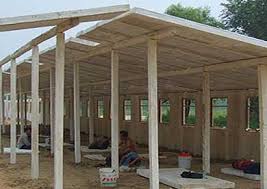
Building a proper poultry pen is one of the most important decisions you will make as a poultry farmer. Your birds need a safe, comfortable space where they can grow, stay healthy, and produce well. But many new farmers struggle with knowing where to start or what to consider when building their first poultry house.
The truth is, you cannot just put birds anywhere and expect good results. Your poultry pen needs to meet specific requirements that protect your birds from weather, predators, and diseases while giving them enough space to thrive. A well-built pen also makes your work easier, from feeding and cleaning to monitoring bird health and collecting eggs.
Whether you plan to raise 50 birds or 1,000, the basics remain the same. Your poultry house must be spacious, well-ventilated, properly oriented, and built with the right materials. It should keep out rain and wind but allow fresh air to flow through. The height matters, the roof type matters, and even the direction your pen faces can affect how well your birds perform.
Many farmers make costly mistakes because they rush into construction without understanding these fundamentals. Some build pens that are too small, leading to overcrowding and disease. Others create structures with poor ventilation, which causes respiratory problems. Some choose the wrong location, making daily management difficult or putting their birds at risk.
This guide will walk you through everything you need to know about constructing a proper poultry pen. You will learn about door sizes, wall heights, roof types, ventilation systems, and the difference between deep litter and cage systems. We will also cover important factors like pen orientation, spacing requirements for different bird ages, and what materials work best.
But here is something important to remember: while this article gives you the fundamental knowledge you need, you should still consult an expert before you start building. Every farm is different, and an experienced person can help you adapt these general principles to your specific situation, budget, and goals.
If you are serious about poultry farming, your pen construction deserves serious attention. The money and time you invest in building the right structure from the start will pay off in healthier birds, better production, and fewer problems down the road.
1. Essential Requirements for a Good Poultry Pen
Your poultry house needs to meet several basic requirements before it can support healthy, productive birds. These are not optional features but fundamental necessities that every pen must have.
A. Adequate Spacing
Space is critical for bird health and performance. Cramming too many birds into a small area leads to stress, fighting, disease spread, and poor growth. The spacing you need depends on your birds’ age.
For birds from 0 to 10 weeks old, you can keep 10 birds per square meter. From week 11 to 18, reduce this to 8 birds per square meter. For adult birds from week 19 to 78, you need to allow 5 birds per square meter.
So if you want to house 1,000 adult birds, you will need about 200 square meters of floor space. Plan your pen size based on these numbers to avoid overcrowding.
B. Proper Ventilation
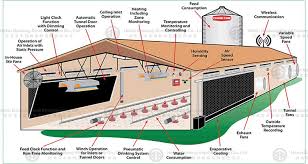
Good airflow keeps your birds healthy. Without proper ventilation, ammonia from droppings builds up, making birds sick. Heat also becomes a problem in poorly ventilated pens, especially during hot weather.
Your pen needs to allow fresh air in while letting stale air out. This means having openings at the right heights and positions. Side walls should typically be 1 to 1.5 feet high, roughly at the birds’ back height. This design protects birds from rain and cold while still allowing air to move through.
The side walls serve a dual purpose. They shield your birds during rainy days and cold weather while providing the ventilation they need. In cage systems, you might not need side walls at all since cages are already elevated.
C. Sunlight Access
Birds need exposure to natural light. Sunlight helps with vitamin D production and supports overall health. Your pen should allow sufficient sunlight to enter without making the interior too hot.
The orientation of your pen matters here. Building your pen in an east-west direction helps minimize direct sunlight through the side walls, which can overheat the interior. This orientation gives you better temperature control throughout the day.
D. Clean Water Supply
Your birds need constant access to clean, fresh water. Plan your pen location and design to include proper water systems. Cool water is especially important since birds dislike warm water, which can increase body temperature and cause heat stress.
During hot periods, you might even need to use ice blocks in the afternoon to keep water cool. Make sure your water containers are easy to clean and refill.
Read Also: Poultry Housing Management: Poultry Pen/House Construction Guide
2. Door Design and Specifications for Poultry Pen
The door is your main access point to the pen, and it needs to be built correctly for both convenience and biosecurity.
A. Door Dimensions
Your door should measure about 6 feet by 2.5 feet. This size allows you to enter comfortably and move equipment in and out without difficulty. The door must open outward, not inward. This prevents birds from escaping when you enter.
In deep litter systems where birds roam on the floor, an outward-opening door is especially important. If the door swings inward, birds can rush out when you open it.
B. Foot Bath at Entrance
At the entry, you need to construct a foot bath. This is a carved-out section where you pour water and disinfectant. Every person entering the pen must dip their feet in this solution.
The foot bath prevents diseases from spreading into your pen from outside. Organisms can survive for days or weeks in dirt stuck to shoes. The disinfectant kills these organisms before they enter your pen.
You should change the water and disinfectant in your foot bath daily. This should be one of the first routine tasks each morning. A contaminated foot bath is useless, so keep it fresh.
Before using the foot bath, scrub your boots with a strong brush to remove all visible dirt, mud, and manure. Organic matter quickly contaminates the water and stops the disinfectant from working properly.
3. Wall Construction Guidelines for Poultry Pen
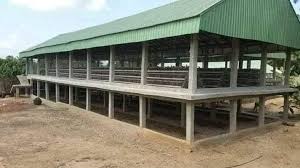
Your pen walls need to balance protection with ventilation. The design differs depending on whether you are building a deep litter system or a cage system.
A. Side Wall Height
For deep litter systems, your side walls should be 1 to 1.5 feet high. This height, roughly at the birds’ back level, protects them during rainy days and cold weather while still allowing proper air circulation.
Do not build walls higher than needed. Walls that are too high block airflow and create ventilation problems. The wall should not exceed 0.3 meters in most cases.
B. Foundation Requirements
Your walls need a proper foundation to prevent water from entering the pen. The immediate area outside your building must have sufficient slope to keep runoff water away from the structure.
If you are building in an area prone to waterlogging, raise your pen slightly. This prevents flooding during heavy rains and keeps the interior dry.
C. Material Considerations
Common wall materials include concrete blocks, wood, and bamboo. Your choice depends on your budget and local availability. Whatever material you use, make sure it is durable and easy to clean.
Walls should be smooth enough to clean easily but sturdy enough to last for years. Rough surfaces harbor parasites and make disinfection difficult.
4. Roof Types and Design for Poultry Pen
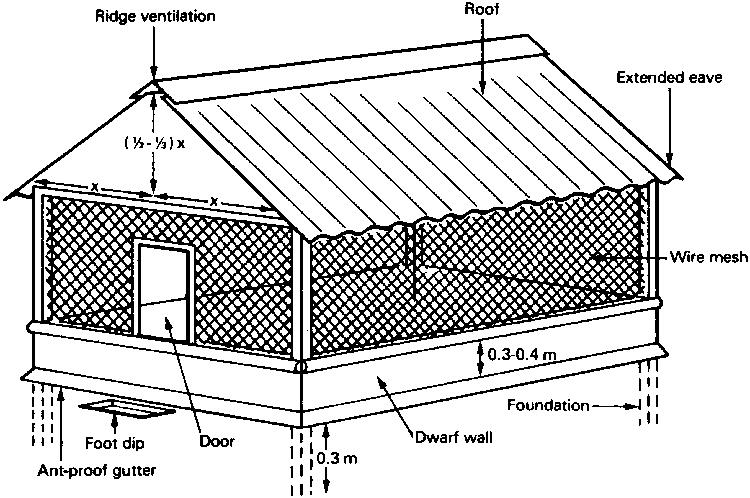
Your roof choice affects temperature control, durability, and cost. Different roof types work better in different climates.
A. Common Roof Materials
I. Thatched roofs: These are cheap and provide good insulation but need frequent replacement. Thatched roofs work in areas where materials like grass or palm leaves are readily available.
ii. Asbestos sheets: These are better than thatch for durability and are commonly used. Asbestos roofs last longer and require less maintenance.
iii. Tiled roofs: Tiles offer good insulation and durability but cost more than asbestos or thatch.
iv. Concrete roofs: These are the most expensive option but provide the best durability and can support multiple levels if you plan to expand later.
B. Roof Style Options
Different roof styles include shed, gable, half-monitor, full-monitor, flat concrete, gambrel, and gothic. The gable type is most popular in tropical countries because it provides good rain runoff and ventilation.
Whatever style you choose, make sure your roof has a proper overhang. The overhang should be at least 3.5 feet. This prevents rainwater from entering the pen through the sides. Without sufficient overhang, rain will wet your birds and litter, creating health problems.
C. Slope Considerations
Your roof needs the right slope for water drainage. Too flat and water pools, causing leaks. Too steep and construction becomes difficult and expensive.
Watch the slope carefully during construction. Water should flow smoothly off the roof without backing up or creating waterfalls at certain points.
5. Pen Height Requirements for Poultry Pen
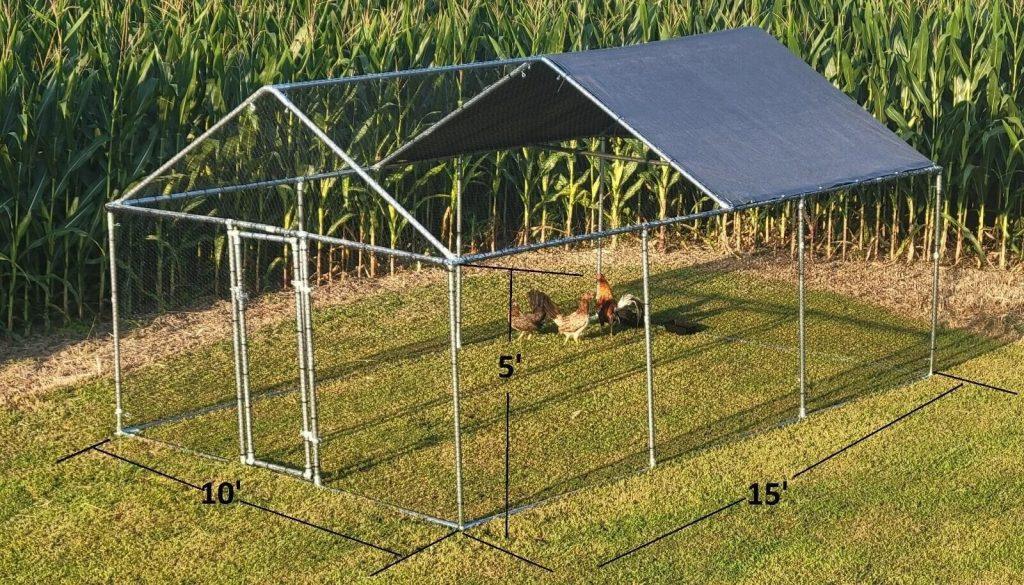
The height of your poultry pen affects ventilation and wind resistance. You need to find the right balance.
A. Deep Litter System Height
For deep litter systems where birds move freely on the floor, the ideal height is 12 feet. This height allows proper ventilation and prevents heat buildup while remaining low enough that strong winds will not damage the structure.
A pen that is too low traps heat and creates poor air quality. A pen that is too high becomes vulnerable to wind damage and costs more to build without adding real benefits.
B. Cage System Height
In cage systems, your building can be higher than 12 feet because cages are stacked in tiers inside. The exact height depends on how many tiers of cages you plan to install.
If you are using three-tier cages, you might need 15 feet or more. Four-tier systems need even more height. Calculate your needs based on cage dimensions plus space for walking and maintenance.
C. Ventilation at Different Heights
Taller structures need more attention to ventilation. Air must circulate properly at all levels, not just near the ground or ceiling. Plan your vent openings to create good airflow throughout the entire vertical space.
6. Deep Litter System for Poultry Pen
The deep litter system is a popular housing method where birds live on a bedding material that builds up over time.
A. How Deep Litter Works
You start by spreading an initial layer of material like wood shavings, sawdust, or rice bran on the floor. As this material gets soiled with droppings, you add new layers on top. Over time, the litter can build up to depths of 1 to 2 meters.
This system requires routine cleaning and removal of litter material. You cannot just let it build up forever. At some point, you need to clear it out and start fresh.
B. Deep Litter Materials
I. Wood shavings: These absorb moisture well and are commonly available. Wood shavings make good litter material if you can source them cheaply.
ii. Sawdust: Similar to shavings but finer. Sawdust works well but can create dust if it gets too dry.
iii. Rice bran: This is available in rice-growing areas and makes acceptable litter material.
iv. Straw: Traditional but not as absorbent as wood products. Straw can work but requires more frequent changes.
C. Litter Management
Keep your litter dry and clean always. Wet litter breeds parasites and creates ammonia problems. If you notice wet spots, remove that section and add fresh material.
Turn or stir the litter occasionally to help it dry and prevent compaction. Good litter management reduces disease and keeps your birds healthier.
Read Also: Recommended Height of Deep Litter Poultry Pen and Cage Poultry Pen
7. Cage System for Poultry Pen
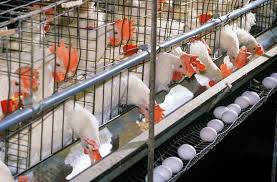
The cage system is different from deep litter. Birds live in individual cages rather than roaming freely.
A. What Are Battery Cages
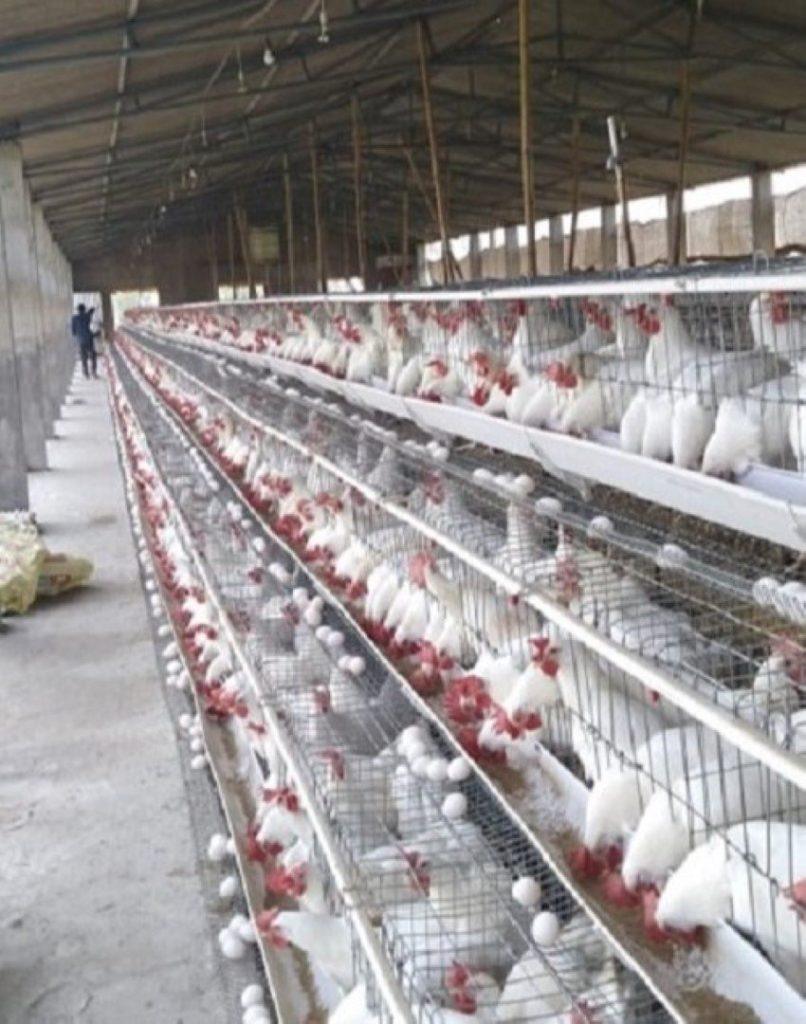
Battery cages are a housing system primarily for egg-laying poultry. Rows and columns of identical cages connect in a unit. The cages come with semi-automated drinking systems, feeding systems that reduce waste, and durable frames.
B. Advantages of Cage Systems
I. Space efficiency: You can rear more birds per unit of area compared to floor systems.
ii. Record keeping: Individual or small-group housing makes it easier to track each bird’s performance.
iii. Disease control: Easier control of parasitic diseases like coccidiosis and worm infestations since birds are not in contact with their droppings.
iv. Clean eggs: Eggs stay cleaner because they roll away from birds immediately after laying.
v. Reduced cannibalism: Controlled housing helps prevent vices like egg eating and bird-to-bird attacks.
vi. Easy culling: You can quickly identify poor producers and remove them.
C. Disadvantages of Cage Systems
I. Bird welfare concerns: Birds cannot perform natural behaviors like roosting, spreading wings, or scratching.
ii. Higher initial cost: Cages are expensive to purchase and install.
iii. Limited to moderate climates: Cage systems work best where summer temperatures do not get too high.
iv. Nutritional requirements: Since birds cannot access outside feed sources or sunlight, you must provide all nutrients in their feed.
8. Poultry Pen Orientation and Location
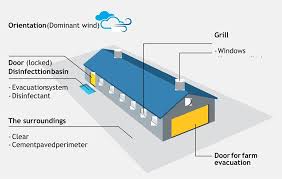
Where you build and how you position your pen matter more than many farmers realize.
A. East-West Orientation
Always construct your pen in an east-west direction. The long axis should run east to west. This orientation minimizes direct sunlight entering through the side walls, which helps control interior temperature.
If your pen faces north-south, the low-angle morning and evening sun will blast directly through the sides, making temperature control difficult.
B. Distance from Residential Areas
Your poultry farm should be located away from homes and businesses. The number of birds you raise determines how far away you need to be. Larger operations need more distance.
Smell, noise, dust, and feathers can make you unpopular with neighbors. Even if regulations do not require specific distances, good relations with neighbors matter. Discuss your plans with nearby residents before you start building.
C. Site Selection Factors
I. Topography: Choose relatively level ground or gently sloping land. Steep hills require expensive grading work. Avoid low-lying areas near streams that might flood.
ii. Drainage: Your site needs good natural drainage. Standing water creates mud and disease problems.
iii. Road access: You need good road access year-round for feed delivery and bird transport. Make sure your access road remains passable during rainy seasons.
iv. Utilities: Water and electricity should be available. Running these utilities at remote sites adds a high cost.
v. Prevailing wind: Consider wind direction so that odors blow away from nearby homes rather than toward them.
D. Setback Requirements
How far should your pen be from property lines, public roads, streams, and wells? While regulations vary by location, poultry companies often have self-imposed guidelines.
These guidelines help reduce problems with odors, dust, noise, and water quality. Follow them even if not legally required.
Read Also: Poultry Housing Management: Site Selection Guide
9. Conversion of Existing Structures
Many farmers wonder if they can use existing buildings for poultry rather than building from scratch.
A. Can You Use Uncompleted Buildings
You can use an uncompleted building as a poultry house if it provides adequate ventilation. The keyword is adequate. Many uncompleted buildings have poor airflow, which makes them unsuitable.
Before converting any building, get expert advice. What looks fine to you might have serious flaws that an experienced person will spot immediately.
B. Using Residential Rooms
Some farmers ask about converting rooms in their house to poultry pens. This is generally a bad idea. The housing will not provide the ventilation birds need, and raising birds close to where people live creates health risks for both humans and birds.
Your family deserves to live in a clean, odor-free environment. Your birds deserve proper housing. Do not compromise on either.
C. How Many Birds per Standard Room
A typical standard room can house about 50 birds. But this depends on your definition of standard and the birds’ age. Remember the spacing guidelines: adult birds need 5 per square meter.
Before putting birds in any room, invite an expert to assess it. Small numbers in poor conditions are still at risk.
10. System Type Selection for Poultry Pen
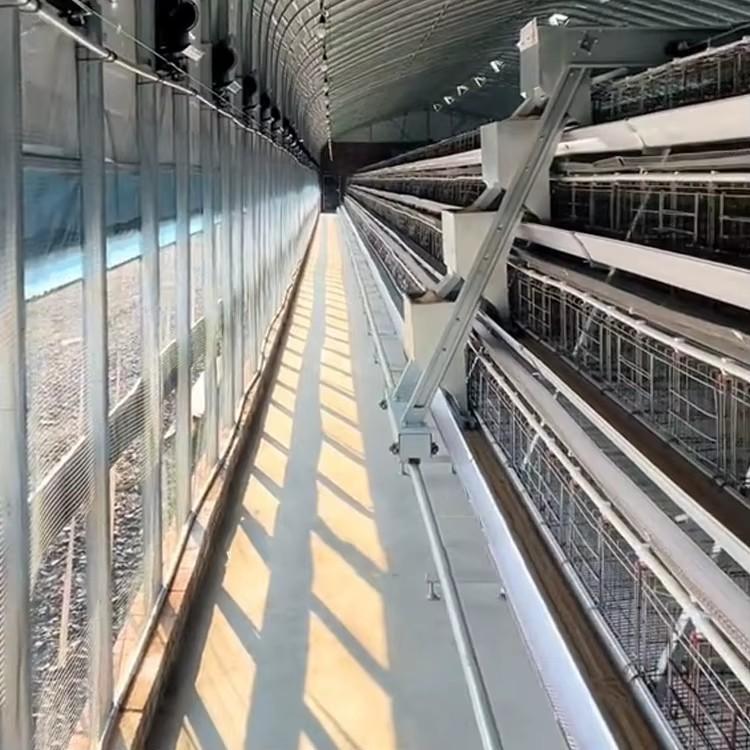
You need to choose between extensive, semi-intensive, and intensive systems.
A. Intensive System
In intensive systems, birds are totally confined to houses. They live either on the floor, in cages, or on slats. This is the most efficient and economical system for large-scale modern poultry production.
I. Advantages: Requires minimum land, can be located near markets, easier day-to-day management, higher production performance since birds save energy from restricted movement, easier application of scientific practices like breeding and medication, sick birds are easily detected and treated.
ii. Disadvantages: Bird welfare suffers since they cannot perform natural behaviors, all nutrients must be provided in feed since birds have no access to outside sources, and a higher initial investment is required.
B. Semi-Intensive System
In semi-intensive systems, birds have access to both housing and outdoor runs. This balances management control with some natural behavior opportunities.
This system works well for smaller operations where you want better bird welfare without going fully free-range.
C. Extensive System
Extensive systems give birds maximum freedom to roam. Birds can scavenge for food and water like indigenous breeds. This requires the least investment but offers the least control.
Even in extensive systems, provide some shelter to protect birds from predators and harsh weather.
11. Construction Materials Needed for Poultry Pen
When you are ready to build, you will need various materials. The exact list depends on your design.
A. Foundation and Floor Materials
I. Cement bags: For foundation and floor concrete work.
ii. Sand: Both sharp sand for mixing concrete and filling sand for leveling.
iii. Granite: For concrete mixing.
iv. Blocks: Material blocks for walls.
B. Framework Materials
I. Poles: Galvanized steel poles, wooden posts, or concrete pillars to support the structure.
ii. Wood: Various sizes like 3×4, 2×4, 2×3, and 2×2 for framing.
iii. Wire mesh: Multiple bundles of netting for sides and ventilation areas.
C. Roofing Materials
I. Roofing sheets: Asbestos or slate depending on your budget.
ii. Nails: Several bags for securing the roof and framework.
iii. Thyroid: For additional roof support.
D. Other Materials
Water for mixing concrete, labor for construction work, disinfectant for the foot bath, and any specialized equipment your design requires.
12. Poultry Pen Cost Considerations
Building a poultry pen requires financial planning. Costs vary widely based on size, materials, and location.
A. Basic Cost Factors
Wall construction, roofing materials, foundation work, labor charges, and equipment all contribute to the total cost. An expert can help you estimate costs based on your specific plans.
Grade work can add substantially to construction costs. If your site needs significant leveling or drainage work, budget for this separately.
B. Cost Reduction Strategies
Use locally available materials where possible. Thatch costs less than asbestos, which costs less than tiles or concrete. Choose based on what you can afford and what works in your climate.
Start small if money is tight. You can always expand later once your operation is profitable.
C. Hidden Costs
Do not forget utilities. Getting water and electricity to your site can be expensive. Access roads might need improvement. Stormwater drainage systems might be necessary.
Budget for these extras rather than being surprised when they come up.
13. Biosecurity Features
Your pen design should include features that protect birds from disease.
A. Foot Bath Details
We mentioned the foot bath earlier, but it deserves emphasis. This simple feature is one of your best biosecurity tools. The container should allow easy access and be large enough that people cannot step over or around it.
Place it where everyone must use it. If people can bypass it, they will.
B. Restricted Access
Design your pen to control who enters. Having a single entrance with a foot bath works better than multiple entry points.
Keep visitors to a minimum. Every person who enters brings potential contamination.
C. Cleaning and Disinfection
Your pen design should make cleaning easy. Smooth walls, accessible corners, and proper drainage all help.
Plan for routine disinfection. You need space to store cleaning equipment and supplies.
Read Also: Importance of a Poultry Farm Entrance Foot Bath
Climate Considerations
Your local climate affects many construction decisions.
1. Hot Climate Adjustments
In hot areas, focus on ventilation and shade. Adequate overhang prevents direct sun from heating the interior. Light-colored roofing reflects heat better than dark materials.
Consider installing fans if temperatures regularly exceed comfortable levels. Sprinkler systems for the roof can also help cool the interior.
2. Cold Climate Modifications
In colder regions, you might need more enclosed walls while still maintaining ventilation. The challenge is keeping birds warm without blocking airflow.
During cold seasons like harmattan, some farmers cover their pens completely. This is a mistake. Birds still need ventilation even in cold weather. Find the right balance.
3. Rainy Season Planning
Ensure your roof overhang is sufficient. Three and a half feet minimum prevents rain from entering through the sides. Gutters and drainage systems keep water away from the foundation.
The ground around your pen should slope away from the building. Even a slight slope helps prevent water from pooling near walls.
Equipment Placement Planning
Your pen design should accommodate all necessary equipment.
1. Feeder Locations
Plan feeder placement based on the number of birds. Feeders should be evenly distributed so all birds can access food without crowding.
Keep feeders at the right height for your birds’ age. Too low and birds scratch feed out. Too high and smaller birds cannot reach.
2. Water System Design
Water containers need proper spacing. Birds should never have to travel far for water. In hot weather, easy water access becomes critical.
Plan for easy refilling. If you have to struggle to refill water, you will not do it as often as needed.
3. Storage Areas
You need space to store feed, equipment, and supplies. This storage should be near the pen but not inside where birds can contaminate it.
Protect feed from moisture, rodents, and insects. Good storage extends feed life and reduces waste.
Consulting an Expert
This article gives you fundamental knowledge, but every situation is unique.
1. When to Hire a Professional
Before you start building, hire someone experienced in poultry pen construction. This investment pays off by preventing costly mistakes.
An expert can assess your specific site, recommend appropriate designs, and help you avoid problems you did not know existed.
2. What an Expert Provides
I. Site evaluation: They can spot drainage issues, wind problems, or other site-specific concerns.
ii. Customized plans: They adapt general principles to your budget and goals.
iii. Material recommendations: They know which materials work best in your area and climate.
iv. Cost estimates: They give realistic budgets so you are not caught off guard.
v. Construction oversight: They can supervise the building to ensure it is done correctly.
3. Finding Qualified Help
Look for people with proven experience building poultry pens. Ask for references and visit the pens they have built. Talk to other farmers about who they used and whether they were satisfied.
Do not choose based solely on price. The cheapest option often costs more in the long run through repairs and poor bird performance.
Common Construction Mistakes to Avoid
Learn from the errors others have made so you do not repeat them.
1. Insufficient Ventilation
This is the most common mistake. Farmers worry about cold or rain and block up their pens too much. Remember, birds tolerate cold better than they tolerate poor air quality.
Never sacrifice ventilation for weather protection. Find designs that provide both.
2. Wrong Orientation
Building your pen facing the wrong direction causes temperature control problems that you will fight every day. Take time to mark out east and west before you start construction.
A compass or phone app can help you get the orientation right.
3. Inadequate Spacing
Trying to pack too many birds in saves money upfront but costs you later in disease, poor growth, and lost production. Follow the spacing guidelines even if it means building bigger or keeping fewer birds.
4. Poor Drainage
Ignoring site drainage leads to muddy conditions, wet litter, and disease. Walk your site during rain to see where water flows and pools. Address drainage before you build, not after.
5. Skipping the Foot Bath
Some farmers view the foot bath as optional. It is not. This simple feature prevents disease introduction that could wipe out your flock.
Build it properly and use it consistently.
Maintenance Planning
Your pen will need regular maintenance to stay functional.
1. Daily Maintenance Tasks
Change foot bath water and disinfectant, check for damage to walls or roof, remove wet litter spots, ensure water and feed systems work properly, and look for signs of predators trying to enter.
2. Weekly Maintenance
Clean cobwebs and dust from nets, inspect the the the the the roof for leaks, check that drainage systems are clear, disinfect equipment, and assess overall cleanliness.
3. Seasonal Maintenance
Before rainy seasons, inspect and repair roofing, clear gutters and drainage, check that windows and vents close if needed, and reinforce any weak areas.
Before cold seasons, check that ventilation can be partially controlled without blocking completely, repair any cracks where cold drafts enter, and ensure heating systems work if you use them.
Expansion Considerations
Plan for growth even if you are starting small.
1. Modular Design
If possible, design your first pen so you can add more units later. Matching units makes management easier than mixing different pen styles.
Leave space on your property for additional structures. Proper spacing between pens reduces disease spread and makes management easier.
2. Infrastructure Scaling
Make sure your water source can handle increased demand. Check that the electrical service can support more equipment. Ensure road access works for larger operations.
Planning these details early prevents bottlenecks when you want to expand.
3. Learning from Experience
Your first pen teaches you what works and what does not. Take notes on problems and successes. Apply these lessons when you build your next pen.
Successful farmers continuously refine their approach based on experience.
Final Thoughts on Pen Construction
Building a poultry pen is a significant investment that deserves careful planning and execution.
Start by understanding the basic requirements: adequate space, proper ventilation, good orientation, suitable roof design, correct height, and biosecurity features. Choose between deep litter and cage systems based on your goals and resources.
Select your site carefully considering topography, drainage, road access, and distance from neighbors. Get expert help to avoid expensive mistakes. Use quality materials appropriate for your climate and budget.
Remember that your pen directly affects bird health, growth, production, and your daily workload. A well-designed pen makes everything easier. A poorly designed pen creates endless problems.
Take your time with planning. Rush jobs lead to regrets. Visit other farms to see what works. Talk to experienced farmers about their successes and failures.
Your poultry farming success starts with proper housing. Build it right the first time, and your birds will reward you with good performance and profits.
Summary on How to Construct Your Poultry Pen
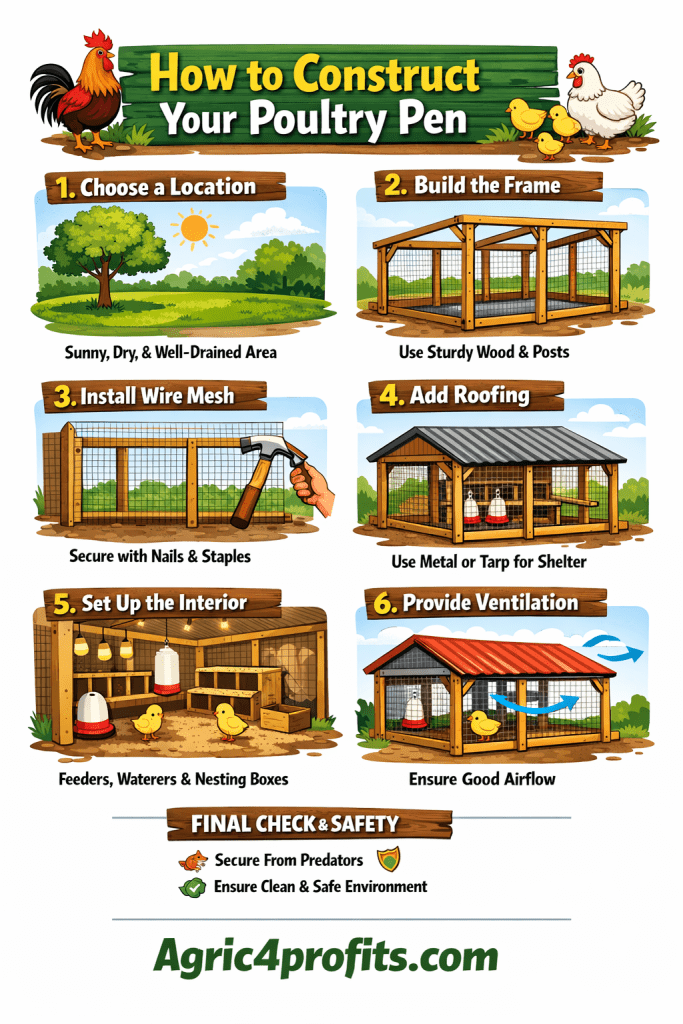
| Aspect | Key Details |
|---|---|
| Door Size | 6 x 2.5 feet, opening outward |
| Foot Bath | Required at entrance, change daily with disinfectant |
| Side Wall Height | 1 to 1.5 feet for deep litter, at bird’s back level |
| Roof Overhang | Minimum 3.5 feet to prevent rain entry |
| Pen Height | 12 feet for deep litter, higher for cage systems |
| Orientation | East-west direction for temperature control |
| Spacing (0-10 weeks) | 10 birds per square meter |
| Spacing (11-18 weeks) | 8 birds per square meter |
| Spacing (19-78 weeks) | 5 birds per square meter |
| Roof Types | Thatch, asbestos, tiles, or concrete; gable style preferred |
| Deep Litter Materials | Wood shavings, sawdust, rice bran |
| System Types | Intensive, semi-intensive, or extensive |
| Location | Away from residential areas, good drainage, accessible roads |
| Expert Consultation | Recommended before construction starts |
| Ventilation | Critical for bird health, never completely block airflow |
Frequently Asked Questions About How to Construct Your Poultry Pen
1. What is the ideal size for a poultry pen door?
The recommended door size is 6 feet by 2.5 feet. The door should open outward to prevent birds from escaping when you enter the pen.
2. How high should the walls be in a deep litter poultry house?
Side walls should be 1 to 1.5 feet high, generally at the level of the birds’ back height. This protects birds during rainy days and cold weather while providing adequate ventilation.
3. Why is east-west orientation important for poultry pens?
East-west orientation minimizes direct sunlight entering through the side walls throughout the day. This helps control interior temperature and prevents overheating.
4. How many birds can I keep per square meter?
For birds aged 0 to 10 weeks, keep 10 birds per square meter. From week 11 to 18, reduce to 8 birds per square meter. Adult birds from week 19 to 78 need 5 birds per square meter.
5. What is the purpose of the foot bath at the pen entrance?
The foot bath contains water and disinfectant that kills disease organisms on people’s shoes before they enter the pen. This prevents disease spread from outside into your poultry house.
6. What is the ideal height for a deep litter poultry pen?
The ideal height for a deep litter system is 12 feet. This allows proper ventilation and prevents heat buildup while remaining low enough to resist wind damage.
7. Can I use an existing building or room in my house for poultry?
You can use an uncompleted building if it provides adequate ventilation, but consult an expert first. Using rooms in your house is not recommended because it creates health risks for both humans and birds.
8. What materials can be used for deep litter bedding?
Common materials include wood shavings, sawdust, rice bran, and straw. Wood shavings and sawdust are most popular because they absorb moisture well.
9. What are the main advantages of cage systems over deep litter?
Cage systems allow more birds per unit area, make record keeping easier, reduce parasitic diseases, produce cleaner eggs, and make it easier to identify and remove poor producers.
10. How often should I change the foot bath water and disinfectant?
You should change the foot bath water and disinfectant daily. This should be one of your first routine tasks each morning to maintain effective biosecurity.
Do you have any questions, suggestions, or contributions? If so, please feel free to use the comment box below to share your thoughts. We also encourage you to kindly share this information with others who might benefit from it. Since we can’t reach everyone at once, we truly appreciate your help in spreading the word. Thank you very much for your support and for sharing!
Read Also: Top 5 Trends in Agriculture