


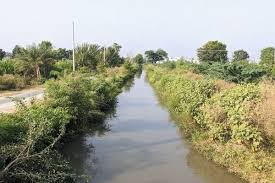
Hydrology is a branch of scientific and engineering study that focuses on the occurrence, movement, distribution, and physical properties of water on Earth.
In agricultural systems, knowledge of hydrology is essential for professionals involved in water resource planning, wastewater treatment, irrigation scheduling, flood risk reduction, navigation, pollution control, hydropower development, and ecosystem modelling.
The hydrological system combines multiple processes such as rainfall, evapotranspiration, surface runoff, unsaturated flow, and the movement of groundwater.
Water, being a renewable resource, is continuously recycled within ecosystems through the hydrologic cycle, making it vital to agriculture and environmental sustainability.
Definition of Hydrology in Agricultural Context
The term “hydrology” is derived from “hydro” meaning water, and “logy” meaning study. Hydrology can therefore be defined as the scientific study of water its occurrence, movement, distribution, circulation, storage, development, and management both on and beneath the Earth’s surface.
This definition of hydrology covers aspects of various disciplines relevant to agriculture and environmental science, including biology, chemistry, geography, geology, meteorology, physics, oceanography, glaciology, volcanology, and more.
Hydrology may also be described as the study of water’s physical properties and its distribution on land and underground, all of which are vital in managing agricultural landscapes.
Read Also: How to Grow, Use and Care for Woolly Cupgrass (Eriochloa villosa)
The Hydrologic System and Its Components
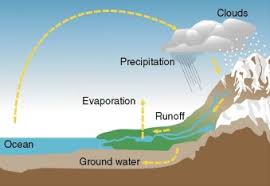
The hydrologic system integrates processes such as precipitation, evapotranspiration, surface runoff, soil water movement, and groundwater flow.
Water is always in motion around, across, and above the Earth’s surface, changing forms between vapor, liquid, and solid.
Different types of water in the hydrologic system include:
1. Meteoric water: Water actively involved in circulation
2. Connate water: Ancient or “fossil” water, often saline
3. Juvenile water: Water originating from the Earth’s interior
4. Surface water: Found in rivers, lakes, and oceans
5. Subsurface water: Includes groundwater, soil water, and capillary water
6. Groundwater: Located in the saturated zone of the soil and may be fresh or saline
Read Also: How to Grow, Use and Care for Woolly Sedge Grass (Carex pellita)
Hydrologic Processes in Agricultural Landscapes
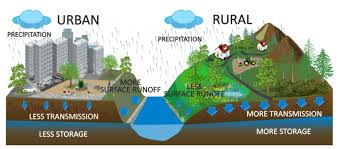
Hydrologic processes operate over a wide range of spatial and temporal scales. These processes range from short-term storm events to long-term river basin development, with space scales extending from small watersheds to large catchment areas covering thousands of square kilometres.
1. Rainfall Interception
Rainfall interception is the process by which water is prevented from reaching the soil surface directly. It occurs when vegetation or surface depressions temporarily hold rainwater.
Leaves and organic matter intercept rainfall, causing water to spread as a thin film or collect in droplets along plant edges.
Once the holding capacity of the surface is exceeded, water droplets form and fall to the ground. Rain impact and wind can also dislodge water from vegetation.
Water stored in intercepted layers is exposed to evaporation, reducing the amount of water available for infiltration and crop use.
2. Runoff Generation
Runoff refers to water that flows across the land surface and into drainage systems such as streams and rivers. It forms part of the water that escapes infiltration and is not stored in the soil.
Runoff includes:
i. Direct precipitation falling on streams
ii. Surface runoff that travels over the land
iii. Subsurface runoff that moves laterally through soil layers
iv. Groundwater discharge from deeper percolated water
Subsurface flow can quickly or slowly reach the stream, depending on soil characteristics and slope. The total of these water sources contributes to streamflow, which may be classified as direct runoff (immediate response) or base flow (sustained contribution).
3. Sediment Transport
Sediment transport is the movement of detached soil and rock particles by flowing water. It begins with erosion, where particles are loosened from the surface, followed by their transportation and eventual deposition when the flow velocity decreases.
The three stages include:
1. Detachment of soil or rock particles by rain impact or flowing water
2. Transportation of particles by moving water
3. Deposition of materials when water slows down
This process contributes to nutrient loss and pollution in water bodies, affecting agricultural productivity and water quality.
The hydrologic cycle is one of Earth’s most significant physical processes, powered by solar energy and gravity. It ensures the continuous movement of water in various forms vapor, liquid, and ice across the Earth’s systems.
Key types of water include meteoric, connate, juvenile, surface, subsurface, and groundwater.
Hydrological processes such as rainfall interception, runoff generation, and sediment transport*play crucial roles in water availability, soil conservation, and pollution control in agriculture.
Understanding these processes supports efficient irrigation, sustainable land management, and environmental protection.
Do you have any questions, suggestions, or contributions? If so, please feel free to use the comment box below to share your thoughts. We also encourage you to kindly share this information with others who might benefit from it. Since we can’t reach everyone at once, we truly appreciate your help in spreading the word. Thank you so much for your support and for sharing!