


Soil fertility is the capacity to receive, store, and transmit energy to support plant growth. It is the component of overall soil productivity that deals with its available nutrient status and its ability to provide nutrients out of its own reserves and through external applications for crop production.
Read Also: Thistle Flowers: Complete Growing and Care Guide
Components of Soil Fertility in Agriculture
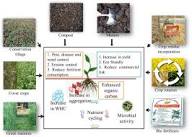
There are three main components of soil fertility physical, chemical, and biological (Abbott and Murphy, 2003). The level of soil fertility results from the inherent characteristics of the soil and the interactions that occur between these three components.
Most characteristics that contribute to the fertility of soil, such as soil pH and the susceptibility of the soil to compaction, are dependent on the constituents of the original parent rock. Subsequent events, including the growth of plants and the addition of fertilizer, modify the soil characteristics and alter its fertility.
Continuous use of acidic or salty synthetic fertilizers, insecticides, fungicides, and herbicides disrupts the delicate balance between the three components of soil fertility.
Competing land uses and extensive degradation are rapidly depleting the amounts of soils and water available for food production.
In Africa alone, 6.3 million hectares of degraded farmland have lost their fertility and water-holding capacity and need to be regenerated to meet the demand for food of a population set to more than double in the next 40 years.
Besides preventing deficit or surplus of water that affects development and yield and managing surface run-off to minimize erosion and nutrient leaching, water management has a major influence on soil fertility evolution.
The soil water regime is closely interrelated with organic matter evolution, soil fauna development, and soil physical property changes, especially in peat soil.
Essential Plant Nutrients and Their Sources
Of the 90 or so chemical elements forming the earth’s crust, 16 are known to be essential for plant growth and reproduction. Seven elements needed in good quantity (macronutrients) are hydrogen, oxygen, nitrogen, and carbon from air and water, and phosphorus, potassium, and calcium from mineral particles in the soil.
The other nine elements needed only in small amounts (micronutrients) are magnesium, sulfur, boron, copper, iron, manganese, zinc, molybdenum, and chlorine.
Among others listed are cobalt and sodium as essential elements for plant growth. With the exception of hydrogen, carbon, and oxygen, all other inorganic plant requirements are obtained directly or indirectly from the soil minerals; hence, these elements are called mineral nutrients.
Strictly speaking, nitrogen is not a mineral element, but it has been included in the list because it can also be obtained by plants from soil.
The mineral elements are taken by plants from soils mostly in the form of ions. Plants obtain nutrients from the following four sources:
- From the soil solution through roots,
- From exchangeable ions on the surface of clay and humus particles through roots,
- From readily decomposable minerals, and
- Through the leaves.
The essentiality of an element is proved by the following criteria:
i. The element may be considered essential if its exclusion from the nutrient medium inhibits or drastically reduces the growth and reproduction of plants.
ii. Acute deficiency of the element produces certain well-defined disease symptoms which are not produced by the deficiency of any other element.
iii. Deficiency disease symptoms will disappear if the particular element is supplied before the living system has been damaged beyond repair.
Read Also: Significance and Uses of Flower Basket
Mechanisms of Nutrient Uptake in Plants
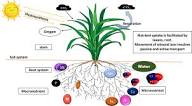
All of these nutrients are taken in through the roots. Water transfers the nutrients from the soil to the plant roots, so water is an important requirement for sufficient plant nutrition.
A second requirement is the appropriate soil pH for the plant being grown. Each plant prefers a specific pH range to be able to access the nutrients in the soil. Some plants are fussier than others, but if the soil pH is too acidic or alkaline, the plant will not be able to take in nutrients no matter how rich the soil may be.
Symptoms of Nutrient Deficiencies in Plants
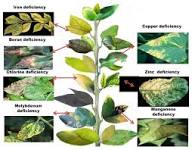
Plants will usually display definite deficiencies if required nutrients are not present in adequate concentrations. The following symptoms may occur if the level of one mineral nutrient is not high enough to be within the range needed for optimal plant growth.
A plant may exhibit a particular symptom for reasons other than a nutrient deficiency. However, if one of the deficiency symptoms occurs, a lack of the proper dopants should be suspected, and the amount of that nutrient should be increased.
| Deficient Nutrient | Symptoms |
|---|---|
| Nitrogen | Leaves are small and light green; lower leaves lighter than upper ones; not much leaf drop; weak stalk. |
| Phosphorus | Dark-green foliage; lower leaves sometimes yellow between veins; purplish color on leaves or petioles. |
| Potassium | Lower leaves may be mottled; dead areas near tips and margins of leaves; yellowing at leaf margins continuing toward center. |
| Calcium | Tips of the shoot die; tips of young leaves die; tips of leaves are hooked-shaped. |
| Magnesium | Lower leaves are yellow between veins (veins remain green); leaf margins may curl up or down or leaves may pucker; leaves die in later stages. |
| Sulfur | Tips of the shoot stay alive; light green upper leaves; leaf veins lighter than surrounding areas. |
| Iron | Tips of the shoot stay alive; new upper leaves turn yellow between veins (large veins remain green); edges and tips of leaves may die. |
| Manganese | Tips of the shoot stay alive; new upper leaves have dead spots over surface; leaf may appear netted because of small veins remaining green. |
| Boron | Tip of the shoot dies; stems and petioles are brittle. |
Not all plant problems are caused by insects or diseases. Sometimes an unhealthy plant is suffering from a nutrient deficiency or even too much of any one nutrient. Plant nutrient deficiencies often manifest as discoloration or distortion of the leaves and stems.
Do you have any questions, suggestions, or contributions? If so, please feel free to use the comment box below to share your thoughts. We also encourage you to kindly share this information with others who might benefit from it. Since we can’t reach everyone at once, we truly appreciate your help in spreading the word. Thank you so much for your support and for sharing!