


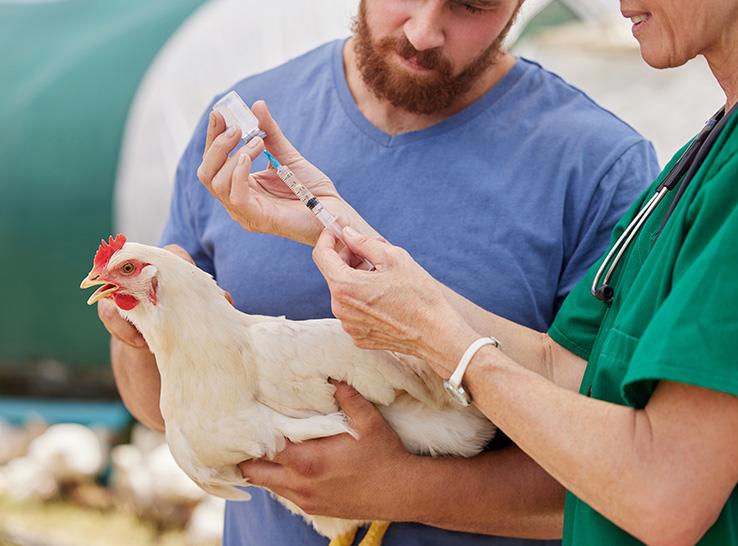
Vaccination is one of the most important health management tools available to any poultry farmer. It is not a cure. Vaccines do not treat birds that are already sick. What they do is prepare the bird’s immune system to fight off a disease before it ever takes hold. That distinction matters because it changes how you think about the value of vaccinating your flock.
Some farmers have raised birds without vaccinating and experienced few losses. If that has been your experience, consider yourself fortunate. The absence of disease does not mean disease was never a threat. It means the threat did not materialize that time. If it had, unvaccinated birds would have had no protection, and the losses could have been severe. Prevention is always cheaper than dealing with an outbreak, and vaccination is the most reliable form of prevention available.
When a vaccine is administered, it triggers the bird’s immune system to produce antibodies against a specific disease. If the actual disease organism later invades, the bird’s body recognizes it and fights it off. A natural infection without vaccination produces the same antibody response, but the damage caused before the immune system responds can be severe, and many birds become unthrifty, non-productive, or die before immunity can develop. Vaccination gives the immune system a head start under controlled conditions with minimal harm to the bird.
Always source vaccines through a qualified veterinarian. They are the proper custodians of vaccines, understand how each one works, and will guide you on administration, storage, and timing. Vaccines are fragile products. Some contain live organisms in a state of suspended animation. Others contain killed organisms. All have a limited lifespan that depends heavily on how they are handled, stored, and administered. Mishandling reduces potency and can render a vaccine ineffective.
Read Also: Coccidiosis in Poultry: Signs, Drugs and Treatment
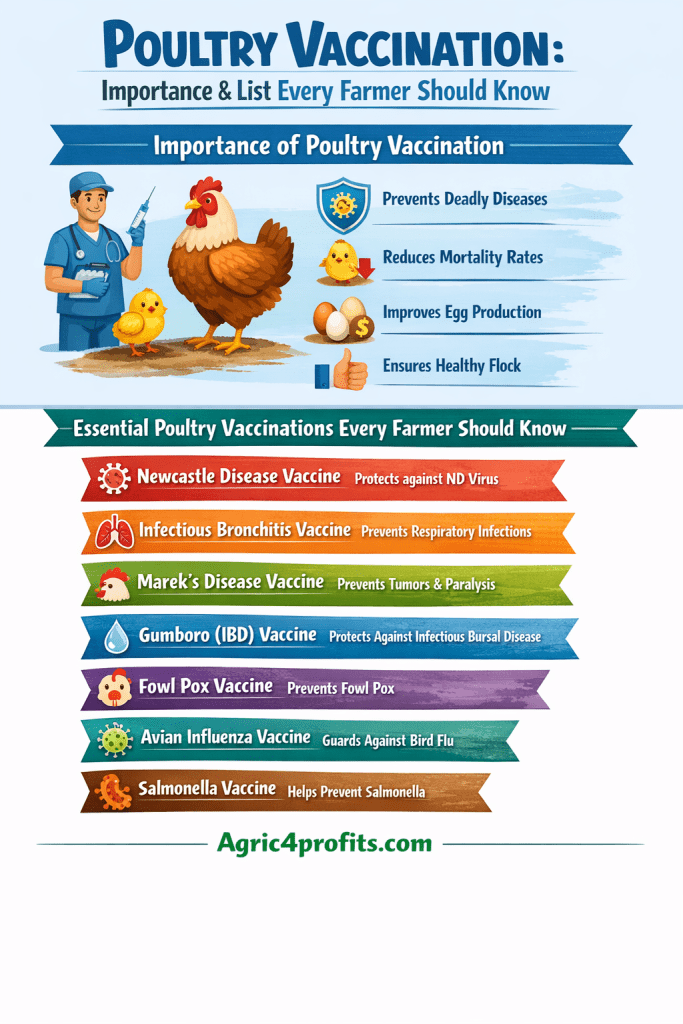
1. List of Poultry Vaccines and Their Importance
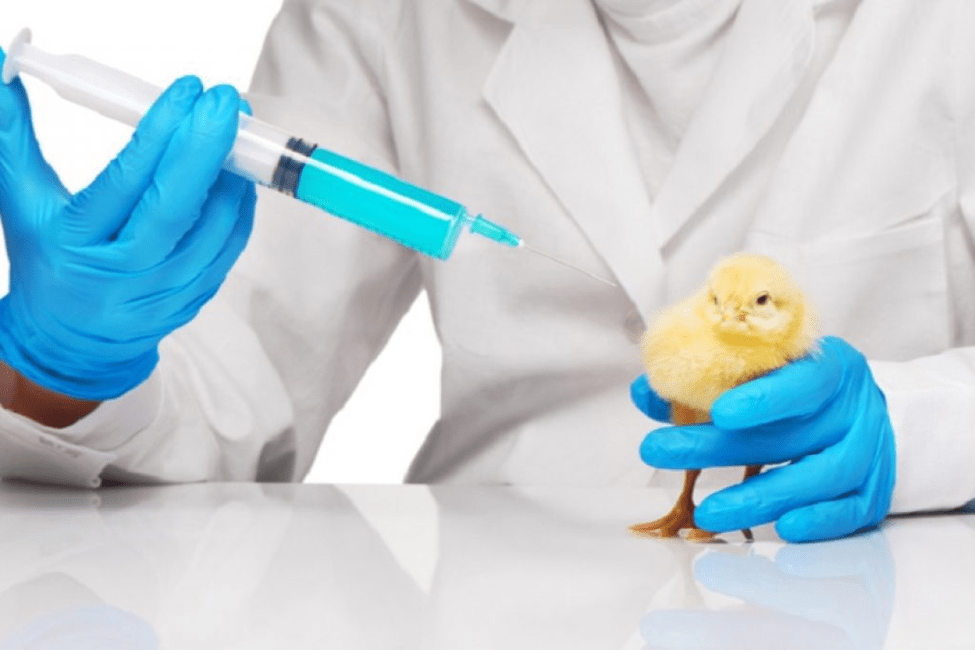
A well-planned vaccination schedule protects your flock at each stage of development. The timing of each vaccine depends on the age of the birds, disease risk in your area, and the specific vaccine strain being used. Here are the key vaccines every poultry farmer should know:
A. Marek’s Disease Vaccine
Marek’s disease is a highly contagious viral infection that affects chickens. It causes tumors, paralysis, and death, and spreads easily through feather dander in the environment. Vaccination against Marek’s disease is one of the most fundamental preventive measures in poultry farming. The disease leads to significant economic losses through mortality and reduced productivity, making this vaccine essential for any serious operation.
B. Newcastle Disease Vaccine
Newcastle disease is a severe and widespread viral infection affecting poultry worldwide. It causes respiratory distress, nervous system damage, and high mortality. Two commonly used strains of Newcastle disease vaccine are Lasota and Kumarov. These are not interchangeable. They are different strains given at different times in the vaccination schedule. Both are important and neither should be skipped in favor of the other.
C. Infectious Bronchitis Vaccine
Infectious bronchitis is a respiratory disease that spreads rapidly through flocks and significantly reduces egg production and quality. Vaccination targets multiple strains of the virus and helps control its spread. Without vaccination, an outbreak in a laying flock can cause production losses that take weeks to recover from.
D. Avian Influenza Vaccine
Avian influenza, commonly called bird flu, is a contagious viral disease with multiple strains. Some strains cause severe illness and high mortality in poultry. Certain strains also pose a risk to human health. Vaccination is a key strategy for preventing transmission and controlling outbreaks, protecting both the flock and public health.
E. Fowl Pox Vaccine
Fowl pox causes skin lesions, respiratory issues, and drops in egg production. It spreads through direct contact and insect bites, particularly mosquitoes. Vaccination prevents the spread of the virus within the flock and protects egg production from the disruption that an active pox outbreak causes.
F. Gumboro Disease Vaccine (Infectious Bursal Disease)
Gumboro disease targets the bursa of Fabricius, which is the organ responsible for developing the bird’s immune system. Infection in young chicks destroys this organ and leaves birds immunosuppressed, meaning they cannot respond effectively to other diseases or vaccines. Vaccination against Gumboro is critical, especially in intensive farming systems where bird density makes rapid spread likely.
G. Coccidiosis Vaccine
Coccidiosis is a parasitic disease that damages the intestinal lining of birds, causing bloody droppings, poor feed conversion, and death in severe cases. The coccidiosis vaccine works by exposing birds to low-level oocysts that stimulate immunity without causing clinical disease. It is especially useful as an alternative to medicated feed in natural or organic production systems.
H. Salmonella Vaccine
Salmonella is a bacterial infection that affects both poultry and humans. Birds carrying Salmonella may show no visible signs of illness but can pass the bacteria through eggs and meat to consumers. Vaccination reduces the prevalence of Salmonella in the flock, contributing directly to food safety and protecting public health.
Read Also: Worm infestation in Poultry: Signs and Treatment
2. Importance of Poultry Vaccination
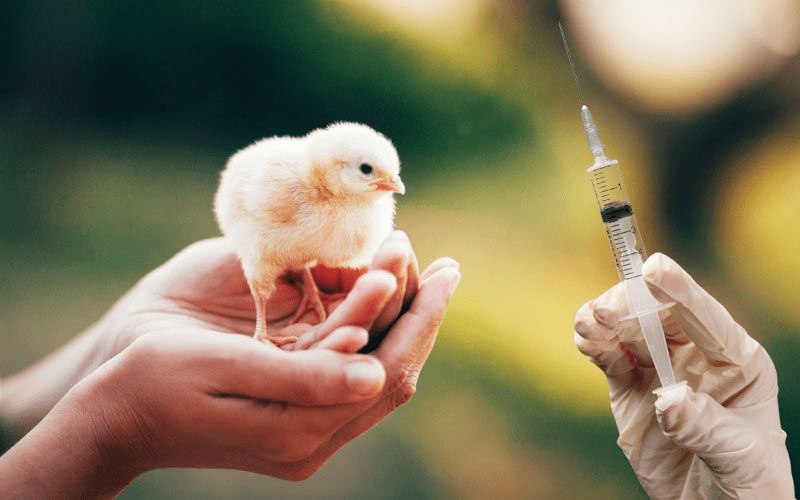
Beyond the individual vaccines, the broader case for a consistent vaccination program rests on four key pillars:
A. Disease Prevention
Vaccination is the primary tool for stopping infectious diseases from spreading through a flock. A single outbreak of Newcastle disease or Gumboro can wipe out a significant portion of unvaccinated birds in a matter of days. Vaccination prevents this by building immunity before exposure occurs.
B. Animal Welfare
Sick birds suffer. They stop eating, lose weight, become lethargic, and in many cases die in distress. A properly vaccinated flock lives healthier, grows better, and produces more consistently. Vaccination is a direct investment in the welfare of the animals in your care.
C. Food Safety
Some poultry diseases, particularly Salmonella and certain strains of avian influenza, can be transmitted to humans through poultry products. Vaccination reduces the risk of these pathogens reaching consumers, making it a food safety issue as much as a farm management one.
D. Economic Sustainability
Disease outbreaks are expensive. They cause direct losses through bird deaths and reduced production, and indirect losses through treatment costs, downtime, and the cost of restocking. A consistent vaccination program is a fraction of the cost of managing a serious outbreak. Healthy flocks are profitable flocks.
3. Monitoring, Evaluation, and Biosecurity
A vaccination program is not a one-time event. It requires regular monitoring to confirm it is working. This means assessing vaccine efficacy, tracking disease prevalence on the farm, and adjusting the schedule when conditions change. If birds are still getting sick despite vaccination, the problem may be improper storage, incorrect administration, or a vaccine strain mismatch. Your vet can help identify and correct these issues.
Vaccination also works best as part of a broader biosecurity plan. Controlling who enters your poultry facility, maintaining strict hygiene at all entry points, and keeping new birds isolated before introducing them to the flock all reduce the disease pressure that vaccines have to handle. Vaccination and biosecurity together form a much stronger defense than either one alone.
Summary on Importance and List of Poultry Vaccination
| Vaccine | Disease Prevented | Key Importance |
|---|---|---|
| Marek’s Disease | Marek’s disease | Prevents tumors, paralysis, and mortality in chickens |
| Newcastle Disease | Newcastle disease | Controls respiratory and nervous system disease; Lasota and Kumarov are both required |
| Infectious Bronchitis | Infectious bronchitis | Reduces respiratory spread and protects egg production |
| Avian Influenza | Bird flu | Prevents outbreaks and protects public health |
| Fowl Pox | Fowl pox | Controls skin lesions and egg production drops |
| Gumboro (IBD) | Infectious bursal disease | Prevents immunosuppression in young birds |
| Coccidiosis | Coccidiosis | Reduces intestinal damage and mortality from parasites |
| Salmonella | Salmonella infection | Reduces bacterial load in flock and protects food safety |
Frequently Asked Questions About Importance and List of Poultry Vaccination
1. Is vaccination really necessary if my birds have not been getting sick?
Yes. The fact that your birds have not gotten sick does not mean disease was never present. It may mean the conditions for an outbreak did not align during that period. Vaccines prevent diseases that have not yet arrived. Once an outbreak starts in an unvaccinated flock, it is often too late to stop it from spreading rapidly. Vaccination is always safer than relying on luck.
2. What is the difference between Lasota and Kumarov vaccines?
Both Lasota and Kumarov are strains of Newcastle disease vaccine but they are not the same product and are not interchangeable. Each is administered at a different stage in the bird’s life. Both are necessary for complete protection against Newcastle disease. Do not skip either one. Your vet will advise on the correct timing for each.
3. When should I start vaccinating my chicks?
The timing depends on the specific vaccine. Marek’s disease vaccine, for example, is typically given on the day of hatching or within the first 24 hours. Gumboro vaccine is usually given in the first few weeks. Newcastle disease vaccination follows a schedule starting in the first week and continuing with booster doses. Your vet will provide a full schedule suited to your flock type and local disease risks.
4. How should vaccines be stored to maintain their effectiveness?
Most poultry vaccines must be stored in a refrigerator at between 2°C and 8°C. Live vaccines are especially sensitive and can lose potency quickly if exposed to heat, light, or freezing. Always check the storage requirements on the vaccine label and never use a vaccine that has been stored incorrectly or has passed its expiry date.
5. Can I administer vaccines myself or do I need a vet?
Some routine vaccines can be administered by trained farm staff following veterinary guidance. However, sourcing vaccines should always go through a qualified veterinarian. They will ensure you are using the right vaccines for your region, advise on correct dosing and administration method, and help you build a schedule that matches the disease risks in your area.
6. What happens if I miss a vaccination in the schedule?
Missing a scheduled vaccination leaves your birds unprotected during a critical window. Some vaccines require boosters to maintain immunity, and missing a booster can allow that immunity to lapse. Consult your vet if you miss a scheduled dose. They can advise on whether and when to administer it and whether the gap has left your flock at significant risk.
7. Why is Gumboro disease particularly dangerous for young chicks?
Gumboro disease attacks the bursa of Fabricius, the organ responsible for developing the immune system in young birds. Damage to this organ leaves birds immunosuppressed, meaning they cannot fight off other diseases or respond properly to other vaccines. This makes early Gumboro vaccination critical, as the window for the disease to cause this damage is in the first few weeks of life.
8. Does vaccination against Salmonella eliminate all food safety risk from poultry products?
Vaccination significantly reduces Salmonella prevalence in the flock but does not eliminate all risk. Good hygiene during slaughter, processing, storage, and food preparation is still essential. Vaccination is one layer of a multi-layered food safety system, not a complete solution on its own.
9. How does vaccination work alongside biosecurity?
Vaccination and biosecurity work together. Biosecurity measures, such as controlling farm access, disinfecting equipment, and quarantining new birds, reduce the amount of disease pressure the birds are exposed to. Vaccination builds immune protection for when exposure does occur. Together they provide much stronger protection than either measure alone.
10. What should I do if vaccinated birds still get sick?
If birds develop disease despite vaccination, investigate the cause. Common reasons include improper vaccine storage, incorrect administration technique, using an outdated vaccine, a vaccine strain mismatch, or an overwhelming disease challenge that exceeded the vaccine’s protection level. Contact your vet immediately to identify the problem, treat affected birds, and review your vaccination and biosecurity protocols.
Do you have any questions, suggestions, or contributions? If so, please feel free to use the comment box below to share your thoughts. We also encourage you to kindly share this information with others who might benefit from it. Since we can’t reach everyone at once, we truly appreciate your help in spreading the word. Thank you very much for your support and for sharing!
Read Also: 12 Management Tips for Better Poultry Performance Potential