


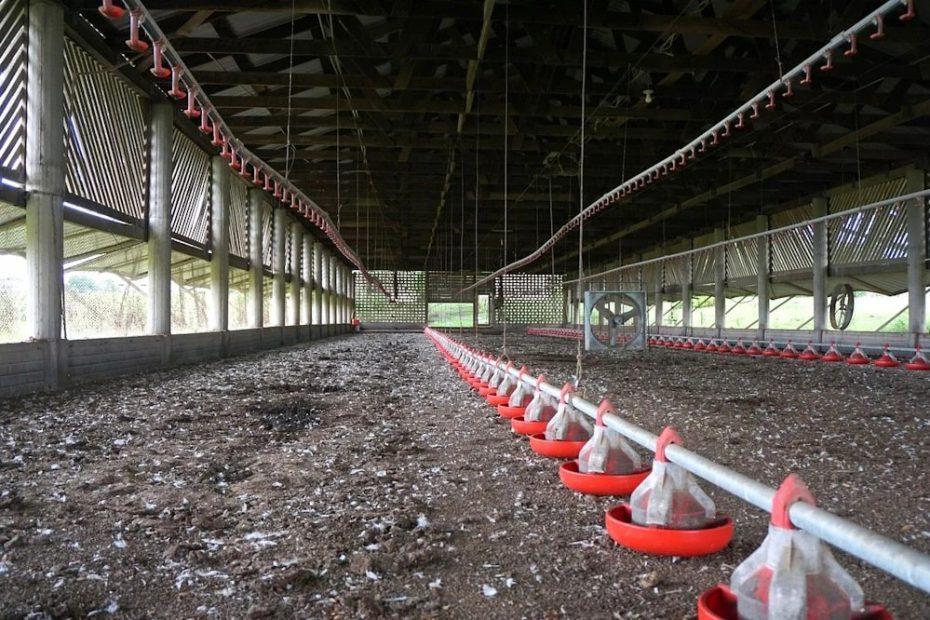
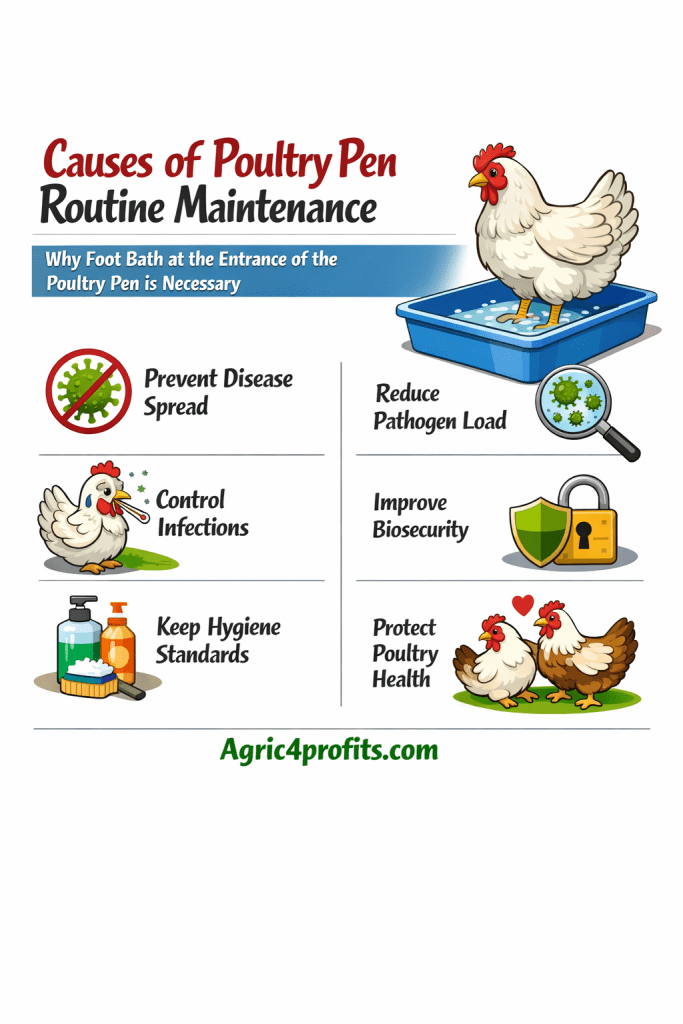
A foot bath might seem like a small detail, but it’s one of the most important parts of running a clean poultry farm. This simple setup can make the difference between healthy birds and a disease outbreak that costs you money and time.
Every day, people walk in and out of poultry houses. Farm workers, visitors, veterinarians, and delivery personnel all bring something with them on their shoes. It’s not always visible, but dirt, mud, and organic matter on footwear can carry harmful organisms like bacteria, viruses, parasites, and even weed seeds. These contaminants can survive for days or weeks on the soles of shoes.
The foot bath is a carved-out section at the entrance of the poultry pen. It’s filled with water and disinfectant, and anyone entering the pen must dip their feet in it. This practice stops diseases from spreading from the outside into your pen, and from one pen house to another. It’s basic biosecurity, but it works.
Without proper foot hygiene, you risk bringing in diseases like coccidiosis, anthrax, phylloxera, and Panama disease. These aren’t just theoretical risks. Soil-borne pests and pathogens are real threats that can wipe out your flock or damage your crops. Infected plant material, manure, and contaminated soil can transfer diseases from one farm to another with just a single visit.
So how often should you change the water and disinfectant? Daily. In fact, on well-managed farms, it’s the first task of the day. Some farms even impose penalties on workers who skip this step. Once the footbath gets dirty with mud and debris, the disinfectant loses its power. Fresh water and fresh disinfectant every morning ensure maximum protection.
This article will walk you through everything you need to know about setting up and maintaining a proper foot bath system for your poultry farm. You’ll learn the cleaning steps, disinfection methods, and best practices that keep your birds safe.
1. Why Foot Baths Matter for Poultry Biosecurity
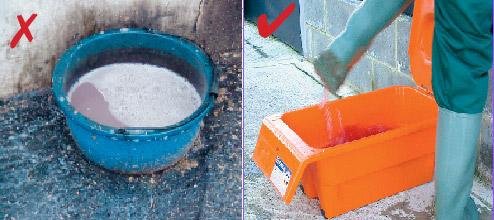
Biosecurity sounds complicated, but it’s really just about keeping bad things out and good things in. Foot baths are one of the simplest and cheapest biosecurity measures you can take.
Dirty boots are dangerous. People can carry pest organisms or disease-causing microbes on their footwear without knowing it. When they walk into your poultry house, those microbes go with them. Once inside, they can infect your birds and spread quickly through the flock.
Soil-borne diseases are particularly sneaky. They hide in the dirt stuck to boot treads. A visitor who walked through another farm earlier that day could bring contaminated soil to your property. Even tiny amounts of infected material can cause problems.
The good news is that foot baths eliminate most of these organisms when used correctly. A proper three-step process (check, clean, disinfect) removes visible debris and kills germs that could harm your birds.
2. Who Needs to Use the Foot Bath
Not everyone who visits your property needs to use the foot bath. You need to assess the risk level.
A. High-Risk Visitors
People who have been on other farms recently are at high risk. This includes:
I. Farm workers who work at multiple locations
ii. Veterinarians making rounds to different farms
iii. Feed delivery drivers who visit many farms
iv. Equipment rental providers
v. Agricultural consultants and advisors
These visitors must clean and disinfect their footwear before entering any production area.
B. Medium-Risk Visitors
People who work outdoors or in agricultural settings but haven’t been on other farms recently still carry some risk. They should use the foot bath as a precaution.
C. Low-Risk Visitors
People who are just dropping by the house and won’t come into contact with your birds or production areas don’t need to use the foot bath. A casual visitor staying in non-production zones poses minimal risk.
Read Also: Poultry Farm Bio-Security and Vaccination
3. The Three-Step Footwear Cleaning Process
Proper footwear hygiene requires three distinct steps. Skipping any step reduces effectiveness.
A. Check Step
Before anything else, check all boots and shoes. Ask visitors where they wore their footwear previously. If they’ve been on another farm, they need extra attention. Look for visible dirt, mud, plant material, or manure on the soles.
B. Clean Step
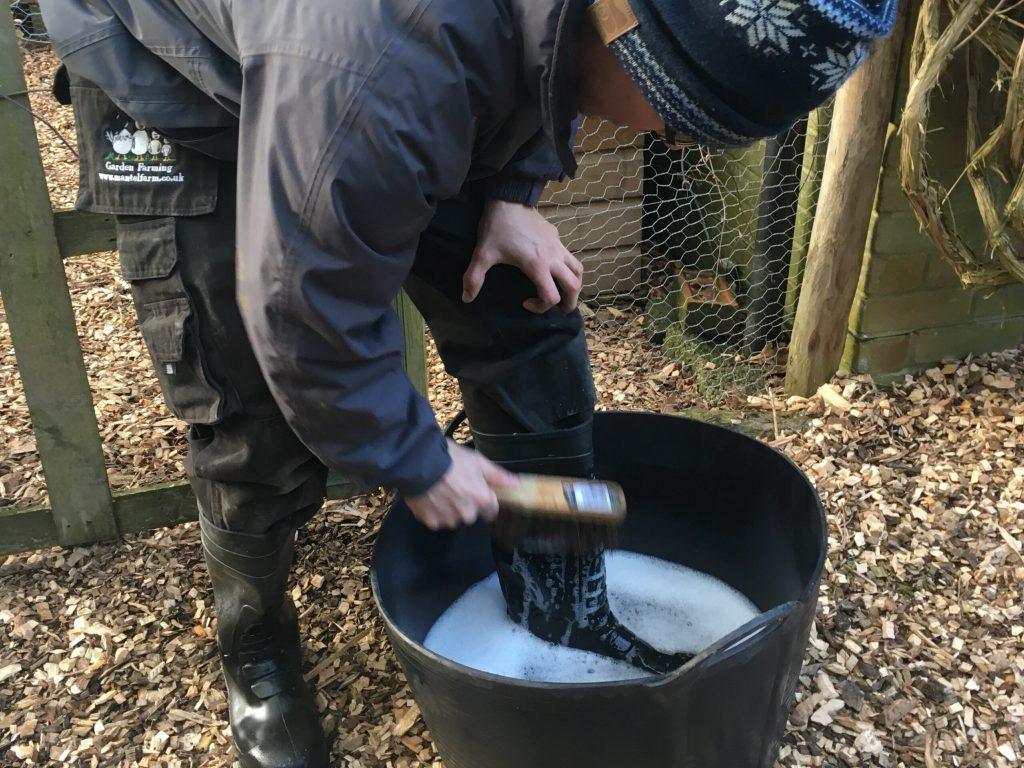
Use a strong-bristle brush to remove all visible debris. Boots should be free of dirt, mud, manure, and plant material before they touch the footbath water.
Why? Because organic matter contaminates the disinfectant and prevents it from killing germs. Think of it like washing dishes. You scrape off the food scraps before putting the plates in soapy water. Same principle here.
C. Disinfect Step
After cleaning, the boots go into a disinfectant solution. This step kills any remaining organisms that survived the initial cleaning. The disinfectant must be strong enough to do the job and fresh enough to work properly.
4. Setting Up Your Footbath Station
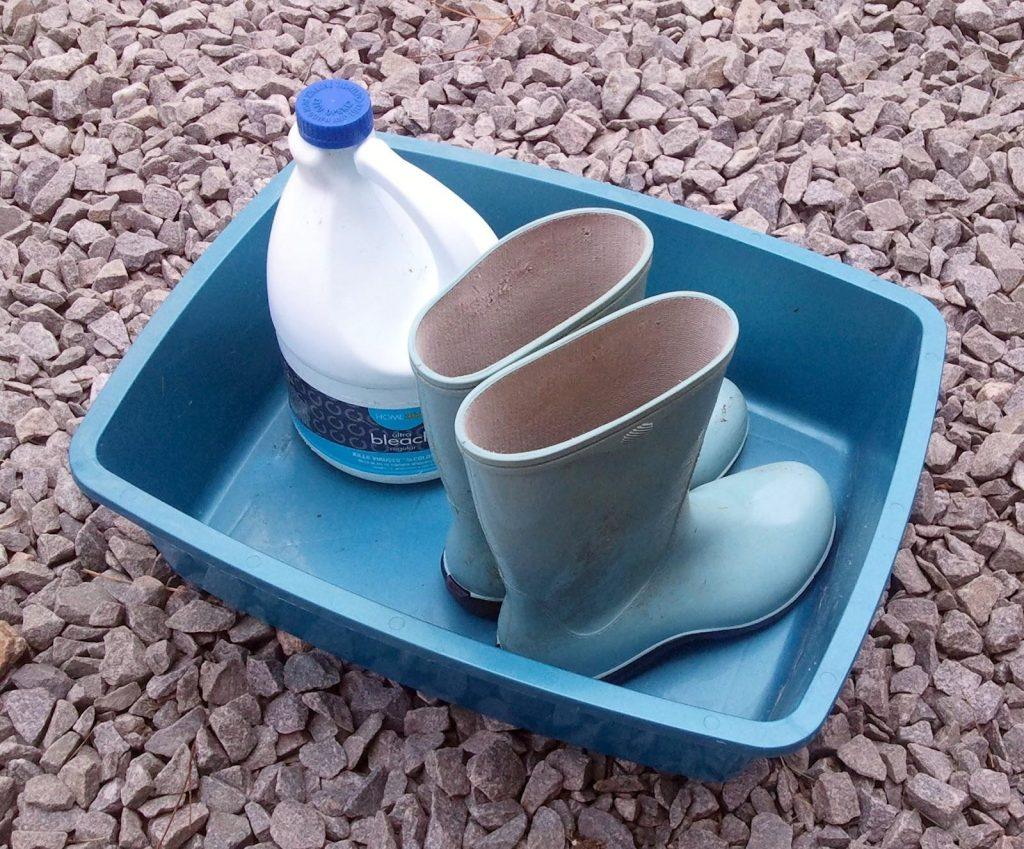
A proper footbath station requires some basic equipment and supplies. Here’s what you need:
I. Heavy-duty scrubbing brushes and scraping tools (horse pick or screwdriver work well)
ii. At least two heavy-duty plastic containers
iii. Clean water for the washing tub
iv. Clean water for the rinse tub
v. Registered decontaminant (check your local agricultural chemical database)
vi. Drying material like hessian bags, rubber mats, or towels (must be clean, porous, and non-slip)
vii. A tarpaulin if you’re placing footbaths on a dirt surface
The containers need to be large enough to fit big work boots completely. The liquid should saturate all parts of the footwear, including the sides and heel.
5. Cleaning Step Details
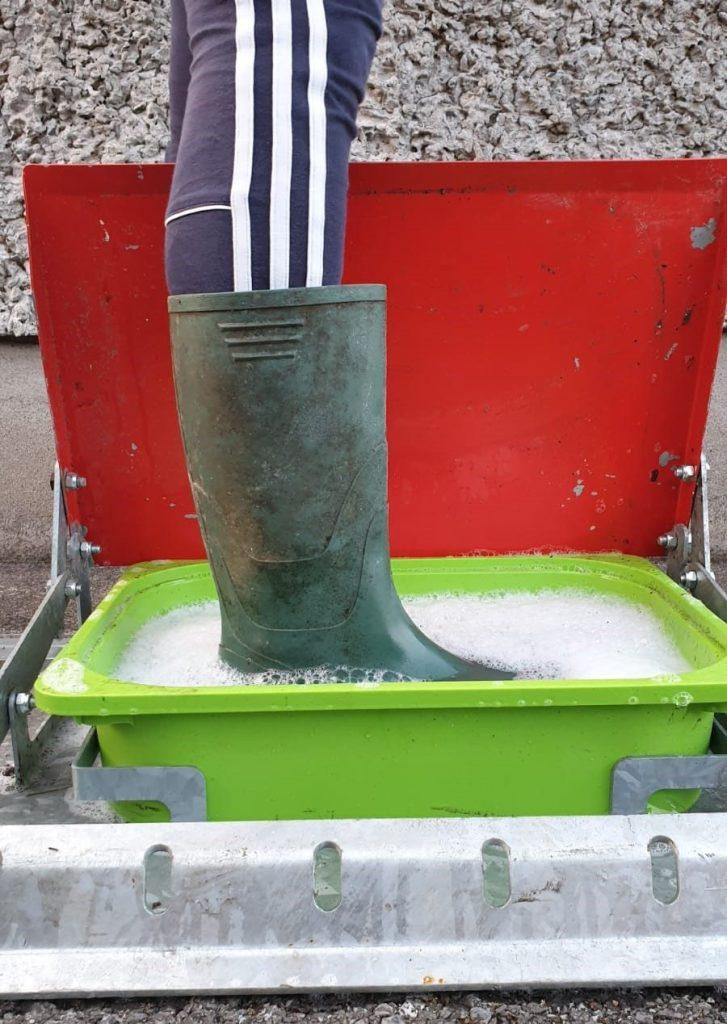
The first container should be your washing station. Fill it with clean water. Adding some soap or detergent helps clean better than water alone.
If the boots are very dirty, scrub the soles while standing in the soap solution. Use the brush vigorously to dislodge caked-on mud and debris. Don’t rush this step. Thorough cleaning makes the disinfectant more effective.
Remove all visible plant material and soil. Pay attention to boot treads where dirt likes to hide. The grooves and patterns in boot soles can trap surprisingly large amounts of contaminated material.
6. Washing Step Details
The footbath container should allow easy access. You want people to step in and out smoothly without losing balance or splashing water everywhere.
Make sure the container is deep enough. The liquid needs to cover the entire sole and come up the sides of the boot. Shallow footbaths don’t work because the top parts of the boot stay contaminated.
Change the washing water regularly throughout the day if you have many visitors. Once the water turns murky with dirt, it stops cleaning effectively.
7. Disinfection Step Details
For maximum protection, a disinfection step should follow the washing step. Here’s how to do it right:
A. Set Up the Second Footbath
The second container should contain your disinfecting product. This is where the actual germ-killing happens.
B. Choose Your Disinfectant
You can use bleach diluted to 1% active sodium hypochlorite. If your bleach is 4% active sodium hypochlorite, mix three parts water to one part bleach.
Other farm detergents and disinfectants work too. Just follow the label instructions carefully. Different products have different dilution rates and contact times.
C. Maintain the Solution
Refresh the disinfectant regularly. Build-up of dirt and rainwater dilutes the solution and reduces effectiveness. On busy days with lots of foot traffic, you might need to change it multiple times.
D. Protect Footwear
Leather or fabric shoes can get damaged by prolonged exposure to disinfectants. After the disinfection step, rinse boots with fresh water. This final rinse removes residual chemicals and extends the life of the footwear.
8. Alternative: Dedicated Footwear System
Instead of washing boots every time someone enters or exits, you can provide dedicated footwear. This approach has several advantages.
A. How It Works
Keep a supply of clean gumboots or shoe covers at the entrance to your production area. Visitors and workers change into these before entering. The boots or covers stay on the farm and are only worn in production areas.
B. Benefits
This system minimizes the chance of transferring diseases, pests, or weeds both on and off your property. Dedicated footwear never leaves the farm, so it can’t bring in outside contamination.
You still need to wash the dedicated boots to keep them generally clean. But because they only go in the production area, they won’t be a source of new diseases, pests, or weeds.
C. Best Practices
I. Number the boots and assign them to specific workers
ii. Store them in a clean, dry area between uses
iii. Wash them at least weekly, or more often if visibly dirty
iv. Replace worn-out boots that have cracked soles or damaged material
Read Also: Best Ways to Prevent and Control Coccidiosis among Poultry Birds
9. Setting Up and Preparing the Footbath
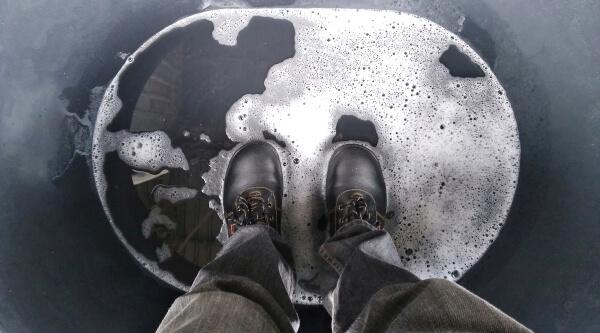
Here’s a step-by-step process for setting up your footbath station properly:
A. Choose the Location
Set up each footbath station on a flat surface. The location should be:
I. At the entrance to every production area
ii. Sheltered from rain if possible (rain dilutes disinfectant)
iii. Well-lit so people can see what they’re doing
iv. Accessible but not in the way of normal traffic flow
B. Fill the Containers
Fill the first plastic container with clean water for washing off soil and plant material. This is your pre-cleaning station.
Fill the second footbath with a registered decontaminant. Follow the label instructions for proper dilution. Too weak won’t kill germs, too strong wastes product, and can damage footwear.
C. Add Drying Material
Lay down drying material after each of the clean water and decontamination footbaths. This prevents people from tracking wet, soapy feet or disinfectant residue into the poultry house.
The drying material should be:
I. Clean and replace regularly
ii. Porous enough to absorb moisture
iii. Non-slip to prevent falls
iv. Easy to wash or dispose of when dirty
Daily Maintenance and Disposal
Footbaths need daily attention. Here’s what farm attendants should do every morning:
1. Morning Routine
I. Empty all containers completely
ii. Rinse out any residue or debris
iii. Refill with fresh water
iv. Add fresh disinfectant to the second container
v. Replace drying mats if they’re dirty or worn
vi. Check that brushes and scraping tools are clean and in good condition
2. Throughout the Day
Monitor the footbaths during normal farm operations. If the water gets very dirty or the disinfectant gets contaminated with mud, change it immediately. Don’t wait until the next day.
3. Disposal
After the footbaths have been used, dispose of the water and decontaminant away from production areas and water sources. Never dump dirty footbath water near your poultry houses, feed storage, or wells.
Take note of the label instructions for disposal of the decontaminant. Some chemicals have specific disposal requirements to protect the environment.
Common Mistakes to Avoid
Even well-meaning farms make mistakes with footbath systems. Here are the most common ones:
1. Using Dirty Disinfectant
The biggest mistake is not changing the disinfectant daily. Once organic matter builds up in the solution, it stops working. You might as well be using plain water.
2. Skipping the Pre-Cleaning Step
Some people try to save time by going straight to the disinfectant. This doesn’t work. The dirt on the boots will contaminate the disinfectant immediately.
3. Using Too-Shallow Containers
If the container is too shallow, only the bottom of the boot gets treated. The sides and top of the sole are contaminated.
4. Wrong Disinfectant Concentration
Using too little disinfectant wastes everyone’s time because it won’t kill germs. Using too much waste money and can damage boots.
5. Forgetting Low-Traffic Entrances
Some farms set up footbaths at the main entrance but forget about side doors or service entrances. Contamination can enter through any opening.
Training Workers and Visitors
The best footbath system in the world won’t work if people don’t use it correctly. Training is essential.
1. Worker Training
Farm workers should understand:
I. Why biosecurity matters (not just following rules blindly)
ii. How do diseases spread through contaminated footwear
iii. The financial impact of disease outbreaks
iv. The three-step cleaning process
v. How to check if the footbath is working (clean solution, proper depth)
vi. Their responsibility is to change solutions daily
2. Visitor Instructions
Post clear signs at entrances. The signs should explain:
I. That footbath use is mandatory
ii. The step-by-step process
iii. Where to find brushes and tools
iv. Who to contact if supplies are missing
Make the instructions visual if possible. Pictures or diagrams help people who aren’t familiar with farm biosecurity.
Cost and Return on Investment
Footbaths are one of the cheapest biosecurity investments you can make. Let’s look at the numbers:
1. Setup Costs
I. Two heavy-duty plastic containers: $20-40
ii. Brushes and scraping tools: $10-20
iii. Initial disinfectant purchase: $30-50
iv. Drying mats or materials: $15-30
v. Signs and instructions: $10-15
Total one-time setup: roughly $85-155
2. Ongoing Costs
I. Disinfectant refills: $20-40 per month
ii. Replacement mats: $15-30 every few months
iii. Water: minimal
iv. Labor for daily maintenance: 5-10 minutes
Total monthly cost: roughly $25-50
3. What You’re Preventing
A single disease outbreak can cost thousands of dollars in lost birds, veterinary bills, medications, and lost production time. If a footbath prevents even one outbreak, it pays for itself many times over.
Summary on Poultry Pen Routine Maintenance and Foot Baths
| Topic | Key Points |
|---|---|
| Purpose of Foot Bath | Prevents disease spread from outside to poultry pen and between pen houses by removing and killing organisms on footwear |
| How Often to Change | Daily, as first routine activity; more often if heavily contaminated during the day |
| Main Biosecurity Threat | Soil-borne pests, diseases, and weed seeds carried in dirt and mud on boots |
| Three-Step Process | Check boots and ask about previous locations; Clean with brush and wash with water; Disinfect using proper solution |
| Setup Requirements | Two containers, brushes, scraping tools, water, registered disinfectant, drying material, flat surface |
| Who Must Use It | High-risk visitors (farm workers, vets, delivery drivers, consultants); anyone entering production areas |
| Who Can Skip It | Low-risk visitors staying in non-production zones like the house |
| Cleaning Step | Remove all visible debris with strong bristled brush before using the footbath |
| Washing Step | Use container with soapy water; scrub boot soles; ensure liquid saturates all footwear parts |
| Disinfection Step | Use 1% sodium hypochlorite bleach or farm disinfectant; refresh regularly; final water rinse for leather/fabric |
| Alternative Method | Provide dedicated farm boots or disposable shoe covers for production area use only |
| Container Requirements | Large enough for big boots; deep enough to cover entire sole and boot sides |
| Maintenance | Empty daily, refill with fresh water and disinfectant, dispose of away from production areas |
| Common Mistakes | Not changing daily, skipping pre-cleaning, using shallow containers, wrong disinfectant concentration |
| Cost | Setup: $85-155 one-time; Ongoing: $25-50 per month |
| ROI | Prevents disease outbreaks costing thousands; pays for itself with one prevented outbreak |
Frequently Asked Questions About Poultry Farm Foot Baths
1. Why is a foot bath necessary at the entrance of a poultry pen?
A foot bath prevents the spread of diseases, pests, and parasites from entering your poultry house. Organisms can survive for days or weeks in the dirt on shoes, and a properly maintained foot bath eliminates these threats before they reach your birds.
2. How often should I change the water and disinfectant in the foot bath?
You should change it daily as the first task each morning. If the footbath gets heavily used or becomes visibly dirty during the day, change it immediately. Dirty water with organic matter makes the disinfectant ineffective.
3. What disinfectant should I use in my poultry farm’s foot bath?
You can use bleach diluted to 1% active sodium hypochlorite (mix three parts water to one part 4% bleach). Other registered farm disinfectants work too. Just follow the product label instructions for proper dilution and contact time.
4. Do all visitors need to use the foot bath?
No. High-risk visitors who have been on other farms or work in agricultural settings must use it. Low-risk visitors who are just stopping by the house and won’t enter production areas don’t need to use the footbath.
5. Can I skip the cleaning step and just use the disinfectant?
No. You must remove visible dirt and debris before disinfection. Organic matter like mud and manure, contaminates the disinfectant and prevents it from killing germs. Always clean first, then disinfect.
6. What size container do I need for the foot bath?
Use heavy-duty plastic containers large enough to fit big work boots completely. The container must be deep enough so the liquid covers the entire sole and comes up the sides of the boot.
7. Is it better to use a foot bath or provide dedicated farm boots?
Both methods work well. Dedicated boots or shoe covers are more convenient and reduce the risk of bringing in outside contamination. However, they still need regular washing. Footbaths are cheaper upfront but require daily maintenance.
8. What should I do with the dirty water from the foot bath?
Dispose of it away from production areas, poultry houses, feed storage, and water sources. Follow the disinfectant label instructions for proper disposal to protect the environment.
9. How much does it cost to set up and maintain a foot bath system?
Initial setup costs around $85-155 for containers, brushes, disinfectant, and mats. Monthly ongoing costs are roughly $25-50 for disinfectant refills and replacement materials. This is minimal compared to the cost of a disease outbreak.
10. What happens if I don’t maintain the foot bath properly?
The disinfectant loses effectiveness and fails to kill disease-causing organisms. This defeats the entire purpose of biosecurity. In some cases, a poorly maintained foot bath can give you false confidence while still allowing diseases to enter your farm.
Do you have any questions, suggestions, or contributions? If so, please feel free to use the comment box below to share your thoughts. We also encourage you to kindly share this information with others who might benefit from it. Since we can’t reach everyone at once, we truly appreciate your help in spreading the word. Thank you very much for your support and for sharing!
Related: How to Graft an Avocado Tree to Produce Avocado Fruit