



Failure to maintain a clean environment and food preparation area has significantly impacted the ecosystem, leading to increased cases of food poisoning. To mitigate this, meticulous attention must be given to ensuring the kitchen is well-organized, maintained, and cleaned.
According to Codex (2009), it is critical to reduce contamination risks through proper kitchen layout and equipment placement. Kitchen hygiene must also be prioritized during the planning and construction of a kitchen.
Definition of Kitchen Hygiene
Kitchen hygiene, as defined by Gifter (2020), involves maintaining a high level of cleanliness and sanitation in the kitchen to prevent or reduce the spread of hazardous bacteria that can contaminate food.
Anyanwu (2022, in press) describes kitchen hygiene as a procedure ensuring that the food preparation and production area is clean, well-ventilated, and that food handlers uphold personal hygiene to prevent food contamination.
These definitions highlight that kitchen hygiene is a process of keeping the kitchen clean and organized, ensuring food safety for human consumption.
Read Also: Important Diseases of Crop Plants
Strategies for Achieving Kitchen Hygiene

To achieve kitchen hygiene, food handlers must prioritize personal cleanliness, ensure food safety, and store food appropriately. Gifter (2020) outlines the following essential practices for maintaining kitchen hygiene:
1. Maintaining Personal Hygiene Standards
Food handlers must practice and maintain appropriate personal hygiene, including regularly washing hands with soapy water and wearing clean personal protective apparel (Gifter, 2020). Richard (2007) supports this, stating that food workers’ personal hygiene, particularly hand cleanliness, is crucial in preventing food poisoning.
Kafferstien and Abdussalam (1999) emphasize that kitchen workers should keep uniforms clean at all times and have access to a changing facility with spacious lockers. Storing food in lockers is unsanitary.
Food handlers, along with anyone accessing the kitchen such as management, delivery personnel, or visitors are potential sources of contamination.
Food handlers, in constant contact with food, must regularly clean hands, noses, and lips, wash and iron clothes, and trim nails to prevent adverse health effects like food poisoning.
Read Also: Fertilizer Application, Pests and Diseases Control in Cocoa
3. Ensuring Food Safety and Availability
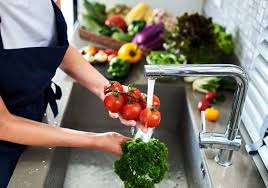
Food in the kitchen must be safe and sourced from reputable suppliers. Gifter (2020) stresses the importance of inspecting food for quality and safety. Adebayo and Anyanwu (2010) note that food in the food service industry must be pest-free and safe for consumption.
4. Proper Food Storage Practices
Food must be stored in a ventilated, pest-proofed environment, away from the ground, ceilings, chemicals, and physical items (Gifter, 2020). David and Patricia (2011) emphasize that storage areas require high hygiene levels, with crack-free, painted, or tiled walls and ceilings to facilitate cleaning.
5. Controlling Air Pollution in the Kitchen
Proper kitchen hygiene requires removing smoke to eliminate odors. Mohiti (2011) supports this, stating that adequate ventilation achieves this goal. Kitchens should have sufficient lighting to illuminate the entire space, even noticing small objects like a fallen pin.
Installing kitchen extractors and exhaust fans is essential to remove bad air and odors, replacing them with fresh air. Additionally, insect control and a well-designed drainage system are critical. All potential rodent entry points must be sealed, and the drainage system should be easy to clean (Anon, 2011).
Effective Inventory Management
Gifter (2020) advocates for the FIFO (First In, First Out) approach, ensuring that food entering the kitchen first is used first, promoting efficient food use. Adebayo et al. (2010) suggest bringing older items forward with each new delivery.
Hygienic Food Preparation Practices
Using durable, easy-to-clean materials in food preparation areas is recommended (Kaferstein et al., 1999). Materials prone to pathogenic microorganisms or contamination by foreign elements should be avoided. Gifter (2020) advises that food handlers maintain a clean preparation area and personal hygiene to prevent contamination.
Surfaces should be designed to avoid dirt accumulation and facilitate cleaning, reducing contamination and infestation risks (Ali, Mustafa, and Funda, n.d.). Food must be cooked at the correct temperature, and surfaces and equipment should be cleaned and disinfected regularly (Gifter, 2020).
Do you have any questions, suggestions, or contributions? If so, please feel free to use the comment box below to share your thoughts. We also encourage you to kindly share this information with others who might benefit from it. Since we can’t reach everyone at once, we truly appreciate your help in spreading the word. Thank you so much for your support and for sharing!