


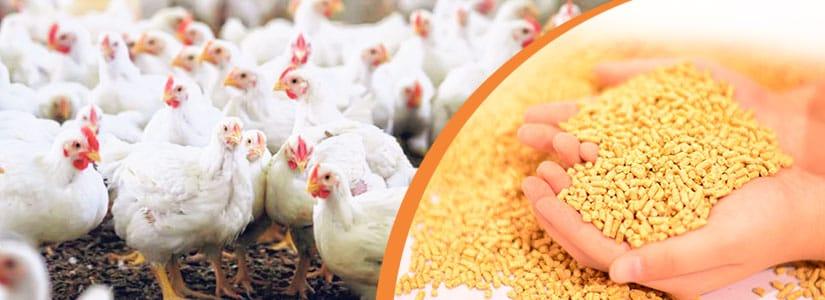
Multivitamins do a lot for birds on the farm. They help poultry regain strength after stressful events. Vaccination, debeaking, transportation and the daily demands of laying eggs all take a toll. These supplements encourage better feed intake and lift overall productivity whether you raise layers or broilers.
Birds live under constant pressure in most operations. That is why multivitamins should form part of a steady routine rather than an occasional fix. I recommend three days a week for commercial layers when I advise farmers. The pattern keeps birds steady without waste.
Do not overuse them. Stick to sensible amounts and switch brands from time to time. Different products work better in different conditions and you may discover one that fits your flock perfectly.
Farmers sometimes ask about leftovers. If you bought drugs or vitamins last year and stored them properly they can still be used on new birds provided they have not expired and your consultant approves. Always double-check dates and storage.
Read Also: Coccidiosis in Poultry: Signs, Drugs and Treatment
Importance of Multivitamins in Poultry Production
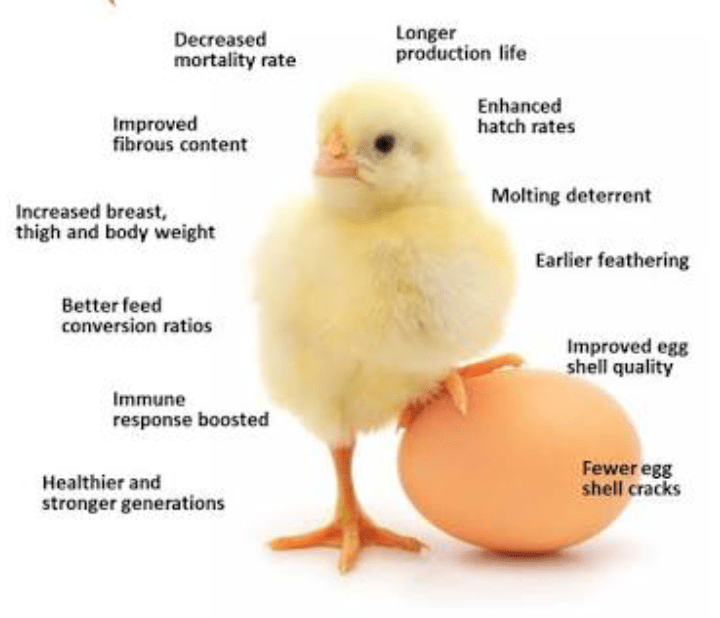
Multivitamins fill gaps that plain feed sometimes leaves. A shortage of even one vitamin can trigger health problems or lower output. Vitamins split into fat-soluble and water-soluble groups. Fat-soluble ones stay in the body longer. Water-soluble ones flush out quickly and need regular top-ups.
Birds make their own vitamin C so they do not need it daily from feed. Still extra vitamin C during tough periods can ease stress and support recovery.
A. Fat-Soluble Vitamins: These build up in body tissues so careful dosing matters.

i. Vitamin A: It supports normal growth, reproduction and healthy linings in the skin digestive tract reproductive system and airways. Deficiency leads to nutritional roup with inflamed eyes oculo-nasal discharge and stuck eyelids. In worse cases the gut and lung linings suffer damage. Fish liver oil and fresh greens supply plenty. In practice many farmers notice stronger immunity and fewer respiratory issues when levels stay right especially in crowded houses.
ii. Vitamin D3: This vitamin helps absorb calcium and phosphorus for bone growth and solid eggshells. Birds produce some through sunlight on their skin but indoor flocks often fall short. Lack causes rickets thin-shelled eggs poor hatchability leg weakness and a penguin-like sitting posture. Beaks claws and ribs turn soft and the sternum or spine may bend. Fish liver oils are rich sources. Supplementing properly improves shell quality and leg strength on most farms.
Read Also: Worm infestation in Poultry: Signs and Treatment
iii. Vitamin E: It acts as an antioxidant and protects nerves and muscles. Deficiency can bring encephalomalacia in chicks or muscle wasting in older birds. It helps birds handle heat and high production stress better.
iv. Vitamin K: The body needs it to make prothrombin for proper blood clotting and it gives some protection against coccidiosis. Shortage increases blood spots in eggs and causes bleeding in legs or breast. Greens wheat germ oil and alfalfa supply it naturally.
B. Water-Soluble Vitamins: The body does not store these long so regular supply is essential.
i. Thiamine (Vitamin B1): It helps turn carbohydrates into energy. Birds without enough lose appetite drop weight ruffle feathers and show muscle paralysis. They often sit with heads pulled back in a star-gazing pose. Rice polish wheat bran and cereal grains provide good amounts.
ii. Riboflavin (Vitamin B2): This vitamin drives enzyme systems for metabolism. Young birds develop curled-toe paralysis and walk on their hocks. Layers lay fewer eggs and see higher embryo death between days 18 and 20 of incubation. Grass and brewer’s yeast are strong sources.
iii. Pyridoxine (Vitamin B6): It handles amino-acid metabolism. Shortage causes jerky movements and convulsions. Cereal grains yeast and alfalfa meal help cover needs.
iv. Cyanocobalamin (Vitamin B12): It supports nucleic-acid synthesis and fat-carbohydrate metabolism. Found in animal-origin feeds. Lack slows growth cuts feed efficiency and lowers hatchability with peak embryo death around day 17. Fish meal and milk products supply it.
v. Choline: Deficiency leads to perosis with swollen hocks slipped tendons and fatty liver. Yeast fish meal and oil cake plus synthetic choline correct it.
Read Also: Difference between Poultry Vaccines and Poultry Drugs
2. Best Practices for Giving Multivitamins to Poultry
Mix vitamins in clean drinking water so every bird gets an even share. Follow the label exactly and prepare fresh each day. Use them three to five days a week during normal times and add extra short courses after vaccination transport or heat waves.
Store packs in a cool dry spot away from direct sun. Watch the flock daily. Dull feathers poor appetite or soft eggs signal it is time for support. Test two or three trusted brands over a season to learn what suits your birds and water quality best.
3. Handling Old Supplements and Common Concerns
The question about last year’s stock comes up often. If the package shows no expiry damage and was kept cool and dry it can work for the new flock once your advisor confirms. When unsure buy fresh.
Overuse brings imbalance or loose droppings so keep courses short. Pairing the right vitamin mix with your base feed avoids most problems.
Summary on Multivitamins in Poultry Production: Supporting Bird Health and Farm Success
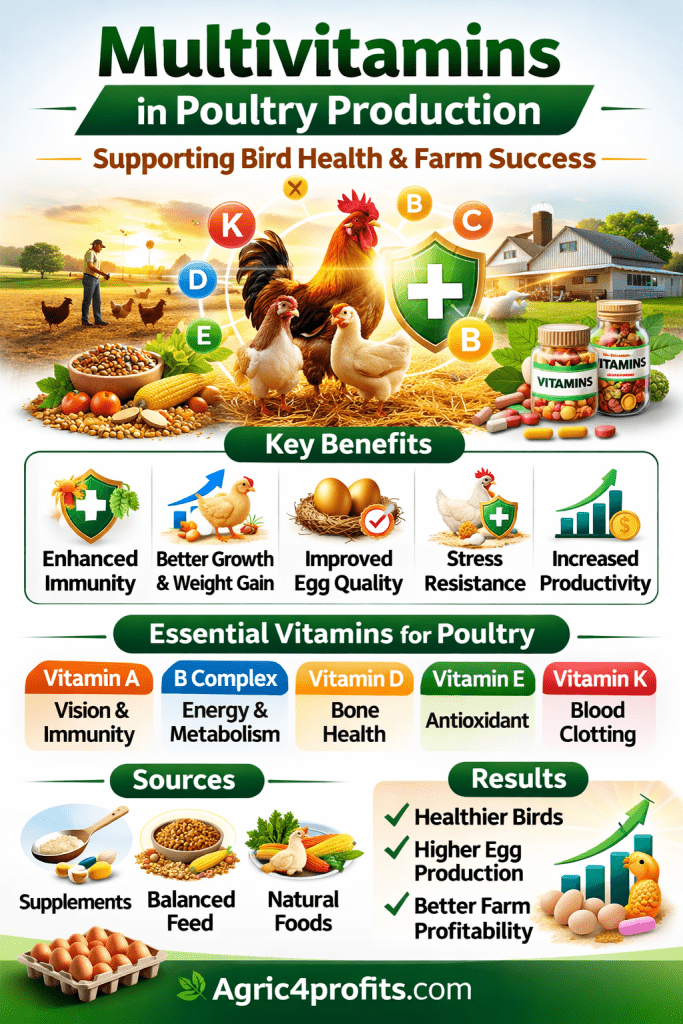
| Aspect | Key Details |
|---|---|
| Main purpose | Help birds recover from stress improve feed intake and raise productivity |
| Recommended use | Regular but controlled often 3 days per week for layers |
| Fat-soluble vitamins | A (growth immunity) D3 (bones eggshells) E (antioxidant nerves) K (clotting) |
| Water-soluble vitamins | B-group for energy metabolism and growth |
| Common deficiencies | Eye issues rickets curled toes poor shells low hatchability |
| Practical sources | Greens fish oils grains yeast premixes |
| Storage tip | Cool dry place check expiry before reuse |
| Best time | After vaccination transport or heat stress |
Frequently Asked Questions About Multivitamins in Poultry Production: Supporting Bird Health and Farm Success
1. Why do poultry need multivitamins even with good feed?
Multivitamins fill small gaps that appear under stress or in high-production systems and keep birds eating and growing steadily.
2. How often should I give multivitamins to layers or broilers?
Three to five days a week works for most farms especially after any stressful event.
3. Can I give multivitamins every single day?
Daily use is rarely needed and can waste money or upset balance. Stick to label advice or consultant guidance.
4. What signs show my birds lack certain vitamins?
Watch for low appetite weak legs thin eggshells curled toes or slow growth.
5. Are all poultry multivitamin products the same?
No. Strength and added minerals differ so testing a couple helps you pick the right one.
6. Do multivitamins replace a balanced ration?
No. They support good feed but cannot fix poor quality base diet.
7. How do I mix and give the vitamins?
Dissolve in drinking water for even intake. Make fresh batches daily.
8. Is extra vitamin C ever useful for birds?
Yes. Birds make their own but added amounts during heat or transport ease stress.
9. What happens without enough vitamin D3?
Birds develop soft bones thin shells and leg weakness especially in houses without sunlight.
10. Should I ask for advice before starting supplements?
Yes. A vet or experienced consultant can match the product and schedule to your exact flock and conditions.
Do you have any questions, suggestions, or contributions? If so, please feel free to use the comment box below to share your thoughts. We also encourage you to kindly share this information with others who might benefit from it. Since we can’t reach everyone at once, we truly appreciate your help in spreading the word. Thank you very much for your support and for sharing!
Read Also: Sheep 101: Wool Production Complete Guide