



The selection of raw materials is a vital consideration to the quality of processed products. The quality of raw materials can rarely be improved during processing, and while sorting and grading operations can aid by removing oversize, undersize, or poor-quality units, it is vital to procure materials whose properties most closely match the requirements of the process.
1. Role of Raw Material Selection
Proper raw material selection is vital before processing because it will go a long way to determining the quality of the finished product. The food processor must therefore ensure that farmers supply raw materials of high quality.
2. Significance of Proper Raw Material Selection
The quality of end products is influenced primarily by the raw materials used. For this reason, close cooperation between agriculture and processing plants is needed. In all cases, the raw material must fulfill all hygienic requirements.
Great attention is paid to the presence of different kinds of contamination, such as heavy and toxic metals, toxic metabolites of microorganisms, residues of pesticides, the presence of GM material, and others.
In perishable raw materials, the microbiological quality of the raw material plays an important role and has to be controlled. The water content of many raw food materials has the biggest influence on its storability. The water content and weight during acceptance are closely followed.
Read Also: Factors to Consider when Choosing a Snail Farm Site
3. Additional Reasons for Proper Raw Material Selection
Farmers, in many cases, make agreements with the food industry, not only on the quantity of raw materials produced, but above all on their quality. The quality of raw material is evaluated, and farmers are paid according to that quality (for example, for wheat, milk, eggs, and so on).
For quality control of individual raw materials, different quality parameters are chosen, according to the quality requirements of products for which the raw material will be used.
For example, wheat quality, after water content, will be tested on the amount and bakery quality of gluten. For quality evaluation of fruits, in addition to their appearance, the content of ascorbic acid, sugar, and acidity is controlled. In meat, especially the fat content is followed.
Key Properties of Raw Materials for Processing
The main raw material properties of importance to the processor are:
1. Geometric Properties
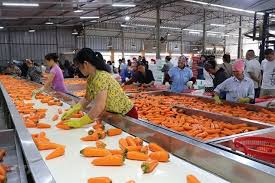
Food units of regular geometry are much easier to handle and are better suited to high-speed mechanised operations. In addition, the more uniform the geometry of raw materials, the less rejection and waste will be produced during preparation operations such as peeling, trimming, and slicing.
For example, potatoes of smooth shape with few and shallow eyes are much easier to peel and wash mechanically than irregular units. Smooth-skinned fruits and vegetables are much easier to clean and are less likely to harbour insects or fungi than ribbed or irregular units.
2. Colour Properties
Colour and colour uniformity are vital components of visual quality of fresh foods and play a major role in consumer choice. However, it may be less important in raw materials for processing.
For low-temperature processes such as chilling, freezing, or freeze-drying, the colour changes little during processing, and thus the colour of the raw material is a good guide to suitability for processing.
For more severe processing, the colour may change markedly during the process. Green vegetables, such as peas, spinach, or green beans, on heating change colour from bright green to a dull olive green. This is due to the conversion of chlorophyll to pheophytin.
It is possible to protect against this by the addition of sodium bicarbonate to the cooking water, which raises the pH. However, this may cause softening of texture, and the use of added colourants may be a more practical solution.
3. Texture Properties
The texture of raw materials is frequently changed during processing. Textural changes are caused by a wide variety of effects, including water loss, protein denaturation which may result in loss of water-holding capacity or coagulation, hydrolysis, and solubilisation of proteins.
Texture is dependent on the variety as well as the maturity of the raw material and may be assessed by sensory panels or commercial instruments. One widely recognised instrument is the tenderometer used to assess the firmness of peas. The crop would be tested daily and harvested at the optimum tenderometer reading.
4. Flavour Properties
Flavour is a rather subjective property which is difficult to quantify. Flavours are altered during processing, and following severe processing, the main flavours may be derived from additives. Hence, the lack of strong flavours may be the most important requirement.
In fact, raw material flavour is often not a major determinant as long as the material imparts only those flavours which are characteristic of the food. Flavour is normally assessed by human tasters, although sometimes flavour can be linked to some analytical test, such as sugar/acid levels in fruits.
5. Functional Properties
The functionality of a raw material is the combination of properties which determine product quality and process effectiveness. These properties differ greatly for different raw materials and processes and may be measured by chemical analysis or process testing.
For example, a number of possible parameters may be monitored in wheat. Wheat for different purposes may be selected according to protein content. Hard wheat with 11.5–14.0% protein is desirable for white bread, and some whole wheat breads require even higher protein levels, 14–16%. Chemical analysis of fat and protein in milk may be carried out to determine its suitability for manufacturing cheese, yoghurt, or cream.