


Incubation is the management of fertilized eggs to ensure the normal development of the embryo into a healthy chick. It is a process that every poultry farmer who wants to hatch chicks must understand well, whether they are doing it the natural way or using machines.
There are two ways incubation happens. The first is natural incubation, where the hen sits on the eggs for a period of time, keeping them warm until they hatch. The second is artificial incubation, where machines called incubators provide the necessary heat and conditions to hatch the eggs without the hen.
Both methods work, but each has its place depending on the scale of your operation and your goals as a farmer. Small backyard setups can rely on broody hens, but commercial poultry farms that need to hatch large numbers of chicks consistently will almost always use incubators.
For incubation to succeed, whether natural or artificial, certain conditions must be met. Temperature is critical. Humidity must be right. The eggs must be turned regularly. Candling is also part of the process, allowing you to check the development of the embryo inside the egg without breaking the shell.
Understanding how the hen’s reproductive system works, how an egg is structured, what affects egg size, how to separate male and female chicks early, and what affects hatchability are all things that matter deeply to anyone serious about poultry farming. This article covers all of that clearly and straightforwardly.
Getting incubation right from the beginning saves you losses and improves the quality of chicks you produce. A good flock should have a hatchability rate of between 80% and 90%. Anything below that is a sign that something is off, and knowing the basics covered in this article will help you figure out what that is.
1. Reproductive System of the Hen

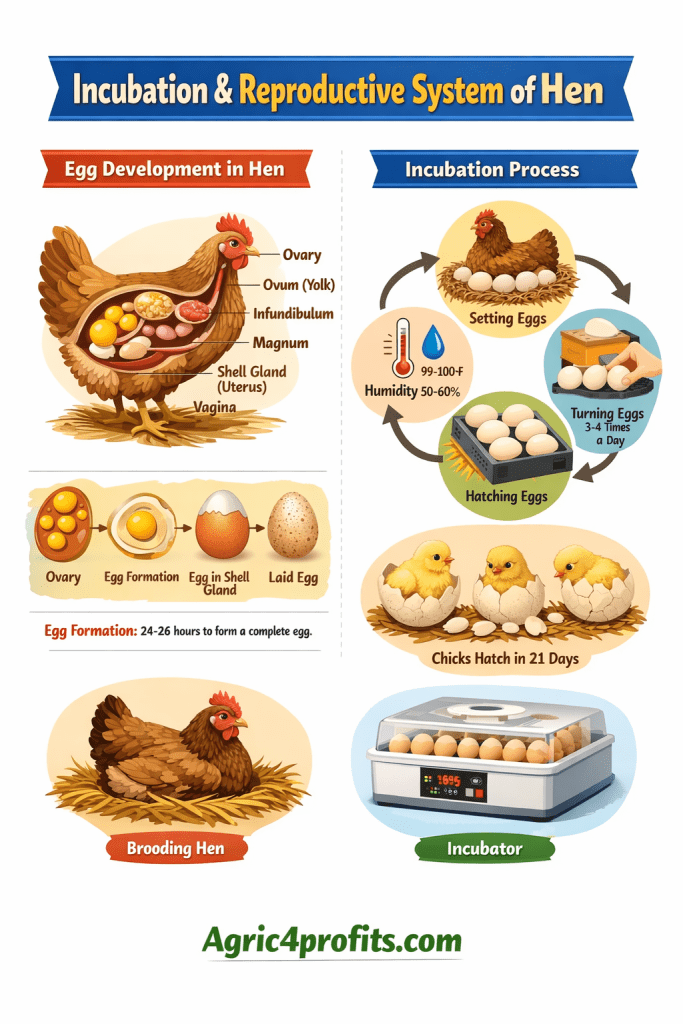
The left ovary of the hen produces numerous ova. When a mature ovum is ready, it is released into the infundibulum, which is where fertilization takes place if a rooster has mated with the hen.
After fertilization, the ovum moves down to the magnum, where albumen is added to it. It then travels to the isthmus, where shell membranes, some albumen, water, and mineral salts are added. The shell itself is formed in the uterus and this process takes between 18 and 21 hours. From ovulation to the point of laying, the entire process takes 24 to 26 hours.
A. The Avian Egg
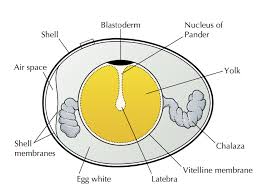
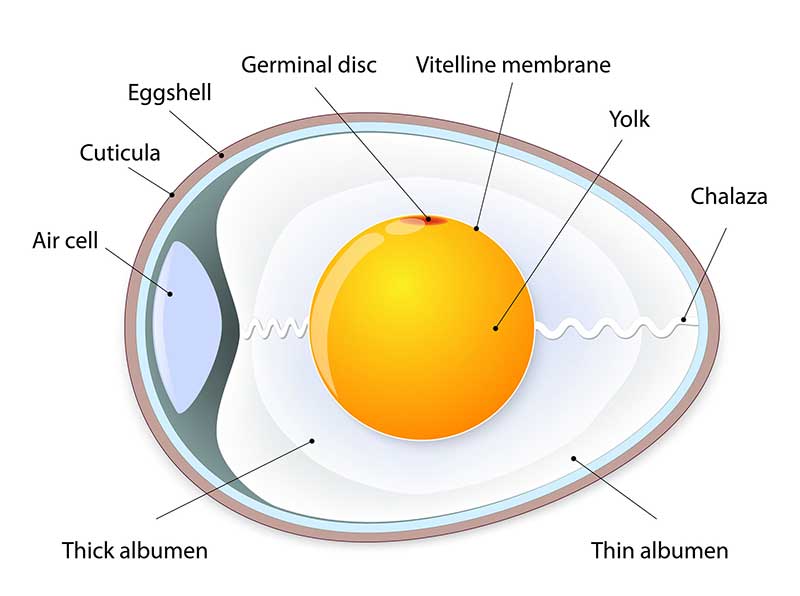
The avian egg is described as irregular ovoid in shape. It is divided into three main parts, which are the shell and shell membranes, the albumen and chalazae, and the yolk. Each part plays a specific role in protecting and nourishing the developing embryo.
B. Composition of the Egg
The table below shows the nutrient composition of the three main parts of an egg:
| Nutrients | Yolk | Albumen | Shell |
|---|---|---|---|
| Water | 48 | 86 | 2 |
| Protein | 17 | 12 | 5 |
| Fat | 33 | 12 | – |
| Ash | 1 | 1 | 93 |
| Carbohydrate | 1 | 1 | – |
Read Also: Causes of Egg Production Reduction in Poultry Farms and Ways to Prevent Them
2. Factors Affecting Egg Size
Egg size is not fixed. Several factors influence how large or small an egg turns out to be. Understanding these factors helps farmers manage their flocks better and produce more consistently sized eggs for the market.
The key factors that affect egg size are:
i. Genetic factors
ii. Age of the birds
iii. The protein level of the diet
iv. Environmental factors
v. Size of the birds
vi. Ovum size
vii. The intensity of egg-laying
3. Sex Separation
Early separation of male and female chicks is an important economic decision on any poultry farm. Knowing which chicks are cockerels and which are pullets helps you allocate feed, space, and management resources correctly right from the start.
There are several ways to sex chicks:
A. Manual Vent Inspection at Day Old
At the center of the vent of a male chick is a small, pinhead-sized structure called the process. This can be seen clearly with the aid of a magnifying lens. A female vent shows no such structure. This method is done on the day the chick hatches and requires some skill and training to do accurately.
B. Sexing at Five to Eight Weeks Old
Separation can also be done when the chicks are between five and eight weeks old. At this stage, cockerels are easier to identify because they develop larger combs and wattles, longer tail feathers, stouter shanks with prominent scales, and a generally larger body size compared to pullets of the same age.
C. Sex-Linked Color Differentiation
Some breeds make sexing even easier through color. For example, in the golden comet breed, female chicks at day old have a dark gold color while male chicks appear white. This color difference allows farmers to separate the sexes quickly without needing to inspect the vent.
4. Artificial Incubation Requirements
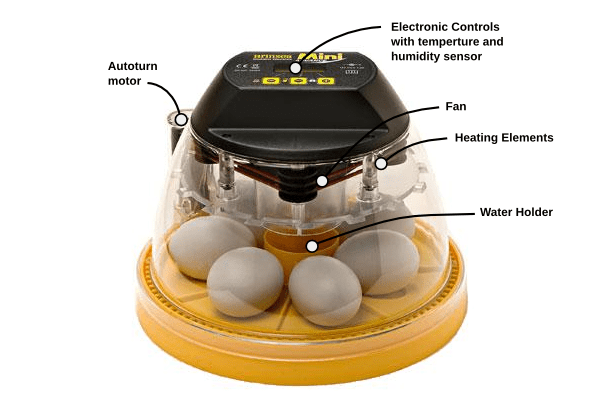
For artificial incubation to be successful, four essential conditions must be maintained throughout the process:
i. Adequate ventilation inside the incubator
ii. Relative humidity of between 60% and 65%
iii. A steady temperature of 37.5°C
iv. Turning of the eggs at least three times daily
The incubator operation is divided into two phases. The first is the setting phase, where eggs are placed into the incubator and maintained under the right conditions. The second is the hatching phase, where the eggs complete their development and chicks begin to emerge.
5. Hatchability
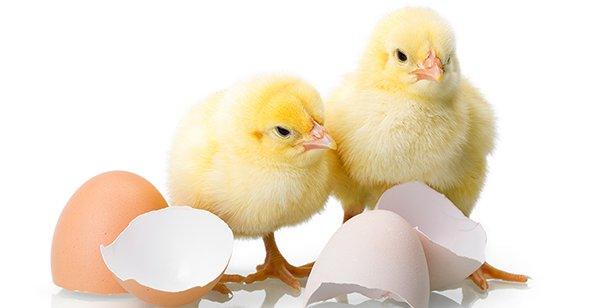
Hatchability refers to the percentage of set eggs that actually hatch. From a good, well-managed flock, hatchability should fall between 80% and 90%. A rate below this is a sign that something needs to be corrected in either the management, nutrition, health, or egg selection process.
Both hatchability and fertility are affected by genetic factors. But in practice, management tends to have a greater influence on the outcome than genetics alone.
The main factors that affect hatchability are:
i. Fertility of the eggs
ii. Genetics
iii. Nutrition of the parent flock
iv. Disease status of the flock
v. Egg selection practices
vi. Management practices during incubation
Read Also: The Recommended Systems of Livestock Management
Summary on Incubation and the Avian Egg
| Topic | Key Points |
|---|---|
| What is Incubation | The management of fertilized eggs to ensure normal embryo development into a healthy chick. |
| Types of Incubation | Natural (hen sits on eggs) or artificial (using incubators). |
| Reproductive System | Fertilization happens in the infundibulum. The shell forms in the uterus over 18 to 21 hours. Laying takes 24 to 26 hours from ovulation. |
| The Avian Egg | Irregular ovoid shape, divided into shell and shell membranes, albumen and chalazae, and yolk. |
| Egg Composition | Yolk is high in fat (33%) and protein (17%). Albumen is mostly water (86%). Shell is mostly ash (93%). |
| Factors Affecting Egg Size | Genetics, bird age, diet protein level, environment, bird size, ovum size, and intensity of laying. |
| Sex Separation Methods | Vent inspection at day old, physical features at 5 to 8 weeks, and sex-linked color differences in certain breeds. |
| Artificial Incubation Requirements | Ventilation, humidity of 60 to 65%, temperature of 37.5°C, and egg turning at least 3 times daily. |
| Incubator Phases | Setting phase and hatching phase. |
| Hatchability | Should be 80 to 90% from a good flock. Affected by fertility, genetics, nutrition, disease, egg selection, and management. |
Frequently Asked Questions About Incubation and the Avian Egg
1. What is incubation in poultry farming?
Incubation is the process of managing fertilized eggs under the right conditions of temperature, humidity, ventilation, and turning so that the embryo develops normally and hatches into a healthy chick. It can be done naturally by a broody hen or artificially using an incubator.
2. What temperature is needed for artificial incubation?
The recommended temperature for artificial incubation is 37.5°C. Maintaining a steady temperature throughout the incubation period is critical. Fluctuations in temperature can slow development, reduce hatchability, or kill the embryo entirely.
3. What humidity level is required during incubation?
The relative humidity inside the incubator should be kept between 60% and 65%. Humidity that is too low causes excessive moisture loss from the egg, while humidity that is too high can drown the developing chick before it hatches.
4. How often should eggs be turned during incubation?
Eggs should be turned at least three times daily during the incubation period. Turning prevents the embryo from sticking to the shell membranes and ensures even development. Most modern incubators have automatic turning mechanisms built in.
5. What is hatchability and what is a good hatchability rate?
Hatchability is the percentage of set eggs that hatch successfully. A good, well-managed flock should produce a hatchability rate of between 80% and 90%. Rates below this indicate problems with fertility, nutrition, disease, egg handling, or incubation management.
6. What factors affect egg size in poultry?
Egg size is influenced by the genetics of the bird, the age of the bird, the protein content of the diet, environmental conditions, the size of the bird, the size of the ovum, and the intensity of egg-laying. Older hens generally lay larger eggs, and birds on higher-protein diets tend to produce bigger eggs.
7. How can you tell a male chick from a female chick at day old?
One method is vent inspection. A male chick has a small pin-edge structure called the process at the center of its vent. A female vent has no such structure. Some breeds also show sex-linked color differences at hatch, making the process easier without vent inspection.
8. What are the three main parts of an avian egg?
The three main parts of an avian egg are the shell and shell membranes, the albumen and chalazae, and the yolk. Each part serves a protective or nutritional function for the developing embryo.
9. How long does it take for a hen to form and lay an egg?
From ovulation to laying, the process takes 24 to 26 hours. The shell alone takes 18 to 21 hours to form in the uterus. This is why a hen typically lays one egg per day under good conditions.
10. What is candling and why is it done during incubation?
Candling is the process of shining a light through the eggshell to check the development of the embryo inside without breaking the egg. It helps farmers identify infertile eggs, dead embryos, or developmental problems early so those eggs can be removed from the incubator before they affect the others.
Do you have any questions, suggestions, or contributions? If so, please feel free to use the comment box below to share your thoughts. We also encourage you to kindly share this information with others who might benefit from it. Since we can’t reach everyone at once, we truly appreciate your help in spreading the word. Thank you very much for your support and for sharing!
Read Also: Feed and Nutrition Management for Cattle