


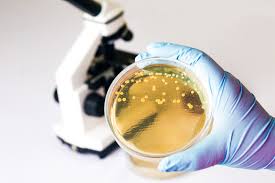
All pathogenic microorganisms implicated in foodborne diseases are considered enteric pathogens, except Staphylococcus aureus, Bacillus cereus, Clostridium botulinum (except in the case of infant botulism), C. perfringens, and toxicogenic moulds. This means they can survive and multiply or establish in the gastrointestinal (GI) tract of humans, food animals, and birds.
A food contaminated directly or indirectly with fecal materials from these sources may theoretically contain one or more of these pathogens and can thus be potentially hazardous to consumers.
To implement regulatory requirements and ensure consumer safety, it is necessary to know that a food is either free of some enteric pathogens, such as Salmonella serovars and Escherichia coli O157:H7, or contains low levels of some other enteric pathogens, such as Yersinia enterocolitica and Vibrio parahaemolyticus.
The procedures used to isolate and confirm a pathogen from a food involve several steps, take a relatively long time, and are costly. Some of the new tests involving molecular biology techniques require high initial investment and highly skilled technicians.
In a modernized, large commercial operation, involving procurement of ingredients from many countries, processing of different products, warehousing, distribution over a large area, and retail marketing, it is not practical or economical to test the required number of product samples from each batch for all the pathogens or even those that are suspected of being present in a particular product.
Instead, food samples are examined for the number (or level) of groups or a species of bacteria that are of faecal (enteric) origin, usually present in higher density than pathogens, but usually considered to be non-pathogenic.
Their presence is viewed as resulting from direct or indirect contamination of a food with faecal materials and indicates the possible presence of enteric pathogens in the food. These bacterial groups or species are termed indicators of enteric pathogens. Although S. aureus, C. botulinum, C. perfringens, and B. cereus can be present in the faecal matters of humans and food animals, they, along with toxigenic moulds, are not considered classical enteric pathogens.
Their presence in a food is not normally considered to be because of faecal contamination, and the indicators of enteric pathogens are not very effective for the purpose. To determine the presence of these microorganisms and their toxins, specific methods recommended for their detection and identification should be used.
The aerobic plate count (APC) or standard plate count (SPC) is not an indicator of possible presence of pathogens. Instead it is an indicator of the microbiological quality of a food as well as a measure of the level of sanitation used in the handling (processing and storage) of a food.
Read Also: Goats Farming Complete Practical Guide
Criteria for Selecting Ideal Indicator Organisms
Several criteria were suggested for selecting a bacterial group or species as an indicator of enteric foodborne pathogens. Some are listed with brief explanations:
- The indicator should preferably contain a single species or a few species with some common and identifiable biochemical and other characteristics in order to be able to identify them from the many different types of microorganisms that might be present in a food.
- The indicator should be of enteric origin, that is, it should share the same habitat as the enteric pathogens and is present when and where the pathogens are likely to be present.
- The indicator should be nonpathogenic so that its handling in the laboratory does not require safety precautions as required for pathogens.
- The indicator should be present in the fecal matter in much higher numbers than the enteric pathogens so they can be easily detected (enumerated or isolated) even when a food is contaminated with small amounts of fecal matter.
- The indicator should be detected (enumerated or isolated) and identified within a short time, easily, and economically, so that a product, following processing, can be distributed quickly, and several samples from a batch can be tested.
- The indicator should be detected by using one or more newly developed molecular biology techniques for rapid identification.
- The indicator should be detected (enumerated or isolated) even in the presence of large numbers of associated microorganisms, which can be achieved by using compounds that inhibit growth of associated microorganisms but not of the indicator.
- The indicator should have a growth and survival rate in a food as that of the enteric pathogens. It should not grow slower or die off faster than the pathogens in a food. If it dies off more rapidly than the pathogen, then, theoretically, a food can be free of the indicator during storage but can still have pathogens.
- The indicator should not suffer sublethal injury more (in degree) than the pathogens do when exposed to physical and chemical stresses. If the indicator is more susceptible to sublethal stresses, it will not be detected by the selective methods used in the enumeration, and a food may show no or very low acceptable levels of the indicator even when the pathogens are present at higher levels.
- The indicator should preferably be present when the pathogens are present in a food; conversely, it should be absent when the enteric pathogens are absent. Unless such correlations exist, the importance of an indicator to indicate the possible presence of a pathogen in a food reduces greatly.
- There should preferably be a direct relationship between the level of an indicator present and the probability of the presence of an enteric pathogen in a food. This will help set up regulatory standards or specifications for an indicator limit for the acceptance or rejection of a food for consumption. For this criterion, it is very important to recognize whether the high numbers of an indicator in a food have resulted from a high level of initial contamination (and a greater chance for the presence of a pathogen) or from their growth in the food from a very low initial contamination (in which case a pathogen may not be present even when the indicator is present in high numbers).
It is apparent that no single bacterial group or species will be able to meet all the criteria of an ideal indicator. Several bacterial groups or species satisfy many of these criteria. The characteristics, advantages, and disadvantages of some of the important and accepted indicator bacterial groups and species (of enteric pathogens) are described here.
Read Also: Introduction to Ruminant Animals Production
Key Indicator Bacteria Groups and Species
1. Coliform Group in Food Safety
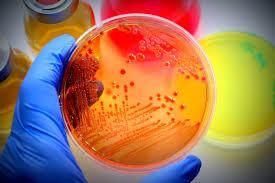
Coliforms In the coliform group, coliforms, faecal coliforms, and E. coli will be discussed. They are not separate, as both faecal coliforms (mostly E. coli) and E. coli belong to coliforms. Depending on the situation, food, water, and environmental samples are examined for one or more of the three.
Organisms and Sources The term coliform does not have taxonomic value; rather, it represents a group of species from several genera, namely, Escherichia, Enterobacter, Klebsiella, Citrobacter, and probably Aeromonas and Serratia.
The main reason for grouping them together is their many common characteristics. They are all Gram-negative, nonsporeforming rods; many are motile, are facultative anaerobes resistant to many surface-active agents, and ferment lactose to produce acid and gas within 48 hours at 32 or 35ºC.
Some species can grow at higher temperature (44.5ºC), whereas others can grow at 4 to 5ºC. All are able to grow in foods except in those that are at pH ≤ 4.0 (a few that are acid resistant can grow or survive) and Aw ≤ 0.92. All are sensitive to low-heat treatments and are killed by pasteurization.
They can be present in faeces of humans and warm-blooded animals and birds. Some can be present in the environment and contaminate food. Thus, some Klebsiella spp. and Enterobacter spp. are found in soil, where they can multiply and reach high population levels. Some are found in water and plants.
Occurrence and Significance in Food Coliforms are expected to be present in many raw foods and food ingredients of animal and plant origin. In some plant foods, they are present in very high numbers because of contamination from soil. Because they can grow in foods, some even at refrigerated temperature, a low initial number can reach a high level during storage.
The occurrence of some coliforms of nonfecal origin and their ability to grow in many foods reduce the specificity of coliforms as an indicator of fecal contamination in raw foods. In contrast, in heat-processed (pasteurized) products, their presence is considered postheat-treatment contamination from improper sanitation.
In heat-processed foods, their presence (even in small numbers) is viewed with caution. Thus, in heat-processed foods, their specificity as an indicator is considered favorably (more as an indicator of improper sanitation than fecal contamination). Several selective media have been recommended to determine coliform numbers in food samples.
These are selective-differential media and differ greatly in their recovery ability of coliforms. The results are based on the ability of most coliforms to ferment lactose and produce gas and are available in 1 to 2 days. The presence of sublethally stressed or injured cells can considerably reduce the recovery in selective media.
Several other factors, such as high temperature of melted agar media in pour plating, high acidity of a food, and presence of lysozymes (egg-based products) in a food, can further reduce the enumeration of stressed cells.
Modified detection methods have been developed to recover injured coliforms. Even with some disadvantages, coliforms are probably the most useful and most extensively used indicators.
2. Faecal Coliforms as Indicators
Organisms and Sources Fecal coliform bacteria also constitute a group of bacteria and include those coliforms whose specificity as fecal contaminants is much higher than that of coliforms. This group includes mostly E. coli, along with some Klebsiella and Enterobacter spp. Non-faecal coliforms are eliminated by using a high incubation temperature (44.5 ± 0.2 or 45.0 ± 0.2ºC) for 24 hours in selective broths containing lactose. Lactose fermentation, with the production of gas, is considered a presumptive positive test.
Occurrence and Significance in Food Some faecal coliforms are present in raw foods of animal origin. They can be present in plant foods from contaminated soil and water. High numbers can be due to either gross contamination or growth from a low initial level, probably because of improper storage temperature.
Their presence in heat-processed (pasteurized) foods is probably because of improper sanitation after heat treatment. In raw foods that are to be given heat treatment, their presence, even in high numbers (103/g or /ml) is not viewed gravely; if the numbers go higher, some importance is given to contamination of fecal matter, improper sanitation, and possible presence of enteric pathogens.
A need for corrective measures becomes important. In contrast, in heated products and ready-to-eat products (even raw), their presence, especially above a certain level, is viewed cautiously for possible faecal contamination and presence of enteric pathogens.
A food can be accepted or rejected based on the numbers present. This group is extensively used as an indicator in foods of marine origin (shellfish) and in water and wastewater.
3. Escherichia coli as a Key Indicator
Organisms and Sources In contrast to either coliforms or fecal coliforms, E. coli has a taxonomic basis. It includes only the Escherichia spp. of the coliform and faecal coliform groups. E. coli strains conform to the general characteristics described for coliform groups.
Biochemically, they are differentiated from other coliforms by the indole production from tryptone, methyl red reduction due to acid production (red coloration), Voges Proskauer reaction (production of acetyl-methyl carbinol from glucose) and citrate utilization as a C-source (IMViC) reaction patterns. E. coli Type I and Type II give IMViC reaction patterns, respectively, of + + – – and – + – –. The – + – – reaction pattern of E. coli Type II could also be due to slow or low production of indole from tryptone or peptone.
The IMViC tests are conducted with an isolate obtained after testing a food sample for coliform group or fecal coliform group. However, there is a concern now about the adequacy of these reaction patterns to identify E. coli types. Initially, E. coli types were used as indicators of faecal contamination and possible presence of enteric pathogens (in food), with the considerations that they are non-pathogenic and occur normally in the GI tract of humans, animals, and birds in high numbers.
However, it is now known that some variants and strains of E. coli are pathogenic (e.g. E. coli O157:H7). None of the methods mentioned previously are able to differentiate pathogenic from non-pathogenic E. coli strains but can be achieved only through specific tests designed to identify different pathogenic E. coli strains. Occurrence and Significance in Food E. coli is present in the lower intestinal tract of humans and warm-blooded animals and birds.
Its presence in raw foods is considered an indication of direct or indirect fecal contamination. Direct fecal contamination occurs during the processing of raw foods of animal origin and because of poor personal hygiene of food handlers. Indirect contamination can occur through sewage and polluted water. In heat-processed (pasteurized) foods, its presence is viewed with great concern.
Its value as an indicator of fecal contamination and the possible presence of enteric pathogens is much greater than that of coliform and fecal coliform groups. However, the time to complete the tests (IMViC) is relatively long (5 days). Some direct plating methods have been developed that give an indication of E. coli in a shorter time.
There are several other inadequacies of E. coli as an indicator. E. coli strains may die at a faster rate in dried, frozen, and low-pH products than some enteric pathogens, and some enteric pathogens can grow at low temperatures (0 to 2ºC), at which E. coli strains can die.
E. coli strains can be injured by sublethal stresses in higher degrees than some enteric pathogens, and may not be effectively detected by the recommended selective media unless a prior resuscitation (repair) step is included.
4. Enterobacteriaceae Group in Sanitation Monitoring
The methods recommended for detecting coliforms and faecal coliforms and E. coli are based on the ability of these bacterial species to ferment lactose to produce gas and acid. In contrast, some enteric pathogens do not ferment lactose, such as most Salmonella serovars.
Thus, instead of only enumerating coliforms or faecal coliforms in a food, enumeration of all the genera and species in the Enterobacteriaceae family is advocated because this family includes not only coliforms but also many genera and species that are enteric pathogens, enumeration of the whole group can be a better indicator of the level of sanitation, possible fecal contamination, and possible presence of enteric pathogens.
In European countries, this concept has been used to a certain degree. The method includes the enumeration of organisms from colony-forming units in a selective-differential agar medium containing glucose instead of lactose.
This concept is criticized because many species in the Enterobacteriaceae are not of fecal origin; many are found naturally in the environment, including plants, and those that form typical colonies because of glucose fermentation in the selective medium do not all belong to this family.
However, in heat-processed foods (all are sensitive to pasteurization) and ready-to-eat foods, their presence in high numbers should have public health significance.
5. Enterococcus Group in Food Quality Assessment
Characteristics and Habitat The genus Enterococcus is relatively new and includes many species that were previously grouped as faecal Streptococci and other Streptococci. They are Gram-positive, non-sporeforming, non-motile cocci or coccobacilli, catalase negative, and facultative anaerobes.
They can grow between 10 and 45ºC, and some species can grow at 50ºC. Some require B vitamins and amino acids for growth. Some can survive pasteurization temperature. They are more resistant than most coliforms to refrigeration, freezing, drying, low pH, NaCl, and water.
They are found in the intestinal tracts of humans and warm- and cold-blooded animals, birds, and insects. Some can be species specific whereas others can be present in humans, warm-blooded animals, and birds.
Among the currently recognized species, several are found in the intestine of humans and food animals and birds, including Enterococcus faecalis, E. faecium, E. durans, E. gallinarum, E. avium, and E. hirae. Many have been found in vegetation, processing equipment, and processing environments.
Once established, they can continue to multiply in the equipment and environment and are often difficult to completely remove. They are found in sewage and water, especially polluted water and mud. They probably do not multiply in water, but can survive longer than many coliforms. They can grow in most foods.
Occurrence and Significance in Food Enterococcus can get in different foods through faecal contamination or through water, vegetation, or equipment and processing environments, and may not be of faecal origin. In this respect, its value as an indicator of faecal contamination and possible presence of enteric pathogens in food is questionable.
Also, the ability of some strains to survive pasteurization temperature (being thermodurics) reduces their value as an indicator. On the other hand, their better survivability in dried, frozen, refrigerated, and low-pH foods and water can make them favourable as indicators.
Currently, their presence in high numbers, especially in heat-processed foods, can be used to indicate their possible presence in high numbers in raw materials and improper sanitation of the processing equipment and environment.
They have been used to determine the sanitary quality of water in shellfish beds and are considered to be better as indicators than coliforms for shellfish. Some strains have also been associated with foodborne gastroenteritis, probably as opportunistic pathogens.
Frequently Asked Questions
- What are indicator organisms in food safety?
Indicator organisms are groups or species of bacteria of faecal origin that signal possible contamination with enteric pathogens in food, helping assess sanitary conditions without testing for every pathogen. - Why are coliforms used as indicators?
Coliforms are used because they share common characteristics, are easy to detect, and their presence in processed foods indicates post-treatment contamination or poor sanitation. - What distinguishes faecal coliforms from general coliforms?
Faecal coliforms, primarily E. coli, have higher specificity for faecal contamination and are tested at elevated temperatures to exclude non-faecal coliforms. - How does E. coli serve as an indicator?
E. coli indicates direct or indirect faecal contamination, with its presence in processed foods raising concerns about enteric pathogens, though some strains are pathogenic themselves. - What is the role of the Enterobacteriaceae group?
This group encompasses coliforms and non-lactose-fermenting enteric pathogens like Salmonella, providing a broader indicator of sanitation and potential pathogen presence. - Why is the Enterococcus group considered for indicators?
Enterococcus species are resilient to environmental stresses and can indicate faecal contamination or sanitation issues, particularly in water and shellfish, despite not always being of faecal origin. - What are the limitations of ideal indicator criteria?
No single bacterial group meets all criteria, such as being nonpathogenic, easily detectable, and correlating perfectly with pathogen presence, leading to the use of multiple indicators. - How do indicator organisms help in regulatory compliance?
They enable efficient testing of food samples for faecal contamination and pathogen risk, supporting decisions on product acceptance, rejection, or corrective measures in commercial operations.
Do you have any questions, suggestions, or contributions? If so, please feel free to use the comment box below to share your thoughts. We also encourage you to kindly share this information with others who might benefit from it. Since we can’t reach everyone at once, we truly appreciate your help in spreading the word. Thank you so much for your support and for sharing!