


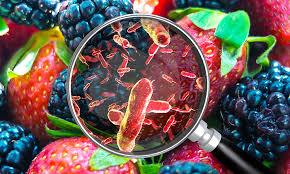
The microbial groups important in foods consist of several species and types of bacteria, yeasts, molds, and viruses. Although some algae and protozoa, as well as some worms (such as nematodes), are important in foods, they are not included among the microbial groups in this article.
Bacteria, yeasts, molds, and viruses are important in food for their ability to cause foodborne diseases and food spoilage and to produce food and food ingredients. Many bacterial species and some molds and viruses, but not yeasts, are able to cause foodborne diseases. Most bacteria, molds, and yeasts, because of their ability to grow in foods, can potentially cause food spoilage.
Several species of bacteria, molds, and yeasts are considered safe or food grade, or both, and are used to produce fermented foods and food ingredients. Among the four major groups, bacteria constitute the largest group because of their ubiquitous presence and rapid growth rate, even under conditions where yeasts and molds cannot grow.
Bacteria are considered the most important microorganism in food spoilage and foodborne diseases. Prion or proteinaceous infectious particles have recently been identified to cause transmissible spongiform encephalopathies (TSEs) in humans and animals. However, their ability to cause foodborne diseases is not clearly understood.
Read Also: Poultry Management during Winter Cold
Classification of Microorganisms in Food Microbiology
Living cellular organisms, on the basis of phylogenetic and evolutionary relationships, were grouped originally in five kingdoms, in which bacteria belonged to procaryotes, and the eucaryotic molds and yeasts were grouped under fungi.
In the 1970s, the procaryotic domain was changed to Eubacteria (with murin on cell wall) and Archaebacteria (without murin on cell wall). In the 1990s, this was changed to Bacteria and Archaea, respectively.
Archaea include most extremophiles and are not important to food microbiology. Viruses are not considered as living cells and are not included in this classification system. For the classification of yeasts, molds, and bacteria, several ranks are used after the kingdom: divisions, classes, orders, families, genus (plural genera), and species.
The basic taxonomic group is the species. Several species with similar characteristics form a genus. Among eucaryotes, species in the same genus can interbreed. This is not considered among procaryotes, although conjugal transfer of genetic materials exists among many bacteria.
Several genera make a family, and the same procedure is followed in the hierarchy. In food microbiology, ranks above species, genus, and family are seldom used. Among bacteria, a species is regarded as a collection of strains having many common features.
A strain is the descendant of a single colony (single cell). Among the strains in a species, one is assigned as the type strain and is used as a reference strain while comparing the characteristics of an unknown isolate. Several methods are used to determine relatedness among bacteria, yeasts, and molds for taxonomic classification.
In yeasts and molds, morphology, reproduction, biochemical nature of macromolecules, and metabolic patterns are used along with other criteria.
For bacterial morphology, Gram-stain characteristics, protein profiles, amino acid sequences of some specific proteins, base composition (% of G + C), nucleic acid (DNA and RNA) hybridization, nucleotide base sequence, and computer-assisted numerical taxonomy are used. Protein profile, amino acid sequence, base composition, DNA and RNA hybridization, and nucleotide base sequence are directly or indirectly related to the genetic makeup of the organisms and thus provide a better chance in comparing two organisms at the genetic level.
In mol % G + C ratio, if two strains differ by 10% or more, they are most likely not related. Similarly, in a hybridization study, two strains are considered the same if their DNAs have 90% or more homology. For the nucleotide base sequence, the sequences in 16S rRNA among strains are compared. A sequence of about 1500 nucleotide bases over a stretch of 16S rRNA is most conserved, so related strains should have high homology.
In numerical taxonomy, many characteristics are compared, such as morphological, physiological, and biochemical. Each characteristic is given the same weightage. Two strains in the same species should score 90% or more. Evolutionary relationships among viruses, if any, are not known.
Their classification system is rather arbitrary and based on the types of disease they cause (such as the hepatitis virus, causing inflammation of the liver), nucleic acid content (RNA or DNA, single-stranded or double-stranded), and morphological structures.
In food, two groups of viruses are important: the bacterial viruses (bacteriophages) of starter culture bacteria and some foodborne pathogenic bacteria, and the human pathogenic viruses associated with foodborne diseases.
Read Also: Animal Segregation Analysis: Complex Segregation Analysis
Nomenclature of Microorganisms in Food
The basic taxonomic group in bacteria, yeasts, and molds is the species, and each species is given a name. The name has two parts (binomial name): the first part is the genus name, and the second part is the specific epithet.
Both parts are Latinized; when written, they are italicized (or underlined), with the first letter of the genus written in a capital letter (e.g., Saccharomyces cerevisiae, Penicillium roquefortii, and Lactobacillus acidophilus).
A bacterial species can be divided into several subspecies (subsp. or ssp.) if the members show minor but consistent differences in characteristics. Under such conditions, a trinomial epithet (subspecific epithet) is used (e.g., Lactococcus lactis ssp. lactis or Lactococcus lactis ssp. cremoris).
In some instances, ranks below subspecies are used to differentiate strains recognized by specific characters (e.g., serovar (antigenic reaction), biovar (producing a specific metabolite), and phagovar (sensitive to a specific phage)). Such ranks have no taxonomic importance but can be practically useful (e.g., Lactococcus lactis ssp. lactis biovar diacetilactis is a Lactococcus lactis ssp. lactis strain that produces diacetyl, an important flavor compound in some fermented dairy products).
Each strain of a species should be identified with a specific strain number, which can be alphabetic or numeric or a mixture of both (e.g., Pediococcus acidilactici LB923). At the family level, bacterial names are used as plural adjectives in feminine gender and agree with the suffix “-aceae” (e.g., Enterobacteriaceae).
The species and strains in a genus can be represented collectively, either using “spp.” after the genus (e.g., Lactobacillus spp.) or plural forms of the genus (e.g., lactobacilli for Lactobacillus; lactococci for Lactococcus; leuconostocs for Leuconostoc, or salmonellae for Salmonella).
The scientific names of bacteria are given according to the specifications of the International Code of Nomenclature of Bacteria. The International Committee on Systematic Bacteriology of the International Union of Microbiological Association examines the validity of each name and then publishes the approved lists of bacterial names from time to time.
A new name (species or genus) must be published in the International Journal of Systematic Bacteriology before it is judged for inclusion in the approved list. Any change in name (genus or species) has to be approved by this committee. When writing the name of the same species more than once in an article, it is customary to use both genus and specific epithet the first time and abbreviate the genus name subsequently.
In the Bergey’s Manual of Systematic Bacteriology, only the first letter is used (e.g., Listeria monocytogenes and then L. monocytogenes). The same system is used in most publications in the United States (U.S.). However, it creates confusion when one article has several species with the same first letter in the genus (e.g., Lactobacillus lactis, Leuconostoc lactis, and Lactococcus lactis as L. lactis).
The viruses, as indicated previously, have not been given specific taxonomic names as given for bacteria. They are often identified with alphabetic or numeric designation, or a combination of both (e.g., T4 or l bacteriophages), the disease they produce (e.g., hepatitis A, causing liver inflammation), or by other methods (e.g., Norwalk-like viruses, causing a type of foodborne gastroenteritis in humans).
Do you have any questions, suggestions, or contributions? If so, please feel free to use the comment box below to share your thoughts. We also encourage you to kindly share this information with others who might benefit from it. Since we can’t reach everyone at once, we truly appreciate your help in spreading the word. Thank you so much for your support and for sharing!