


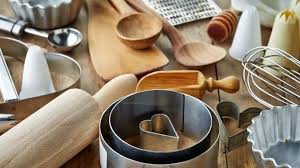
One of the most critical pieces of equipment to be considered in agricultural food processing is kitchen equipment, which is often expensive. To justify the expense, it is essential that maximum use is made of it, which can only be achieved if all equipment operates efficiently. This depends on proper care and maintenance.
Care and Maintenance of Kitchen Equipment
The routine use, care, and cleaning of all items of equipment are vital and should be thoroughly understood. Improper cleaning can lead to serious consequences, such as damage to the equipment, contamination, and food poisoning.
Guidelines from Equipment Manufacturers
Manufacturers of large and mechanical kitchen equipment provide instructions to keep their apparatus in efficient working order. It is the responsibility of everyone using the equipment to follow these instructions, which should be displayed prominently near the machines. Arrangements should be made with the local gas board for regular checks and servicing of gas-operated equipment. Similar arrangements should be made with the electricity board for electrical equipment. Maintaining a logbook for all equipment is advisable, documenting the location of each item, servicing dates, any defects, and details of work performed, signed by the technician.
Servicing Large Equipment: Stoves
A wide variety of stoves is available, operated by gas, electricity, solid fuel, oil, microwave, or a combination of microwave and convection. Solid tops should be washed or wiped clean with a pad of sacking. When cool, stove tops can be thoroughly cleaned by washing with an abrasive, using emery paper if necessary. After cleaning, solid tops should always be lightly greased.
For open-type stoves, all bars and racks should be removed, immersed in hot water with detergent, scrubbed clean, dried, and replaced. All gas jets should be lit to ensure none are blocked. Enamel parts of stoves should be cleaned while warm with hot detergent water, rinsed, and dried.
Read Also: Layers or Broilers which One is More Profitable in Poultry Farming? Find Out!
Understanding Convection Ovens
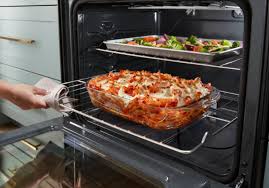
Convection ovens feature a circulating current of hot air rapidly forced around the oven’s interior by a motorized fan or blower, creating an even and constant temperature. This allows food to be cooked successfully in any part of the oven, using heat more efficiently, reducing cooking temperatures, shortening cooking times, and achieving fuel economy.
Forced air convection is fast conventional cooking; heat is applied to the food’s surface, but moving air transfers heat more rapidly than static air. In a sealed oven, fast hot air circulation minimizes evaporation losses, reduces shrinkage, and provides the rapid change in surface texture and color associated with certain cooking processes.
Exploring Microwave Cookers
Microwave cooking uses high-frequency power to heat and cook food, similar to the energy that carries television signals but at a higher frequency. The waves agitate food molecules, causing friction that cooks the entire food item, unlike conventional methods where heat penetrates only from the outside. Foods cooked by microwave require no fat or water and are placed in glass, earthenware, plastic, or paper containers, as metal reflects microwaves.
Microwave ovens vary in size and power, with features like automatic defrosting, browning elements, stay-hot controls, and revolving turntables. The oven cavity has metallic walls, ceiling, and floor to reflect microwaves, with a door fitted with special seals to minimize leakage. A cut-out device automatically switches off the microwave energy when the door is opened.
Combination Convection and Microwave Cookers
This cooker combines forced air convection and microwave, which can be used separately or simultaneously, offering speed, coloration, and texture benefits. Metal cooking pans can be used without damaging the cooker.
Read Also: Milk Processing and Storage Methods
Benefits of Induction Cookers
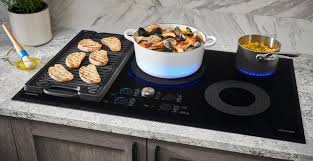
Induction cookers feature solid vitro-ceramic top plates that generate heat only when pans with magnetic bases are placed on them, stopping immediately when removed. A generator creates a two-way magnetic field, passing a current directly to the pan, making energy use far more efficient than conventional equipment.
The ceramic top remains cool, as it is not magnetic, serving only as a surface for pots and pans. Tests indicate over 50% energy savings. When boiling water, there is no delay waiting for the top to heat up, as energy transmission is immediate. For shallow frying, cold oil and food can be placed together without affecting quality due to rapid heating.
Types of Steaming Ovens
There are four types of steaming ovens: atmospheric, pressure, high-compression, and non-pressure steamers. The atmospheric steamer, non-pressurized, has a boiling water bath and a vent to prevent steam from rising above atmospheric pressure, allowing safe door opening at any time, though some steam is lost.
Heat sources can be gas or electricity. Pressure steamers, with a safety valve, cook food faster than atmospheric steamers, but the door must be opened slowly to reduce pressure safely, standing on the hinge side.
High-compression steamers operate at higher pressures, cooking even faster, typically for batch-cooking fresh or frozen vegetables in 1–5 minutes, though capacity is limited. Non-pressure convection steamers cook at low temperatures with a convection fan in an air-free compartment, with a steam generator producing purified steam under pressure.
Versatility of the Bratt Pan
The bratt pan is the most versatile piece of cooking equipment in the kitchen, suitable for shallow frying, deep frying, stewing, braising, and boiling. Its large surface area allows cooking multiple items simultaneously. The ability to tilt the pan facilitates quick and efficient pouring of contents after cooking. Bratt pans, heated by gas or electricity, come in various models to meet diverse catering needs.
Managing Deep Fat Fryers
Deep fat fryers are extensively used in catering establishments, but unskilled or careless operation can lead to food or fat wastage. Heated by gas or electricity, fryers include thermostatic controls to save fuel and prevent overheating.
A cool zone below the heat source allows food particles to sink without burning, preserving other foods and saving fat.
Daily cleaning involves turning off the heat, allowing the fat to cool, draining and straining the fat, filling the fryer with hot water and detergent, boiling for 10–15 minutes, draining, refilling with clean water and vinegar (1 liter per 5 liters of water), boiling again for 10–15 minutes, draining, drying, closing the stopcock, and refilling with clean fat.
Efficiency of Hot Air Rotary Fryers
Hot air rotary fryers cook batches of frozen chips or battered foods without oil in 4–6 minutes. Computerized fryers can be programmed to control cooking temperatures, times, basket lifting, and holding times.
A super-sensitive probe in the frying medium monitors temperature, rates of temperature change, fat quantity and condition, and product temperature and water content, computing exact cooking times and signaling the end of the cooking period.
Do you have any questions, suggestions, or contributions? If so, please feel free to use the comment box below to share your thoughts. We also encourage you to kindly share this information with others who might benefit from it. Since we can’t reach everyone at once, we truly appreciate your help in spreading the word. Thank you so much for your support and for sharing!