


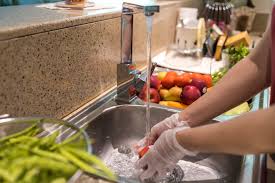
Restaurant kitchens can be treacherous places, with sharp knives in perpetual use and scalding ingredients cooking on multiple stove-top burners. A thoughtful design can help reduce many potential dangers.
Restaurant kitchens can also be breeding grounds for foodborne illnesses, but steps can be taken during kitchen creation to facilitate cleanliness and sanitation.
These design features should not substitute for regular cleanup, but they can make basic cleaning tasks easier. Significant potential for danger exists in restaurant kitchens from wet, slippery floors, which become doubly hazardous when employees carry hot, heavy pots and pans or work with sharp knives. Slip-resistant tiles should be chosen for flooring to minimize the risk of injury.
Importance of Kitchen Safety
1. Significance of Safety Measures
Safety in the kitchen is paramount. To avoid accidents, precautions must be taken. Many fires in commercial premises start in the kitchen due to negligence and lack of proper knowledge about kitchen safety.
Another major danger is accidents caused by knives. Although accidents cannot be planned, they can be easily prevented. Outlined below are simple steps to ensure kitchen safety.
Ensuring Kitchen Knife Safety
1. Safe Handling and Storage of Knives
Knives are essential in the kitchen, making kitchen knife safety a priority. Simple rules must be followed when handling and storing knives:
- Always point knives away when in use.
- Do not mix knives with other cutlery in drawers, as accidental cuts can occur when reaching for a knife.
- Wash knives separately, paying close attention to the sharp blade.
- Do not attempt to catch a falling knife. Where possible, move feet away to allow the knife to fall. Attempting to catch a knife mid-air can result in severe hand injuries unless one is a professional juggler.
- Sharpen knives regularly. Sharp knives require less force to cut through tough food, making them easier and safer to use.
i. Using a Magnetic Knife Holder
Wall-mounted stainless steel magnetic knife holders are preferable. They allow easy access to knives while securely holding them away from danger. Another advantage is that the magnetic board displays knives securely when not in use, solving a kitchen safety problem while adding style to the kitchen.
ii. Using a Drawer
If a magnetic knife holder is unavailable, a drawer can be effective when used properly. Designate one drawer for storing knives and use a secure divider to prevent knives from sliding and causing accidental injury.
iii. Using a Knife Block
Traditionally, knives have been stored in knife blocks made of wood, metal, or plastic, with different-sized insertions for proper knife storage.
Read Also: Importance and Method of Sorting Catfishes
Safe Handling of Pot Lids
1. Proper Techniques for Opening Pot Lids
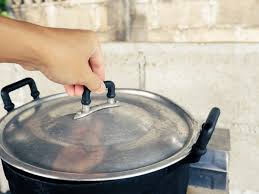
Hot steam can cause scalds to hands and face, so safety is critical when removing a pot lid. The proper way to open a lid is to lift the side opposite first, allowing steam to escape before removing the entire lid.
If no plastic handle is available, use a kitchen towel or oven mitts to lift the lid. Never lift the side nearest first, as hot steam will escape and cause scalds. This is a key aspect of kitchen safety.
Designing Safe Industrial Kitchens
1. Creating a Safe Commercial Kitchen Environment
A commercial kitchen must be a safe and comfortable working environment while meeting demands for energy efficiency and sustainable operation. Continuous risk assessment, appropriate staff training, and a robust maintenance regime are necessary.
However, to ensure minimal risks to personnel and maximum operational effectiveness, appropriate and informed design is essential. Particular consideration should be given to gas safety and overall ventilation requirements.
The science of commercial kitchen ventilation involves both exhausting air and providing replacement air within the cooking area. Whether a restaurant is a small free-standing site or a large institutional kitchen, managing and balancing airflow is complex.
Ventilating commercial kitchens requires moving large volumes of air through ductwork and equipment placement in restricted spaces. Optimal performance and energy-efficient air balance demand careful design, construction, installation coordination, and maintenance.
Buildings must adhere to indoor air quality regulations and, in some jurisdictions, exhaust air quality regulations. The food service industry faces stricter air quality regulations than standard building exhausts due to the contaminated air produced by cooking food.
Appliance Height Considerations
1. Safe Positioning of Kitchen Appliances
A kitchen should be safe and accessible regardless of the age or mobility of its users. In terms of universal design and aging-in-place, the height of appliances, particularly ovens and microwaves, is a critical safety consideration.
Appliances should be positioned at a safe height to avoid pulling hot pots and pans downward toward the body. Similarly, appliances should not be placed too low, where access could be difficult for those with mobility issues.
Importance of Task Lighting
Adequate overhead and under-cabinet lighting is required to fully illuminate surfaces where food is prepared and cooked, reducing the risk of accidents due to poor visibility.
Read Also: The Possible Market Outlet for Table Fishes
Essential Kitchen Safety Guidelines
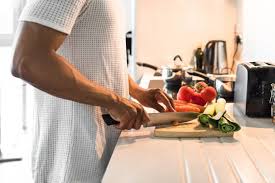
The kitchen is the busiest and often the most dangerous room in the home, according to the National Kitchen & Bath Association. The following guidelines help ensure safety:
- Provide proper lighting.
Good general lighting, supplemented with glare-free, shadow-free task lighting focused on work surfaces, reduces the chance of injury during meal preparation.
- Install slip-resistant flooring. Matte-finished wood, laminate, textured vinyl, or soft-glazed ceramic tile are good choices. If tile is chosen, a throw rug with a non-skid backing is recommended, especially in areas prone to getting wet.
- Provide safe storage for a fire extinguisher. The extinguisher should be visibly located near a room exit, away from cooking equipment, and never near or under a cooktop or range, as it would be unreachable during a fire.
- Keep electrical switches, plugs, and lighting fixtures away from water sources and wet hands. Building codes require grounded electrical receptacles protected with ground-fault circuit interrupters. Wall-mounted controls should be 15 to 48 inches above the finished floor.
- Install water-temperature regulators. Faucets with anti-scald devices prevent water temperature from rising to dangerous levels, and pressure-balanced valves equalize hot and cold water. Faucets can also be preprogrammed to desired temperature settings.
- Recommend a safe cooktop. Cooktops with burners in a staggered layout or a single row help prevent scalds from reaching over boiling pots. Controls should be along the side or front.
- Design a safe floor plan. Traffic flow should keep non-cooking traffic out of the cooking area, avoiding placement of a range near an entrance or exit.
- Position microwaves at a convenient height to avoid reaching for hot food.
- Offer slide-out trays and bins in base cabinets to make contents more accessible, minimizing reaching and twisting.
Additional safety actions to integrate into daily kitchen activities include:
- Keep the fridge/freezer organized and not overly stocked to prevent objects from falling when the door is opened. Apply the same principle to pantries and cupboards, especially upper shelves.
- Keep the underside of the stove range hood clean and follow the manufacturer’s guidelines for changing or cleaning the filter to avoid grease fires.
- Always chop on a stable, non-slip surface. Place a damp dish towel or rag under the cutting board to prevent shifting.
- Position pot and pan handles inward, not protruding from the stove, to avoid being bumped or grabbed.
Preventing Kitchen Accidents
To prevent accidents, the following practices should be adopted:
- Clean up spills immediately.
- Ensure small appliances are switched to “Off” before plugging in.
- Unplug appliances immediately after use.
- Never attempt to catch a falling knife.
- Use equipment only for its intended purpose.
- Position oven racks correctly before preheating, as it is easier when they are cold.
- Never adjust an oven rack with a casserole or tray on it.
- Never place a dirty knife in soapy dishwater, where it becomes hidden and hazardous.
- Stay close to the stove when cooking over high heat.
- Keep a potholder or towel over the handle of a pot or pan just removed from the oven to avoid grabbing a hot handle.
- Keep knives and sharp objects away from the counter’s edge, where they could fall or be reached by children.
- When walking with a knife, keep it tip down at the side.
Additional Safety Practices
When using knives, caution is essential. The following safety tips should be followed:
- Children under ten should be supervised by an adult when cutting.
- Use the appropriate knife size for the task.
- Always use a cutting board to prevent counter scratches and wash it with soapy water after use.
- Slice away from fingers holding the food, not toward them.
- Ensure the knife is sharp but not excessively so.
- After use, clean the knife and store it in its designated place.
1. Safe Microwaving Practices
Microwaves are convenient but require safety precautions:
- Use oven mitts or potholders to remove containers from the microwave.
- Never use foil or metal items inside the microwave, as they can start a fire.
- Use only microwave-safe containers to avoid melting.
- Cover items but leave space for ventilation.
- Avoid standing close to the microwave during operation.
2. Safe Use of Toaster Ovens
Toaster ovens are convenient but require care:
- Do not touch metal parts without a mitt or potholder.
- Allow the toaster oven to cool before cleaning to avoid burns.
- Clean crumbs and food pieces from the bottom during cleaning.
3. Cleaning Up Kitchen Messes
Spills and breakages are common in cooking. The following cleanup tips should be followed:
- Clean up spills or breakages immediately.
- Sweep broken glass or dishes with a broom, not hands, to avoid cuts.
- Sweep broken items into a dustpan or separate bag and discard.
- Wipe the area with a damp paper towel to pick up small glass pieces.
- For oil or gravy spills, wipe and clean with soap and water until the surface is oil-free. Use cornstarch if soap is ineffective, then rinse.
- For lemonade or soda spills, use a dry paper towel, then a wet one to remove stickiness, and dry the surface.
- Ensure hands are dry before unplugging appliances to avoid electrical shock.
- Avoid overloading electrical sockets or using extension cords.
- Keep children away from appliances in use and avoid leaving chairs near the stove to prevent fires or burns.
4. Extinguishing Kitchen Fires
For grease fires in a pan or oven, use a lid or plate to smother the flames. For small paper, rubber, or plastic fires, douse the object in water or place it in the sink and run water over it.
Ensuring Food Safety
1. Food Safety Responsibilities in Canteens
Canteen management is responsible for serving nutritious, appealing, and safe food. A restaurant manager must:
- Identify health hazards in daily operations.
- Develop and implement policies, procedures, and standards to prevent foodborne illness.
- Coordinate training, supervision, and direction of food handling and preparation, taking corrective action to protect customer and employee health.
- Inspect operations periodically to ensure compliance with policies and procedures.
To support a proactive stance in assuring sanitary procedures, managers should understand:
i. Properties of Food: Available moisture and pH levels that promote or inhibit bacterial growth, along with a list of potentially hazardous foods.
ii. Food Processing/Preparation: Processes the food undergoes.
iii. Volume of Food Prepared: Larger quantities increase potential danger.
iv. Type of Customer: The very young, elderly, infirm, or sick are more susceptible to foodborne illness.
Addressing Major Sanitation Problems
Foodborne illnesses occur due to:
- Inadequate cooling and cold holding.
- Preparing food too far ahead of planned service.
- Inadequate hot holding.
- Poor personal hygiene or infected personnel.
- Inadequate reheating.
- Inadequate cleaning of equipment.
- Cross-contamination.
- Inadequate cooking or heat processing.
- Contaminated raw materials.
- Unsafe sources (Mill, 2007).
Do you have any questions, suggestions, or contributions? If so, please feel free to use the comment box below to share your thoughts. We also encourage you to kindly share this information with others who might benefit from it. Since we can’t reach everyone at once, we truly appreciate your help in spreading the word. Thank you so much for your support and for sharing!