


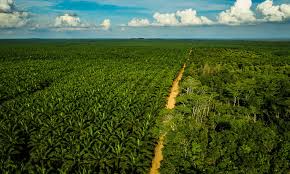
Land is one of the most essential natural resources for the survival and prosperity of humankind. It is the platform on which human activities occur and the source of materials needed for these activities.
This implies that land performs multiple functions that must be considered when planning development, to ensure an efficient and balanced allocation of land resources.
Concept of Land Use in the Tropics in Relation to Agriculture
Land supports a wide variety of uses and can satisfy diverse objectives. Land use is a fundamental component of human activity. The concept of land use refers to a series of activities carried out to generate one or more products or services. Land is defined as man’s activity on the land or the purpose for which the land is being used.
The same type of land use may be observed on multiple parcels of land, and a single parcel may serve multiple uses. This activity-based definition of land use allows for detailed quantitative analysis of both economic and environmental impacts, and enables land uses to be clearly identified and classified.
Read Also: Considerations in Constructing a Poultry House
Functions of Land Use in the Tropics for Agricultural and Environmental Management
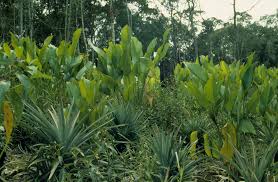
The major functions of land use in tropical regions include:
1. Productive Function: Land supports many life-support systems by producing biomass, which provides food, fodder, fibre, fuel, timber, and other biotic materials for human use either directly or through livestock production, aquaculture, and both inland and coastal fisheries.
2. Biotic Environmental Function: Land serves as the foundation of terrestrial biodiversity. It provides biological habitats and gene pools for plants, animals, and micro-organisms both above and below the ground.
3. Climate Regulation Function: Land and its usage act as sources and sinks for greenhouse gases and help determine global energy balance, along with the reflection, absorption, and transformation of solar radiation and interaction with the global hydrological cycle.
4. Hydrologic Function: Land regulates the storage, flow, and quality of surface and groundwater resources.
5. Storage Function: Land stores raw materials and minerals required for human activities.
6. Waste and Pollution Control Function: Land absorbs, filters, buffers, and transforms various hazardous compounds, playing a vital role in environmental health.
7. Living Space Function: Land provides the physical space for human settlements and activities such as industry, sports, and recreation.
8. Archive or Heritage Function: Land preserves cultural history, serving as a record of past human activity, past climatic conditions, and historic land uses.
9. Connective Space Function: Land provides routes for the transportation of people, goods, and inputs, as well as corridors for the movement of wildlife and plant species between natural ecosystems.
Read Also: Cold Weather Poultry Diseases and How to Manage them
Uses of Land as a Natural Resource in Agriculture and Beyond
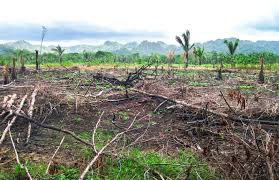
Globally, the total country area is approximately 136,096,598 km², comprising 130,121,447 km² of land and 5,975,151 km² of inland water. The land area is allocated to various uses:
1. Agricultural land: 49,322,388 km² (with arable land covering 14,121,800 km² and permanent crops 1,426,704 km²)
2. Forest land: 39,394,070 km²
3. Other land types: 41,404,989 km²
Land is in high demand for a wide range of human activities. These activities whether current or anticipated depend on surface characteristics, mineral content, water resources, and other renewable or non-renewable features.
Typically, a single land parcel cannot be used for multiple purposes at once, which creates competition between different land-use needs.
Land is a limited resource under increasing pressure. As demand for land intensifies, agricultural productivity may decline, the land’s quality deteriorates, and access becomes more competitive.
Increased demand triggers fierce competition among users. The most logical way to address these needs is for governments to evaluate available land resources, assess current and future demands, and allocate land uses in a way that matches ecological suitability with specific uses.
Effective use of land resources for agricultural production is achieved when each land requirement is allocated to suitable land, and when the land-use combinations are managed to avoid degradation that might undermine their sustainability.
Poor land-use decisions, especially regarding the type and intensity of development permitted on land, can cause significant alterations to natural landscapes and water quality.
Low-intensity land uses include open spaces, woodlands, grasslands, shrubs, and farmland, while high-intensity land uses cover residential, commercial, and industrial activities.
In this article, land use and its various functions in the tropics have been clearly explained. It has been established that land use refers to the activity being carried out on the land or the intended purpose for which the land is being used.
The same land use may occur on multiple land parcels, and a single parcel may serve multiple uses, depending on the planning approach and resource availability.
Do you have any questions, suggestions, or contributions? If so, please feel free to use the comment box below to share your thoughts. We also encourage you to kindly share this information with others who might benefit from it. Since we can’t reach everyone at once, we truly appreciate your help in spreading the word. Thank you so much for your support and for sharing!