


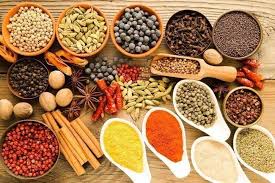
Spices, herbs, and flavorings have been traded internationally for thousands of years, but until recently, most food was produced, sold, and consumed locally. However, over the last century, the amount of food traded internationally has grown exponentially.
Public concerns about food safety issues have increased the amount of regulatory oversight on foods as well as spices, herbs, and flavors in the past century.
Every country needs laws to encourage the production of safe and wholesome foods, and to prohibit the sale of foods that are unsafe or fraudulent. In this article, we shall discuss the food standards and regulations for spices and herbs, using typical spices as case studies.
Understanding Food Laws and Regulations
In all countries, food is governed by a complexity of laws and regulations, which set out the government’s requirements to be met by food chain operators to ensure food safety and quality.
The term “food law” applies to legislation which regulates the production, trade, and handling of food and hence covers the regulation of food control, food safety, quality, and relevant aspects of food trade across the entire food chain, from the provision for animal feed to the consumer.
Food laws govern food production, processing, distribution, marketing, and consumption. There are international, federal, state, and local food laws. Food laws typically govern the use of pesticides, food additives, nutrition labeling, tariffs on agricultural imports, and restaurant cleanliness.
They also govern topics like packaging, distribution, adulteration, and fraud in the food industry. In every country, standards are an important part of the regulation of food production and food trade.
Defining Food Standards
Food standard is a set of criteria that a food must meet if it is to be suitable for human consumption, such as source, composition, appearance, freshness, permissible additives, and maximum bacterial content. In every country, standards are an important part of the regulation of food production and food trade.
These food standards are often set in accordance with the Codex Alimentarius Commission. Standards of identity define what a given food product is and the ingredients that must be used in manufacturing it.
Read Also: Growing Guide and Health Benefits of Rosemary Spice
Role of Food Regulatory Agencies
A wide range of government agencies impact food law at the federal, state, and local levels. The states usually have task forces, food policy councils, and agencies that address food policy issues. States continue to introduce new food laws or amend existing laws.
1. National Agency for Food and Drug Administration and Control (NAFDAC)
NAFDAC is Nigeria’s food safety authority and is responsible for the regulation and control of food product manufacturing, importation, exportation, advertisement, sale, and distribution in Nigeria.
It defines food as any “article manufactured, processed, packaged, sold, or advertised for use as food or drink for human consumption, chewing gum, and any other ingredient which may be mixed with food for any purpose whatsoever.”
Under the provisions of the law and the accompanying guidelines, no food item may be imported, manufactured, advertised, sold, or distributed in Nigeria unless it has been registered by NAFDAC.
Its scope is to regulate, protect, and promote public health by ensuring the wholesomeness, quality, safety, and efficacy (as applicable) of food, packaged water, drugs, cosmetics, medical devices, chemicals, and detergents (referred to as regulated products) consumed in Nigeria.
NAFDAC operates at the Federal and State levels along with the state government agencies. At the local government level, there are primary healthcare agencies responsible for street food vending, catering establishments, and traditional markets.
2. Codex Alimentarius Commission
The Codex Alimentarius Commission (CAC) is an international food standards body established jointly by the Food and Agriculture Organization (FAO) and the World Health Organization (WHO) in May 1963 with the objective of protecting consumers’ health and ensuring fair practices in food trade.
Nigeria is a member of CAC; therefore, her food standards concerning spices are in conformity with Codex standards. Codex Alimentarius is a collection of internationally adopted food standards and related texts presented in a uniform manner.
These food standards and related texts aim at protecting consumers’ health and ensuring fair practices in the food trade.
The Codex Alimentarius (CODEX) international food standards, guidelines, and codes of practice contribute to the safety, quality, and fairness of this international food trade.
Consumers can trust the safety and quality of the food products they buy, and importers can trust that the food they ordered will be in accordance with their specifications.
The Codex Committee on Spices and Culinary Herbs (CCSCH) was established by the Codex Alimentarius Commission to elaborate worldwide standards for spices and culinary herbs in their dried and dehydrated state in whole, ground, and cracked or crushed form.
Read Also: Economic Importance, Uses, and By-Products of Watermelon Shoots
Codex Standard for Chilli Pepper
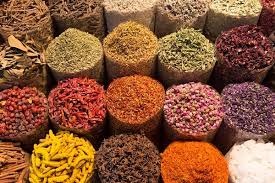
1. Definition and Minimum Quality Requirements for Chilli Pepper
i. Definition of Produce: This Standard applies to commercial varieties of chilli peppers grown from Capsicum spp., of the Solanaceae family, to be supplied fresh to the consumer, after preparation and packaging. Chilli peppers for industrial processing are excluded.
ii. Minimum Quality Requirements: In all classes, subject to the special provisions for each class and the tolerances allowed, the chilli peppers must be:
- whole, the stalk (stem) may be missing, provided that the break is clean and the adjacent skin is not damaged;
- sound, produce affected by rotting or deterioration such as to make it unfit for consumption is excluded;
- firm;
- clean, practically free of any visible foreign matter;
- practically free of pests and damage caused by them affecting the general appearance of the produce;
- free of abnormal external moisture excluding condensation following removal from cold storage;
- free of any foreign smell and/or taste;
- free of damage caused by low and/or high temperatures.
2. Quality Classification and Packaging for Chilli Pepper
Chilli peppers are classified in three classes defined below:
i. Extra Class: Chilli peppers in this class must be of superior quality. They must be characteristic of the variety. They must be free of defects, with the exception of very slight superficial defects affecting an area of up to 0.5% of the produce surface, provided these do not affect the general appearance of the produce, the quality, the keeping quality, and presentation in the package.
ii. Class I: Chilli peppers in this class must be of good quality. They must be characteristic of the variety. Slight defects, however, may be allowed, affecting an area of up to 2.0% of the product surface, provided these do not affect the general appearance of the produce, the quality, the keeping quality, and presentation in the package.
ii. Class II: This class includes chilli peppers which do not qualify for inclusion in the higher classes but satisfy the minimum requirements specified above. Defects, however, may be allowed, affecting an area of up to 3.0% of the product surface, provided the chilli peppers retain their essential characteristics as regards the quality, the keeping quality, and presentation.
a. Packaging: Chilli peppers must be packed in such a way as to protect the produce properly. The materials used inside the package must be new, clean, and of a quality such as to avoid causing any external or internal damage to the produce.
The use of materials, particularly of paper or stamps bearing trade specifications, is allowed, provided the printing or labelling has been done with non-toxic ink or glue.
Chilli peppers shall be packed in each container in compliance with the Recommended International Code of Practice for Packaging and Transport of Fresh Fruits and Vegetables (CAC/RCP 44-1995).
3. Standards for Contaminants in Chilli Pepper
The produce covered by this Standard shall comply with the maximum levels of the Codex General Standard for Contaminants and Toxins in Food and Feed (CODEX STAN 193-1995).
This standard stipulates that the maximum level of aflatoxin in foods is 15 µg/kg and the maximum level for lead is 0.2 mg/kg. Standards for other contaminants are also stipulated.
The produce covered by this Standard shall comply with the maximum residue limits for pesticides established by the Codex Alimentarius Commission. The table below shows the maximum residue limits for some pesticides for spices, fruits, and berries.
Maximum Residue Limits for Pesticides in Spices, Fruits, and Berries
| Pesticide | MRL (mg/kg) | Year of Adoption |
|---|---|---|
| Aldicarb | 0.07 | 2011 |
| Bifenthrin | 0.03 | 2011 |
| Carbaryl | 0.8 | 2011 |
| Carbendazim | 0.1 | 2011 |
| Carbosulfan | 0.07 | 2011 |
| Chlorpyrifos | 1 | 2005 |
| Chlorpyrifos-Methyl | 0.3 | 2005 |
| Cyfluthrin/beta-cyfluthrin | 0.03 | 2011 |
| Cyhalothrin (includes lambda-cyhalothrin) | 0.03 | 2016 |
| Cypermethrins (including alpha- and zeta-cypermethrin) | 0.5 | 2011 |
| Deltamethrin | 0.03 | 2011 |
| Diazinon | 0.1 | 2005 |
| Dicofol | 0.1 | 2005 |
Codex Standard for Fresh Ginger
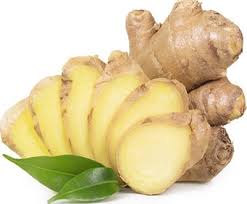
1. Definition and Minimum Quality Requirements for Ginger
i. Definition of Produce: This Standard applies to the rhizome of commercial varieties of ginger grown from Zingiber officinale Roscoe, of the Zingiberaceae family, to be supplied fresh to the consumer, after preparation and packaging. Ginger for industrial processing is excluded.
ii. Minimum Quality Requirements: In all classes, subject to the special provisions for each class and the tolerances allowed, the ginger must be:
- whole;
- sound, produce affected by rotting or deterioration such as to make it unfit for consumption is excluded;
- clean, practically free of any visible foreign matter;
- practically free of damage caused by pests affecting the general appearance of the produce;
- free of abnormal external moisture, and properly dried if washed, excluding condensation following removal from cold storage;
- free of any foreign smell and/or taste;
- firm;
- free of abrasions, provided light abrasions which have been dried properly are not regarded as a defect;
- sufficiently dry for the intended use; skin, stems, and cuts due to harvesting must be fully dried.
The development and condition of the ginger must be such as to enable it:
- to withstand transport and handling; and
- to arrive in satisfactory condition at the place of destination.
2. Quality Classification and Packaging for Ginger
Ginger is classified in three classes defined below:
i. Extra Class: Ginger in this class must be of superior quality. It must be characteristic of the variety and/or commercial type. The roots must be cleaned, well-shaped, and free of defects, with the exception of very slight superficial defects, provided these do not affect the general appearance of the produce, the quality, the keeping quality, and presentation in the package.
ii. Class I: Ginger in this class must be of good quality. It must be characteristic of the variety and/or commercial type. The roots must be firm, without evidence of shriveling or dehydration and without evidence of sprouting. The following slight defects, however, may be allowed, provided these do not affect the general appearance of the produce, the quality, the keeping quality, and presentation in the package: slight skin defects due to rubbing provided they are healed and dry and the total surface area affected not exceeding 10%.
iii. Class II: This class includes ginger which does not qualify for inclusion in the higher classes but satisfies the minimum requirements specified above. The roots should be reasonably firm. The following defects, however, may be allowed, provided the ginger retains its essential characteristics as regards the quality, the keeping quality, and presentation:
skin defects due to rubbing, provided they are healed and dry and the total surface area affected not exceeding 15%;
early signs of sprouting (not more than 10% by weight by unit of presentation);
slight markings caused by pests;
healed suberized cracks, provided they are completely dry;
slight traces of soil;
bruises.
3. Contaminants and Hygiene Standards for Ginger
i. Contaminants: The produce covered by this Standard shall comply with the maximum levels of the Codex General Standard for Contaminants and Toxins in Food and Feed (CODEX STAN 193-1995). See above.
The produce covered by this Standard shall comply with the maximum residue limits for pesticides established by the Codex Alimentarius Commission. See above.
ii. Hygiene: It is recommended that the produce covered by the provisions of this Standard be prepared and handled in accordance with the appropriate sections of the Recommended International Code of Practice.
General Principles of Food Hygiene (CAC/RCP 1-1969), Code of Hygienic Practice for Fresh Fruits and Vegetables (CAC/RCP 53-2003), and other relevant Codex texts such as Codes of Hygienic Practice and Codes of Practice.
The produce should comply with any microbiological criteria established in accordance with the Principles for the Establishment and Application of Microbiological Criteria for Foods (CAC/GL 21-1997).
A microbiological criterion should be appropriate to protect the health of the consumer and, where appropriate, also ensure fair practices in food trade. A microbiological criterion should be practical and feasible and established only when necessary.
Importance of Food Legislation for Spices
Food legislation for spices is very important to promote food safety and ensure the health of consumers. Food legislation can exist at national, state, or local levels.
Food standard is a set of criteria that a food must meet if it is to be suitable for human consumption, such as source, composition, appearance, freshness, permissible additives, and maximum bacterial content. A wide range of government agencies impact food laws at the federal, state, and local levels.
The major food regulatory body in Nigeria is NAFDAC. On the international level, Codex Alimentarius formulates food standards for member states.
Other governmental and non-governmental bodies are also involved in food legislation and control, like the ministries of health and agriculture, the local government areas, research institutes, etc.
Do you have any questions, suggestions, or contributions? If so, please feel free to use the comment box below to share your thoughts. We also encourage you to kindly share this information with others who might benefit from it. Since we can’t reach everyone at once, we truly appreciate your help in spreading the word. Thank you so much for your support and for sharing!